Understanding Simple Machines Worksheets for Ages 5-9
4 filtered results
-
From - To
Unlock the wonders of physics for young learners with our "Understanding Simple Machines Worksheets for Ages 5-9." Specially designed to engage young minds, these worksheets introduce the fundamental concepts of simple machines like levers, pulleys, and ramps. Through hands-on activities, colorful illustrations, and easy-to-follow instructions, children will discover how these basic tools make work easier. Perfect for home or classroom use, these educational resources align with grade-level standards and foster critical thinking, problem-solving, and fine motor skills. Inspire curiosity and a love of learning with our comprehensive and fun approach to understanding simple machines!
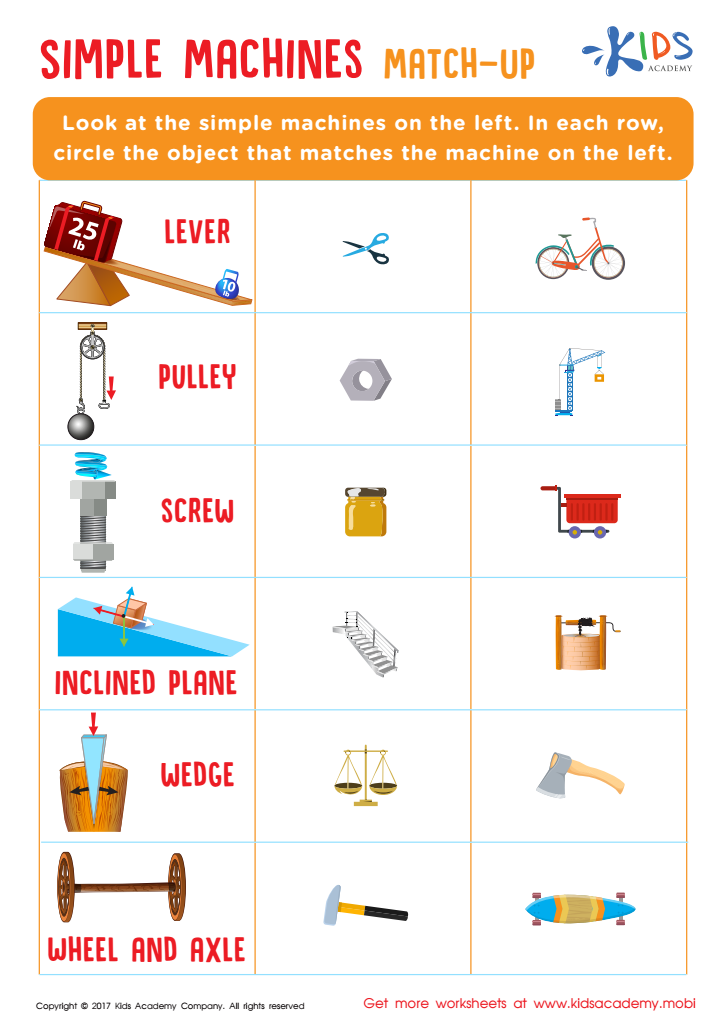
Simple Machines Worksheet
 Assign to My Students
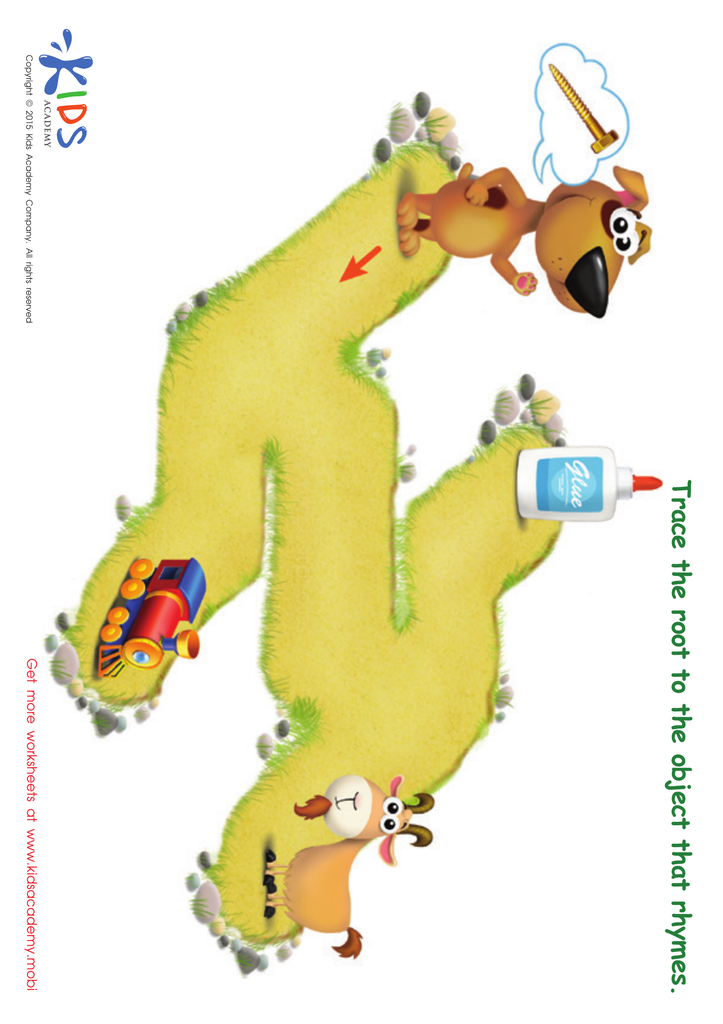
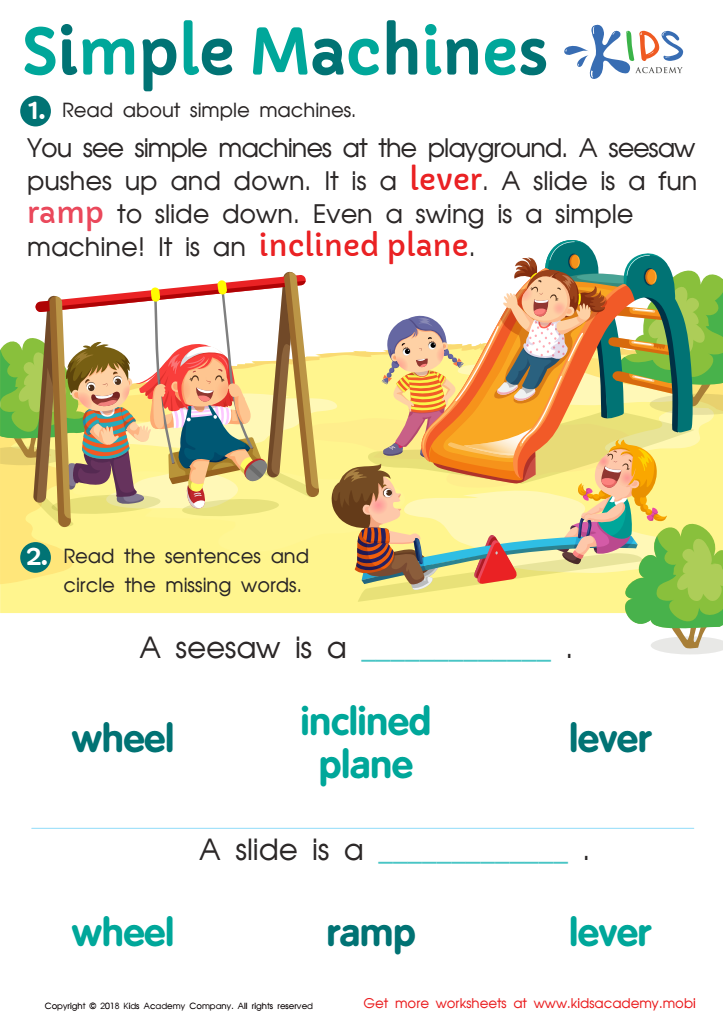
Simple Machines Worksheet
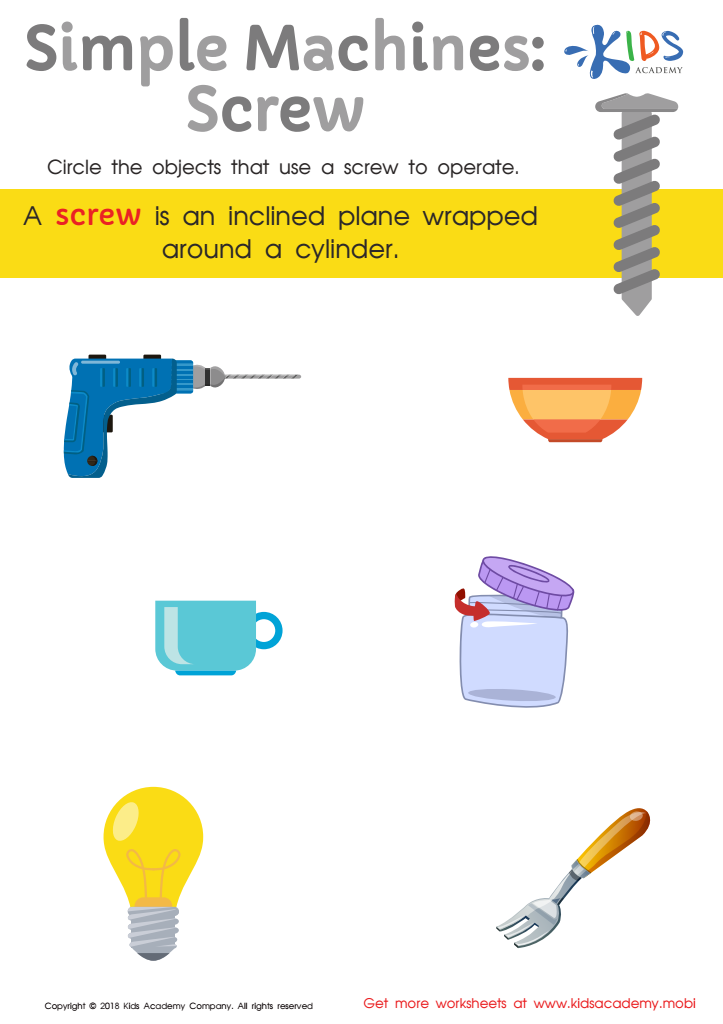
Simple Machines: Screw Worksheet







Parents and teachers should care about teaching children ages 5-9 about simple machines because it lays the foundation for critical thinking, problem-solving, and a love for science and engineering. Simple machines—like levers, pulleys, inclined planes, screws, wedges, and wheels and axles—provide tangible, relatable examples of basic physical principles that govern many aspects of daily life.
Understanding these devices helps young children develop spatial awareness and fine motor skills as they interact with and build their own simple machines. It also stimulates curiosity and creativity; for example, children may become curious about how playground equipment operates or how to create their own tools and gadgets.
From an educational standpoint, early exposure to these concepts supports STEM (Science, Technology, Engineering, and Math) learning, fostering a mindset geared towards exploration and innovation. As children experiment with simple machines, they engage in hands-on learning that's both fun and educational. They learn to ask questions like "Why?" and "How?", which are crucial for scientific inquiry.
Moreover, understanding simple machines can be empowering. It showcases to children that complex problems can be broken down into simpler, manageable parts. This is a life skill that extends beyond just science and math, influencing how they approach challenges in other subjects and daily life.
By nurturing an early interest in simple machines, parents and teachers invest in their children's cognitive development, which can spark a lifelong interest in learning and problem-solving.








