Understanding weather Worksheets for Ages 5-9
4 filtered results
-
From - To
Discover the exciting world of weather with our "Understanding Weather Worksheets for Ages 5-9"! Specifically designed for young learners, these engaging worksheets help kids explore different weather patterns, seasons, and basic meteorological concepts. Through interactive activities, visual aids, and simple explanations, children will develop essential science skills and a deeper understanding of the weather around them. Ideal for classroom use or at-home learning, our worksheets make learning about weather fun and educational. Begin your child’s journey into meteorology today with Kids Academy and nurture their curiosity about the natural world!
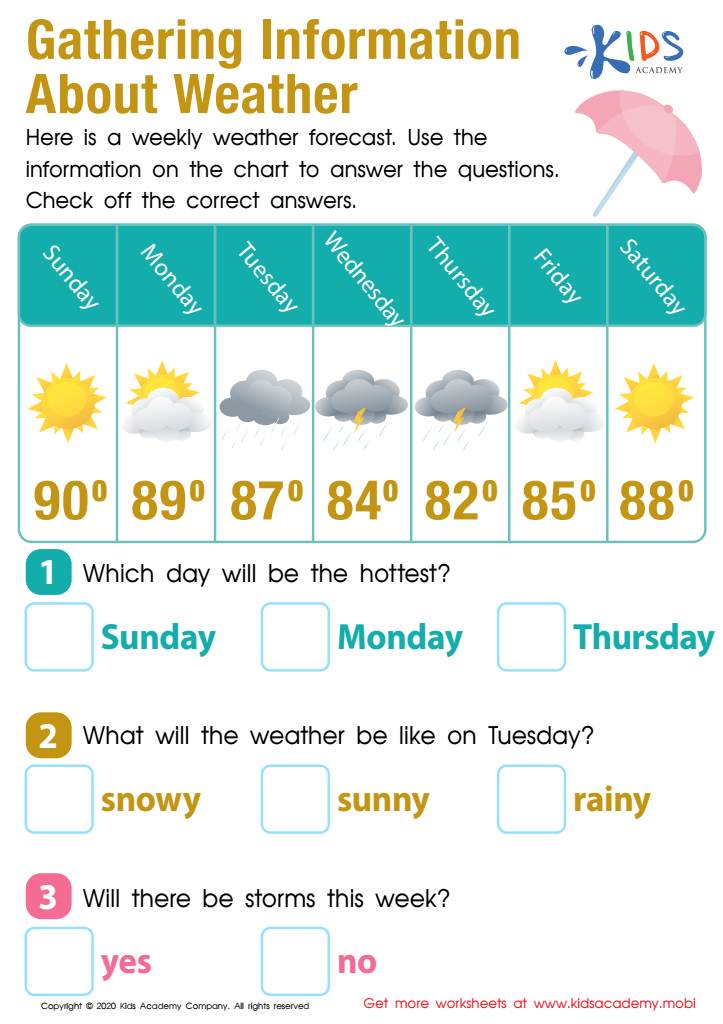
Gathering Information About the Weather Worksheet
 Assign to My Students
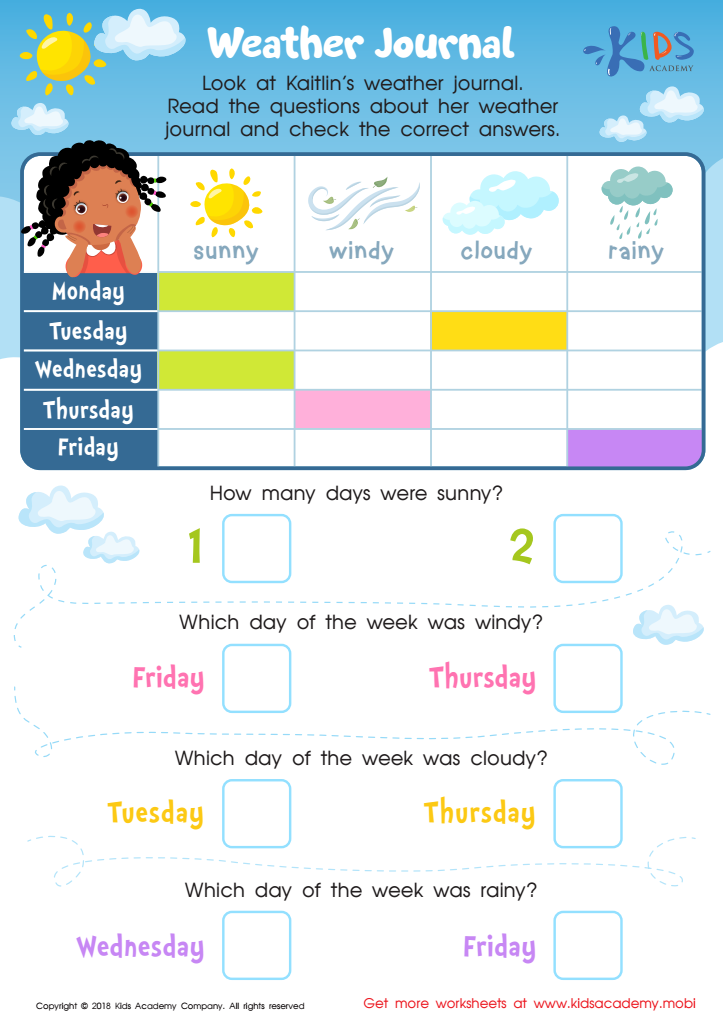
Weather Journal Worksheet
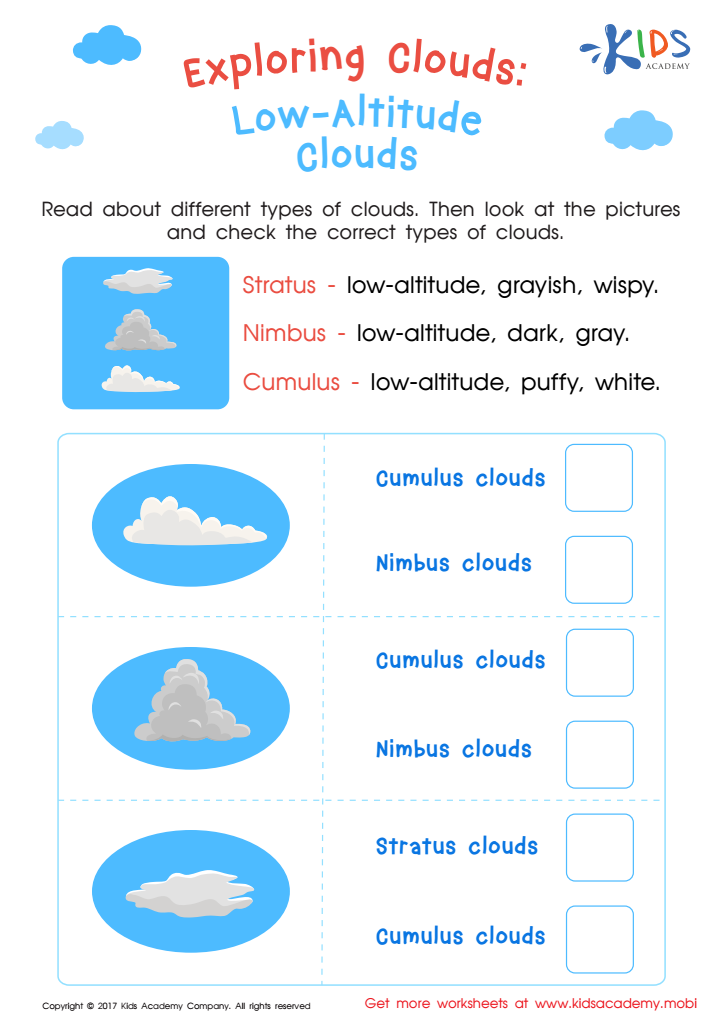
Exploring Clouds: Low Altitude Clouds Printable








Understanding weather is crucial for children aged 5-9, as this knowledge contributes significantly to their overall development and safety. Parents and teachers should prioritize teaching weather concepts to young children for several reasons. Firstly, it helps in fostering curiosity and developing scientific thinking. Children's natural curiosity about the world around them can lead to a better grasp of basic principles of science and nature.
Secondly, understanding weather can promote safety. Young children who know about different weather conditions are better prepared to stay safe. They learn to dress appropriately for various conditions, such as knowing to wear a raincoat in the rain or understanding the importance of sunscreen on sunny days. Moreover, they can recognize severe weather warnings and understand the appropriate actions to take in emergencies, like thunderstorms or tornadoes.
Furthermore, understanding the weather is linked to developing responsible environmental habits. Kids can learn about concepts like climate change early on and realize the importance of taking care of the planet. This awareness can lead to actions like conserving water or reducing waste, helping them develop a lifelong sense of responsibility towards nature.
Finally, weather exploration can be a fun and engaging subject that ties together multiple areas of learning: reading weather charts integrates math skills; describing weather hones language; conducting simple weather experiments stimulates their inquiry-based learning.
In conclusion, understanding weather is not just about knowledge, it's about safety, responsibility, curiosity, and interdisciplinary learning for children aged 5-9.








