Vowel Recognition Worksheets for Ages 5-9 - Page 2
25 filtered results
-
From - To
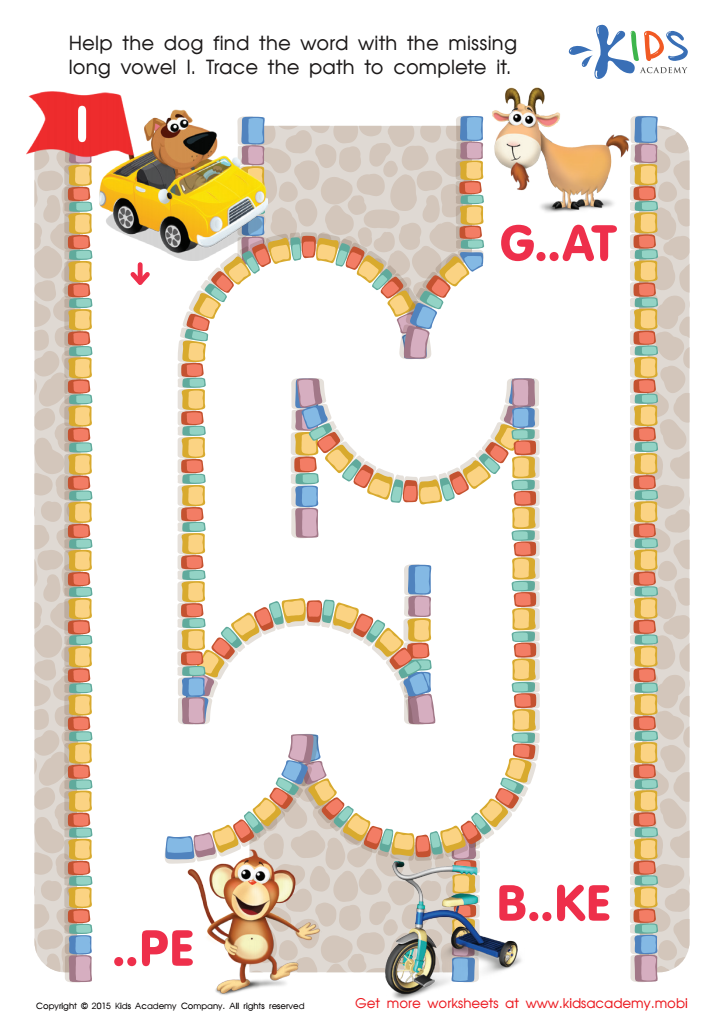
Long Vowel Sound I Worksheet
 Assign to My Students








Vowel recognition is fundamental for children aged 5-9, as it serves as the cornerstone of early literacy. During these formative years, a child's ability to recognize and differentiate vowel sounds significantly impacts their reading development, spelling accuracy, and overall linguistic proficiency.
Phonemic awareness, especially recognizing vowels, enables children to decode words efficiently, facilitating smoother reading experiences. Mastery of vowel sounds aids in blending and segmenting words, which are critical skills for fluent reading. Furthermore, vowels are integral in forming syllables, and understanding their usage helps children grasp the structure of words, enhancing their spelling abilities.
Recognizing vowel sounds also supports vocabulary expansion. When children are familiar with vowels, they can more easily tackle new and complex words, enriching their language and cognitive skills. Additionally, early vowel recognition sets a strong foundation for future learning, especially in mastering advanced phonics, reading comprehension, and even writing.
From a developmental standpoint, building strong early literacy skills, including proficient vowel recognition, has been linked to better academic performance across all subjects. Thus, both parents and teachers have a critical role in fostering these skills through engaging activities, explicit teaching, and consistent practice, laying the groundwork for lifelong learning and success.








