Weather Vocabulary Worksheets for Ages 5-9
5 filtered results
-
From - To
Discover our engaging "Weather Vocabulary Worksheets" designed specifically for ages 5-9! These interactive resources help young learners expand their vocabulary related to different weather conditions. With fun illustrations and activities, children can easily grasp concepts like sunny, rainy, cloudy, and snowy. Worksheets promote reading comprehension, spelling, and critical thinking skills, making learning both educational and enjoyable. Ideal for classroom or home use, our materials cater to diverse learning styles, ensuring every child can explore the fascinating world of weather. Empower your child's learning journey today with our freshly designed worksheets that make mastering weather vocabulary a breeze!
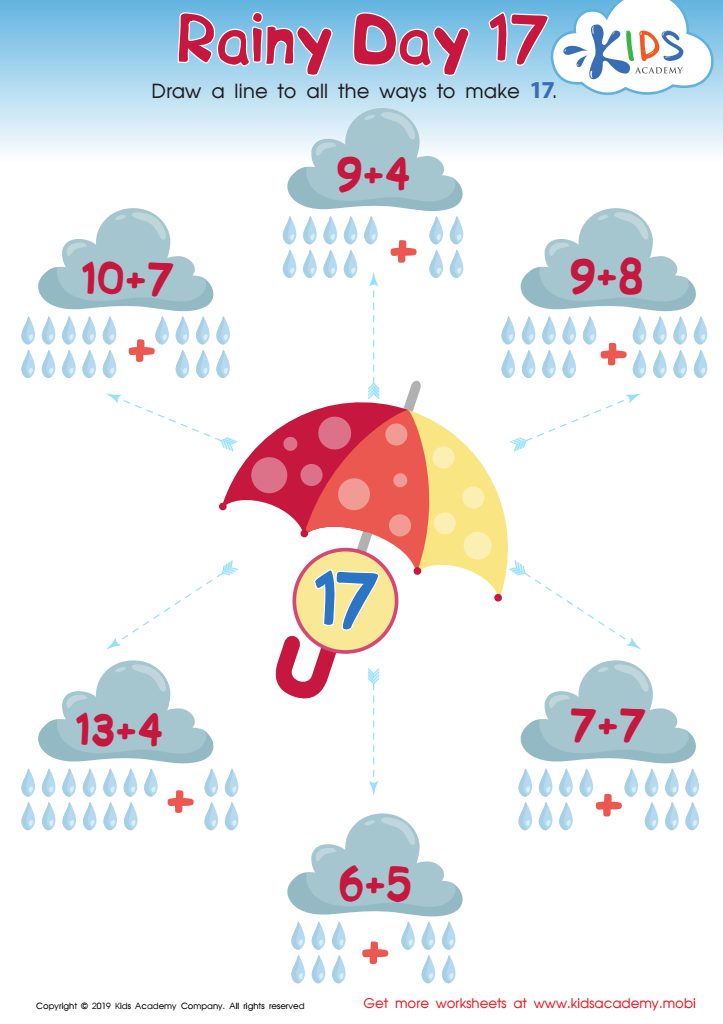
Rainy Day 17 Worksheet
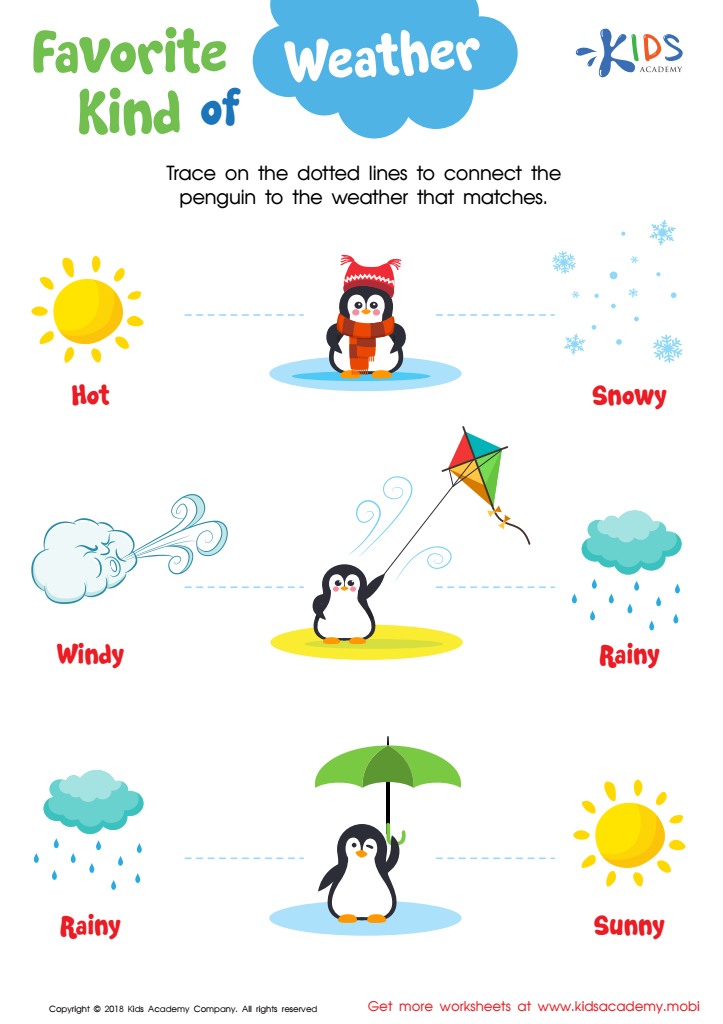
Favorite Kind of Weather Worksheet
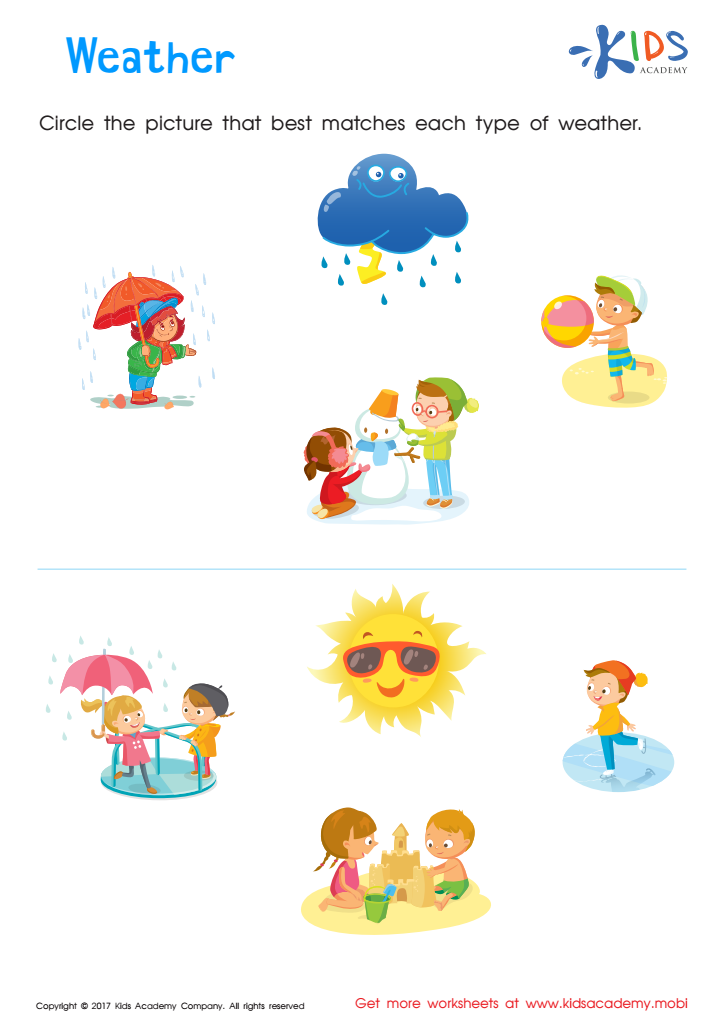
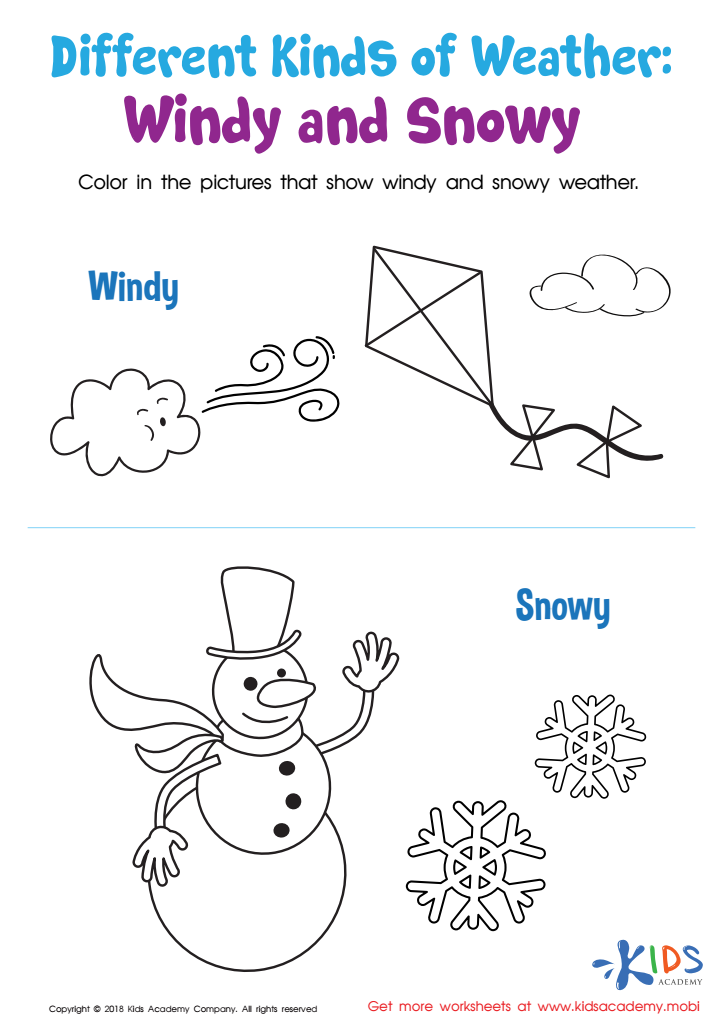
Different Kinds of Weather: Windy and Snowy Worksheet
 Assign to My Students
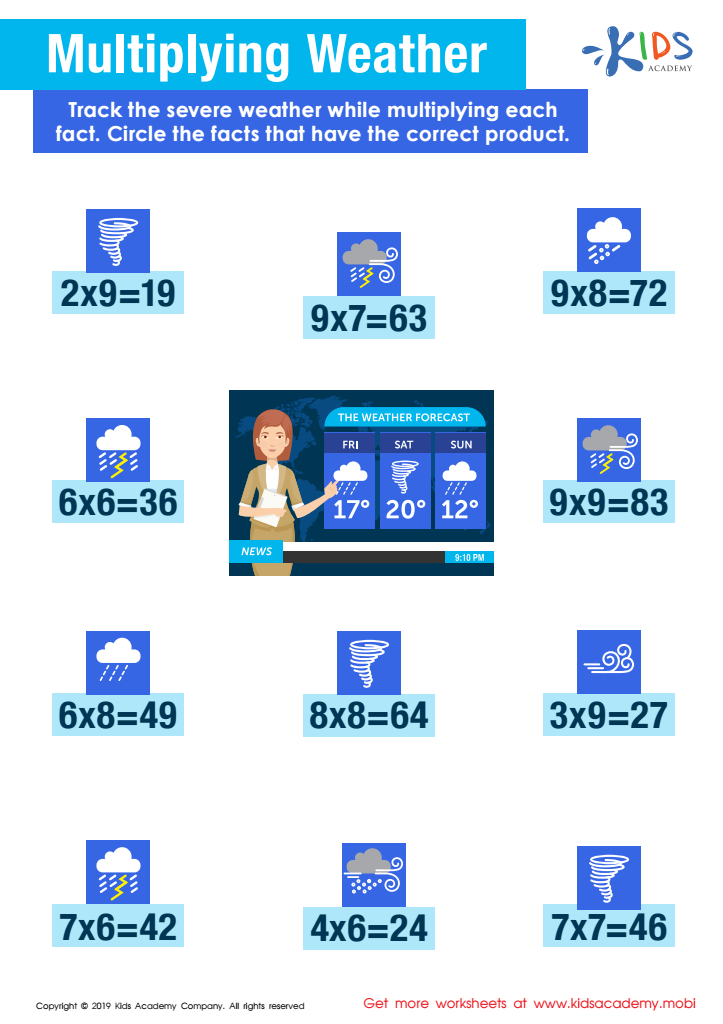
Multiplying Weather Worksheet








Weather vocabulary is crucial for children aged 5-9 as it lays the foundation for their understanding of the natural world and enhances their observational skills. By learning specific terms like "precipitation," "thermometer," and "forecast," children can articulate their experiences and feelings about different weather conditions, fostering effective communication skills.
Building a robust weather vocabulary also cultivates scientific literacy. At this age, children develop curiosity about their surroundings; understanding weather concepts encourages inquiry and exploration. Using terms related to weather helps them engage in discussions, ask questions, and participate in problem-solving.
Furthermore, weather vocabulary promotes safety awareness. As children learn to recognize weather patterns and terminology, they become more equipped to respond to various conditions, such as thunderstorms or extreme heat. This knowledge can empower them to make informed choices, such as dressing appropriately or knowing when to stay indoors.
Finally, integrating weather vocabulary into the curriculum can enhance cross-disciplinary learning. Weather can connect science, mathematics (through measurements), and even art (through weather-inspired projects). Emphasizing weather vocabulary not only enriches their education but also nurtures a lifelong appreciation for the environment. Thus, parents and teachers should prioritize teaching weather vocabulary to support comprehensive child development.








