Matching skills 2D Shapes Worksheets for Ages 5-9
5 filtered results
Difficulty Level
Grade
Age
-
From - To
Subject
Activity
Standards
Explore our engaging 2D Shapes Matching Skills Worksheets designed for children aged 5-9. These interactive resources help young learners develop essential shape recognition and matching abilities through fun activities. Ideal for both classroom and home learning environments, our worksheets feature vibrant illustrations of common 2D shapes to captivate children’s attention while reinforcing their understanding of geometry. From circles and squares to triangles and rectangles, kids will enjoy matching shapes in various interactive exercises. Perfect for building confidence in math and honing fine motor skills, these worksheets provide an effective and enjoyable way to enhance your child’s learning journey.
Favorites
With answer key
Interactive
Shape Connections Worksheet
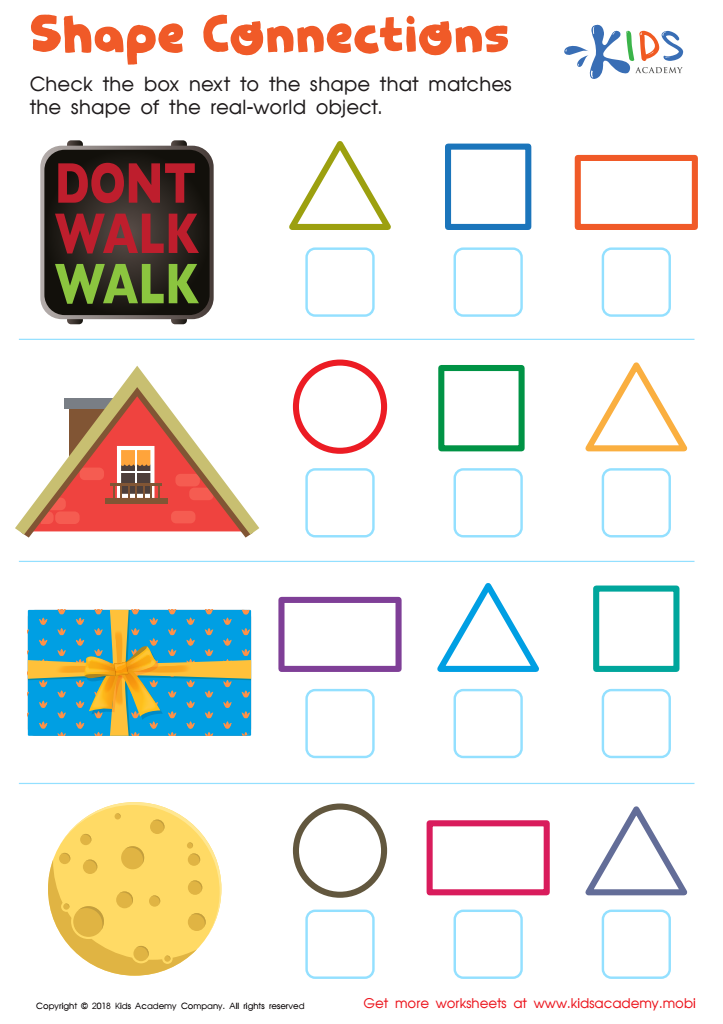
Geometric shapes are all around us and this fun worksheet brings it to life. Kids will match real-world pictures with the corresponding basic shapes, connecting how math is used in various aspects of daily life. A great way to reinforce these concepts!
 Assign to My Students
Shape Connections Worksheet
Worksheet


Matching Shapes Worksheet
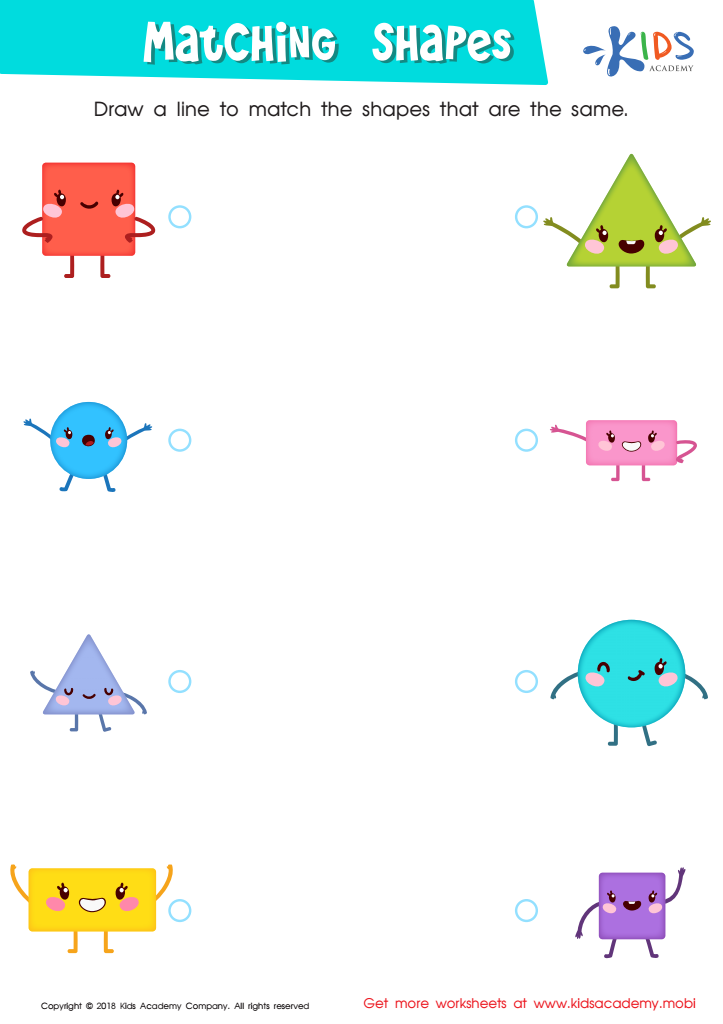
Introduce your students to the 4 most common shapes: squares, triangles, rectangles and circles. When they progress, show them other shapes like rhombuses and parallelograms. Use this matching shapes worksheet to help them match two identical shapes. Print out the worksheet and instruct them to draw lines connecting them.
Matching Shapes Worksheet
Worksheet
Shapes Matchup Worksheet
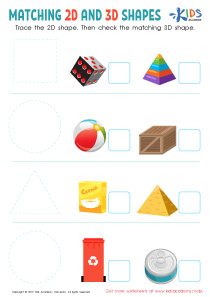
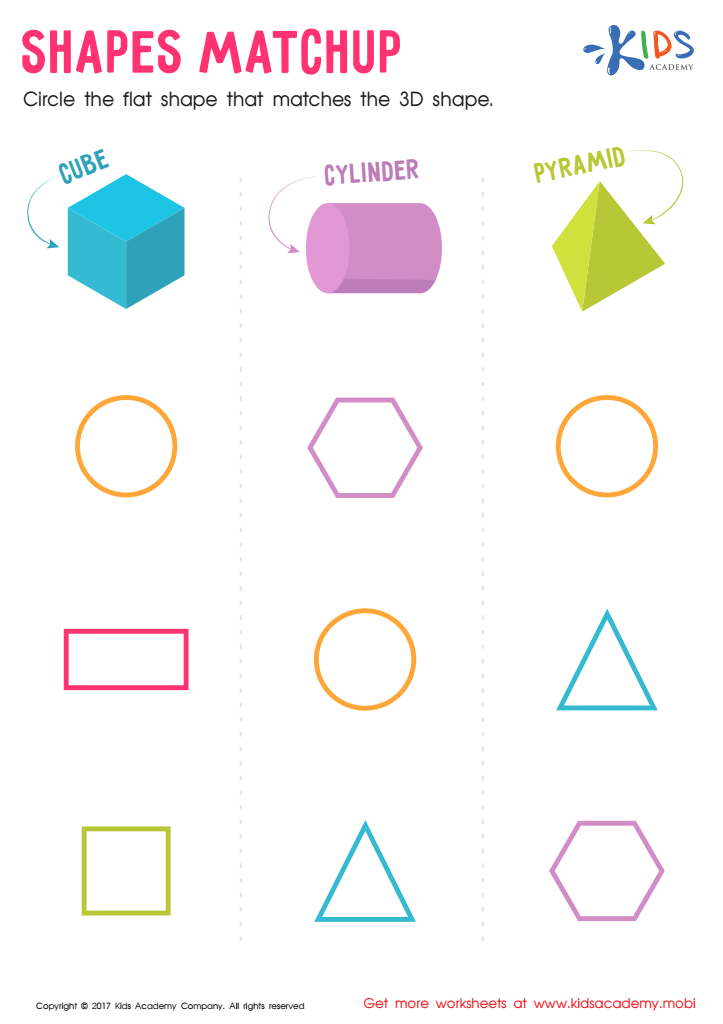
Explain to your kids that 3D shapes are the view from another angle, offering depth, height and width. This worksheet encourages them to match the 3D shapes to their 2D form. They can circle the flat shapes that match the 3D shapes in the printout.
Shapes Matchup Worksheet
Worksheet
Shapes Worksheet
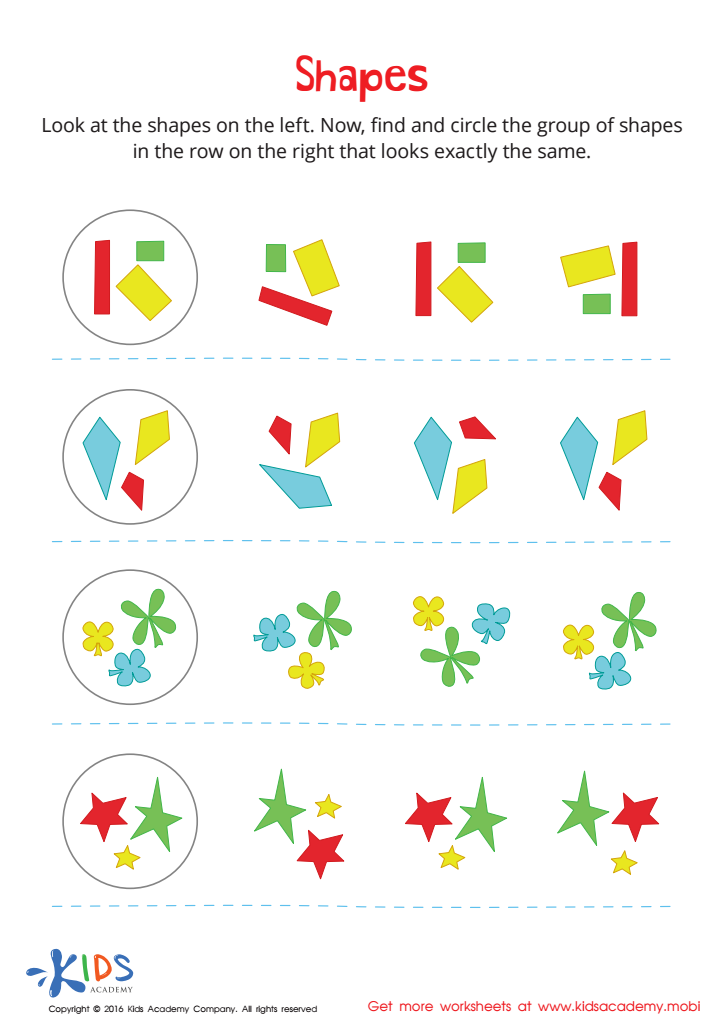
This fun worksheet will challenge your child to recognize tricky patterns, sort through similar ones, and create strategies to get the right answer. It'll also help them to strengthen problem-solving skills and build confidence. With more challenging tasks, your child will be ready to tackle higher level math and sequencing skills.
Shapes Worksheet
Worksheet
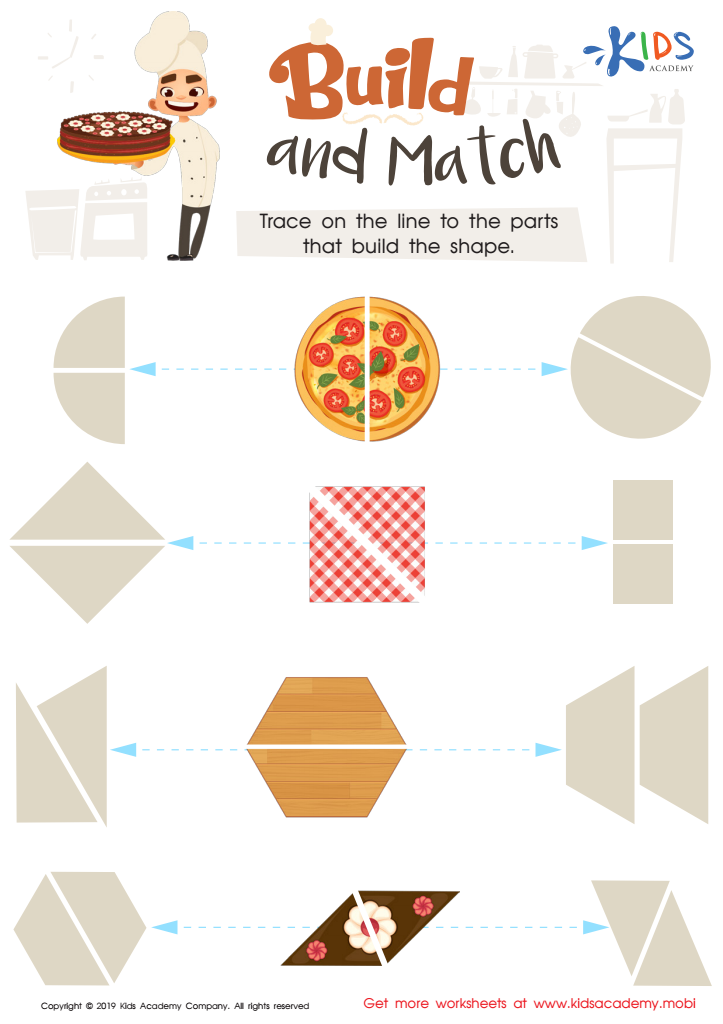
Build and Match Worksheet
This bright worksheet will get your kids excited to learn more! Use the colorful images and shapes to engage them and have them trace the parts to build the shape. This fun exercise will help them retain the lessons and make it an enjoyable experience.
Build and Match Worksheet
Worksheet
Join Kids Academy for Free
Who is primarily going to use this learning content?








Matching skills for 2D shapes is crucial for children aged 5-9, as it forms the foundation for their spatial reasoning and critical thinking abilities. At this age, children are developing essential cognitive skills, and understanding shapes is a key component of their overall mathematical comprehension.
Firstly, learning about 2D shapes helps children recognize and categorize the world around them. This understanding aids in everyday decision-making, fostering essential skills for reading maps, identifying patterns, and engaging in artwork. Additionally, mastery of shape recognition supports future mathematical concepts, such as symmetry, fractions, and geometry, laying a solid groundwork for higher-order math skills.
Moreover, engaging activities that involve matching shapes enhance fine motor skills and attention to detail, promoting hand-eye coordination and focus. Teachers and parents can turn these exercises into fun challenges, increasing motivation and reinforcing a positive learning environment.
Ultimately, the integration of 2D shape matching in daily activities not only creates opportunities for playful learning but also nurtures a child’s confidence in their abilities, empowering them to approach more complex challenges in the future. By prioritizing these skills, adults play a critical role in fostering a child's cognitive and emotional development during their formative years.