Reading comprehension 2D Shapes Worksheets for Ages 5-9
4 filtered results
Difficulty Level
Grade
Age
-
From - To
Subject
Activity
Standards
Enhance your child’s reading and math skills with our engaging Reading Comprehension 2D Shapes Worksheets for ages 5-9! These expertly designed worksheets combine fun narratives and colorful illustrations, guiding young learners through the exciting world of 2D shapes. Each page offers intriguing stories to boost reading comprehension while seamlessly integrating activities on identifying, comparing, and understanding circles, triangles, squares, and more. Perfect for classrooms or at-home learning, our worksheets foster critical thinking and shape recognition, making learning both enjoyable and effective. Help your child master fundamental concepts with these dynamic, integrated activities tailored for young minds!
Favorites
With answer key
Interactive
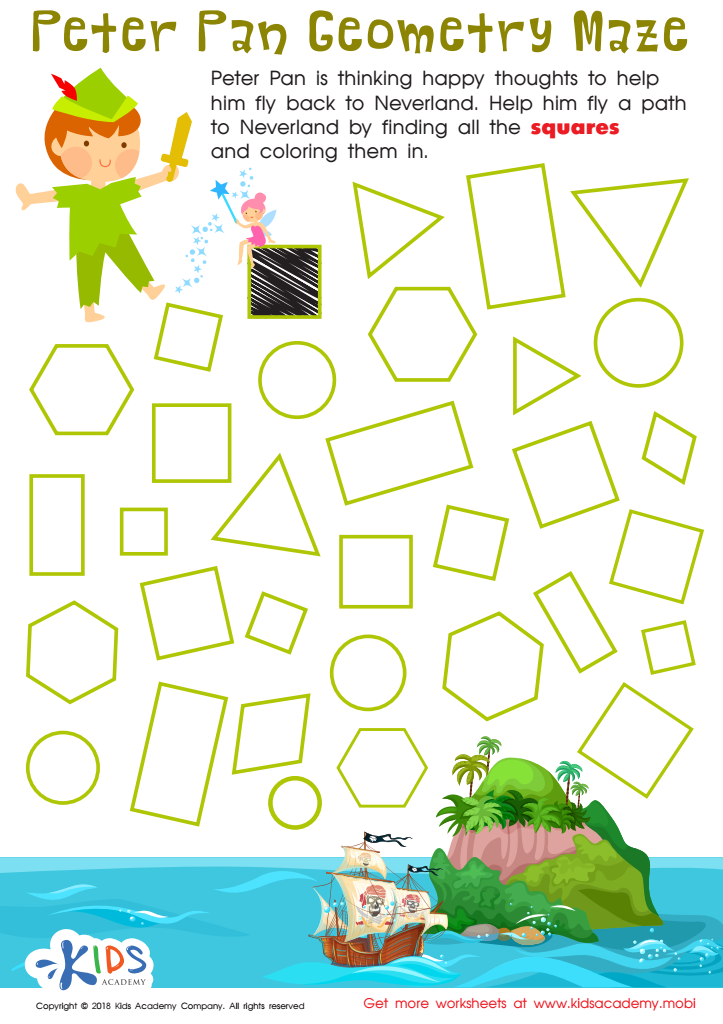
Peter Pan Worksheet
Kindergarteners can join Peter Pan on an adventure to Neverland! They can help him by coloring squares to create a path, strengthening their shape identification skills in a fun maze. Let the journey begin!
 Assign to My Students
Peter Pan Worksheet
Worksheet











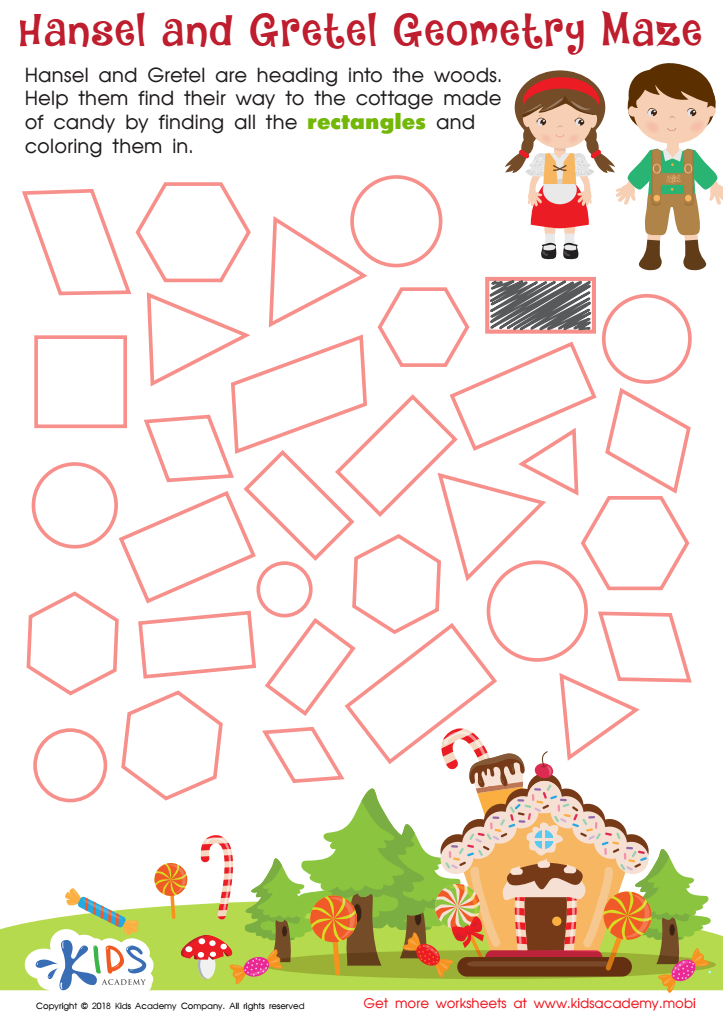
Hansel and Gretel Geometry Maze Worksheet
Your kids will have fun helping Hansel and Gretel get through a colorful forest of shapes! This free PDF reinforces the properties of rectangles, building skills in visual discernment and laying the foundations for geometry. They'll be too busy enjoying the story to realize they're learning!
Hansel and Gretel Geometry Maze Worksheet
Worksheet
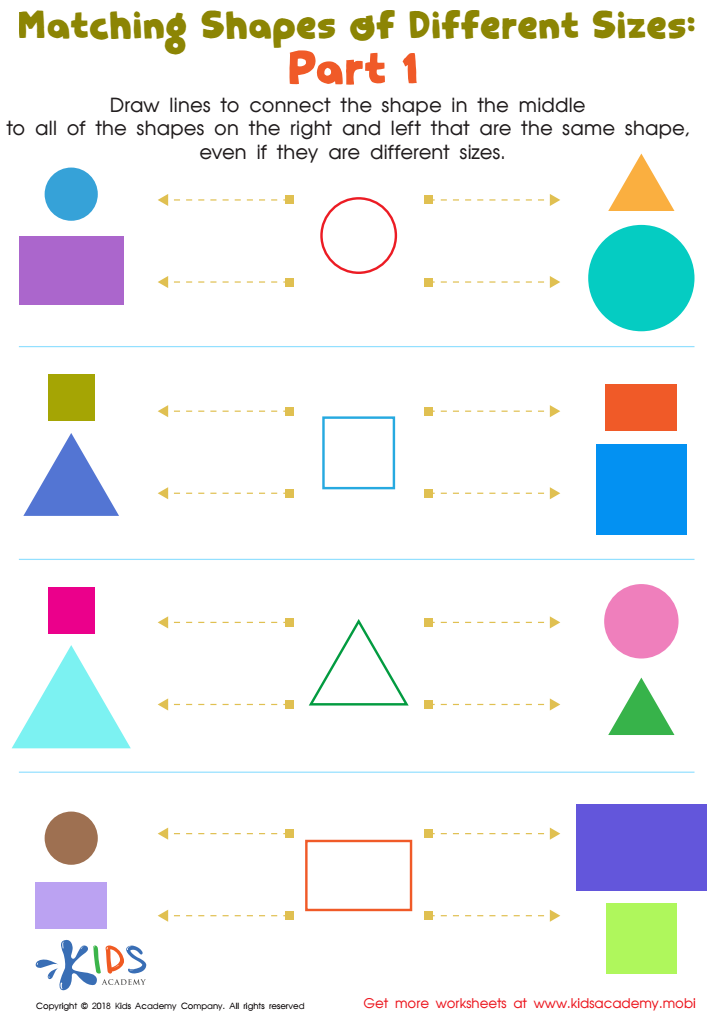
Geometry: part 1 Worksheet
Test your student's shape knowledge with this beginner-level geometry worksheet. This fun, challenging printable PDF will sharpen spacial recognition skills as they match shapes of different sizes. Get started now!
Geometry: part 1 Worksheet
Worksheet
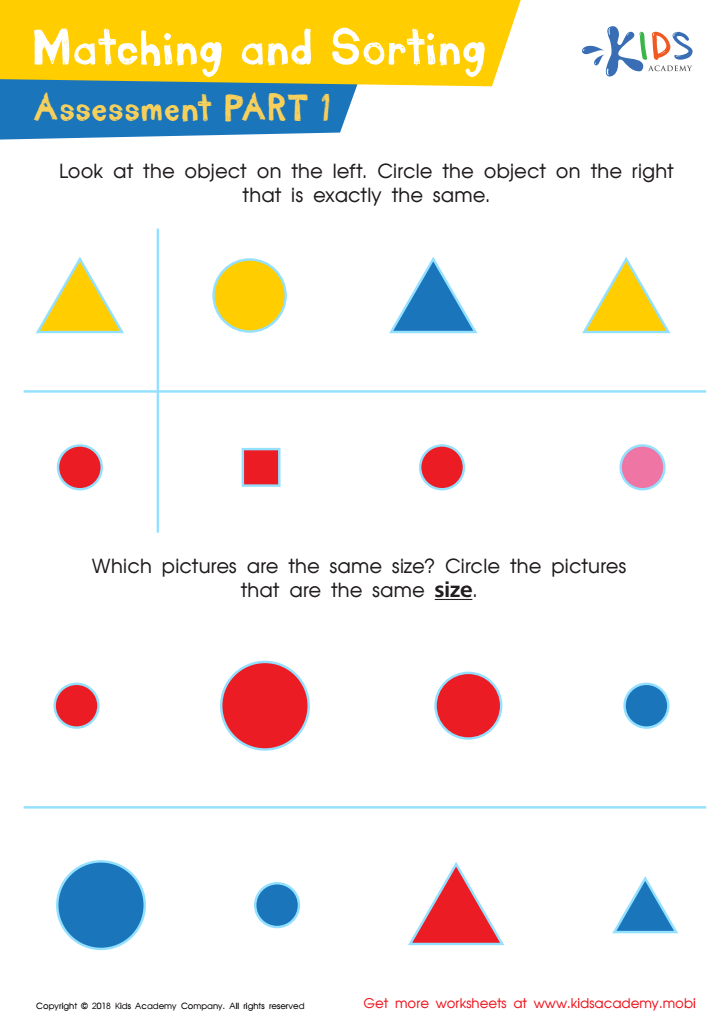
Matching and Sorting for Kindergarten: Assessment 1 Worksheet
Kids can sharpen their visual discrimination skills and analyze properties of shapes with this free downloadable worksheet. They'll identify color, size, shape, and symmetry, working with bright primary colors. This helps build a strong geometric foundation, learning to identify shape attributes.
Matching and Sorting for Kindergarten: Assessment 1 Worksheet
Worksheet
Join Kids Academy for Free
Who is primarily going to use this learning content?








Reading comprehension and understanding 2D shapes are fundamental skills for children aged 5-9 that set the groundwork for future learning.
Reading comprehension represents a child's ability to understand and interpret written material. Strong reading comprehension skills are crucial because they enhance overall communication abilities, boosting vocabulary, improving understanding of world concepts, and promoting critical thinking. When children develop these skills early, they are better prepared for academic success. Parents and teachers should nurture this ability by engaging children with diverse and interesting reading materials, encouraging them to ask questions, and discussing stories to deepen their understanding.
Similarly, recognizing and understanding 2D shapes is a core component of early math education. Knowledge of shapes not only helps children describe the physical world but also lays the foundation for geometry—a vital branch of math. Mastery of 2D shapes aids spatial awareness, problem-solving, and logical thinking. It also has practical applications, such as identifying everyday objects, understanding symmetry and patterns, and comprehending more complex mathematical concepts down the line.
By prioritizing reading comprehension and 2D shape recognition, parents and teachers equip children with essential skills that support cognitive development, academic readiness, and critical life competencies. Investing in these areas fosters well-rounded early education, paving the way for lifelong learning.