Problem-Solving Skills Adding Up to 5 Worksheets for Ages 5-9 - Page 2
37 filtered results
-
From - To
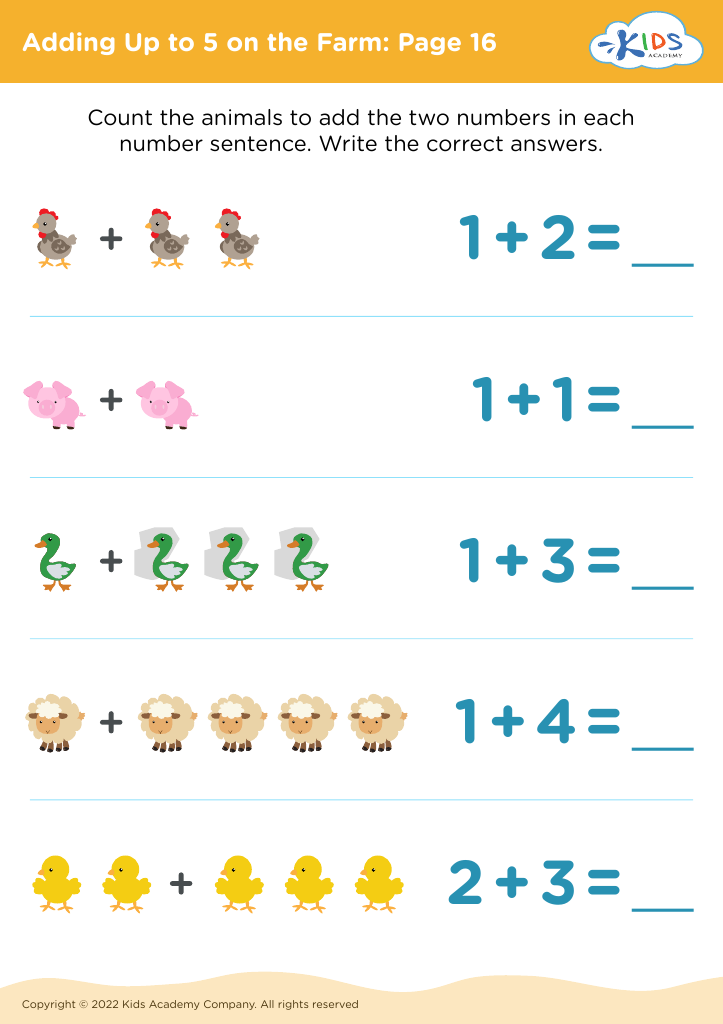
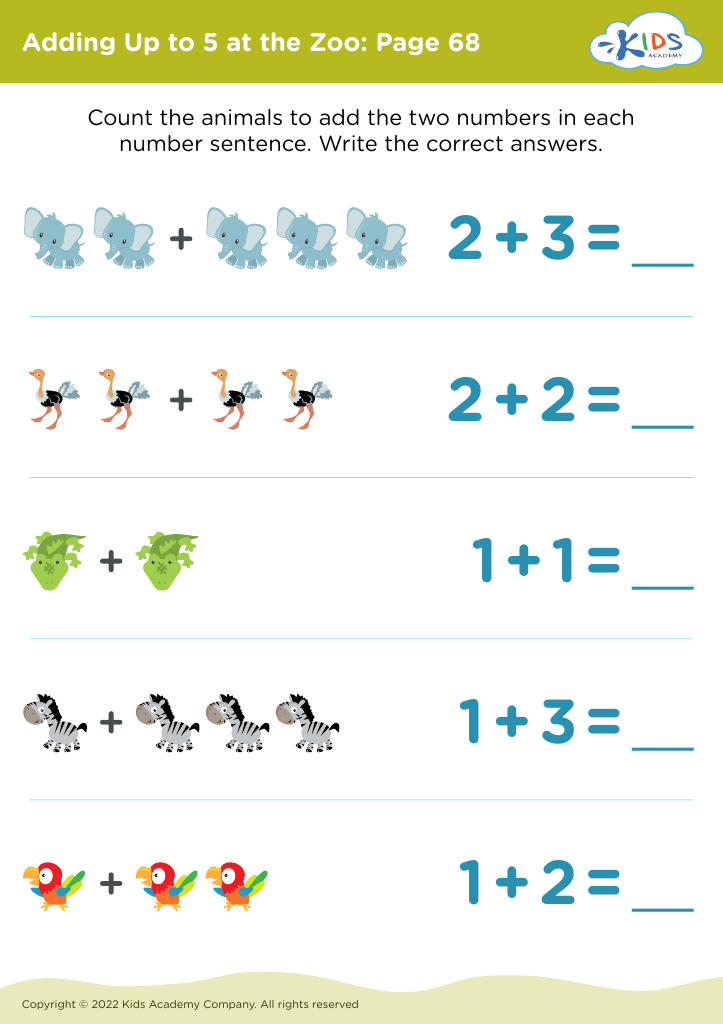
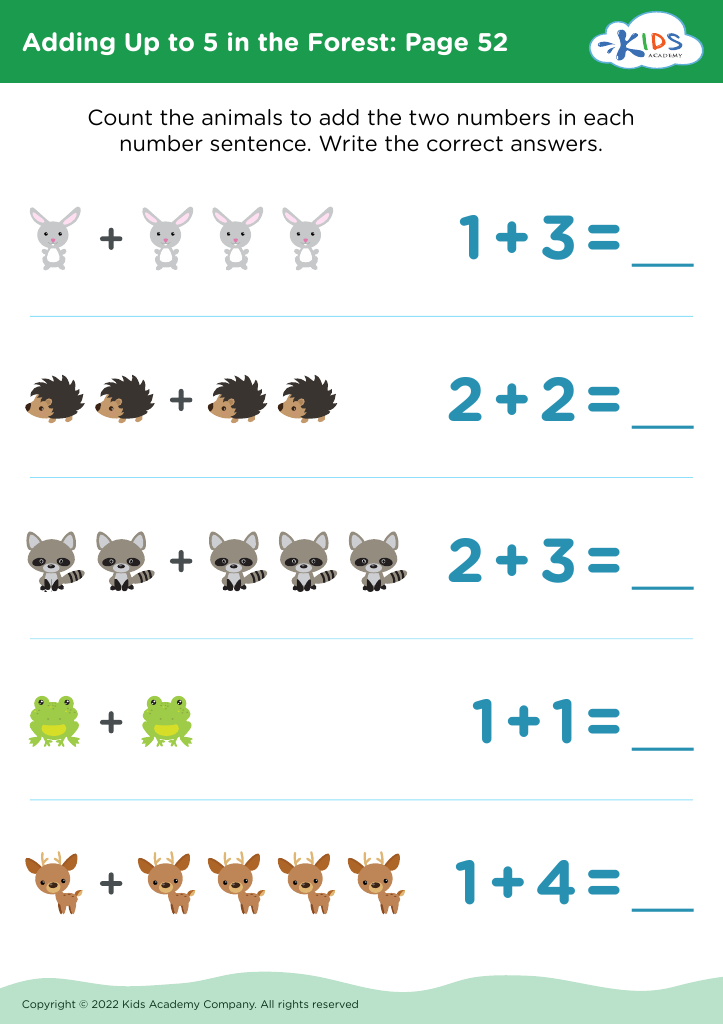
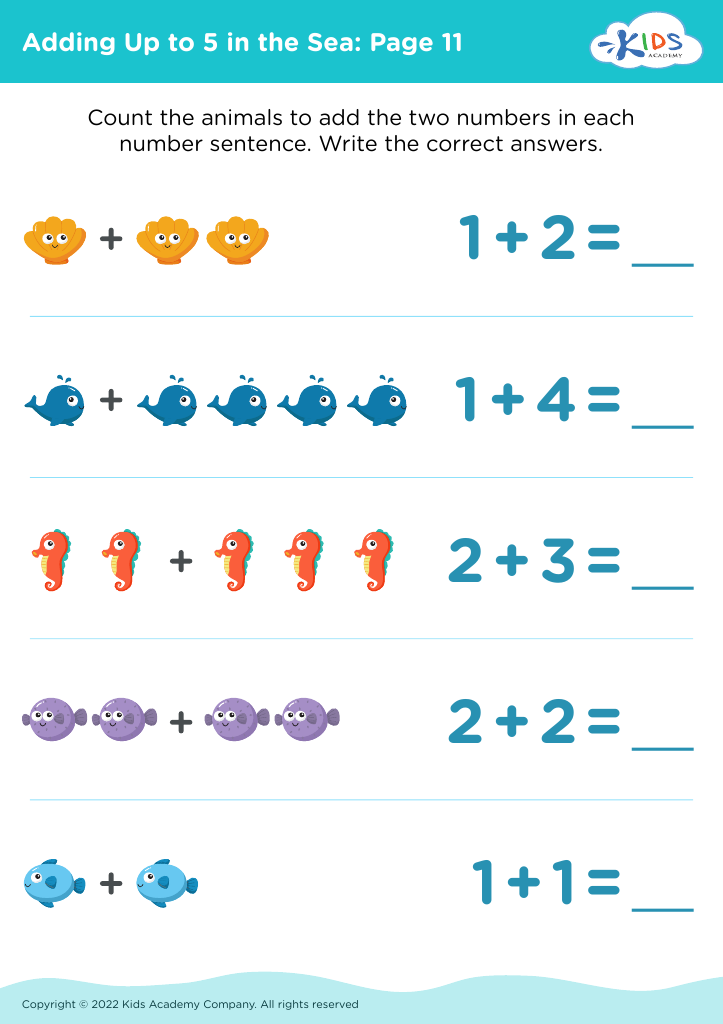
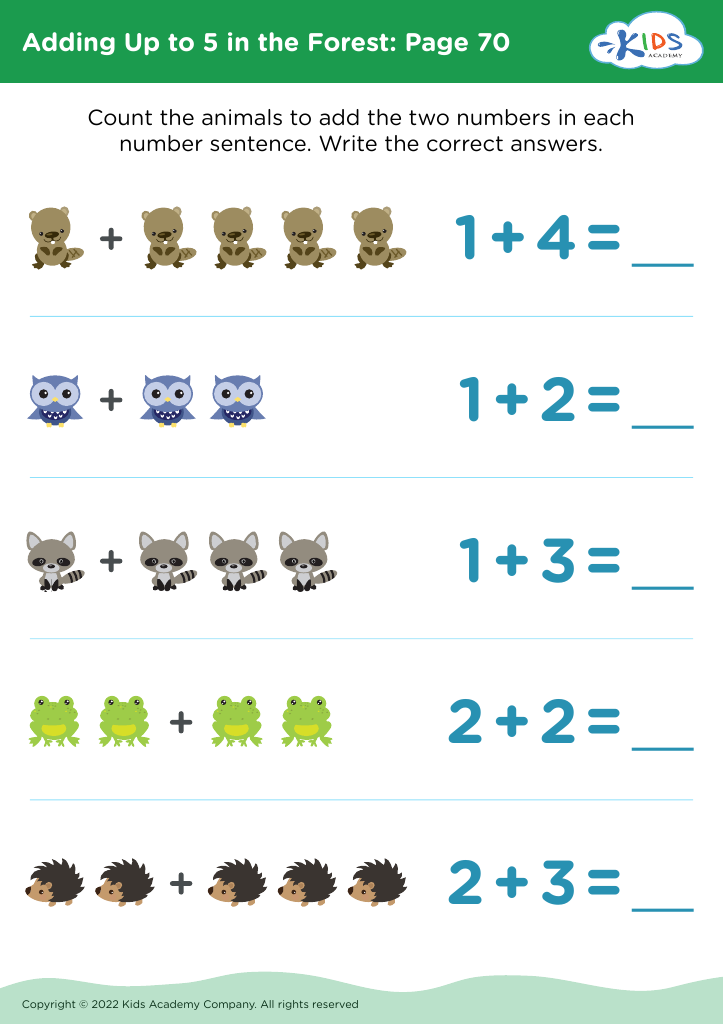
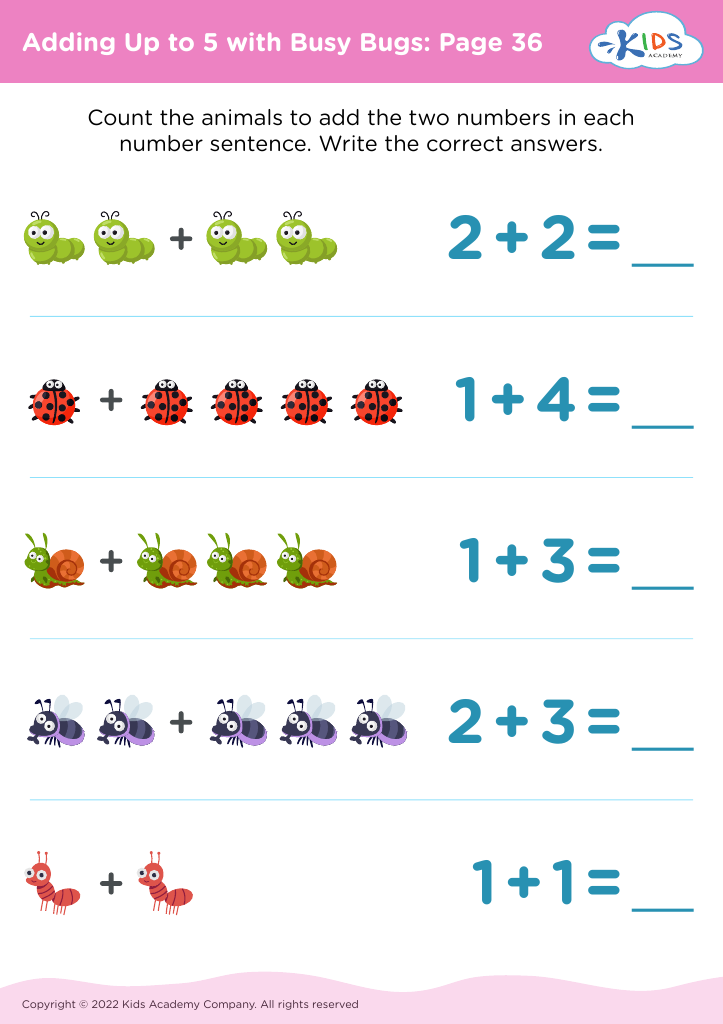
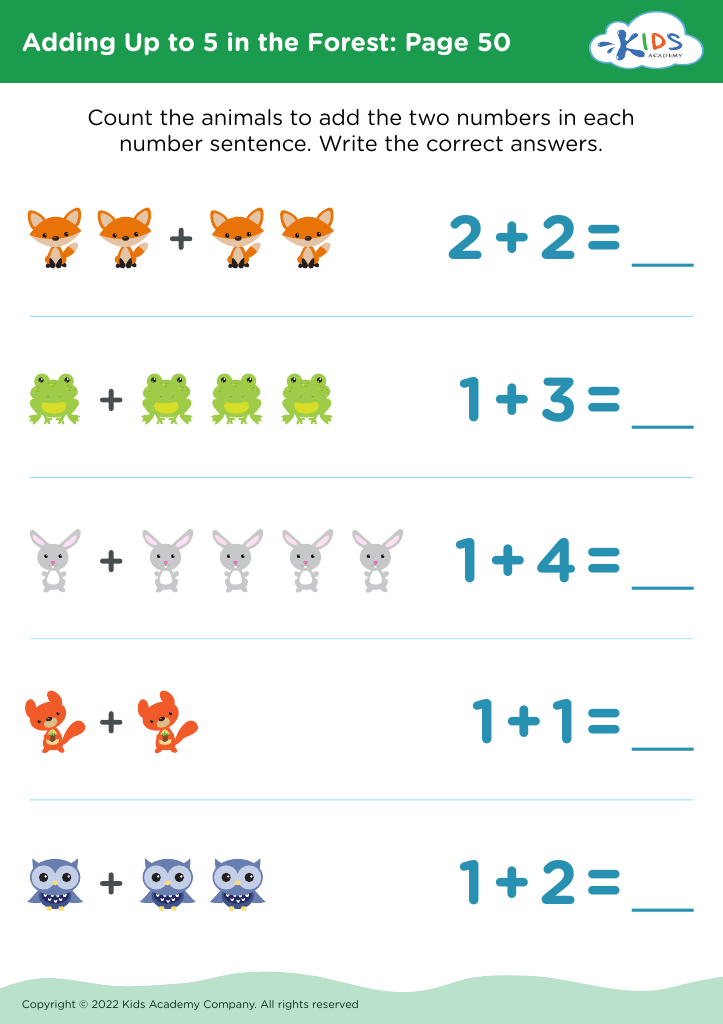
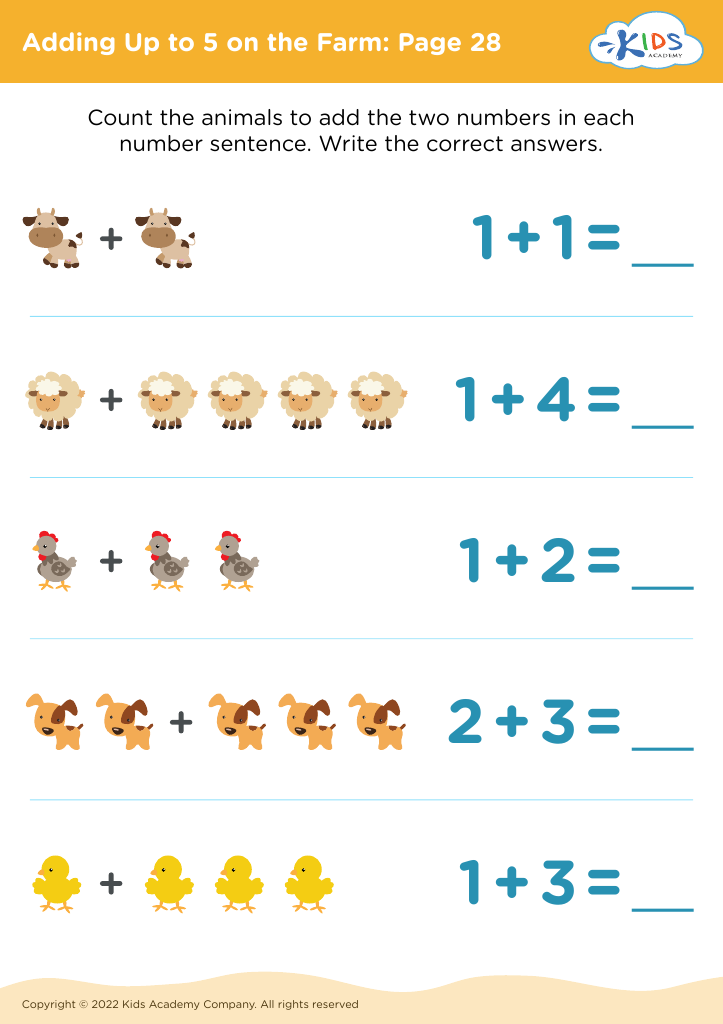
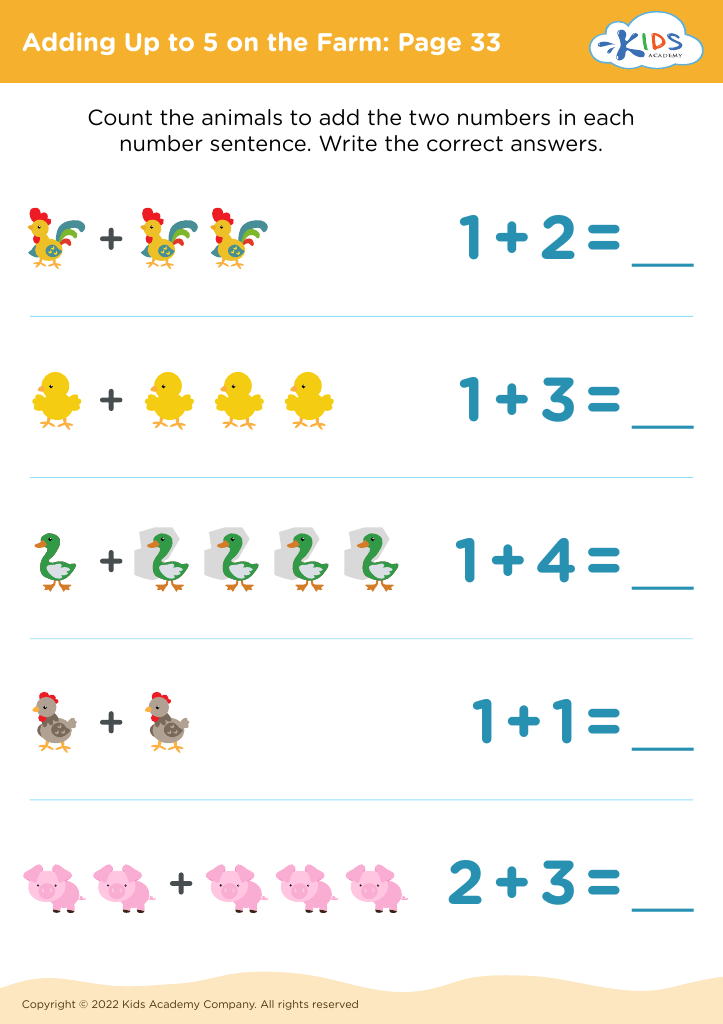
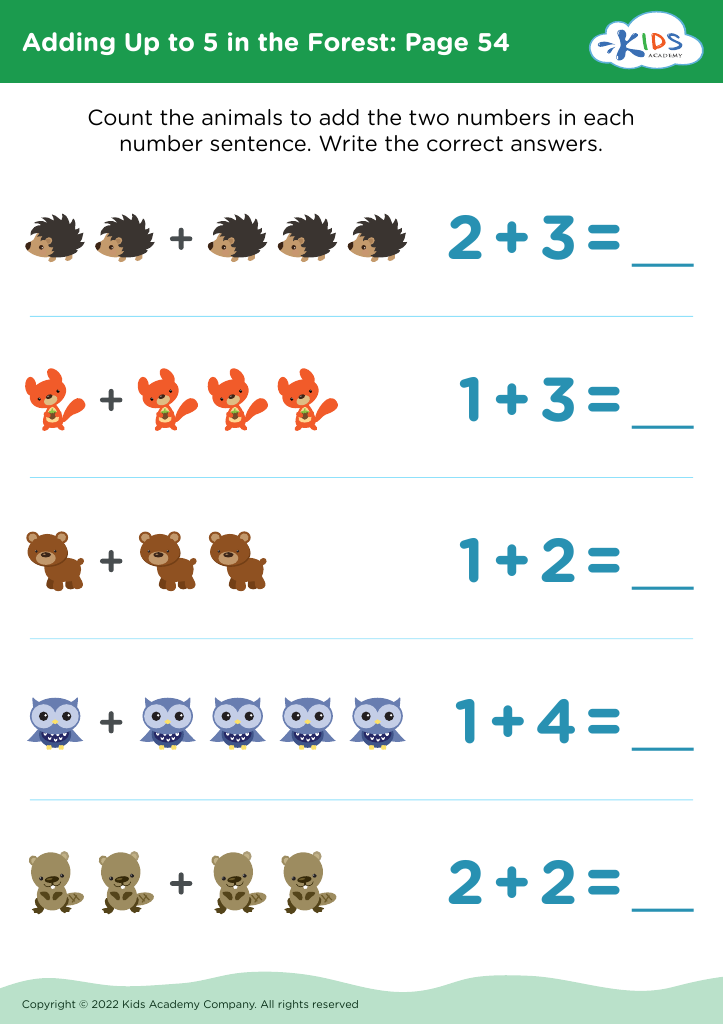
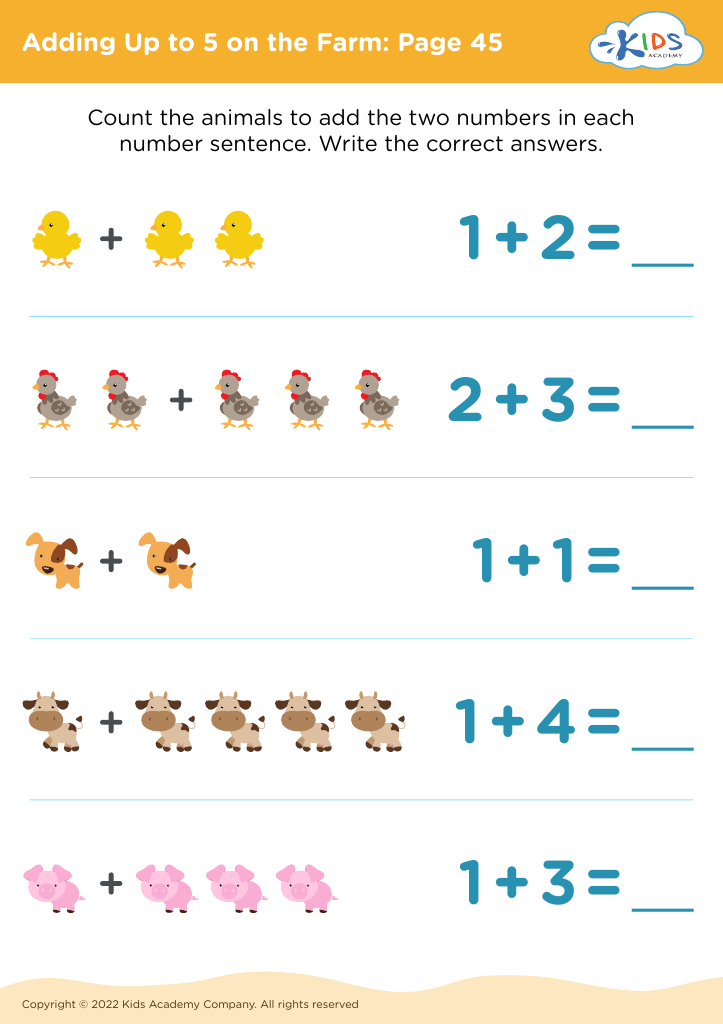
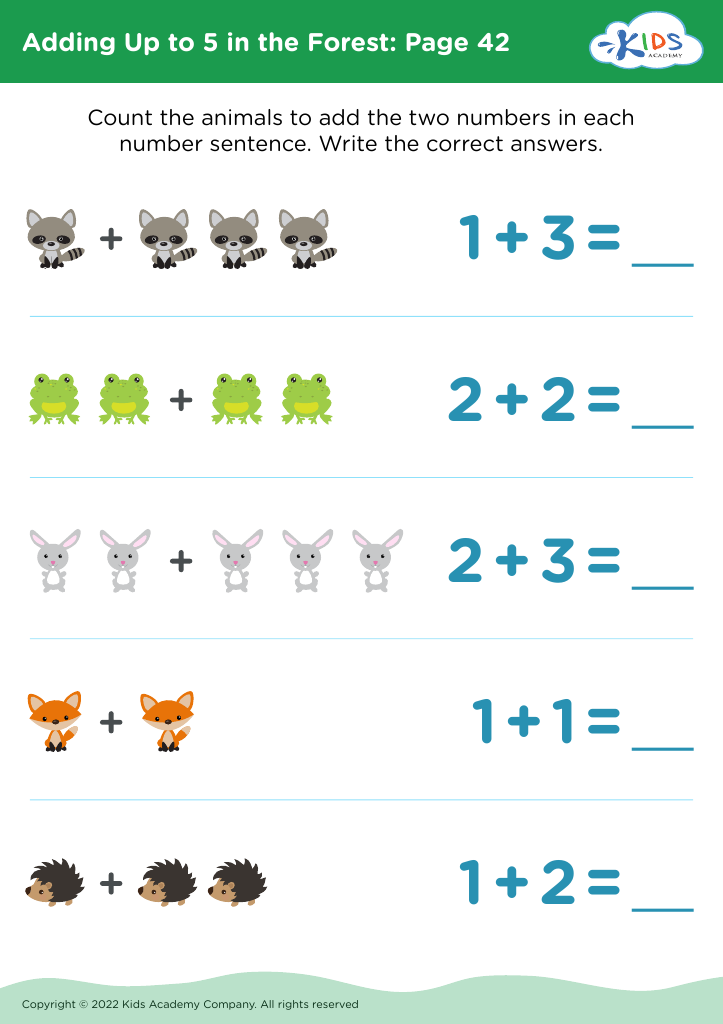
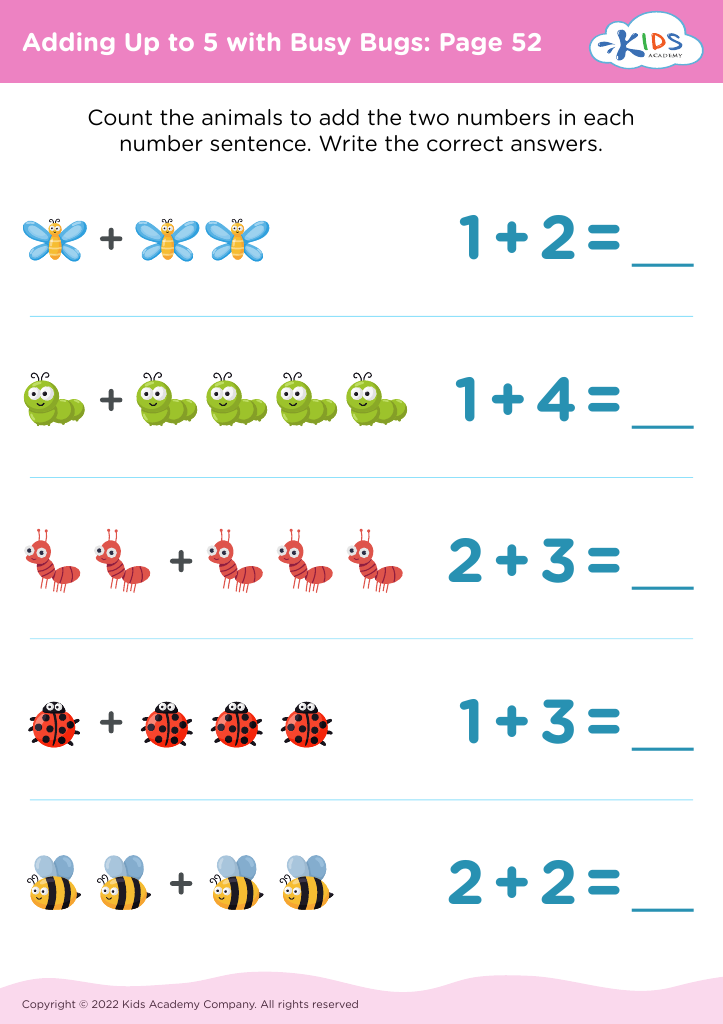








Problem-solving skills are crucial for children aged 5-9, particularly when it comes to basic math concepts like addition up to 5. Developmentally, this age is a key time for cognitive growth, where children begin to make sense of the world around them. Learning to solve simple problems involving addition lays a foundation for critical thinking and analytical skills that they will use throughout their educational journey.
For parents and teachers, fostering these skills can lead to greater confidence in a child's mathematical abilities and enable them to tackle more complex problems in the future. Engaging with problem-solving scenarios encourages creativity and resilience, teaching children that obstacles can be seen as challenges rather than barriers.
Moreover, mastering the concept of addition up to 5 equips children with essential life skills, as they learn to evaluate situations, follow logical steps, and strategize. Such practical applications reinforce a positive attitude towards math and learning in general.
Ultimately, when parents and teachers prioritize teaching problem-solving in a fun and engaging way, they help cultivate a love of learning, enhance cognitive development, and prepare children not just for school, but for life. This investment in early math skills pays off with long-term academic success.








