Understanding quantity Adding Up to 5 Worksheets for Ages 5-9
17 filtered results
-
From - To
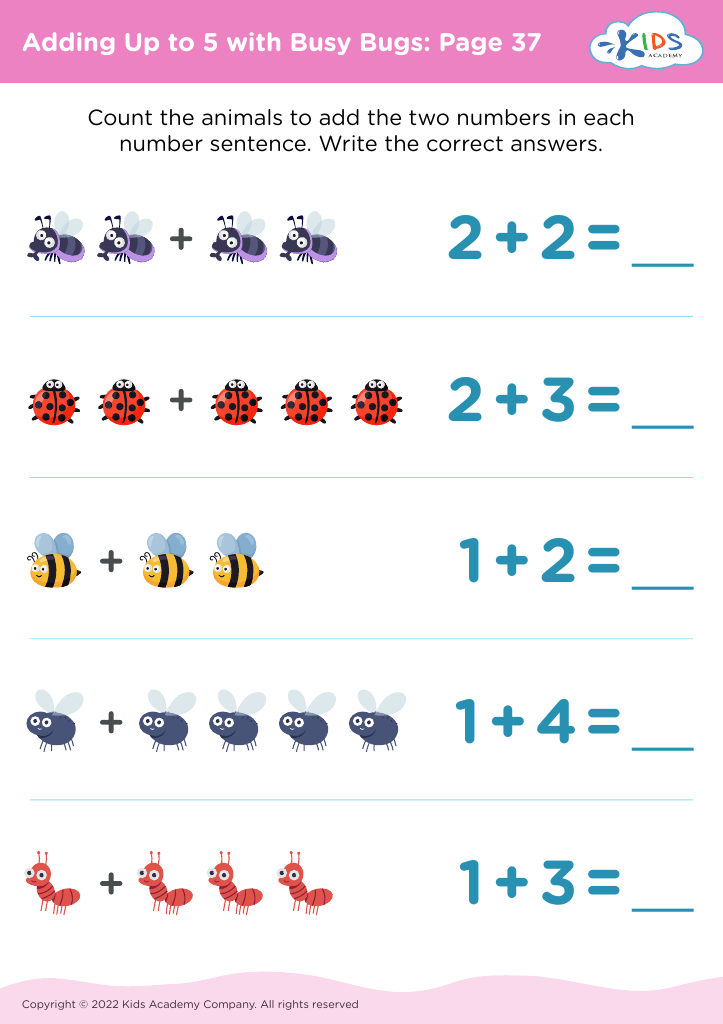
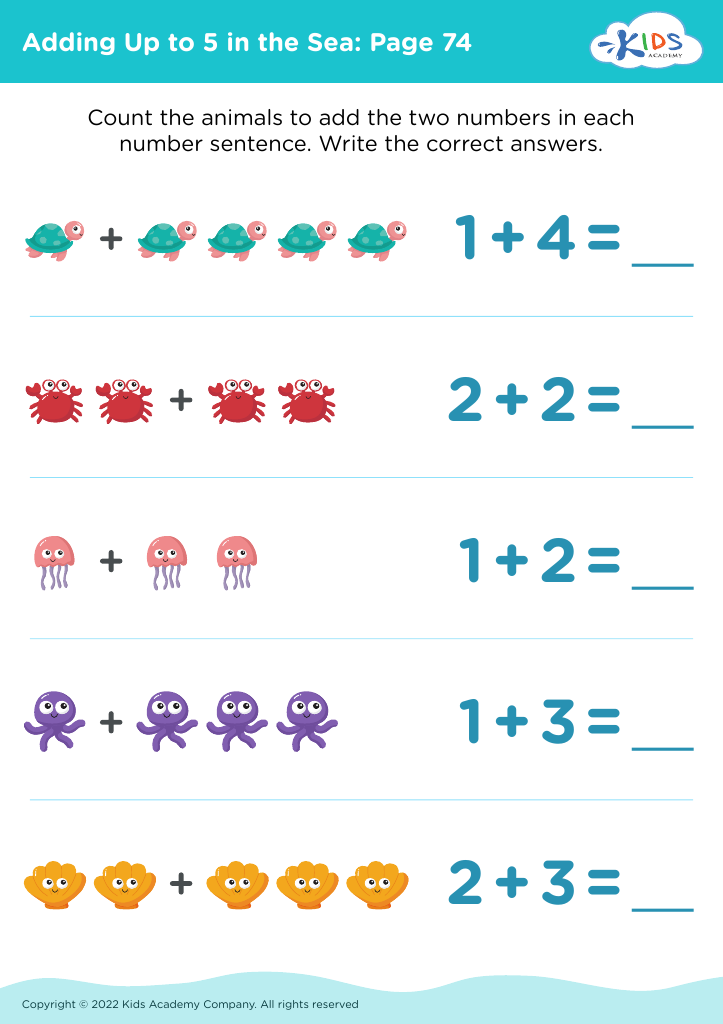
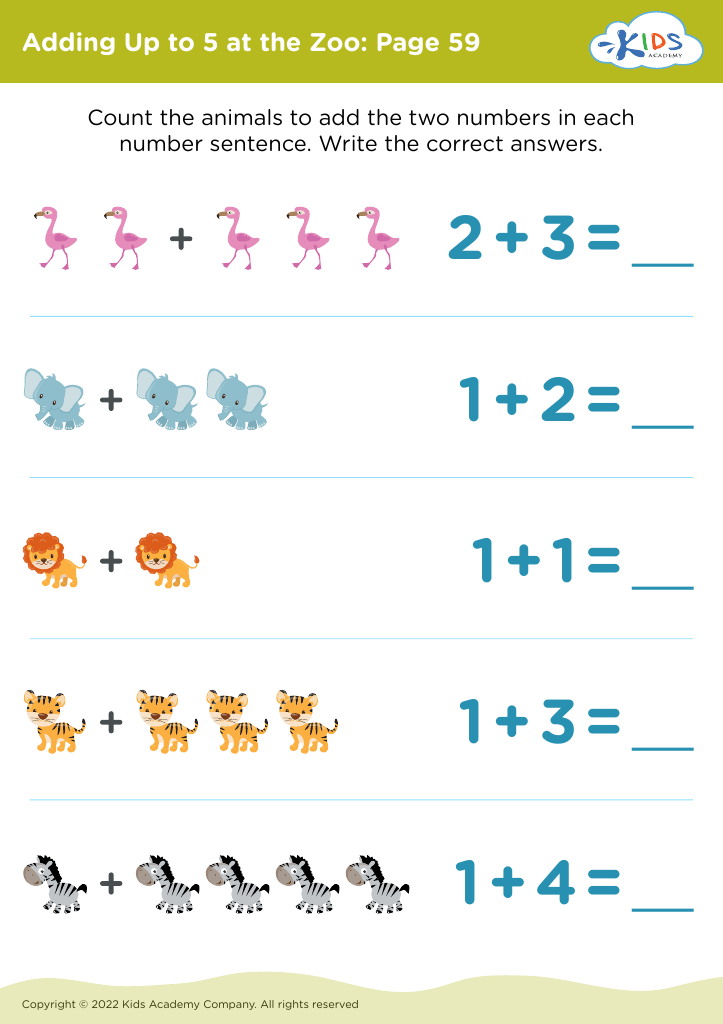
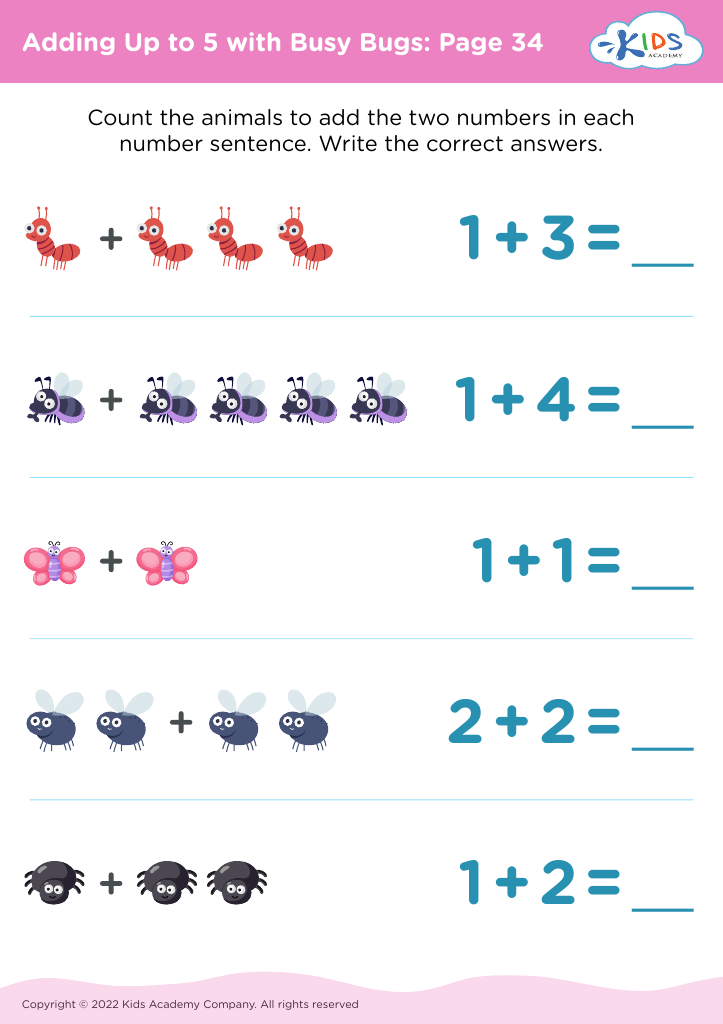
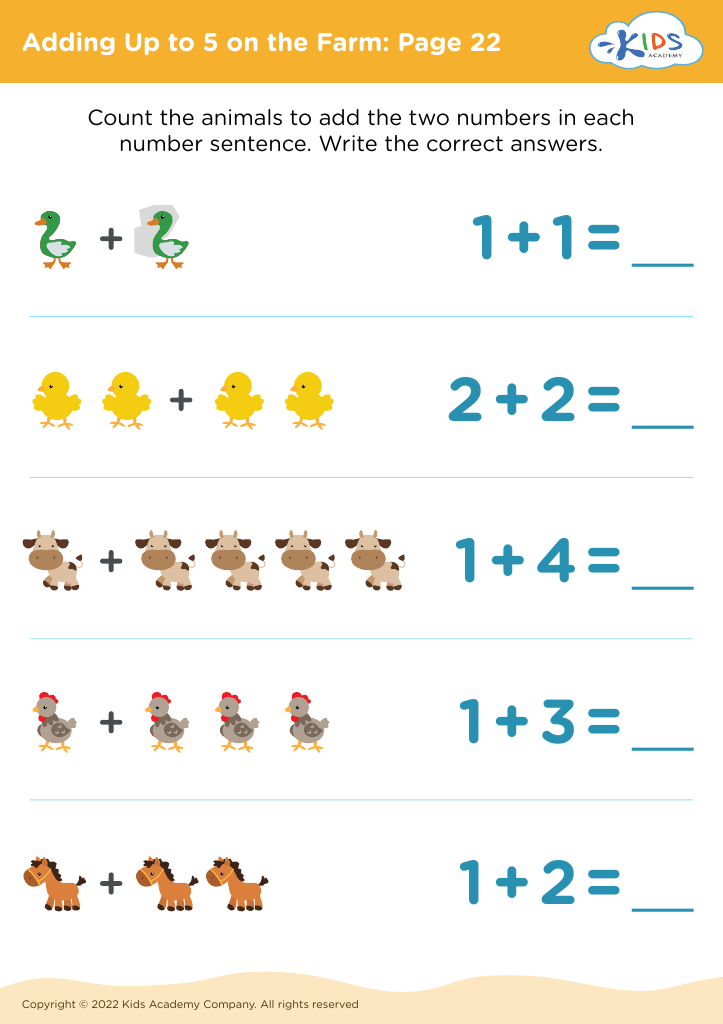
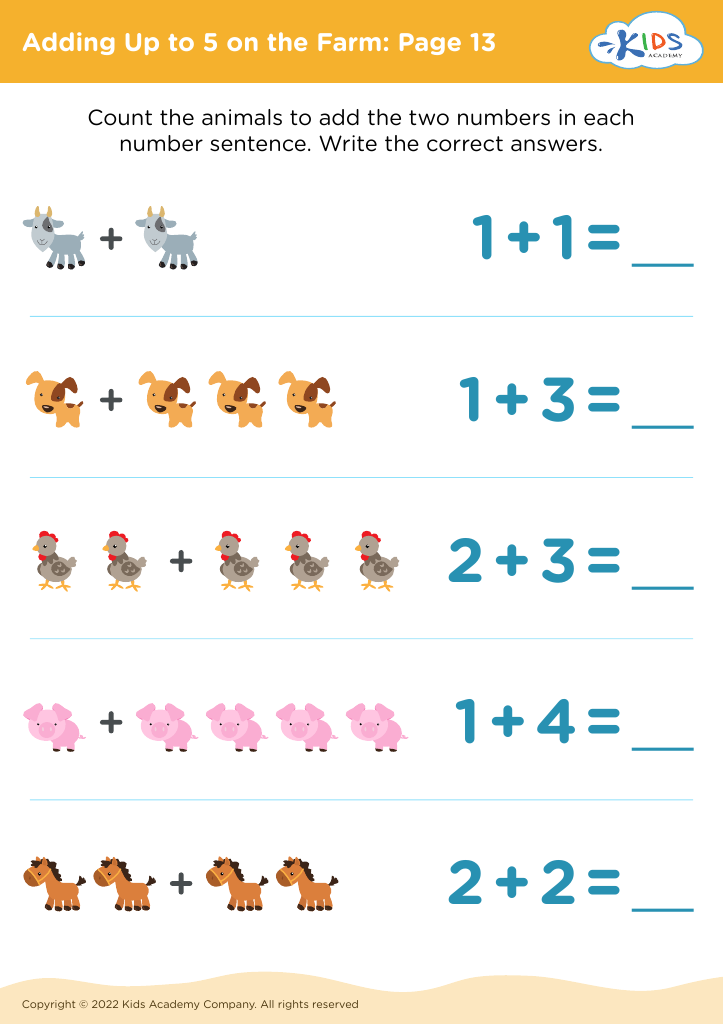
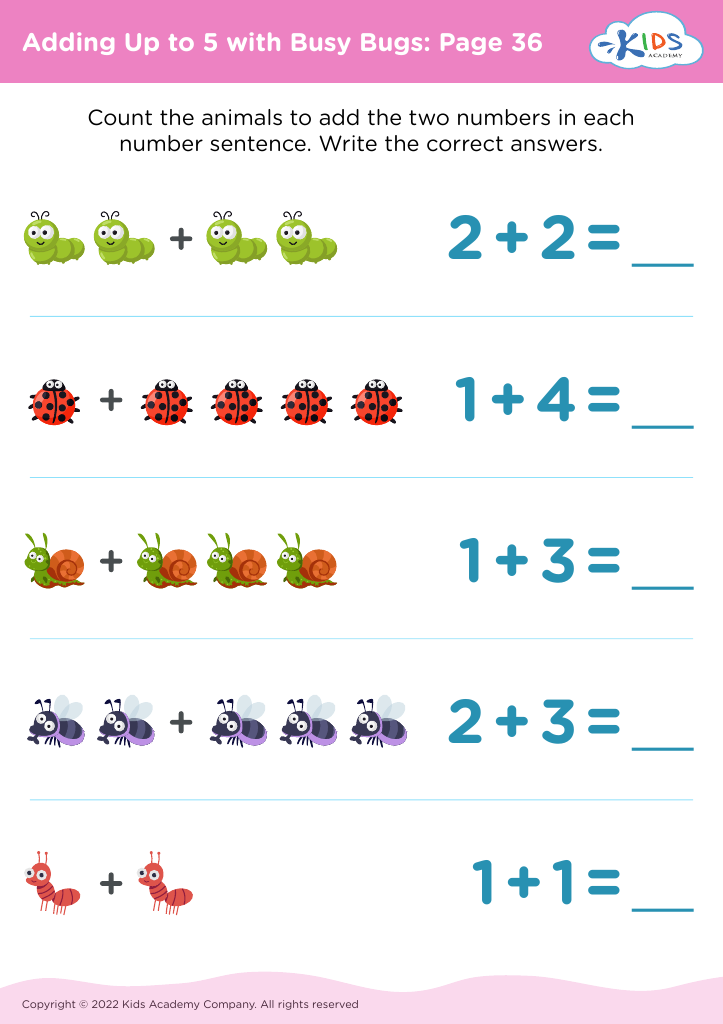
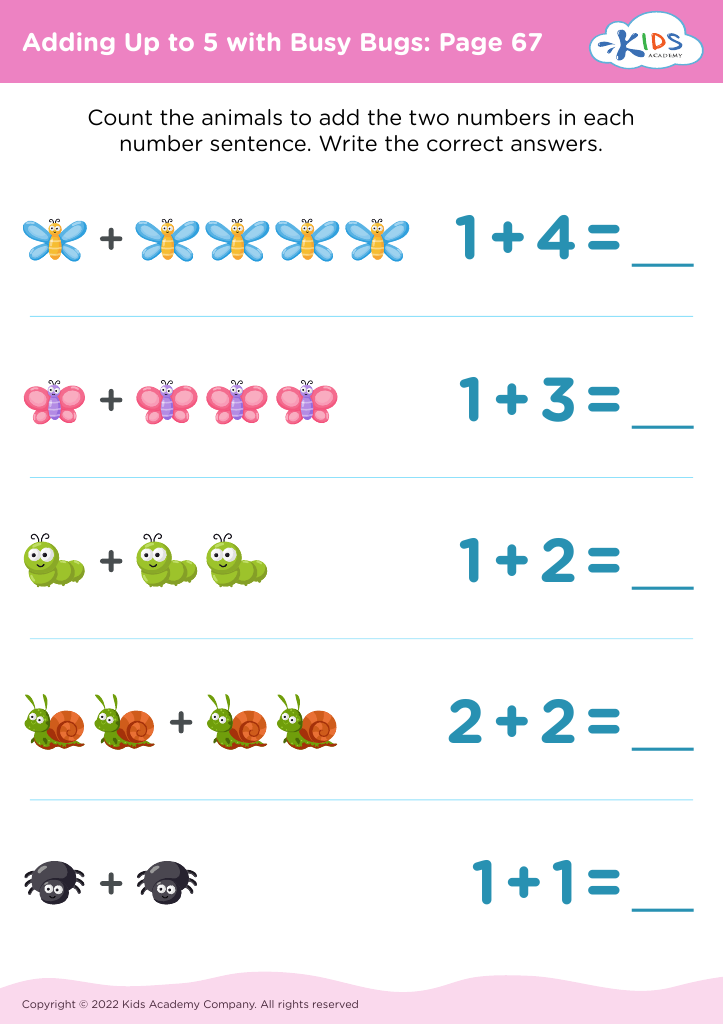
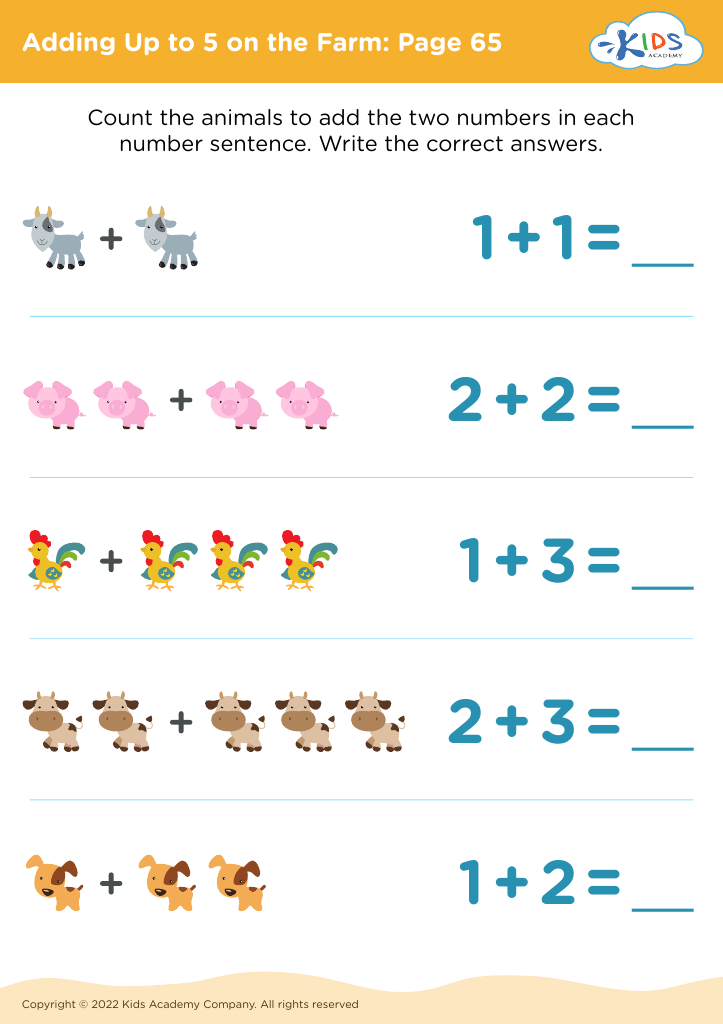
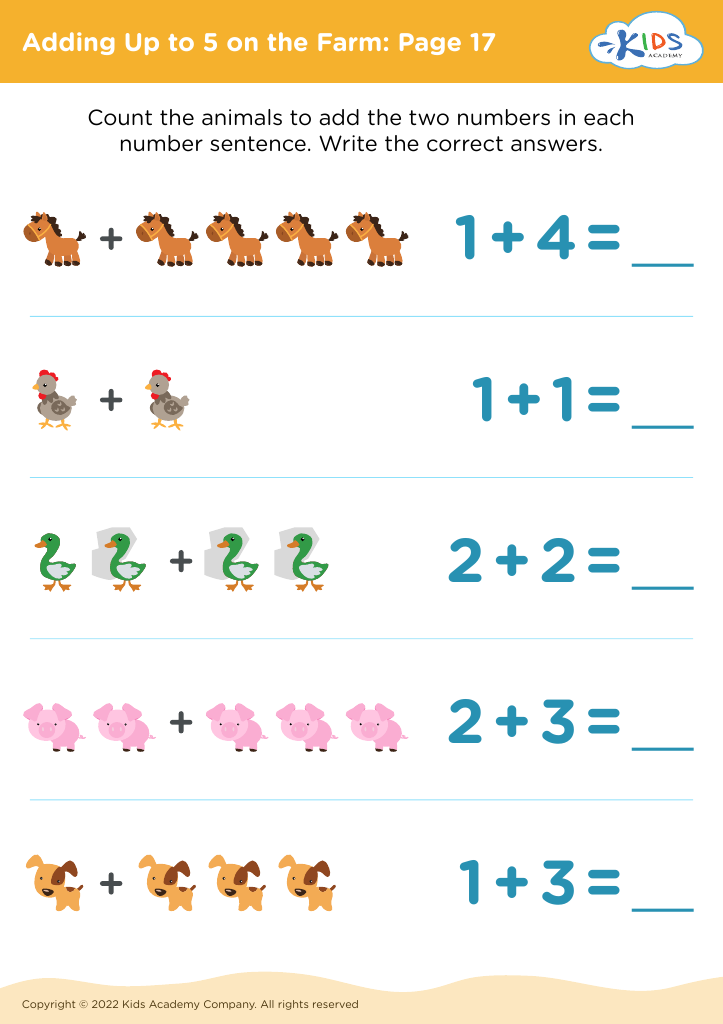
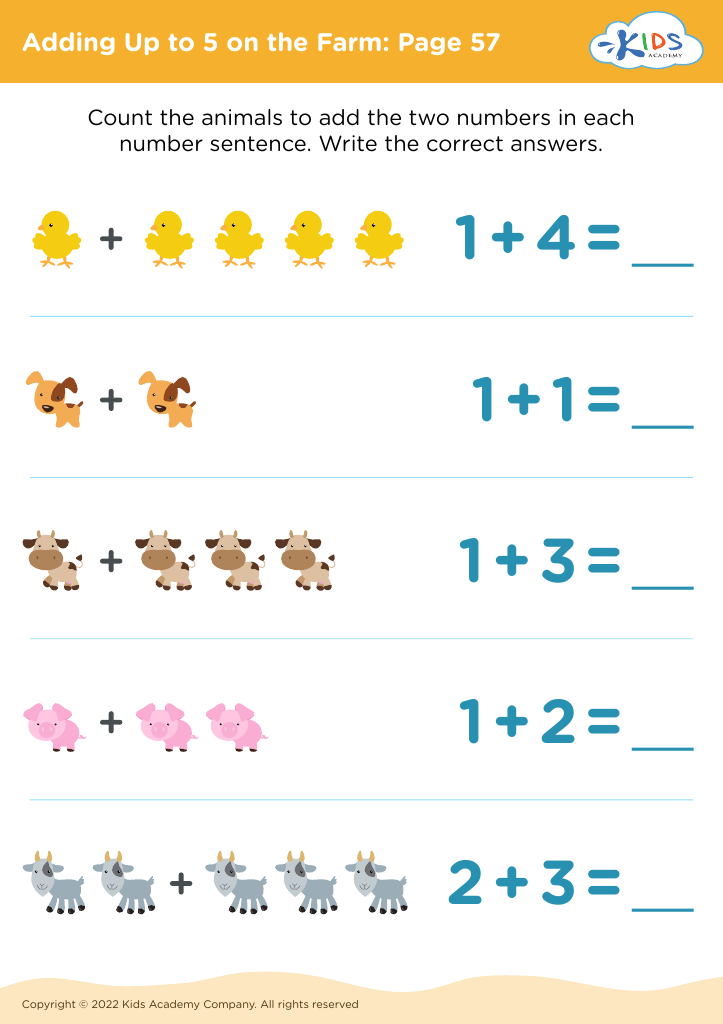
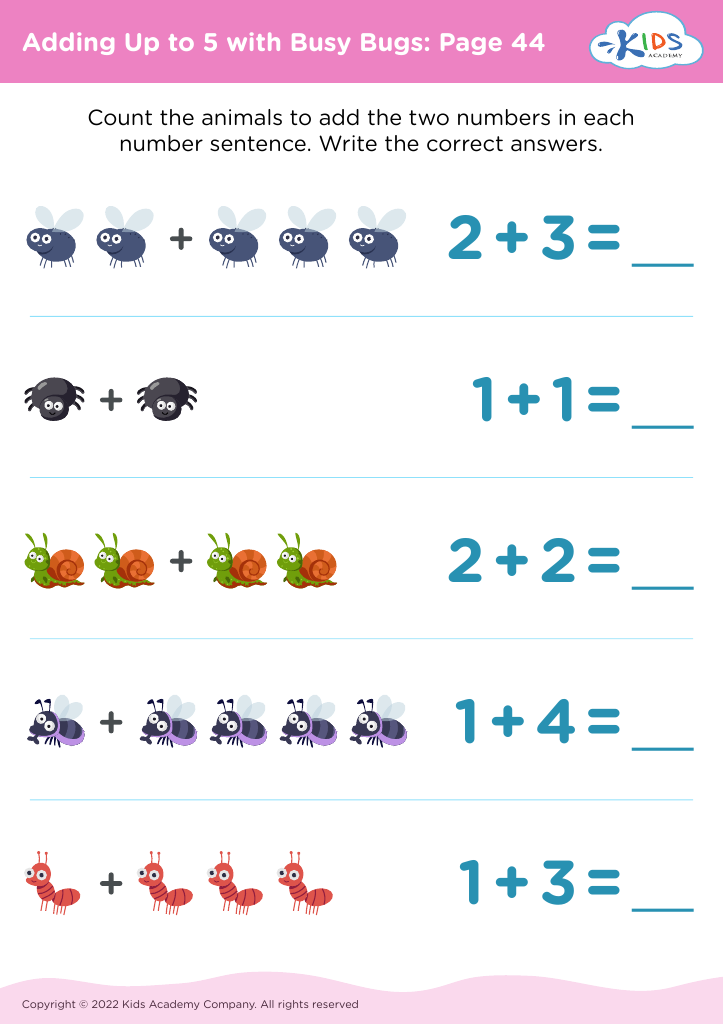
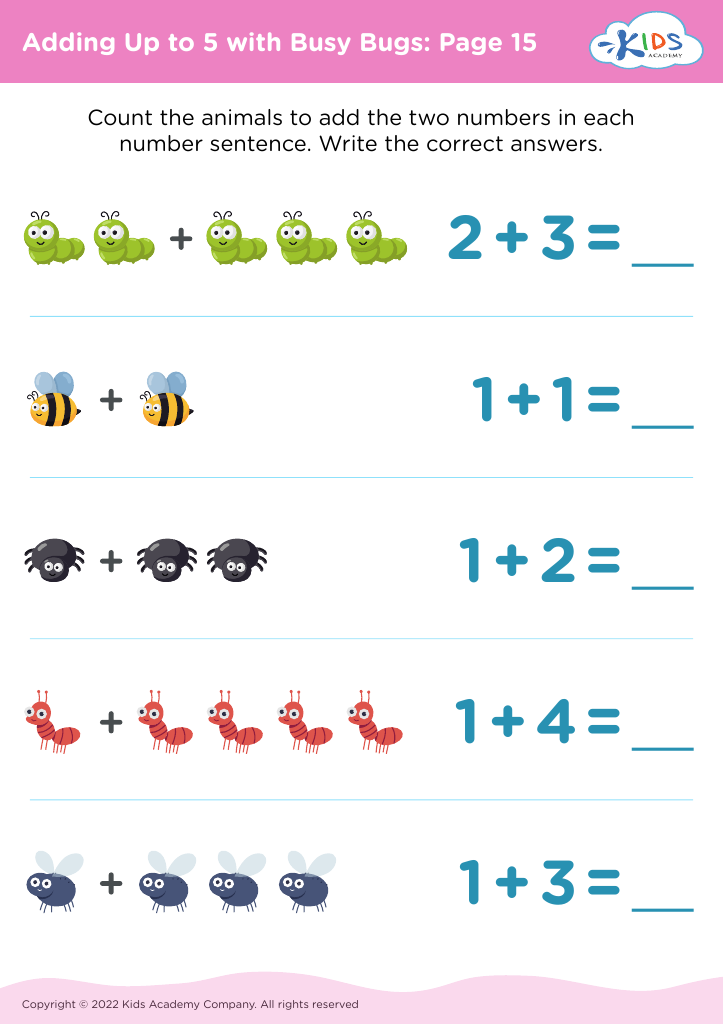
Discover our "Understanding Quantity: Adding Up to 5" worksheets tailored for children aged 5-9! These engaging resources are designed to enhance young learners' number sense and counting skills. Through fun activities, children will explore the concept of quantity by adding numbers together to achieve sums of up to 5. The worksheets include vibrant visuals and interactive exercises, fostering a love for math while building confidence in their abilities. Perfect for home and classroom use, these worksheets support foundational math learning and ensure comprehension of key concepts in a playful and supportive environment. Enhance your child’s arithmetic skills today!
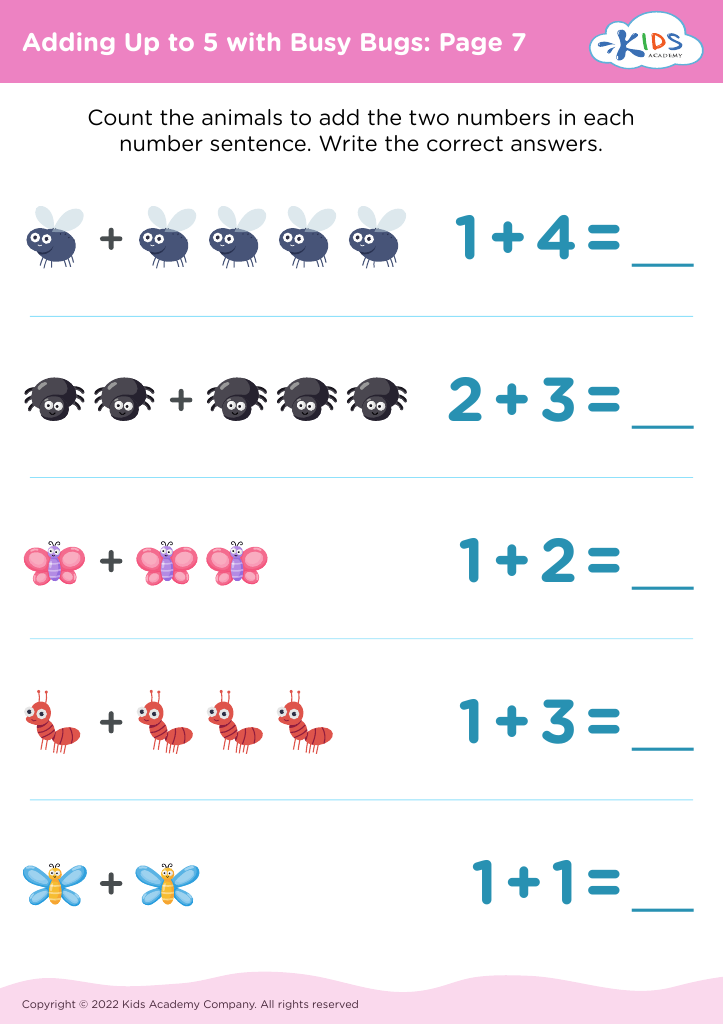
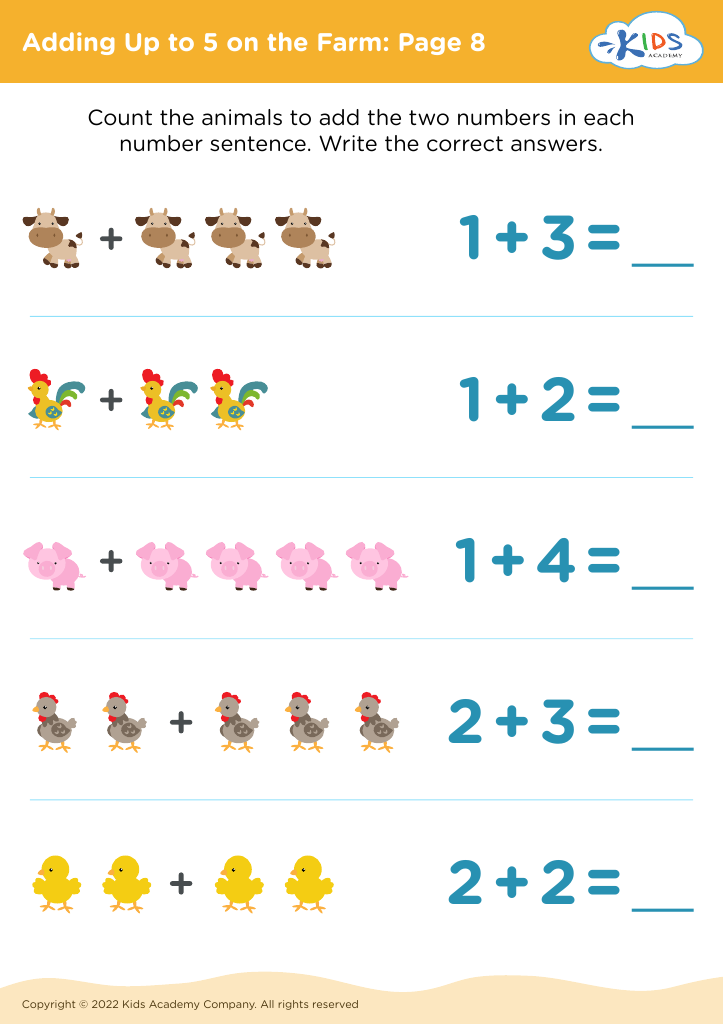
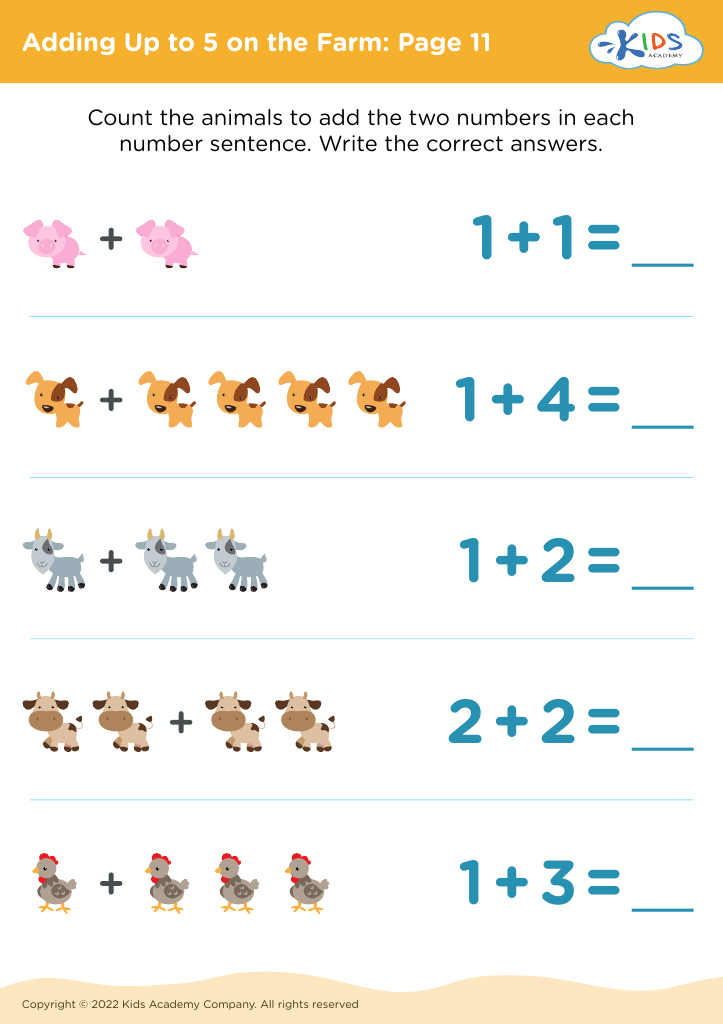
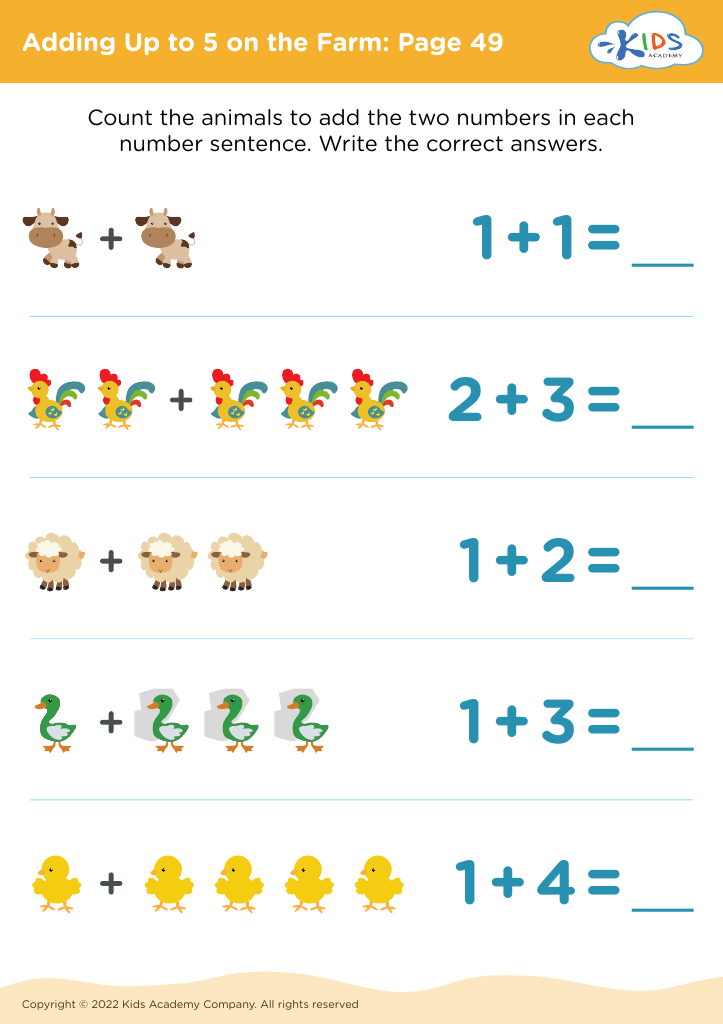


%20(1).jpg)





Understanding quantities and basic addition concepts, especially adding up to 5, is a foundational skill for children aged 5-9. This developmental stage is crucial as it lays the groundwork for future mathematical understanding. Teaching children to comprehend quantities fosters number sense, enabling them to recognize the value of numbers beyond rote memorization.
For parents and teachers, emphasizing these concepts supports cognitive development. When children can visualize quantities and learn to add small numbers, they build confidence and problem-solving skills. Mastering addition up to 5 allows them to explore larger numbers and more complex math topics in the future. Additionally, understanding quantities promotes critical life skills, such as counting objects, managing money, and telling time.
Engaging children in fun, hands-on activities that encourage these skills—like using everyday objects for counting or playing simple math games—can make learning enjoyable and memorable. Moreover, this early grasp of addition strengthens their overall academic performance, positively influencing their approach to future learning challenges. Ultimately, supporting children in understanding quantities helps them develop a solid mathematical foundation, paving the way for lifelong learning and success in life. By prioritizing these skills, parents and teachers work collaboratively to nurture well-rounded and capable learners.








