Visual Learning Adding Up to 5 Worksheets for Ages 5-9 - Page 3
84 filtered results
-
From - To
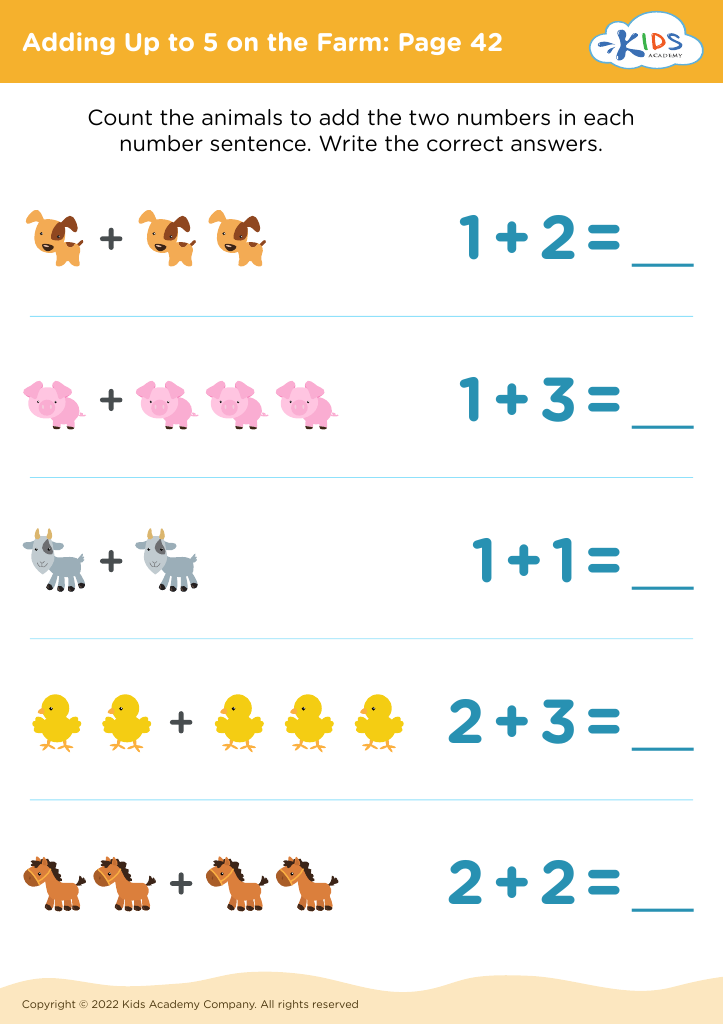
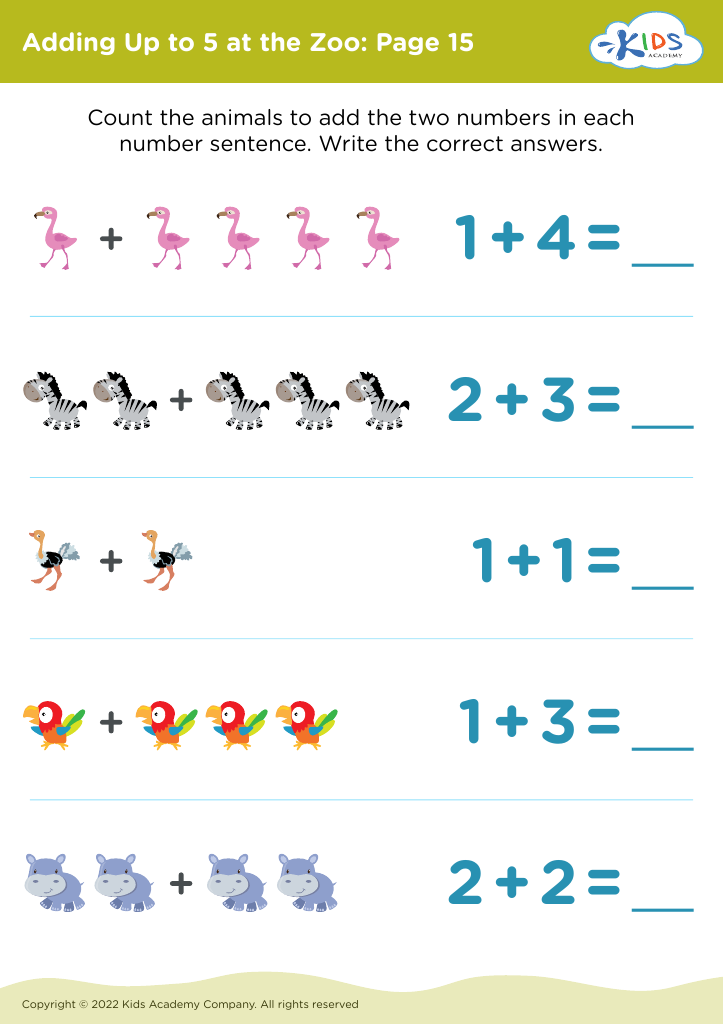
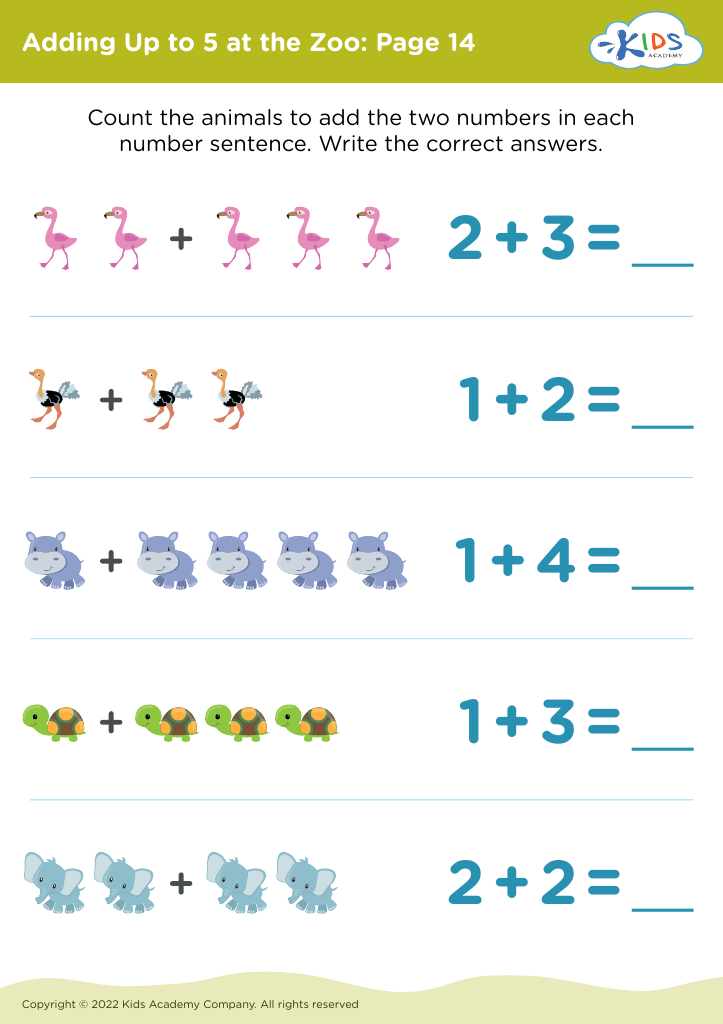
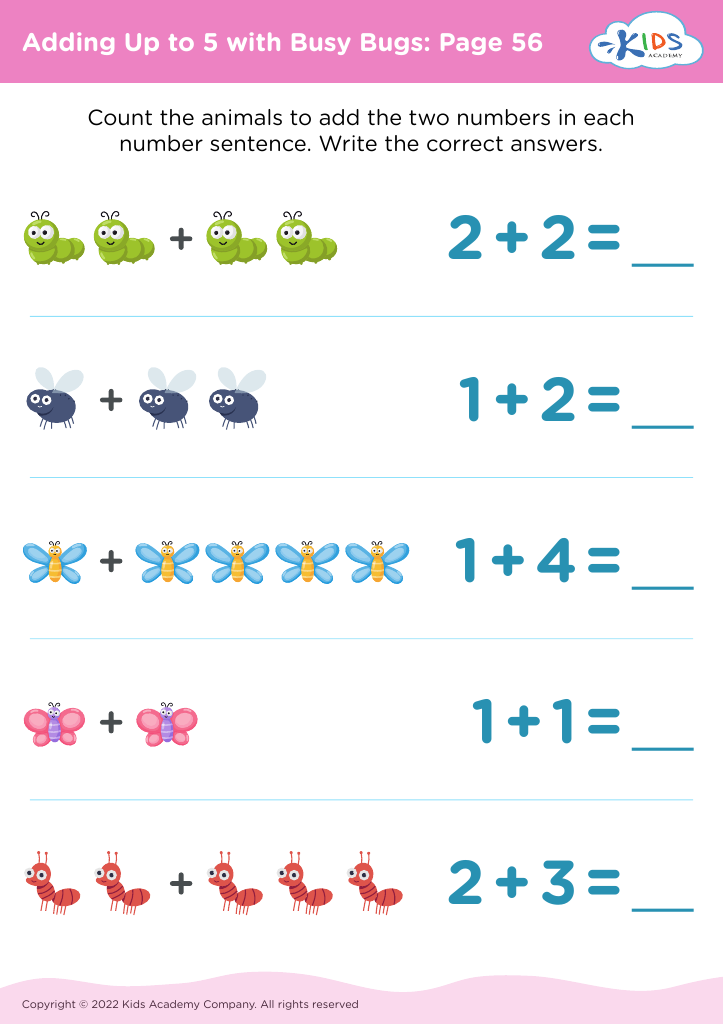
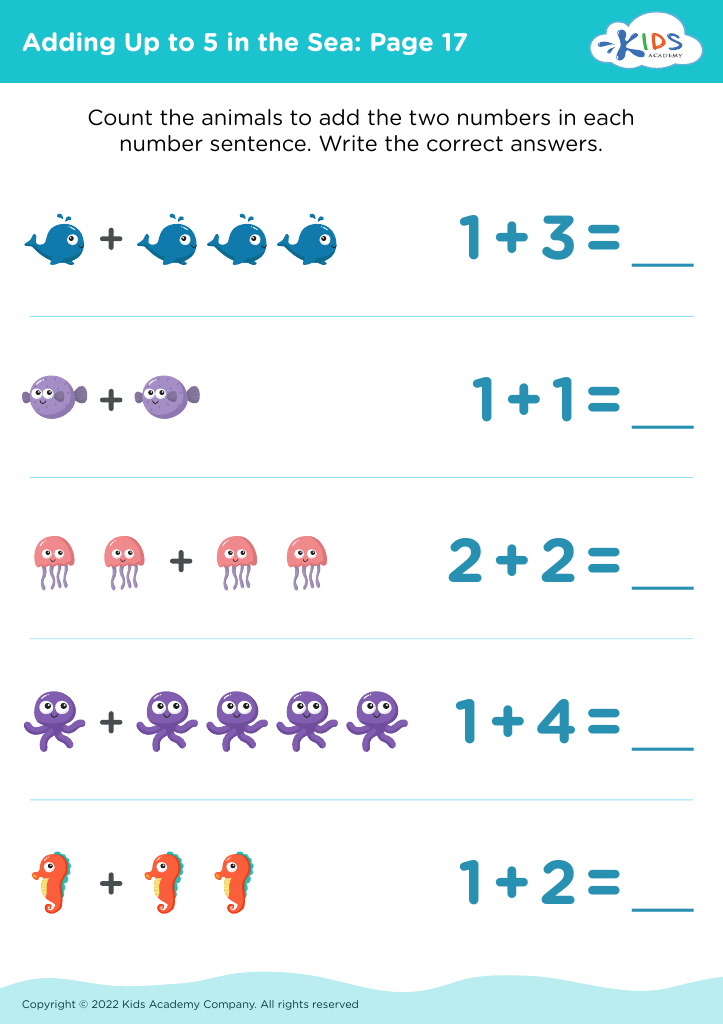
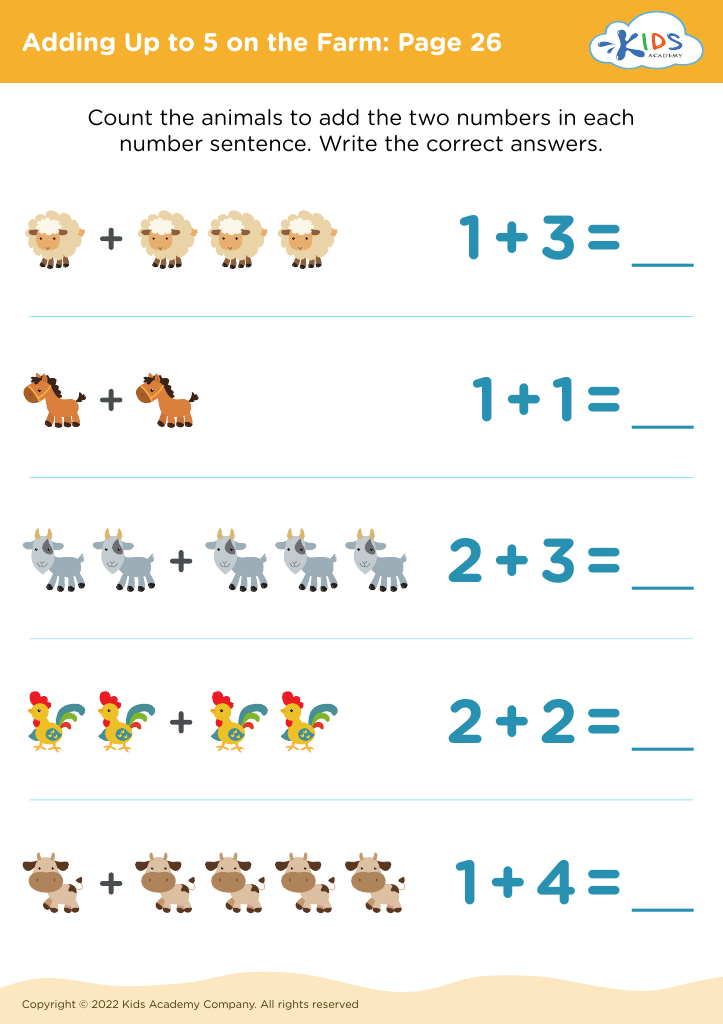
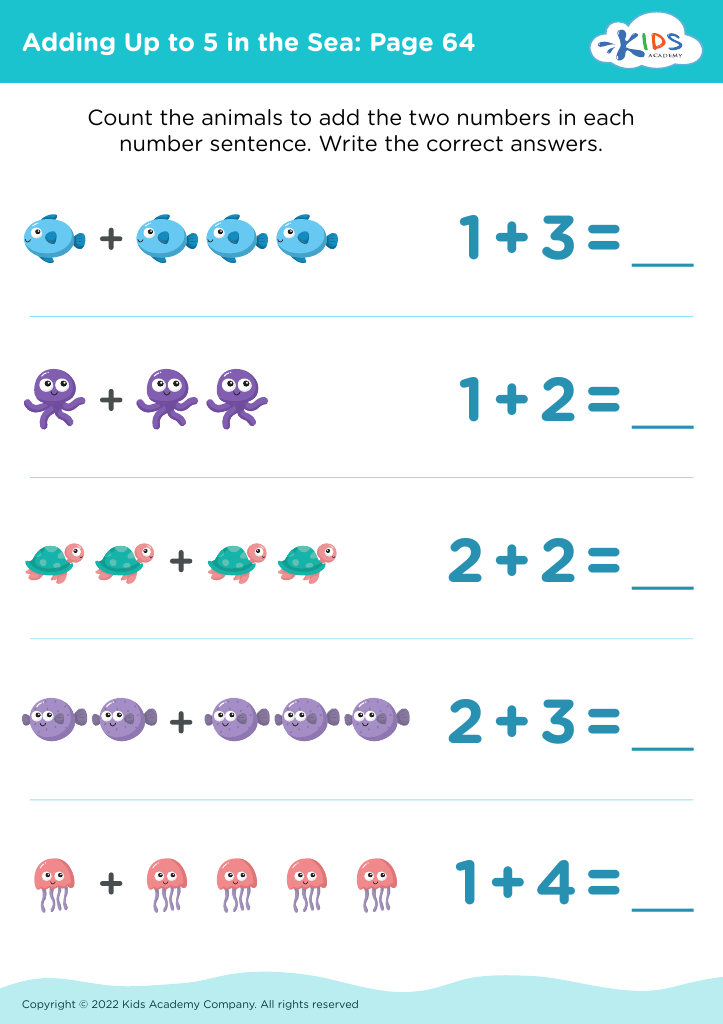
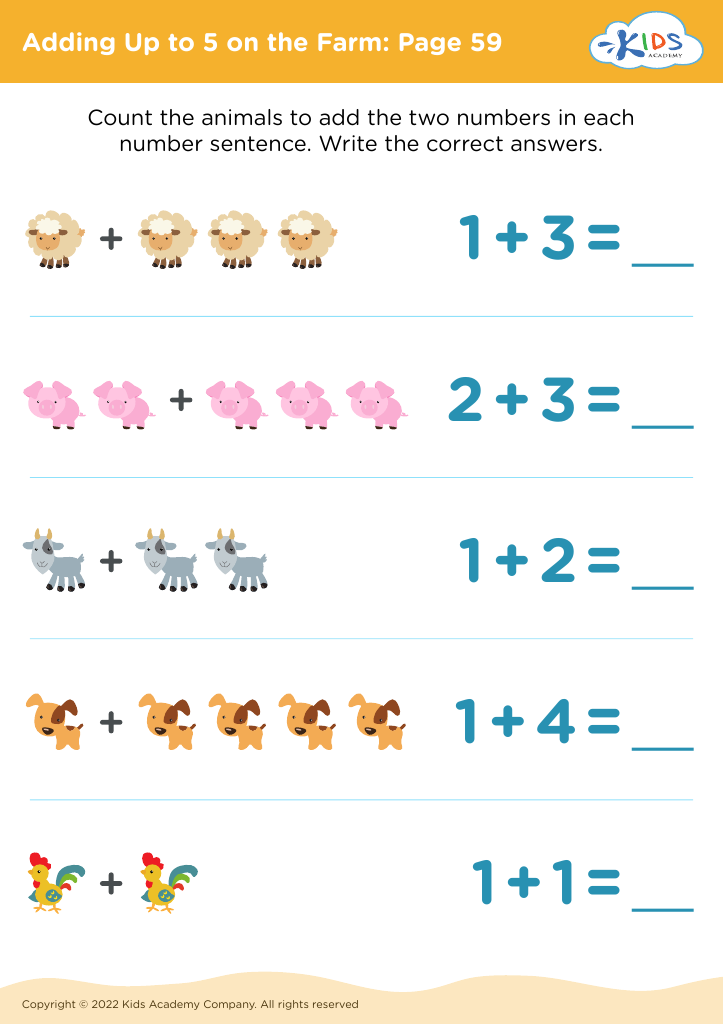
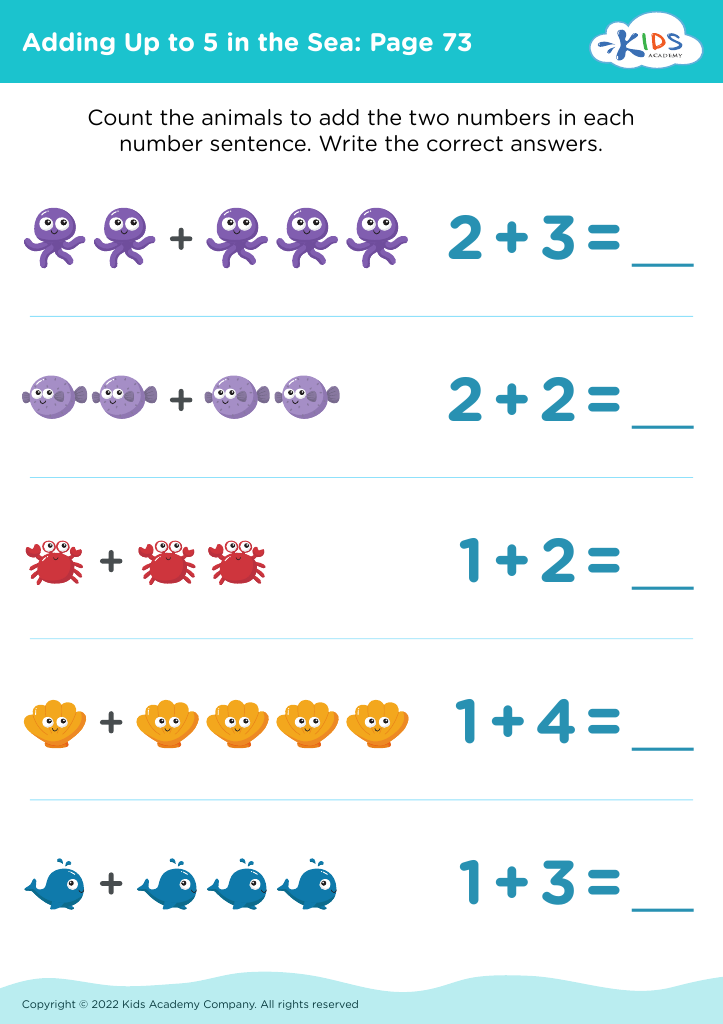
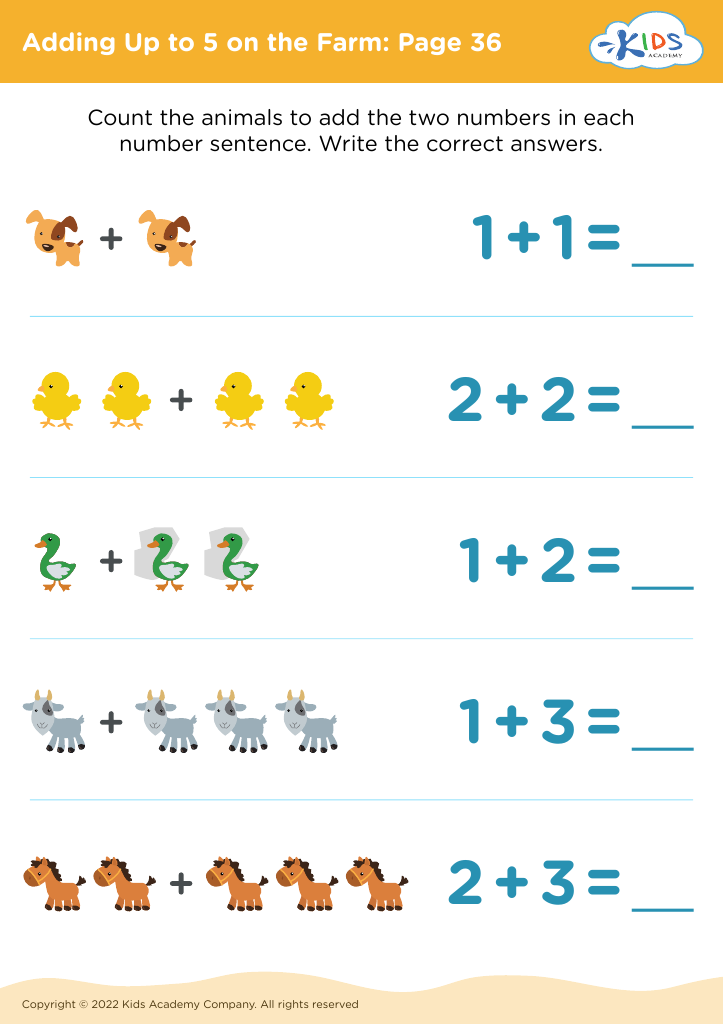
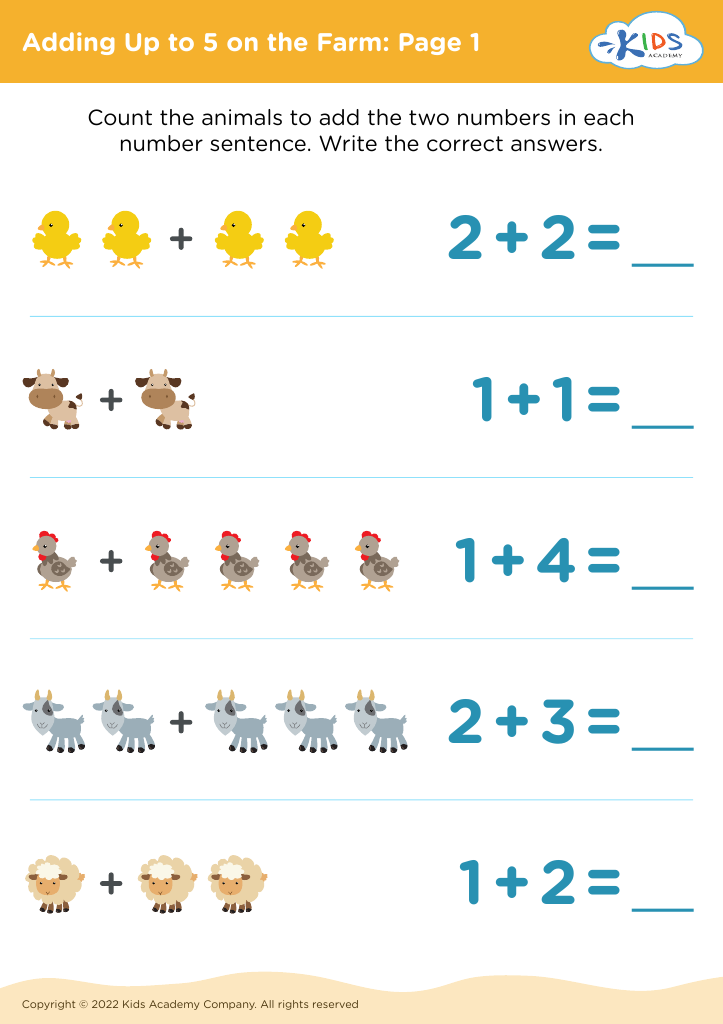
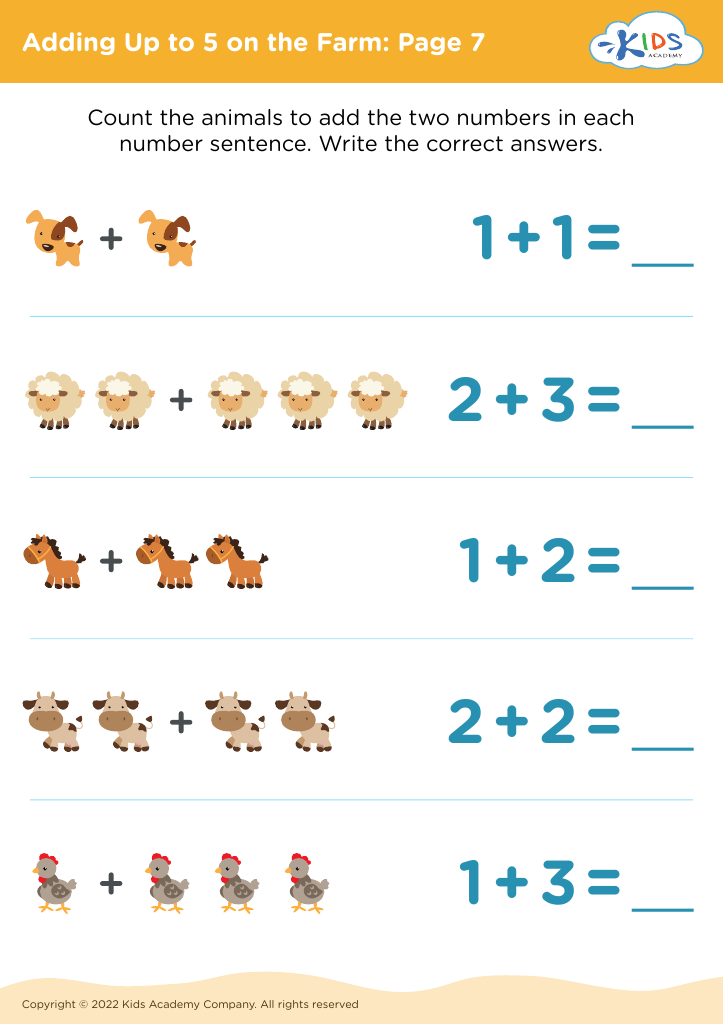
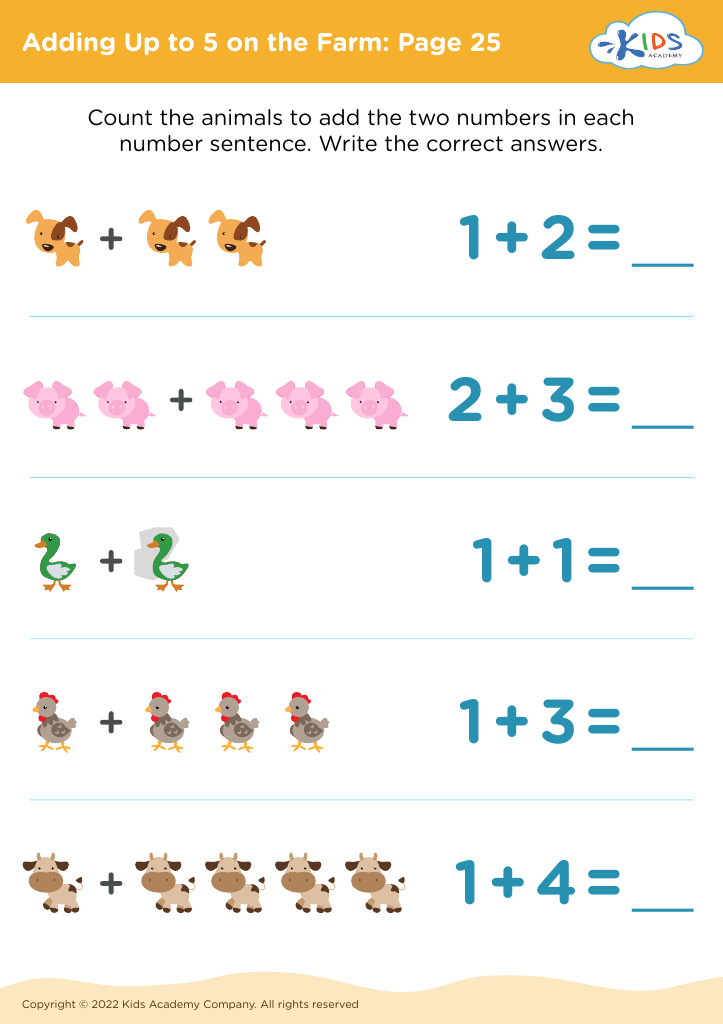
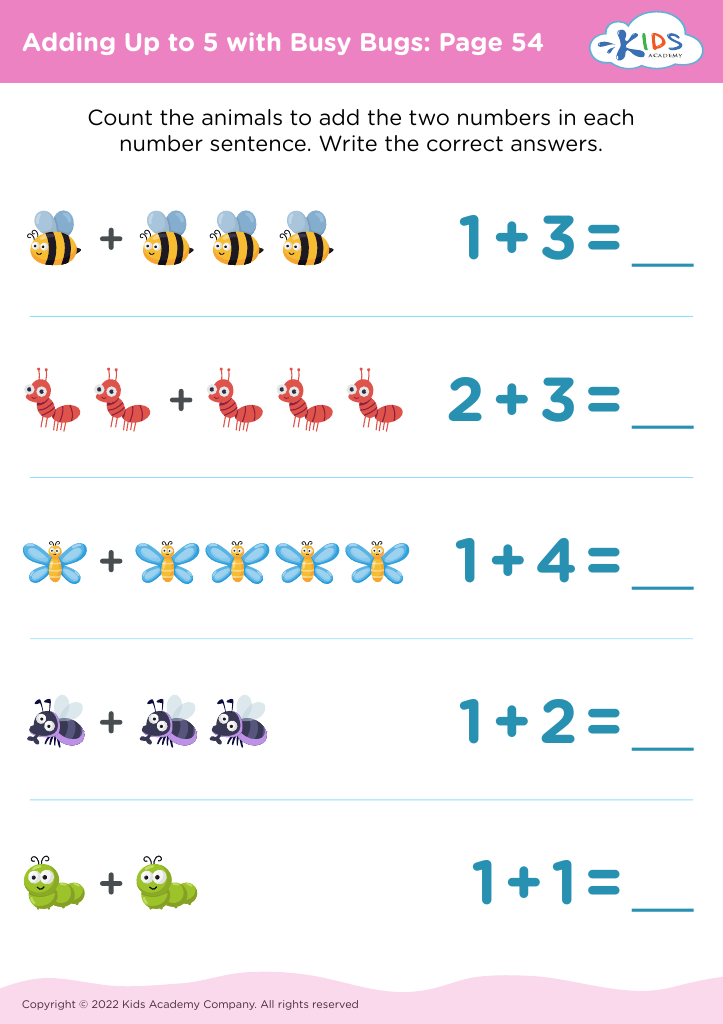
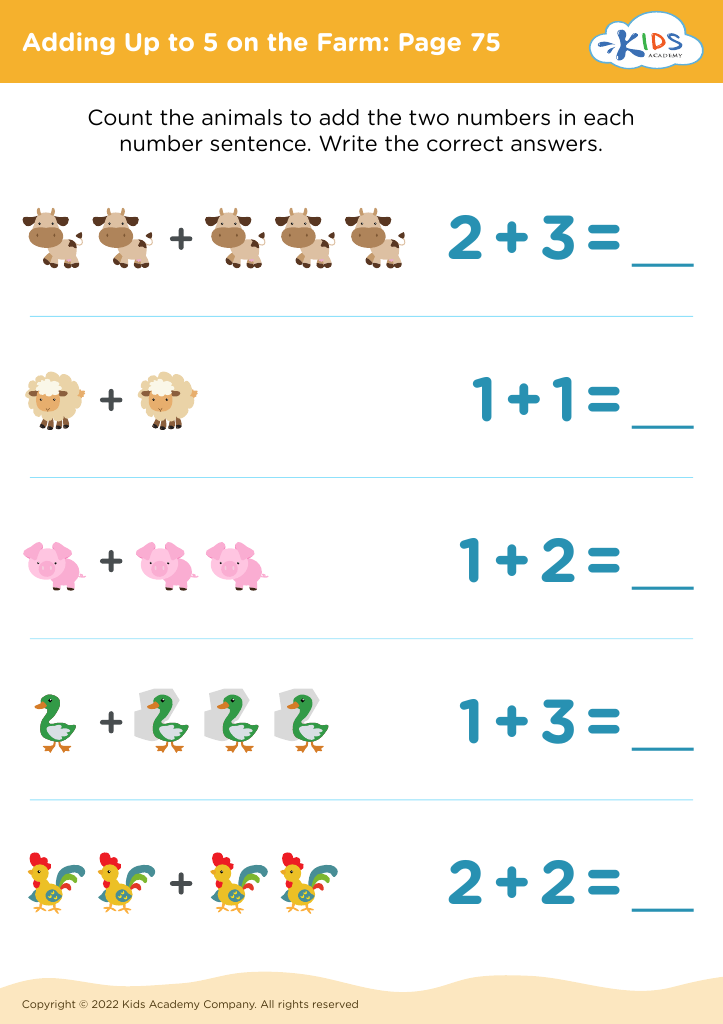
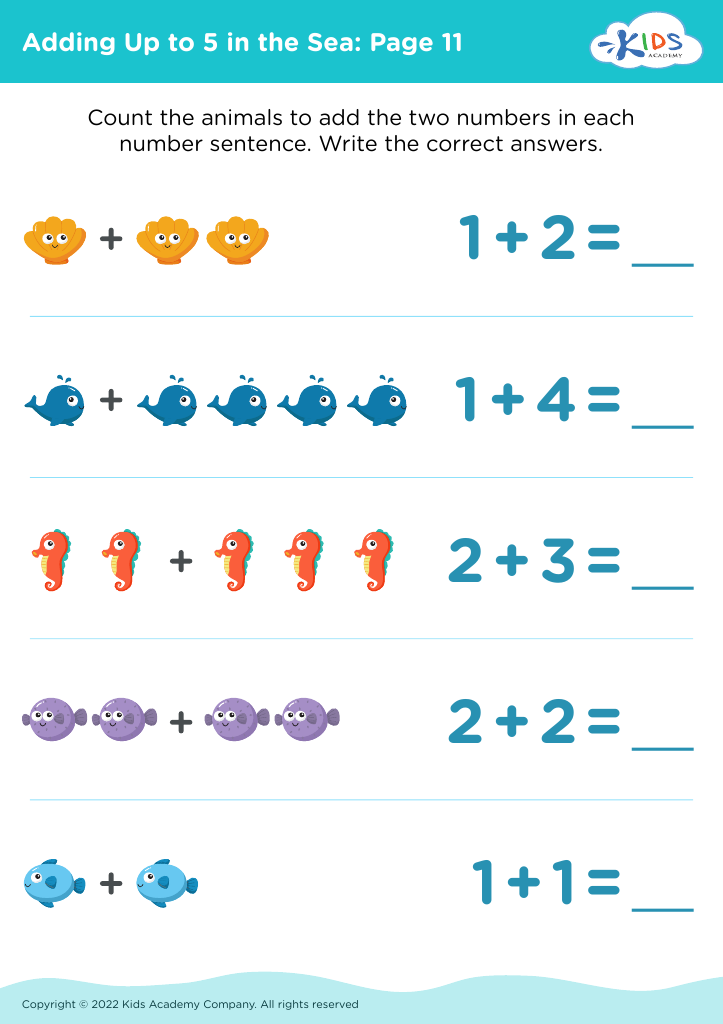
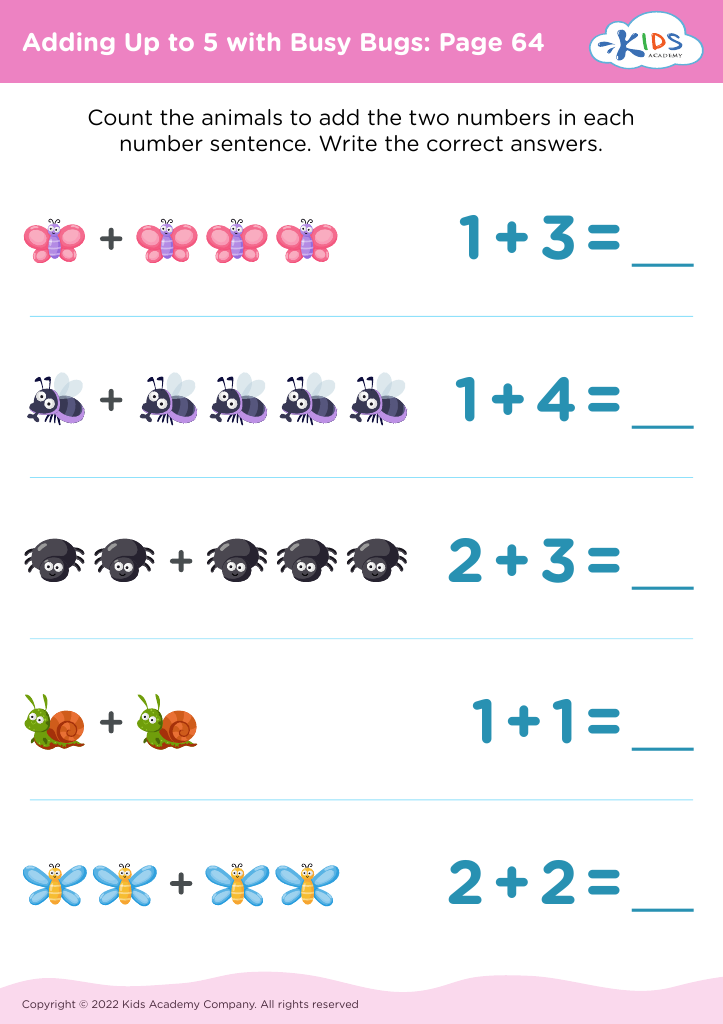
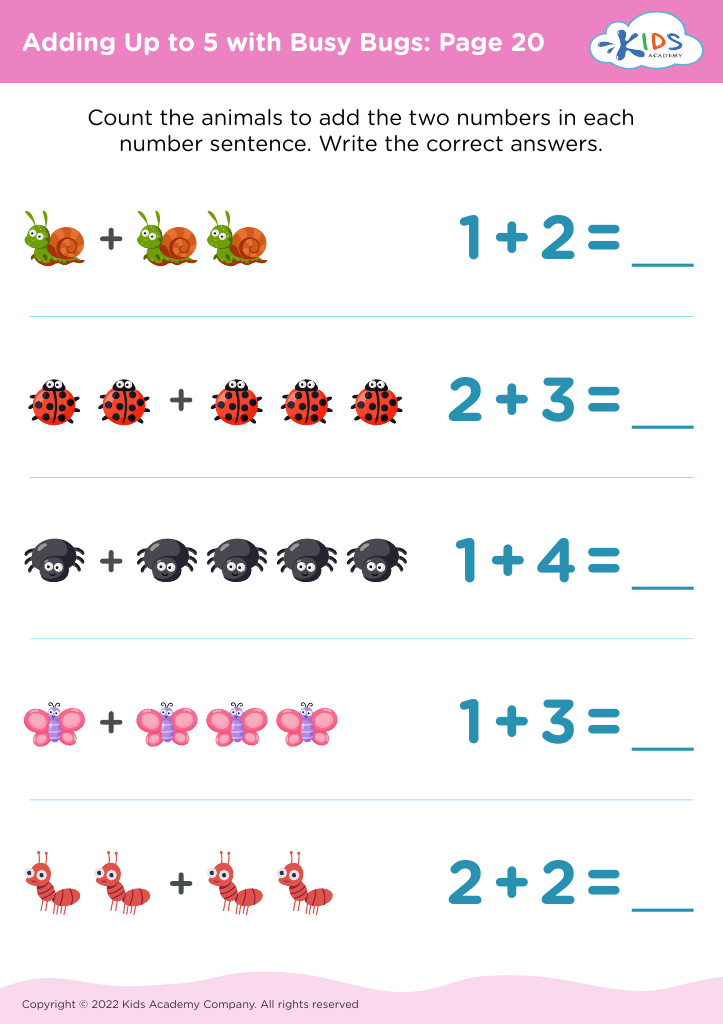
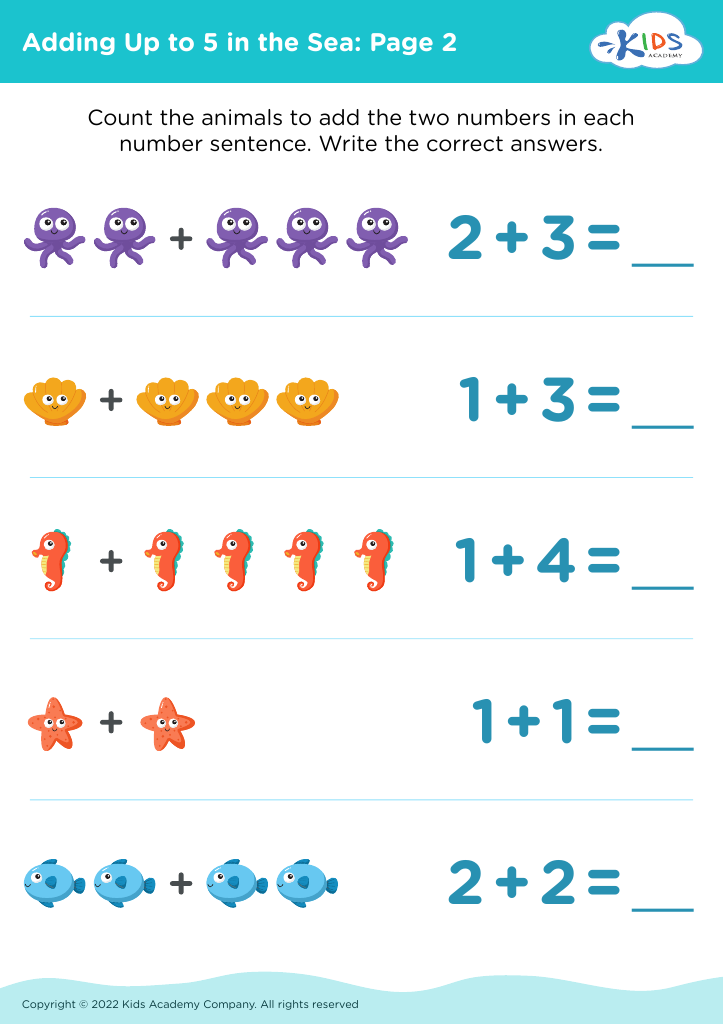
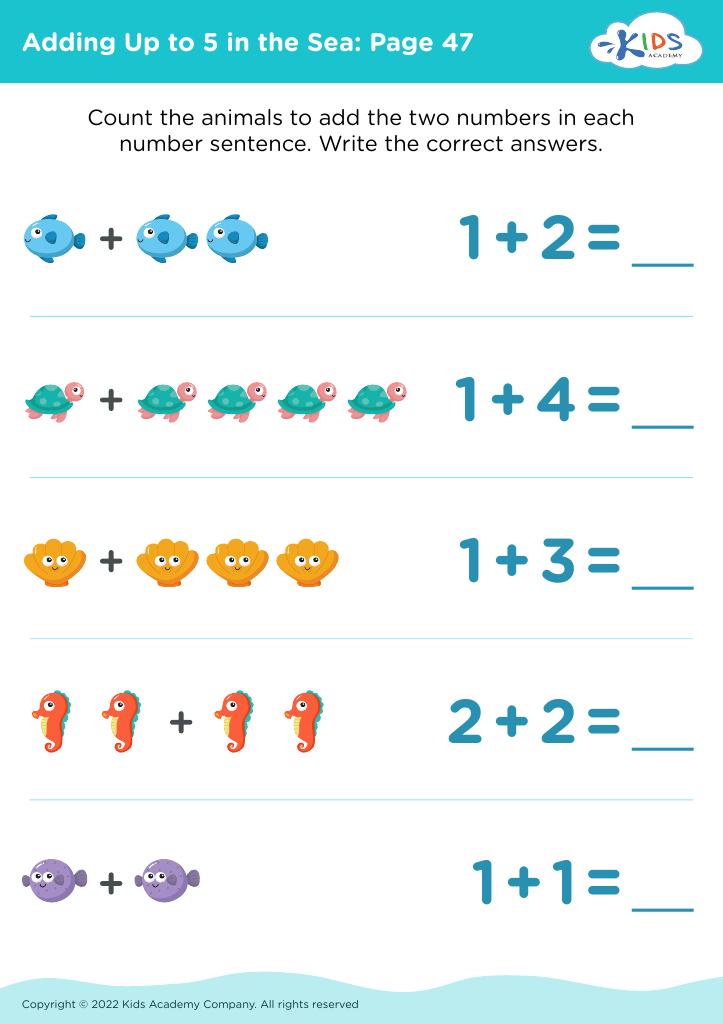
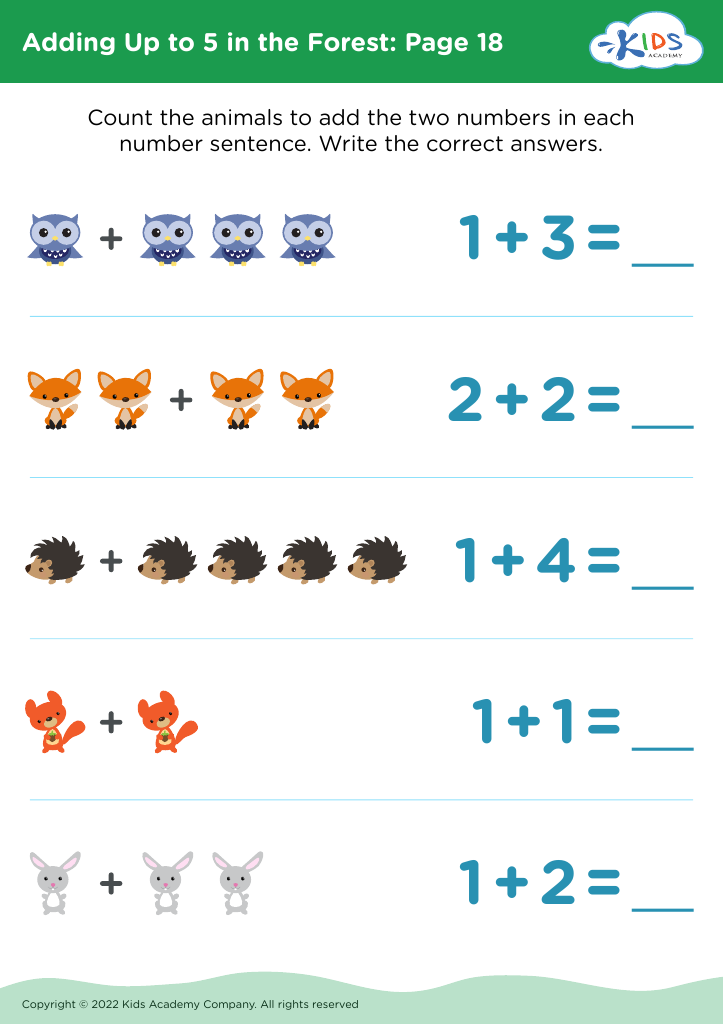
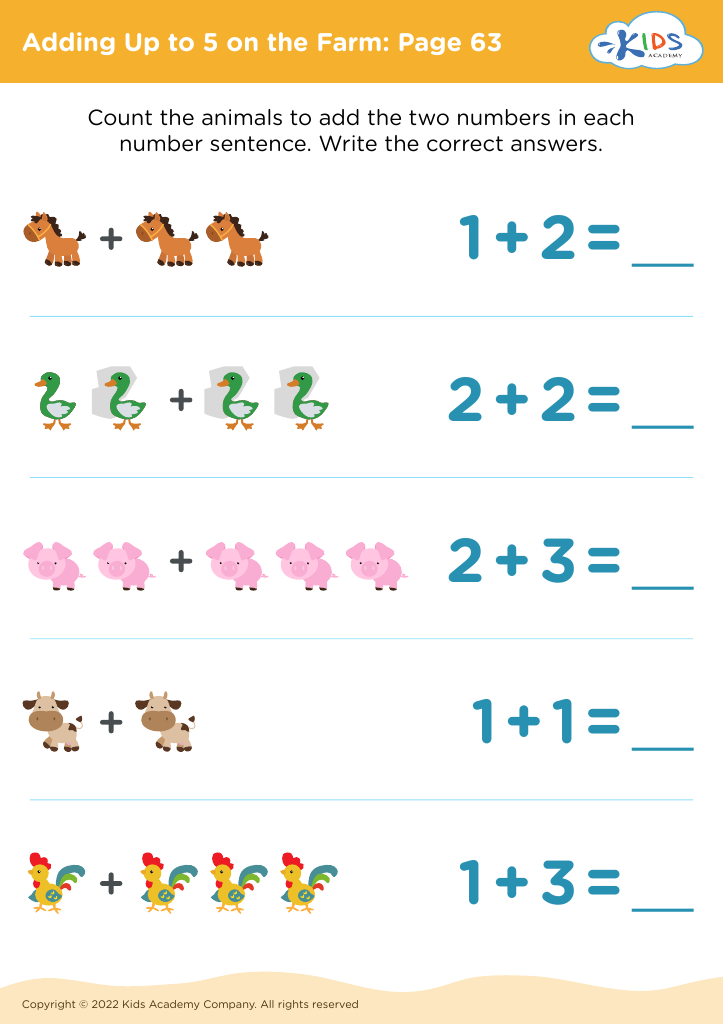
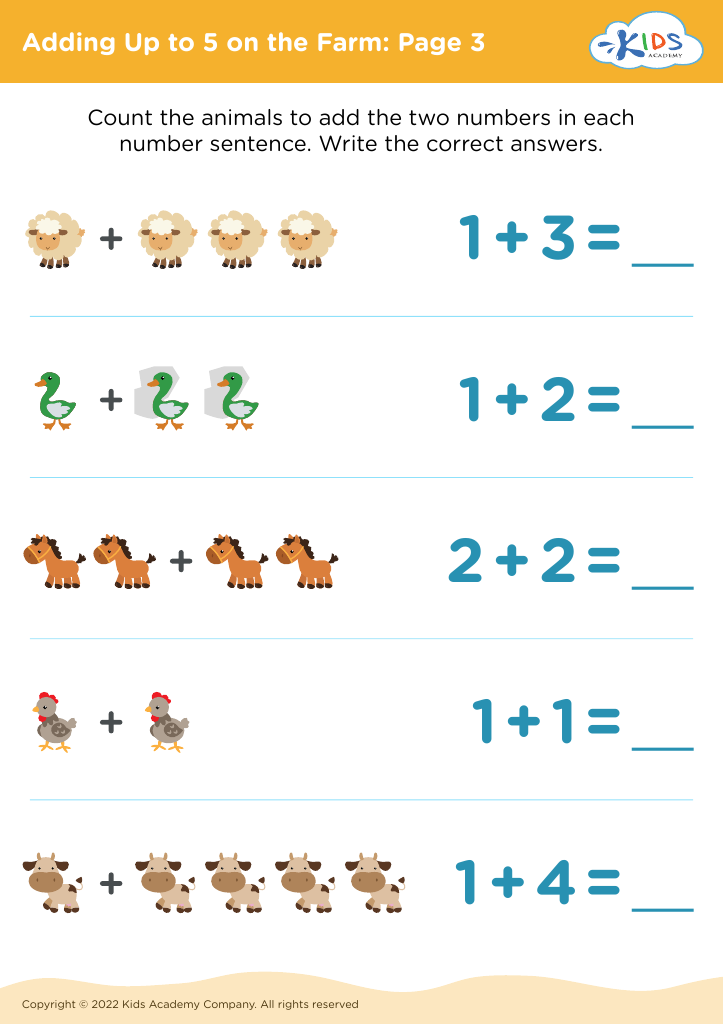
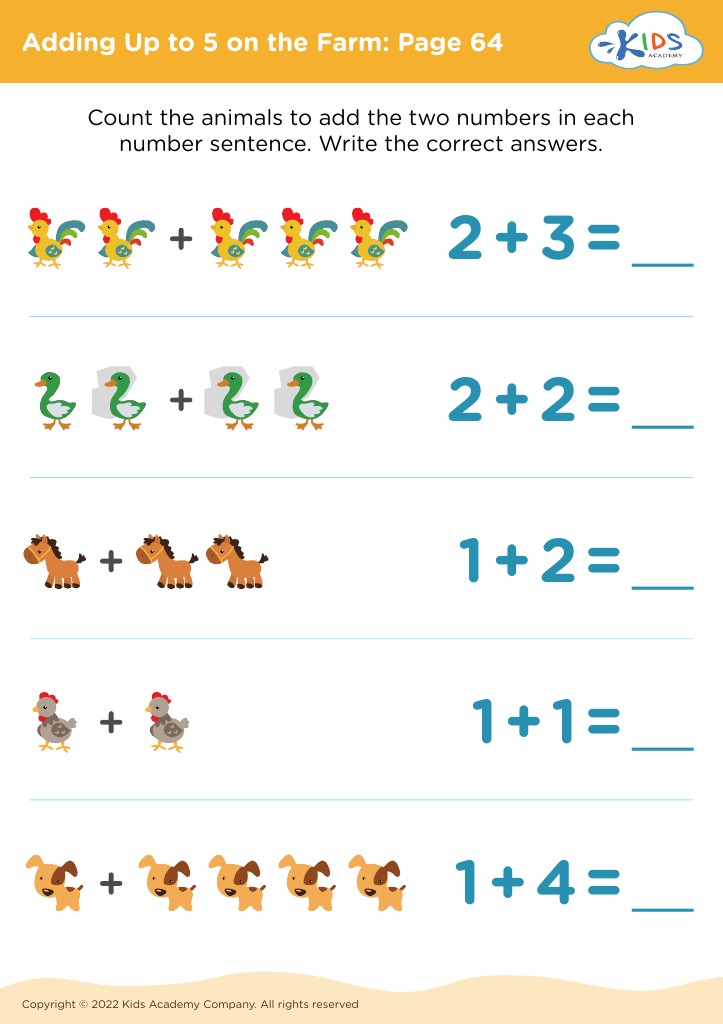








Visual learning is an essential approach for children aged 5-9, particularly when mastering foundational concepts like addition. At this developmental stage, children are often more engaged and can better retain information when it's presented visually. Utilizing tools like instead of traditional worksheets—cut-and-paste activities, colorful counters, or illustrated number lines—can significantly enhance understanding and retention.
By integrating visual strategies, teachers and parents can cater to various learning styles, making mathematics accessible and enjoyable. For instance, children can visualize problems by grouping objects or drawing pictures, which helps them grasp the concept of "adding up to 5" more concretely. Such methods promote problem-solving abilities, critical thinking, and spatial awareness.
Moreover, visual learning fosters greater confidence in young learners who may struggle with abstract numbers. When concepts are made tangible, children experience a sense of accomplishment that encourages further exploration and risk-taking in learning.
Parents and teachers should prioritize visual learning to create strong mathematical foundations while also nurturing a positive attitude towards math, making it a fun and approachable subject. Engaging with visual materials builds not just skills but also enthusiasm for learning that lasts a lifetime.








