Discover the joy of math with our Basic Addition Practice worksheets tailored for children aged 5-9! These interactive and engaging worksheets provide essential practice in addition and subtraction, helping young learners build a strong foundation in math. With vibrant visuals and age-appropriate exercises, kids can enhance their skills through fun activities. Our worksheets are designed to reinforce learning and boost confidence while developing critical thinking abilities. Whether at home or in the classroom, these resources are perfect for personalized education. Explore our collection today and watch your child become proficient in basic math! Learning has never been this exciting!
Check out this FREE Trial Lesson on Addition & Subtraction for age 5-9!

Enrichment

Favorites
With answer key
Interactive
  • 5-9
  • Basic addition practice
  • Addition & Subtraction
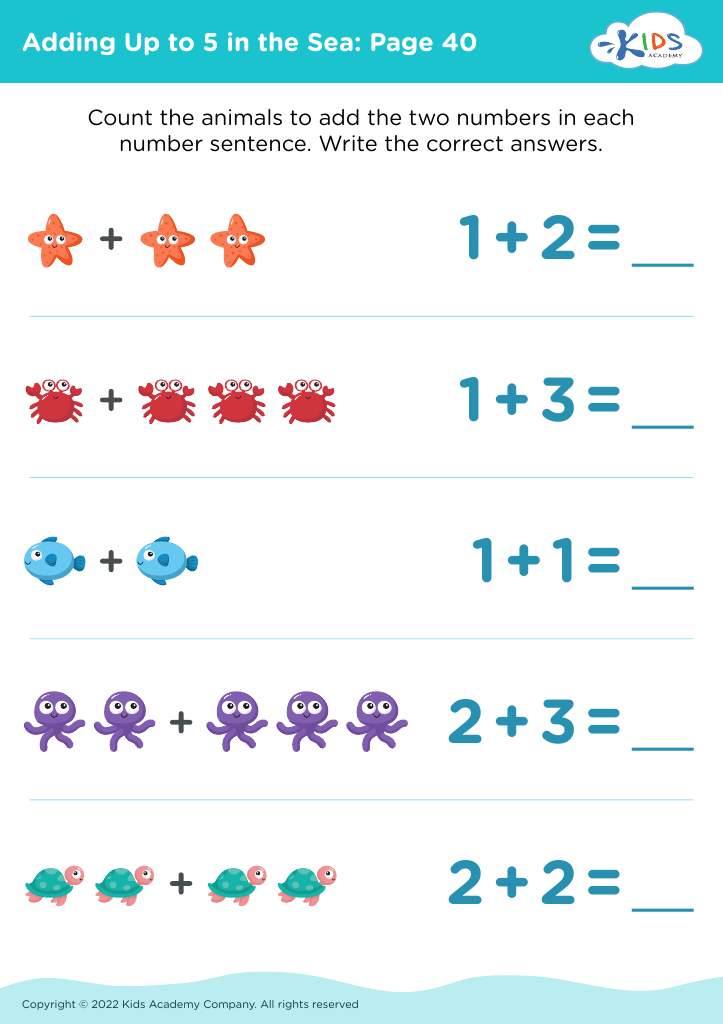
Adding Up to 5 in the Sea: Page 40
Worksheet
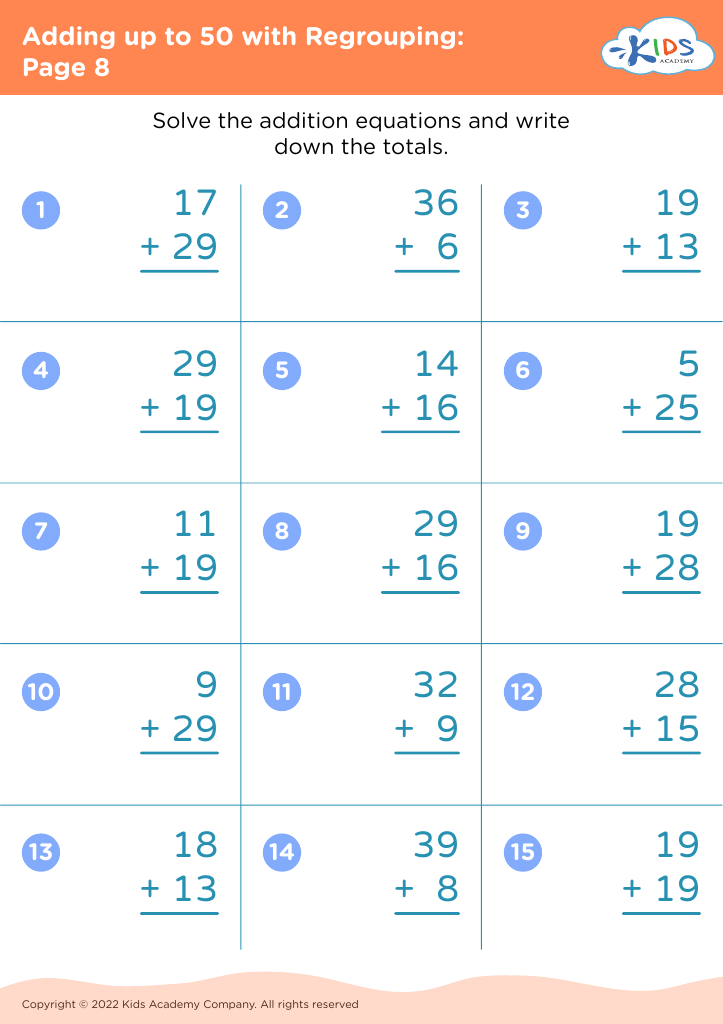
Adding up to 50 with Regrouping: Page 8
Worksheet
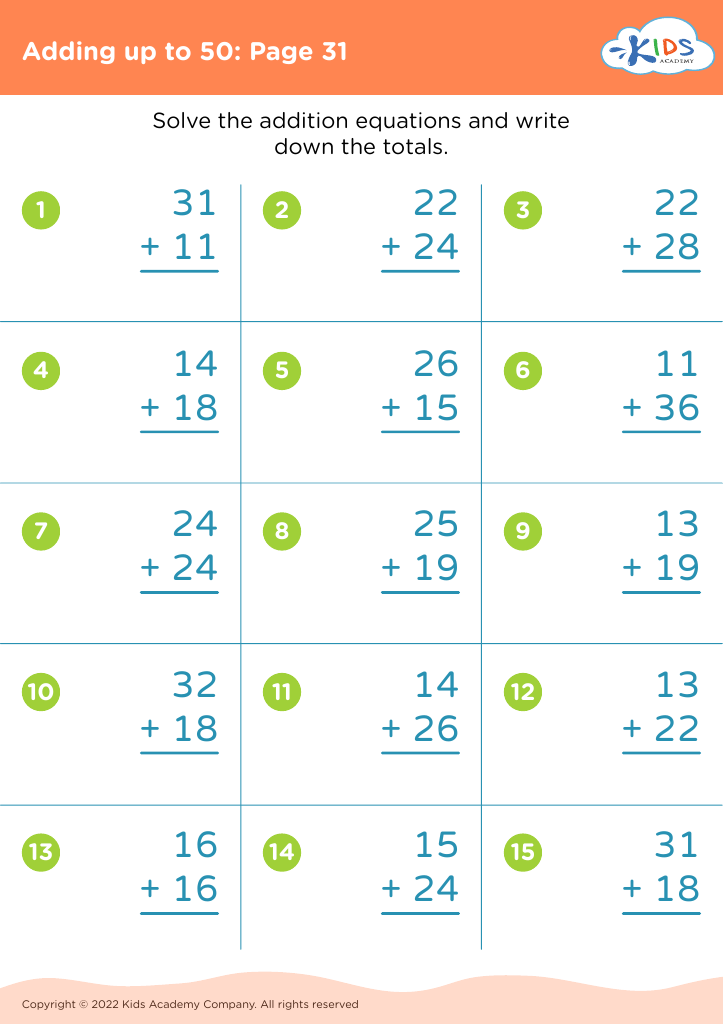
Adding up to 50: Page 31

Adding up to 50: Page 31

Adding up to 50: Page 31
Worksheet
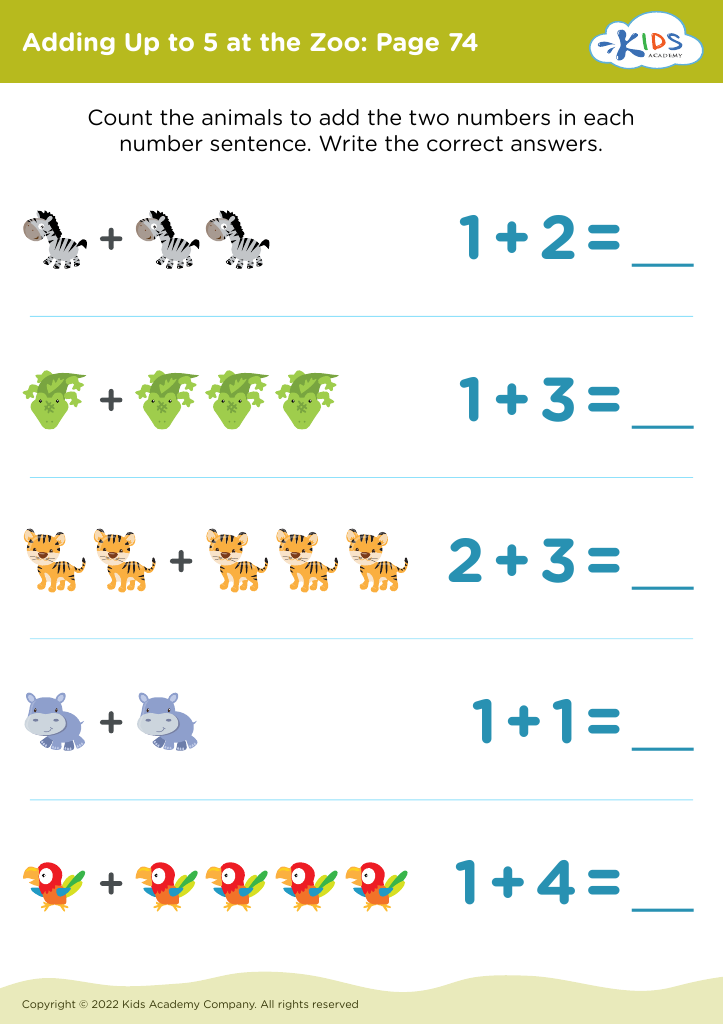
Adding Up to 5 at the Zoo: Page 74
Worksheet
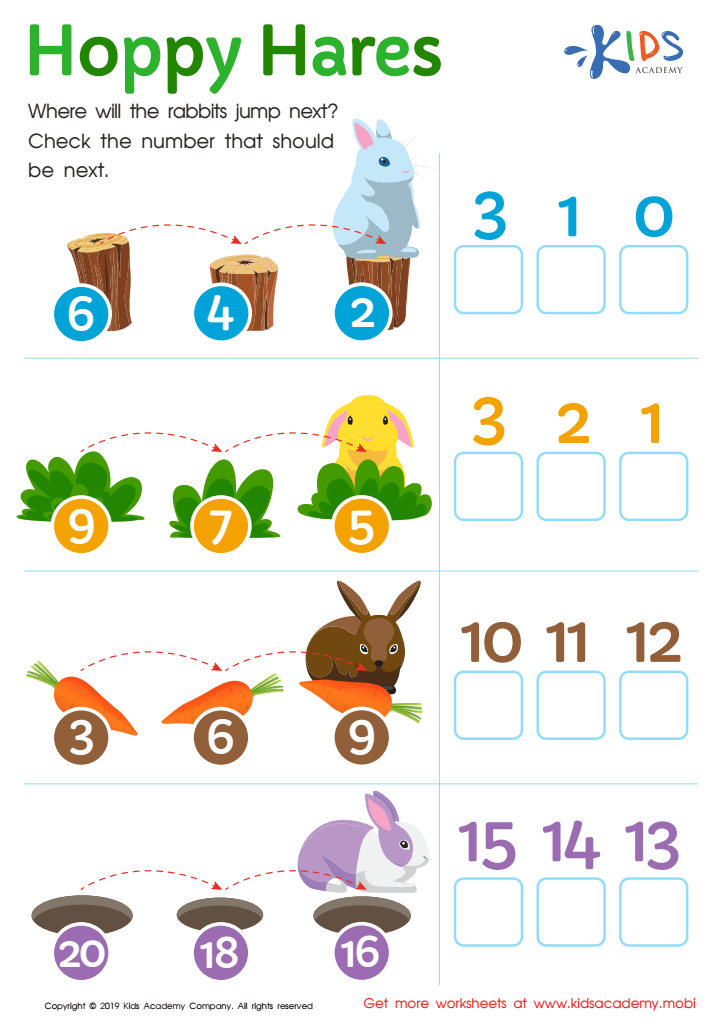
Hoppy Hares Worksheet

Hoppy Hares Worksheet

Ask your kids if they can identify the rabbits in the picture, then help them solve the math problems. The rabbits need to hop from place to place, so look at the numbers and help your kids figure out the next one. These cute and friendly little animals make great pets. Have fun solving this worksheet together!
Hoppy Hares Worksheet
Worksheet
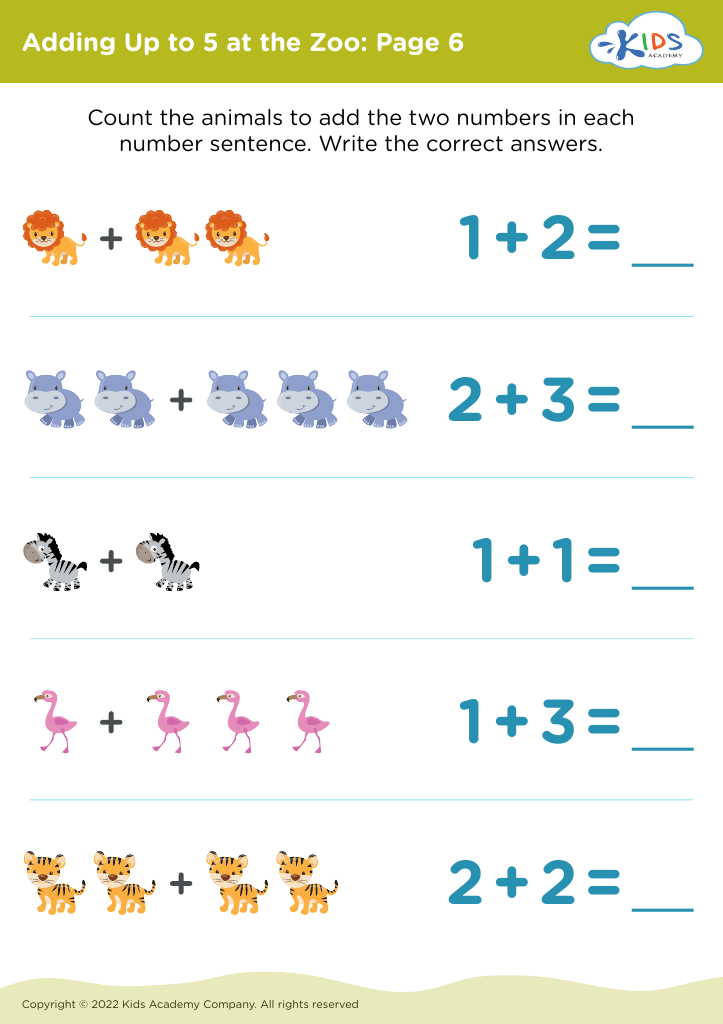
Adding Up to 5 at the Zoo: Page 6

Adding Up to 5 at the Zoo: Page 6

Adding Up to 5 at the Zoo: Page 6
Worksheet
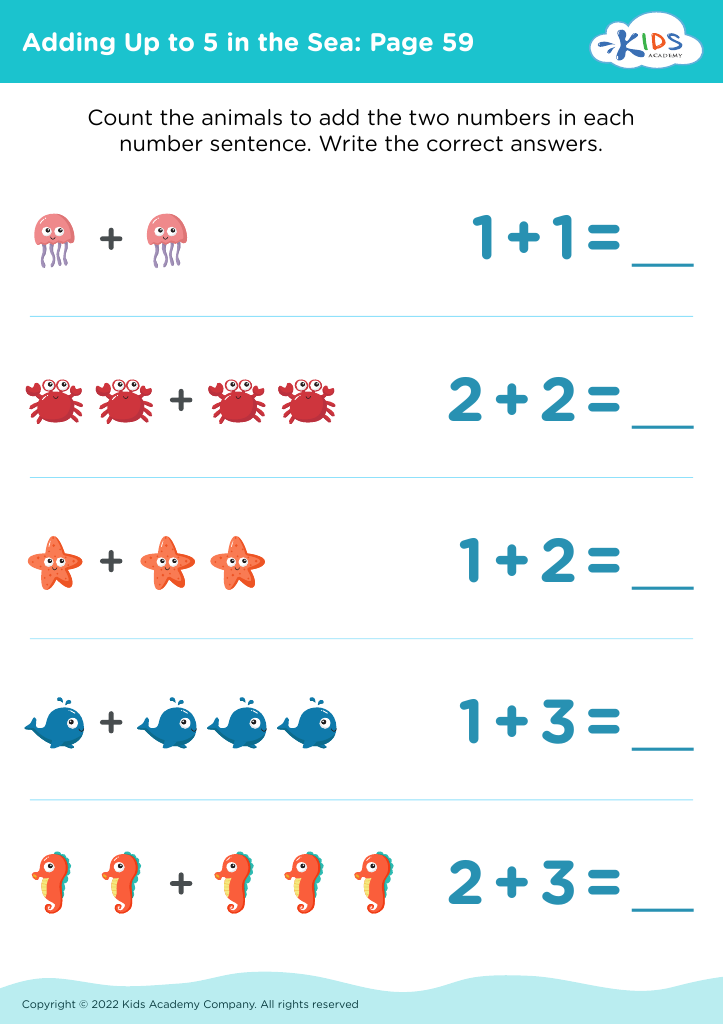
Adding Up to 5 in the Sea: Page 59
Worksheet
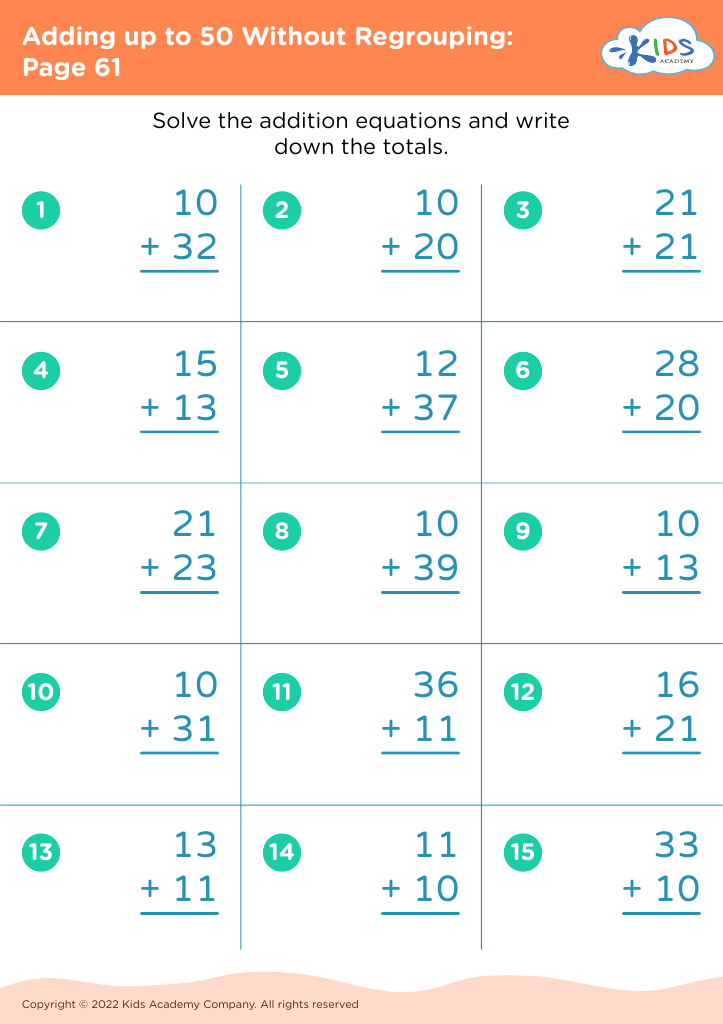
Adding up to 50 Without Regrouping: Page 61
Worksheet
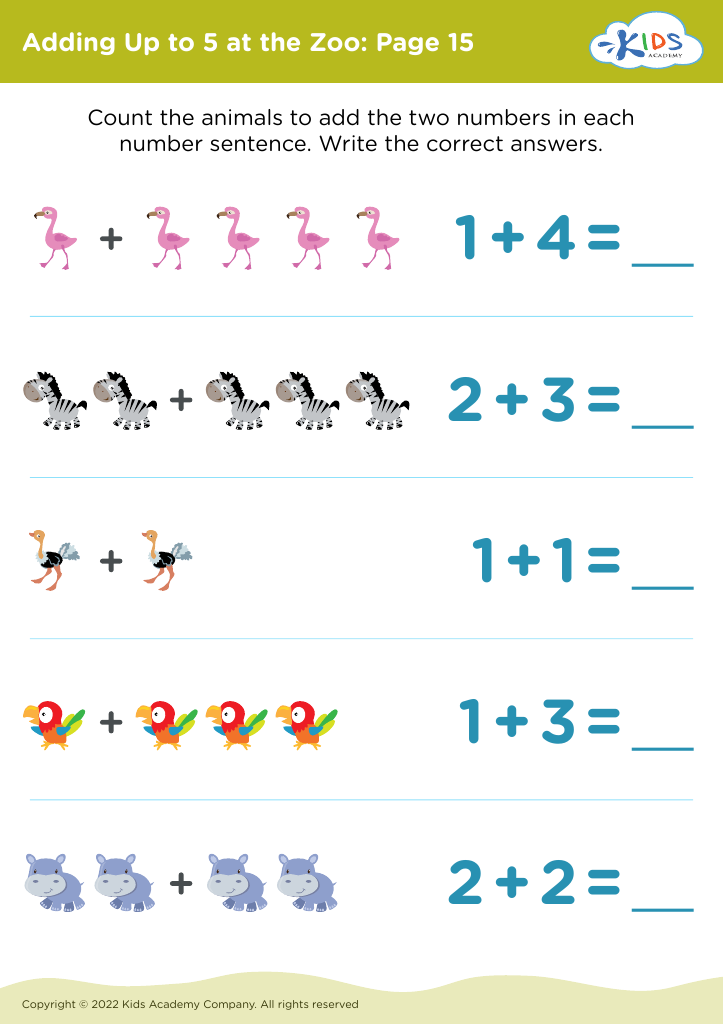
Adding Up to 5 at the Zoo: Page 15
Worksheet
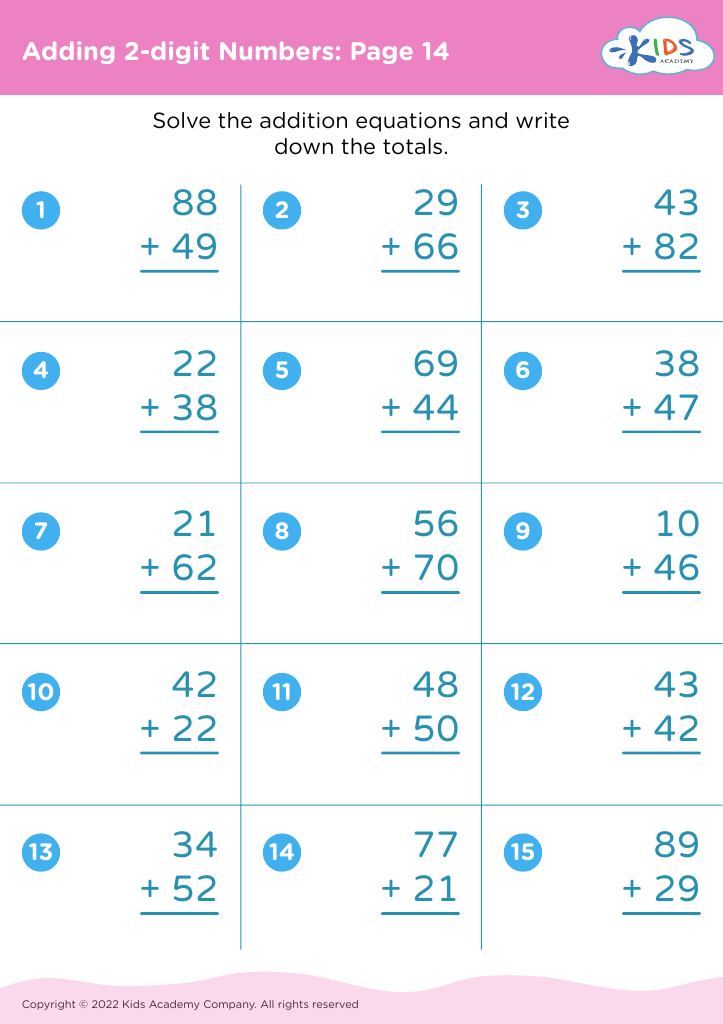
Adding 2-digit Numbers: Page 14

Adding 2-digit Numbers: Page 14

Adding 2-digit Numbers: Page 14
Worksheet
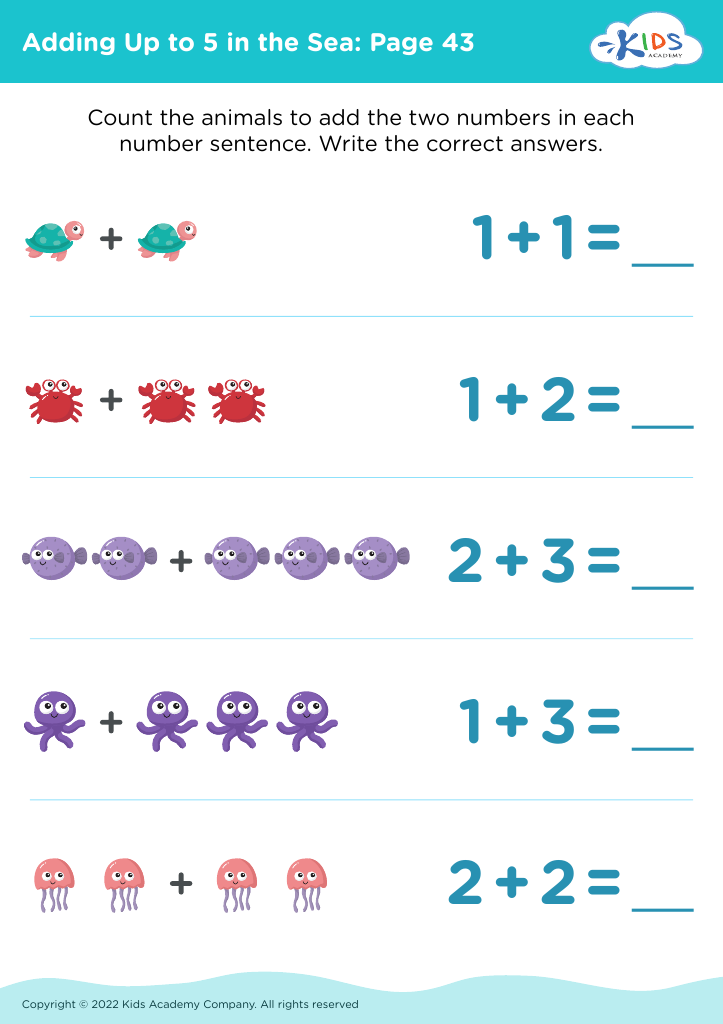
Adding Up to 5 in the Sea: Page 43
Worksheet
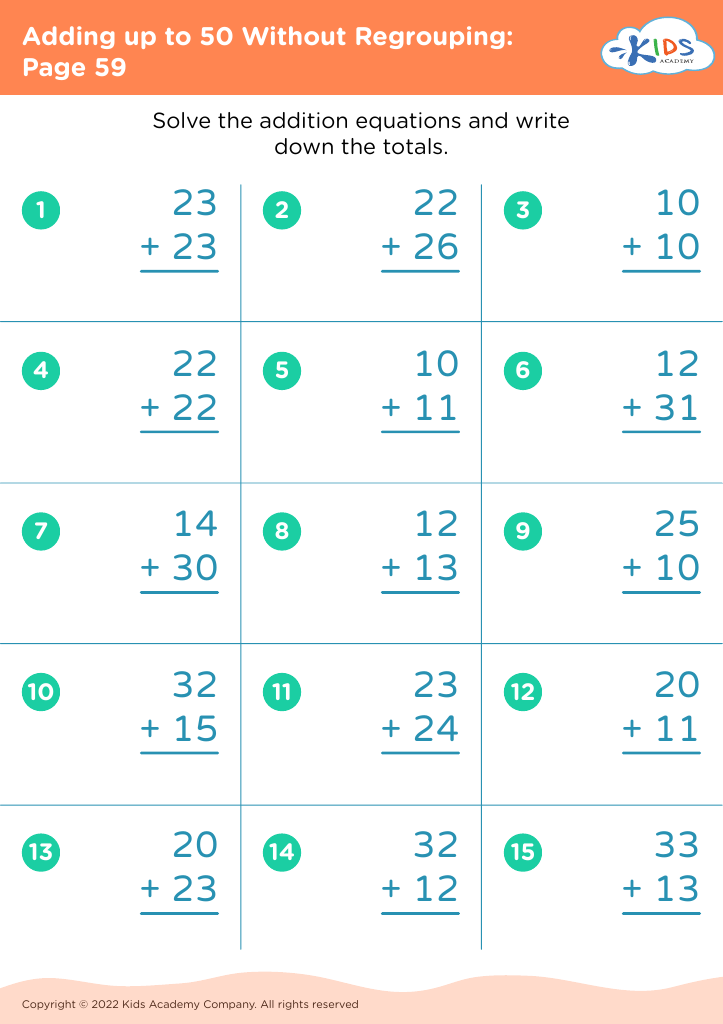
Adding up to 50 Without Regrouping: Page 59
Worksheet
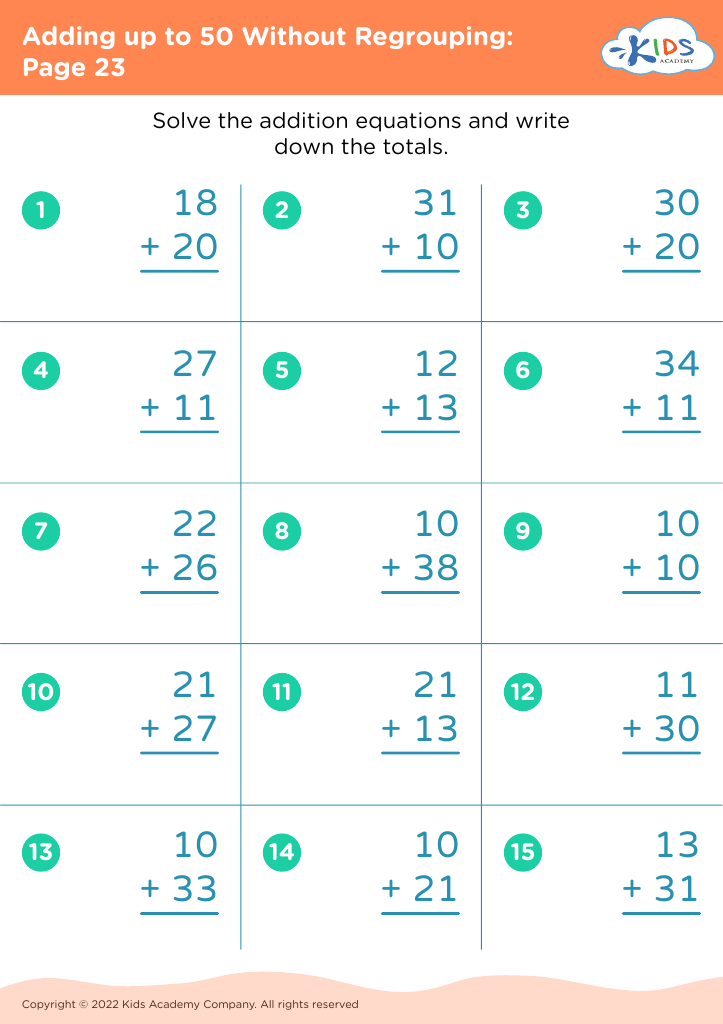
Adding up to 50 Without Regrouping: Page 23
Worksheet
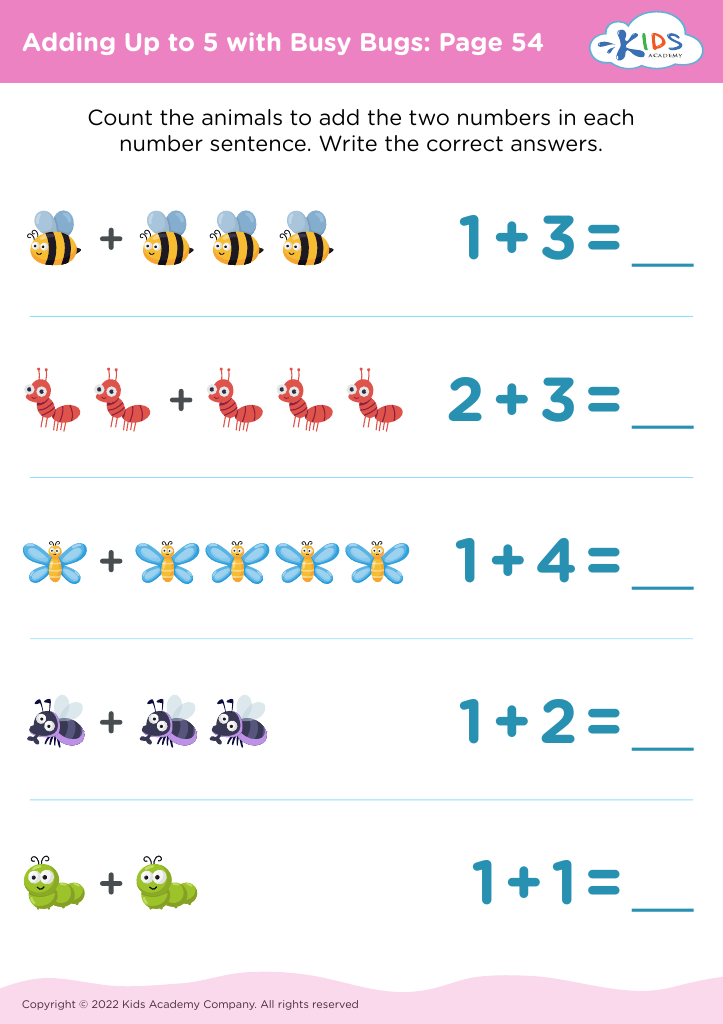
Adding Up to 5 with Busy Bugs: Page 54
Worksheet
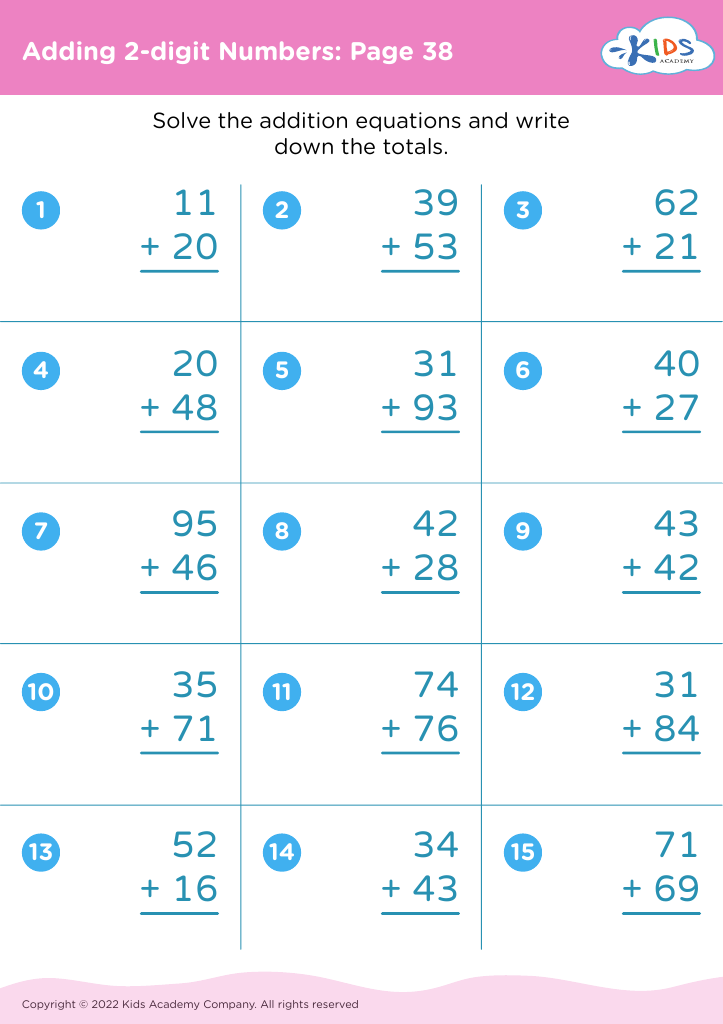
Adding 2-digit Numbers: Page 38

Adding 2-digit Numbers: Page 38

Adding 2-digit Numbers: Page 38
Worksheet
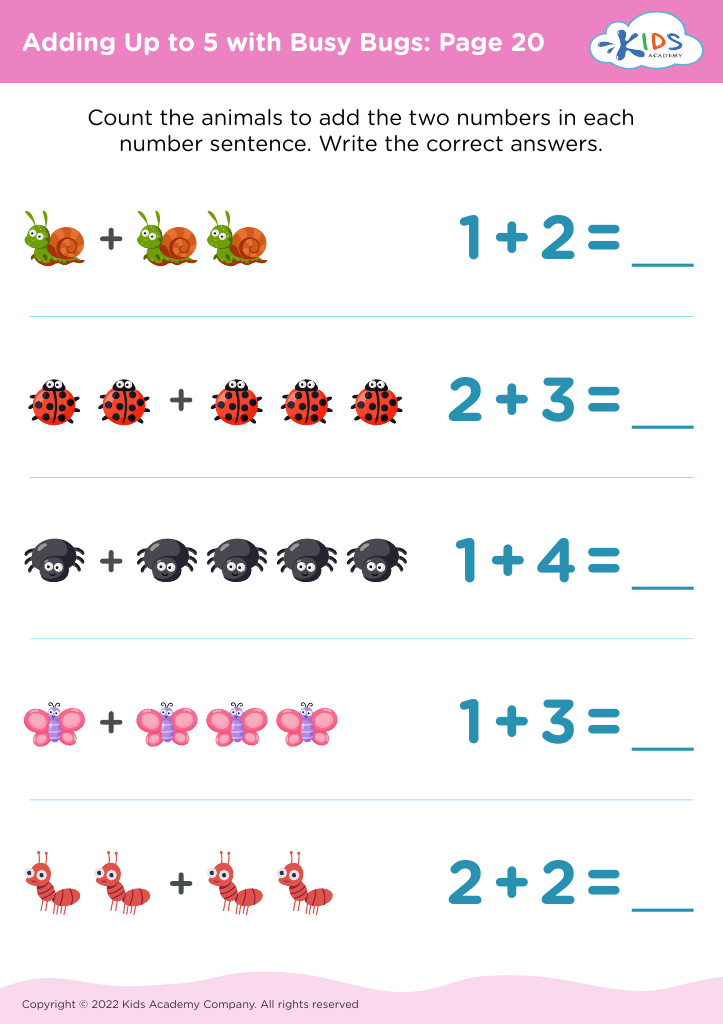
Adding Up to 5 with Busy Bugs: Page 20
Worksheet
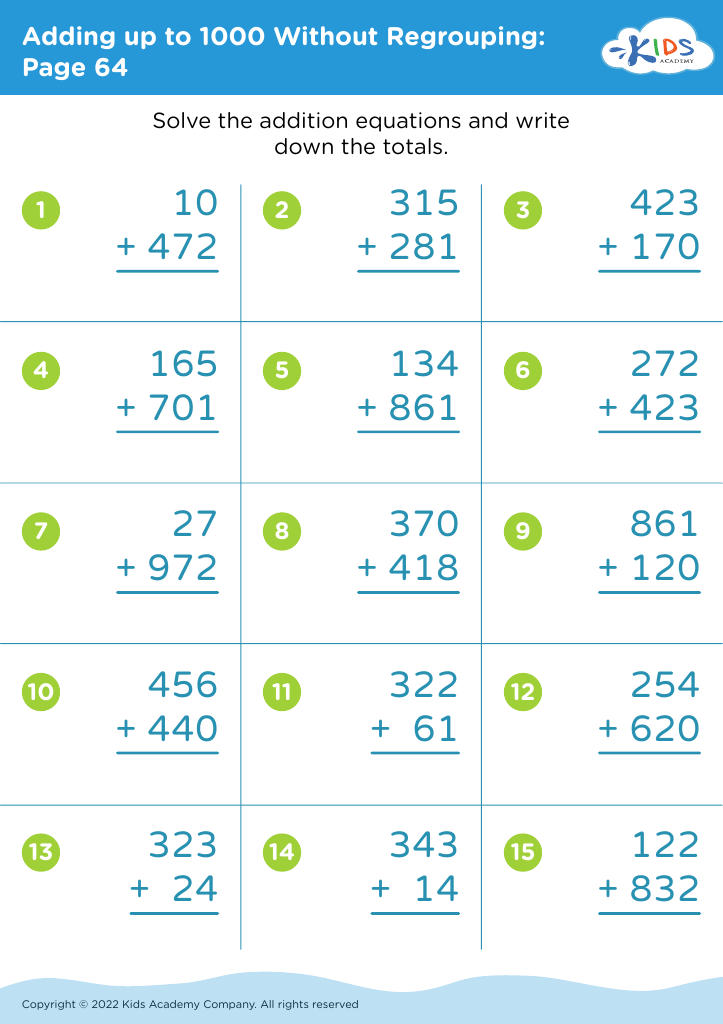
Adding up to 1000 Without Regrouping: Page 64
Worksheet
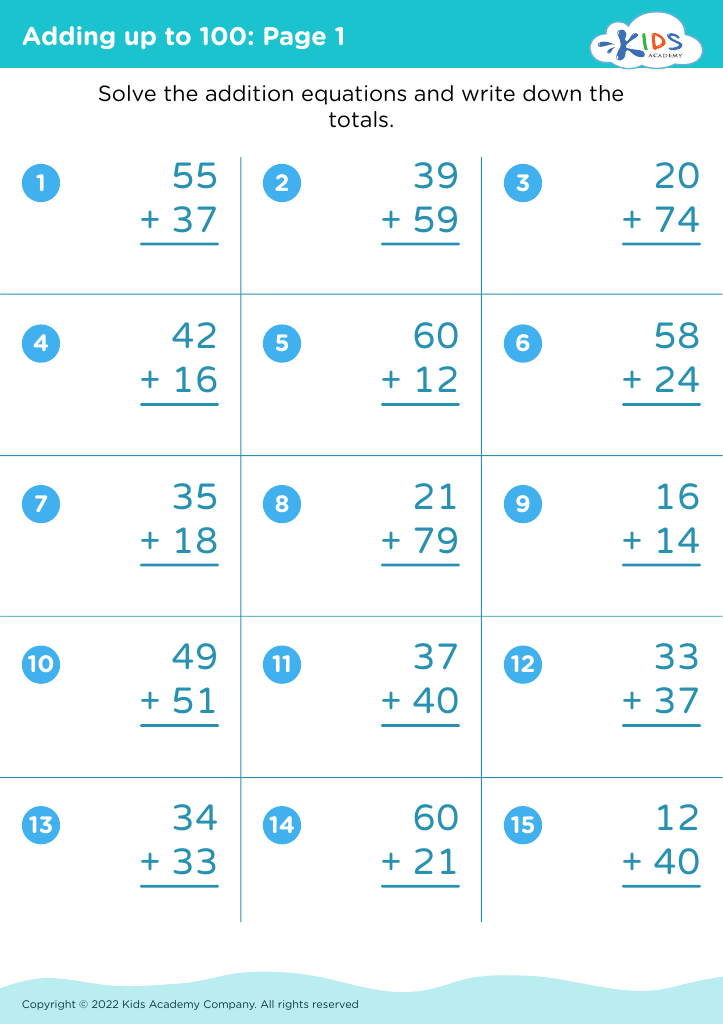
Adding up to 100: Page 1

Adding up to 100: Page 1

Adding up to 100: Page 1
Worksheet
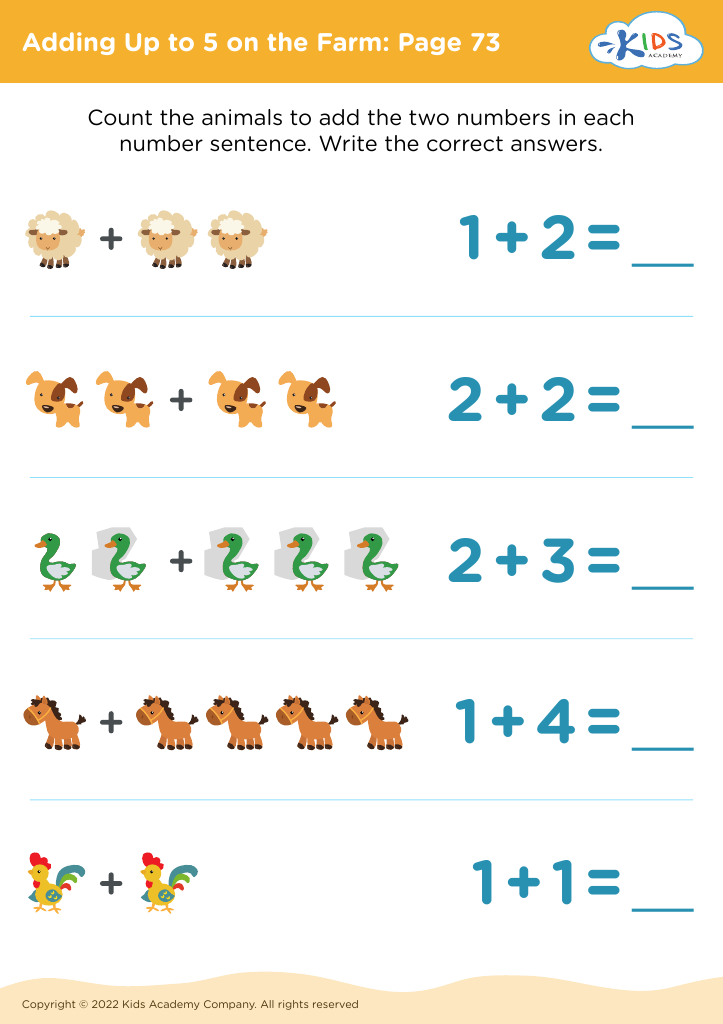
Adding Up to 5 on the Farm: Page 73
Worksheet


Basic addition and subtraction skills are foundational to a child's mathematical development and can have a significant impact on their academic success. For children ages 5-9, these skills are not just about numbers; they facilitate critical thinking, problem-solving, and cognitive reasoning abilities. Mastery of basic arithmetic enables students to progress confidently through more complex math concepts, fostering a positive attitude toward mathematics.

Early practice in addition and subtraction promotes fluency, which can reduce math anxiety and build self-esteem in students. It helps them understand real-world applications, such as budgeting, telling time, and measuring, making math relevant and engaging. Furthermore, collaborative practice with parents or teachers strengthens relationships, allows for individualized learning experiences, and creates a supportive environment that encourages exploration and curiosity.

By ensuring that children develop firm foundational skills in addition and subtraction, parents and teachers empower them to navigate challenges confidently. Ultimately, a strong grasp of these basic math principles sets the stage for lifelong learning, critical thinking, and success both inside and outside the classroom. Identifying areas of struggle early and providing the necessary support can turn potential difficulties into opportunities for growth and mastery.