Filters

305 filtered results

Clear all filters
Favorites
With answer key
Interactive

305 filtered results

Difficulty Level

Grade


Check out this FREE Trial Lesson on Addition & Subtraction for age 5-9!

My Family

Favorites
With answer key
Interactive
  • 5-9
  • Counting practice
  • Addition & Subtraction
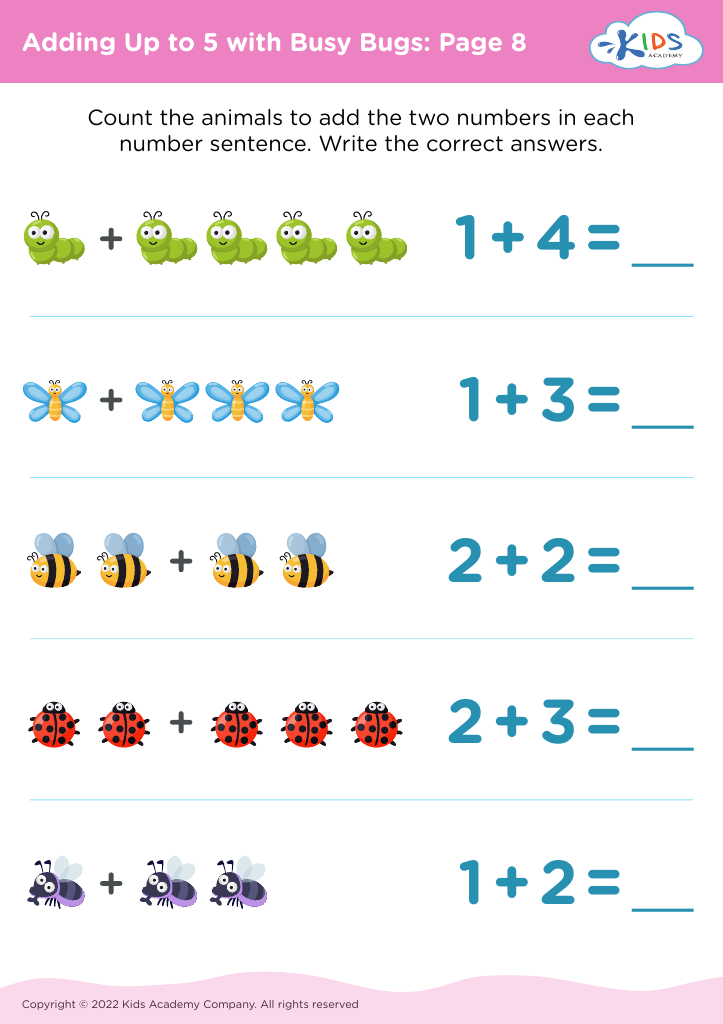
Adding Up to 5 with Busy Bugs: Page 8
Worksheet
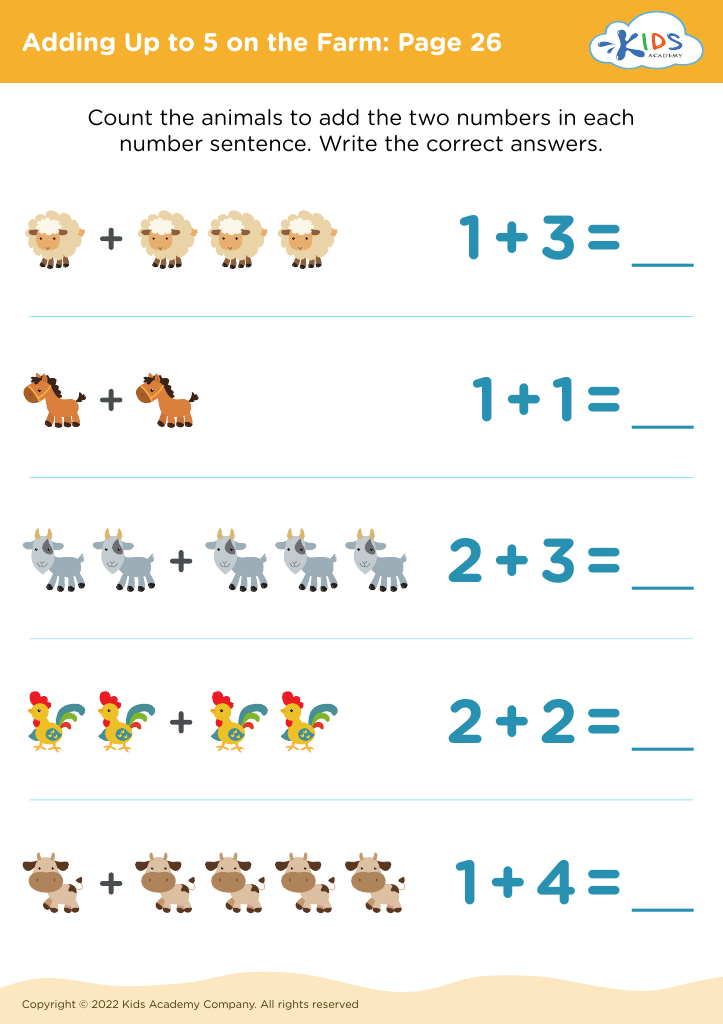
Adding Up to 5 on the Farm: Page 26
Worksheet
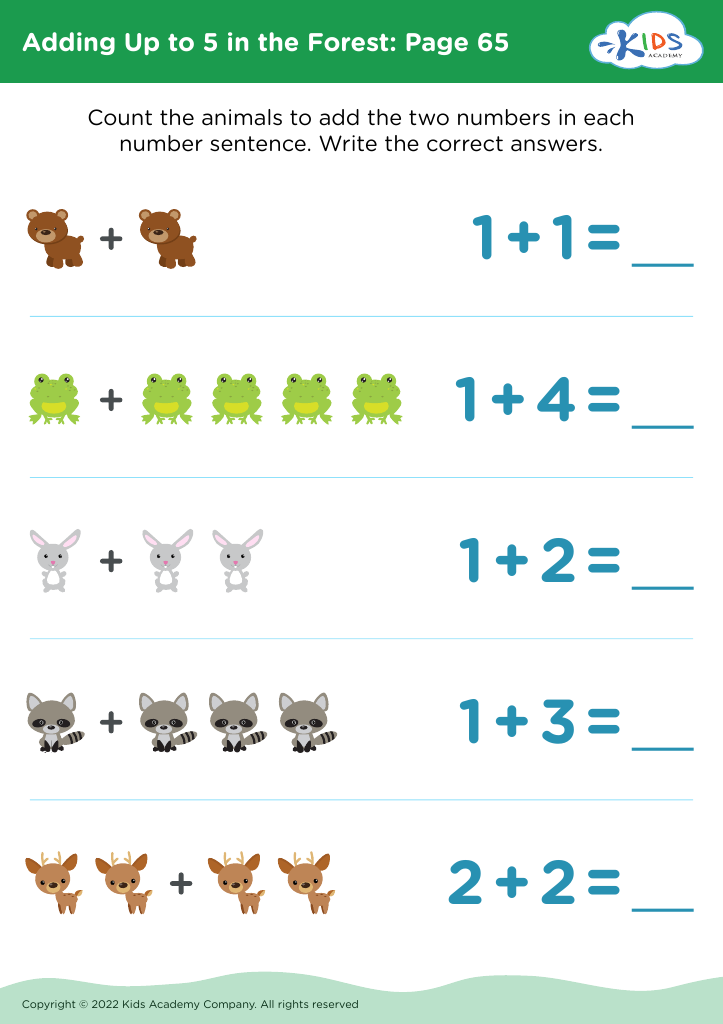
Adding Up to 5 in the Forest: Page 65
Worksheet
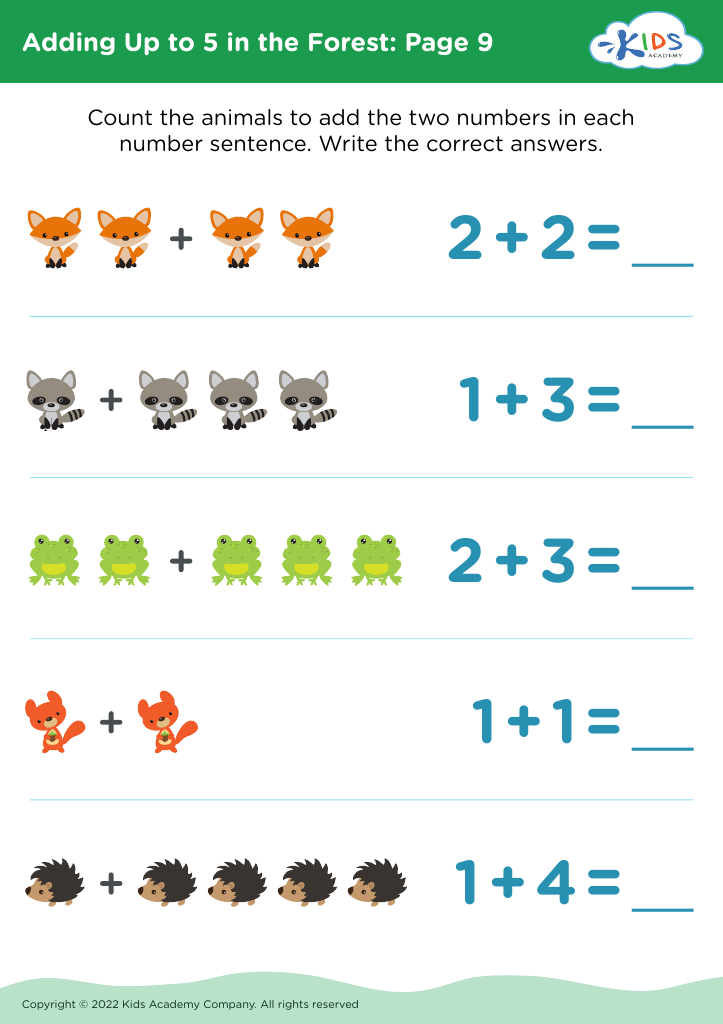
Adding Up to 5 in the Forest: Page 9
Worksheet
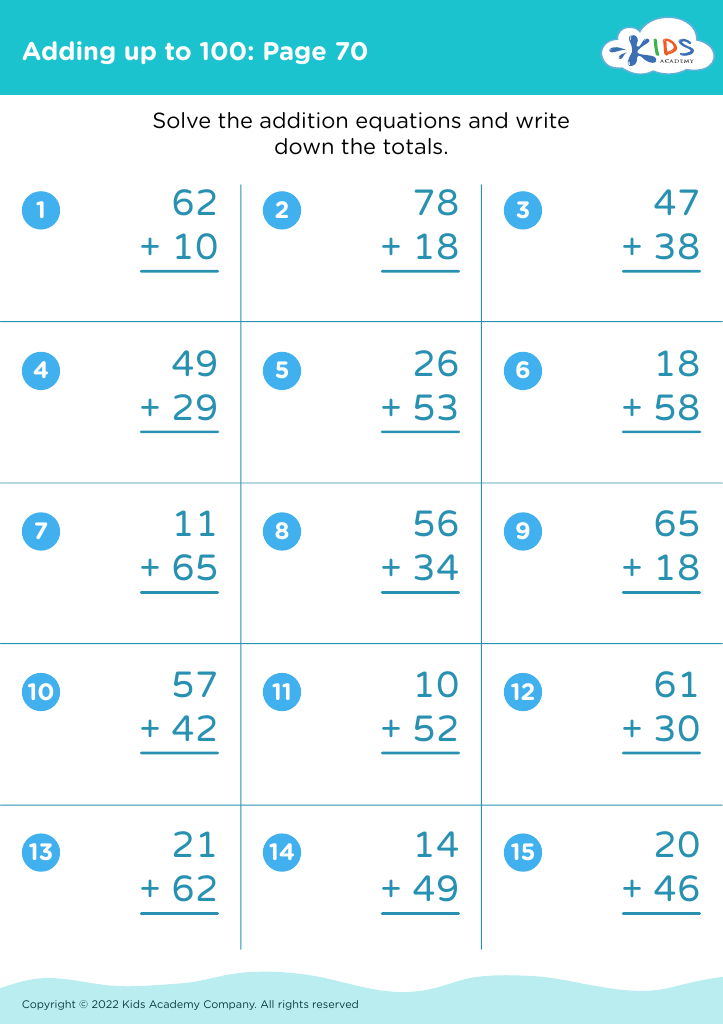
Adding up to 100: Page 70

Adding up to 100: Page 70

Adding up to 100: Page 70
Worksheet
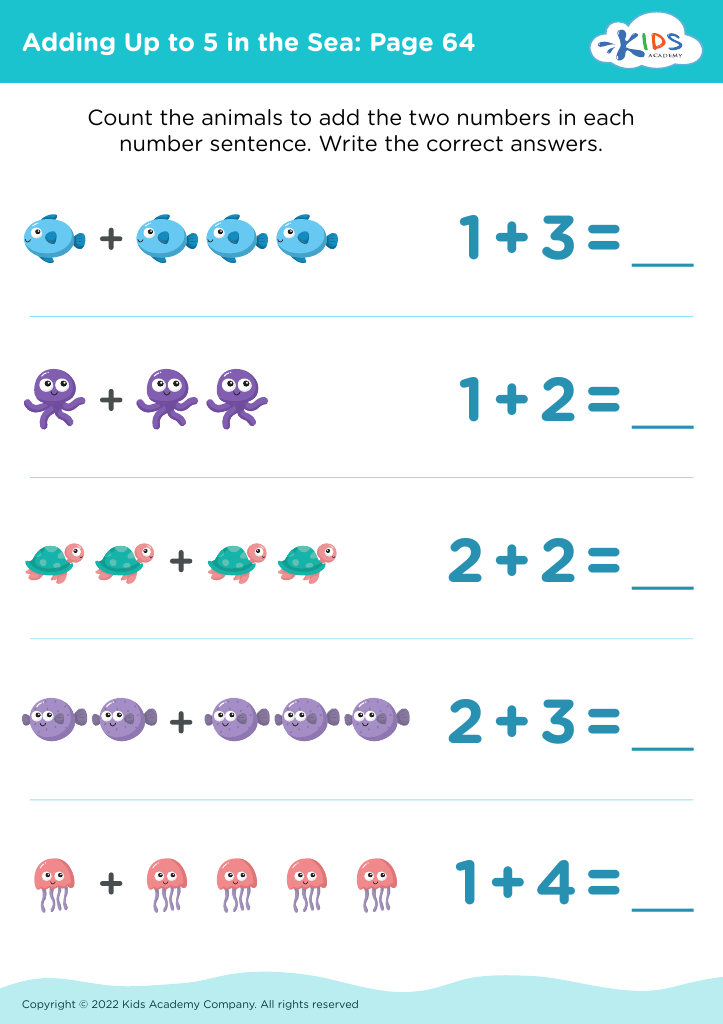
Adding Up to 5 in the Sea: Page 64
Worksheet
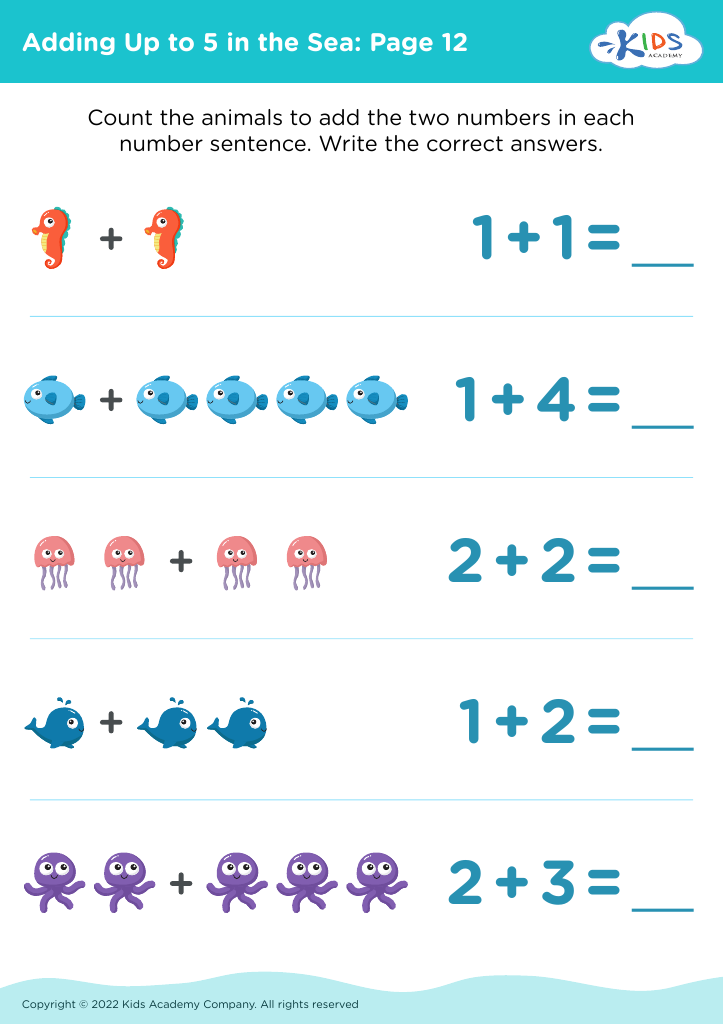
Adding Up to 5 in the Sea: Page 12
Worksheet
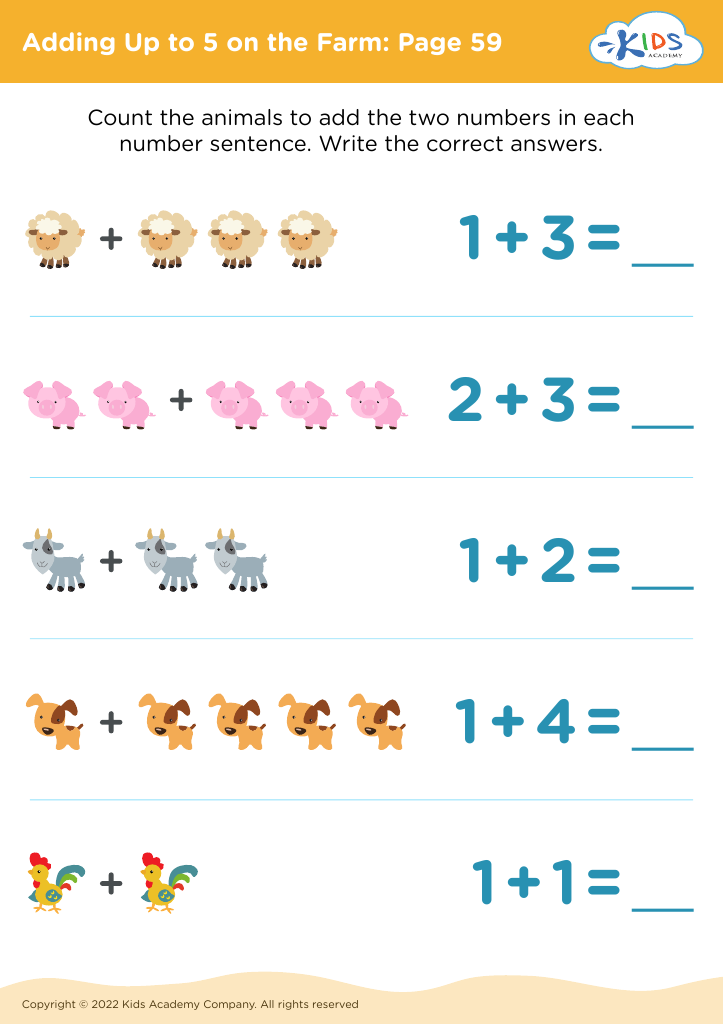
Adding Up to 5 on the Farm: Page 59
Worksheet
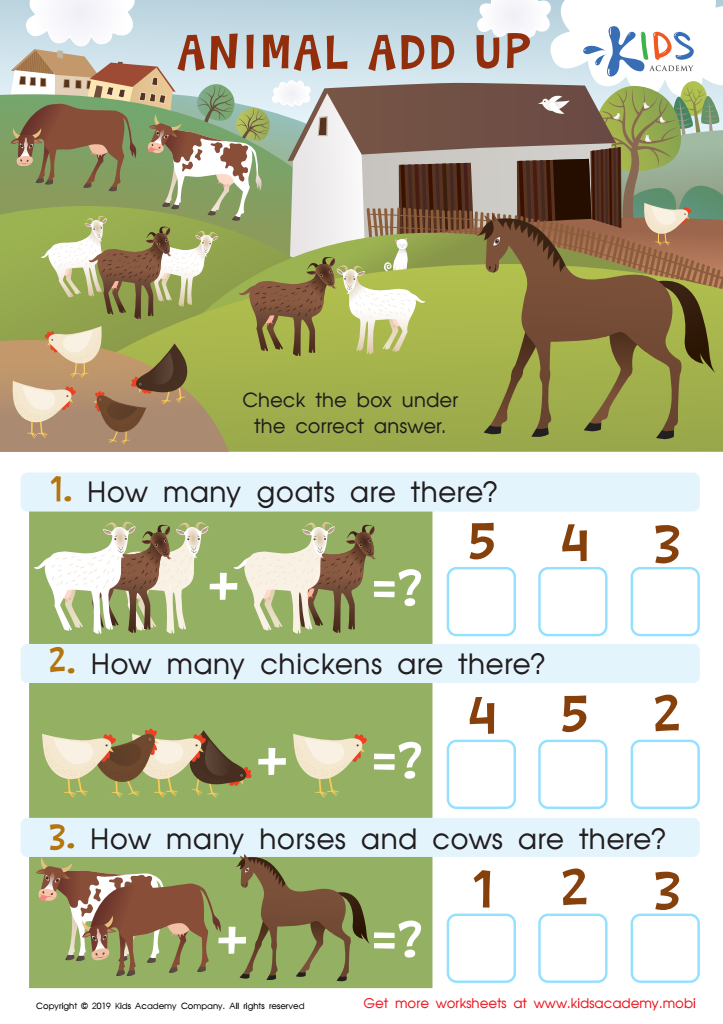
Animal Add Up Worksheet

Animal Add Up Worksheet

Animals are fun to observe and interact with. They can be seen at the zoo, parks, farms and in homes with pets. This worksheet helps kids identify animals, and build addition skills. Look at the picture with them and help name each animal. After that, add the animals up and check the box for the correct answer. 80 words.
Animal Add Up Worksheet
Worksheet
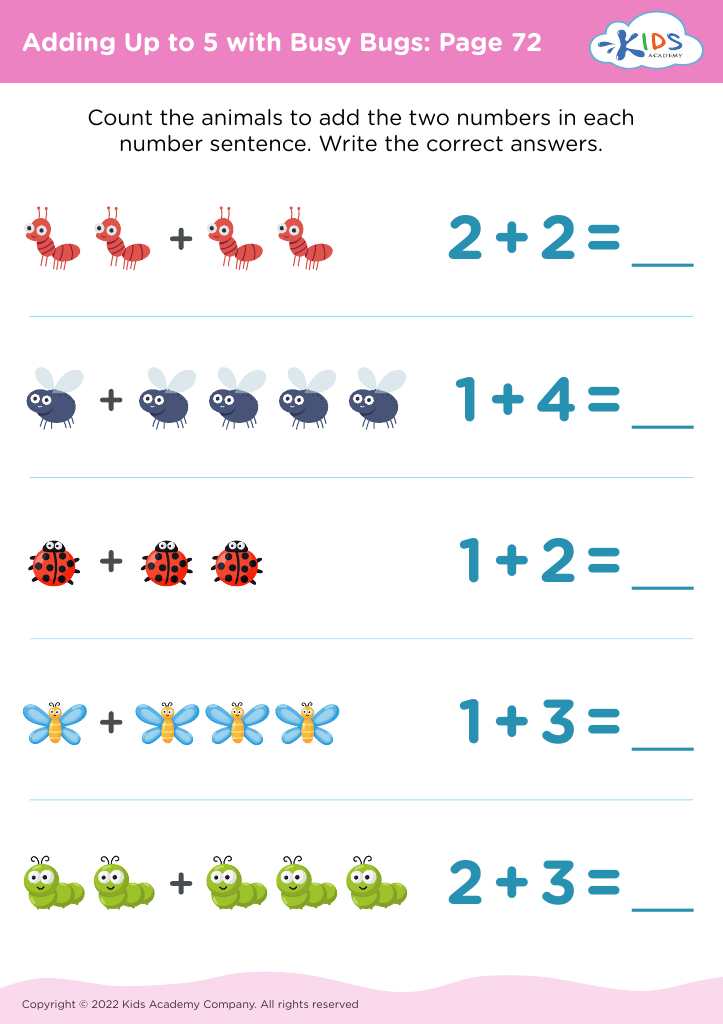
Adding Up to 5 with Busy Bugs: Page 72
Worksheet
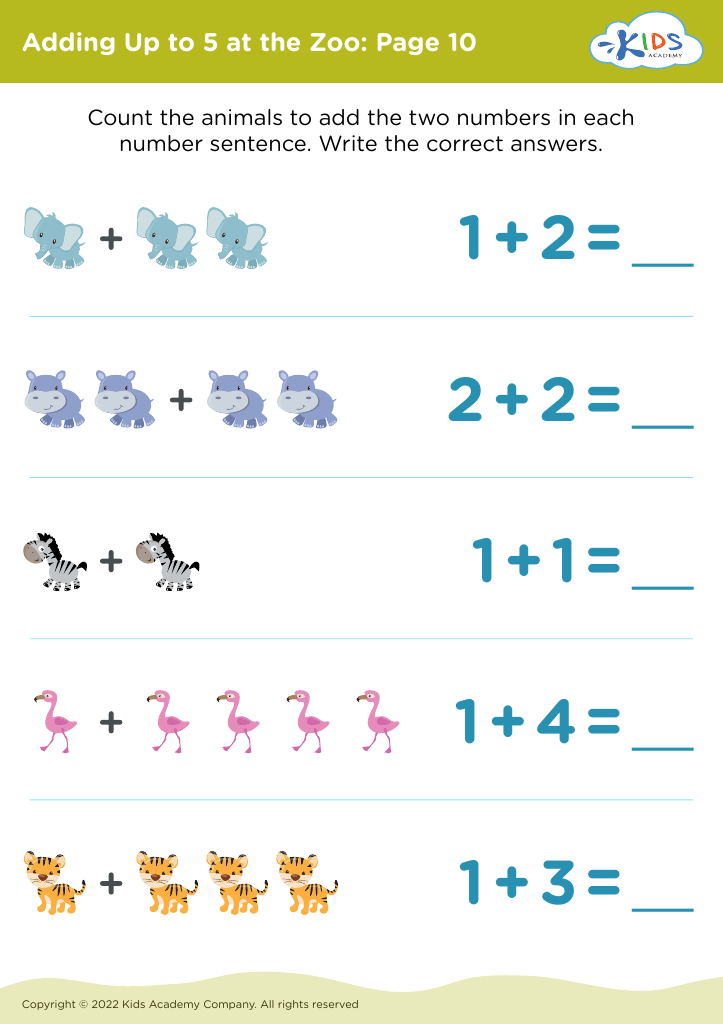
Adding Up to 5 at the Zoo: Page 10
Worksheet
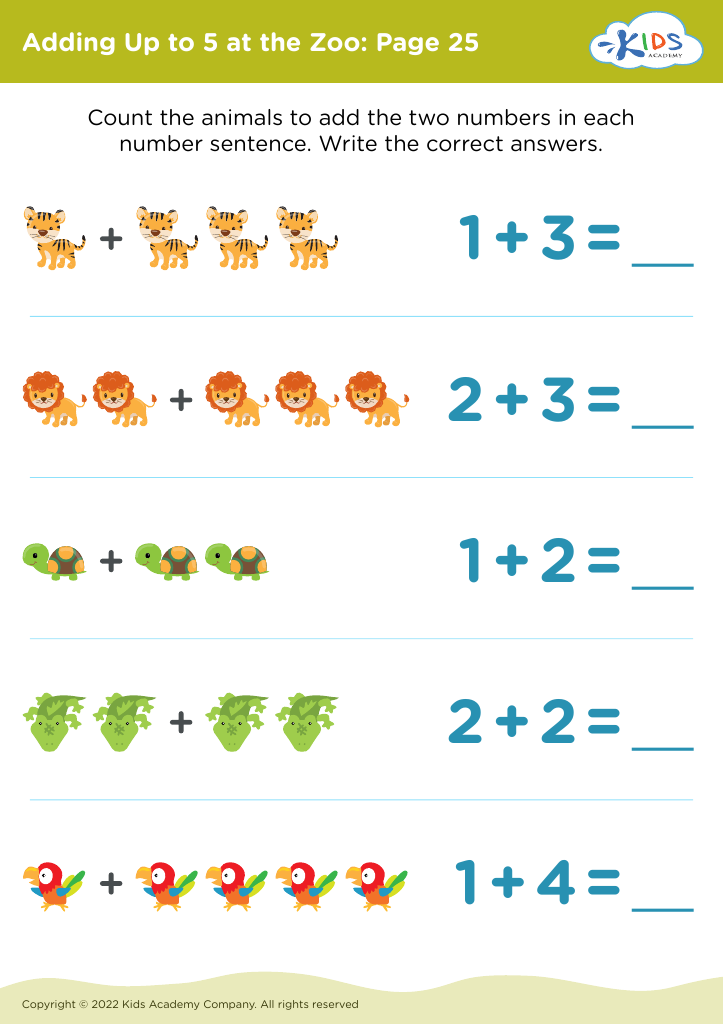
Adding Up to 5 at the Zoo: Page 25
Worksheet
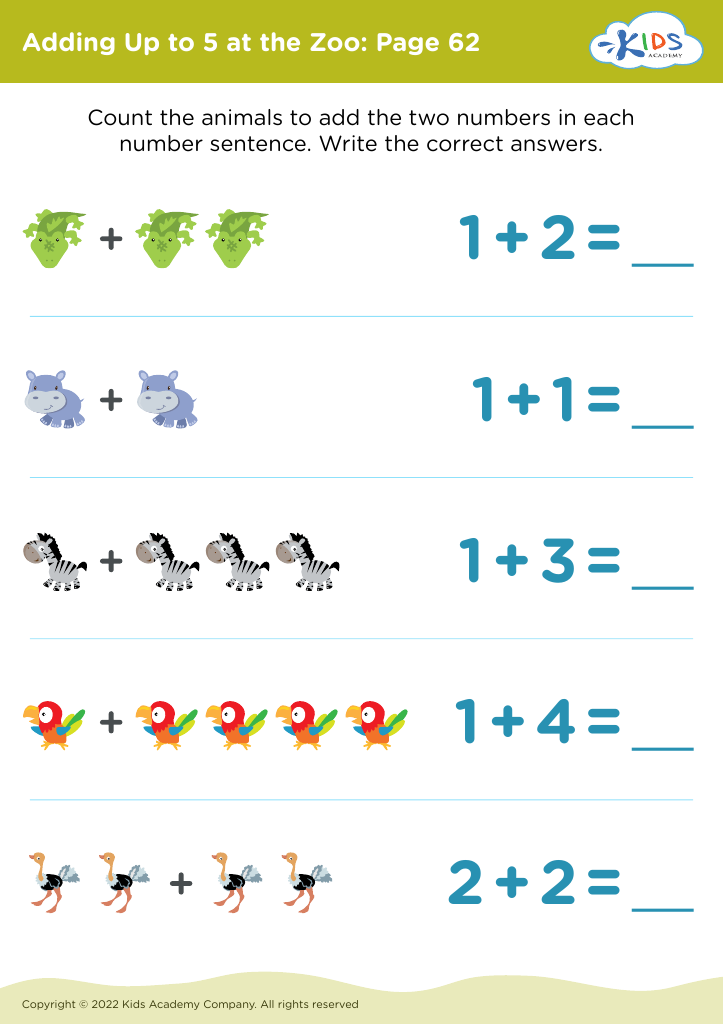
Adding Up to 5 at the Zoo: Page 62
Worksheet
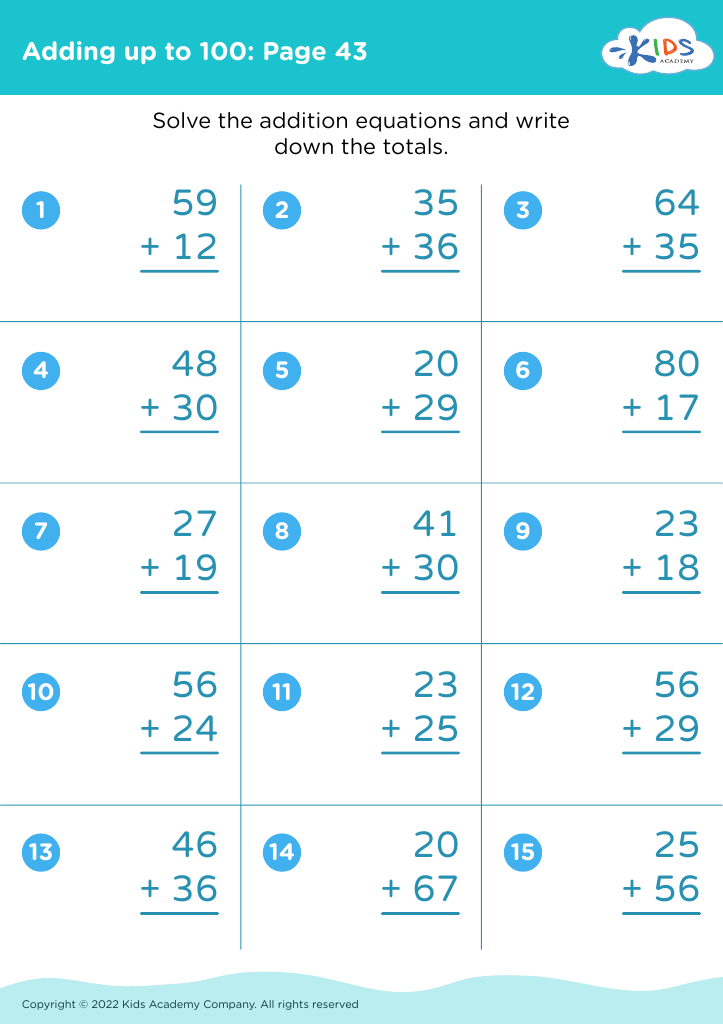
Adding up to 100: Page 43

Adding up to 100: Page 43

Adding up to 100: Page 43
Worksheet
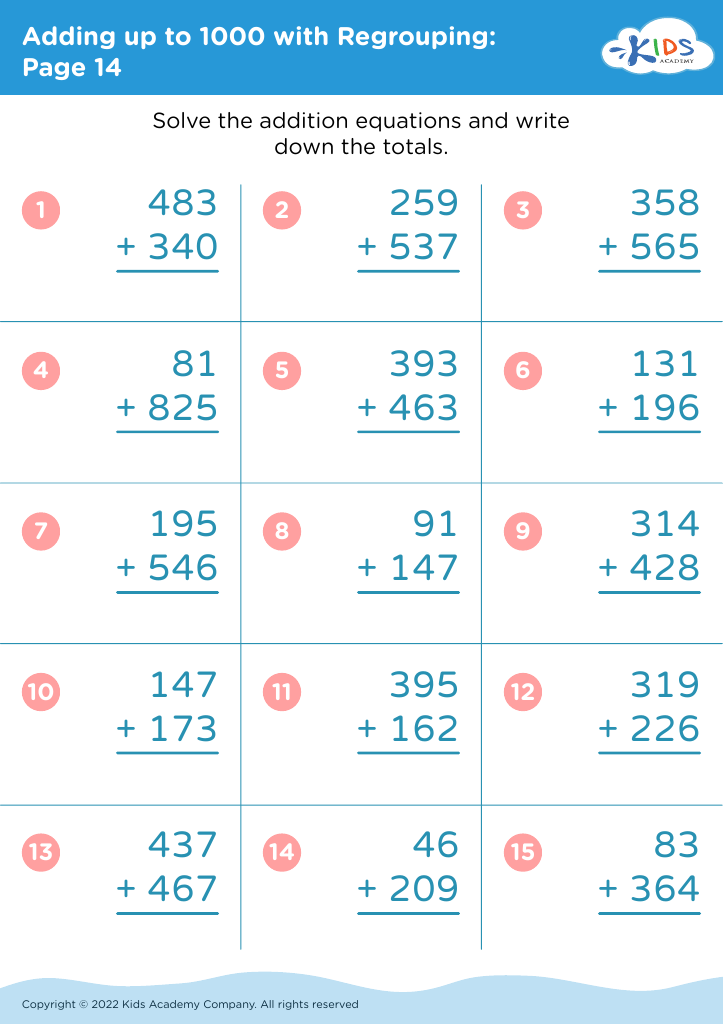
Adding up to 1000 with Regrouping: Page 14
Worksheet
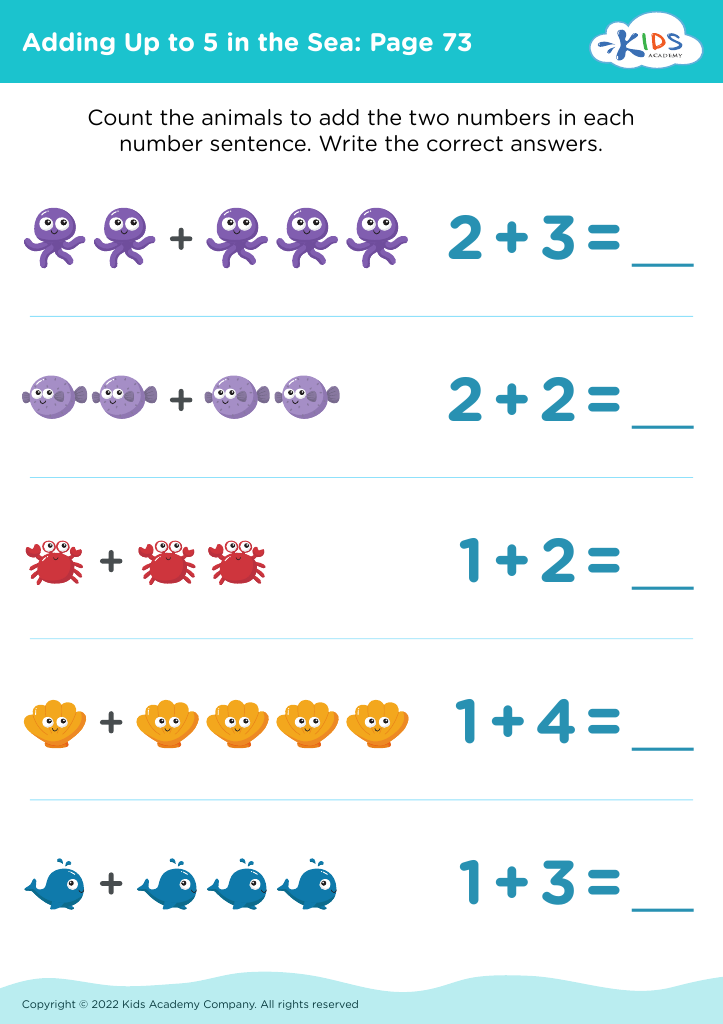
Adding Up to 5 in the Sea: Page 73
Worksheet
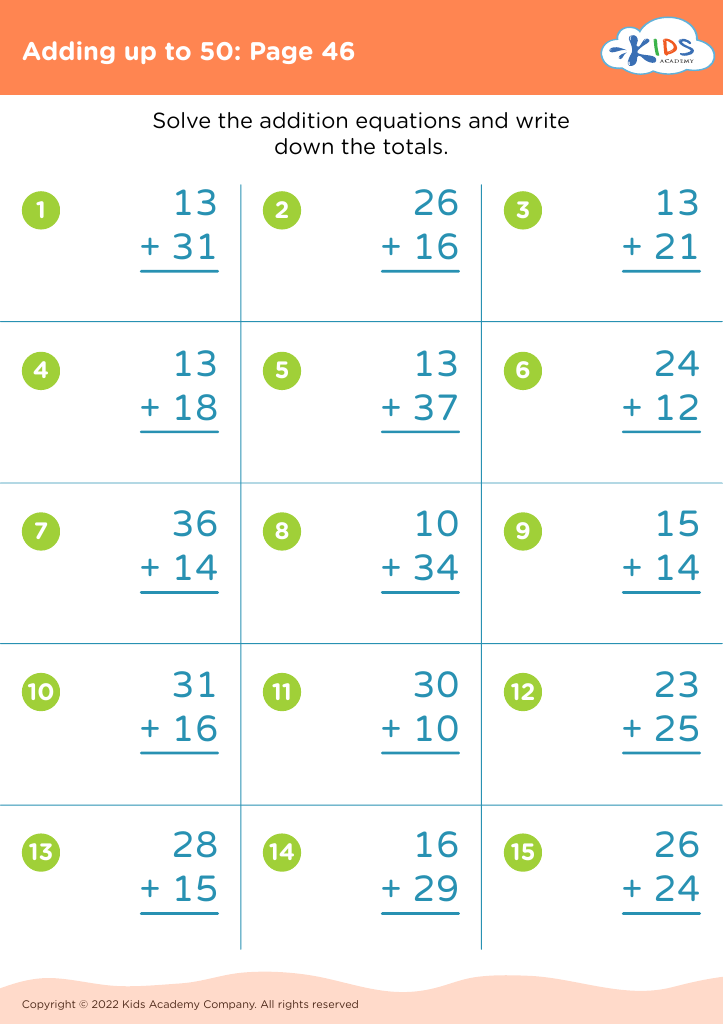
Adding up to 50: Page 46

Adding up to 50: Page 46

Adding up to 50: Page 46
Worksheet
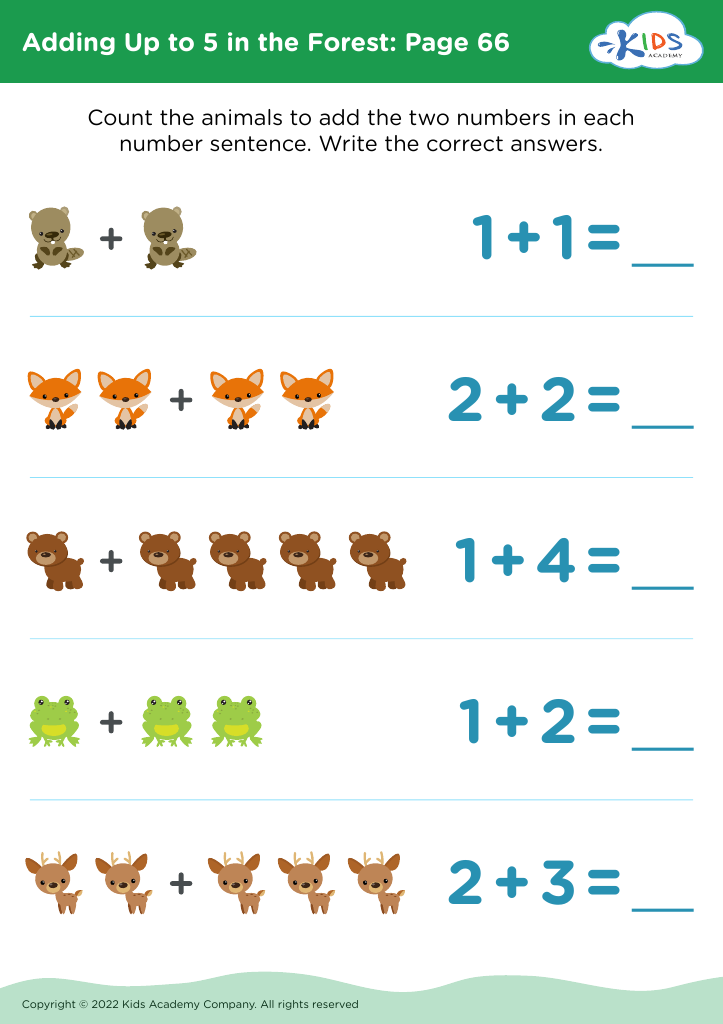
Adding Up to 5 in the Forest: Page 66
Worksheet
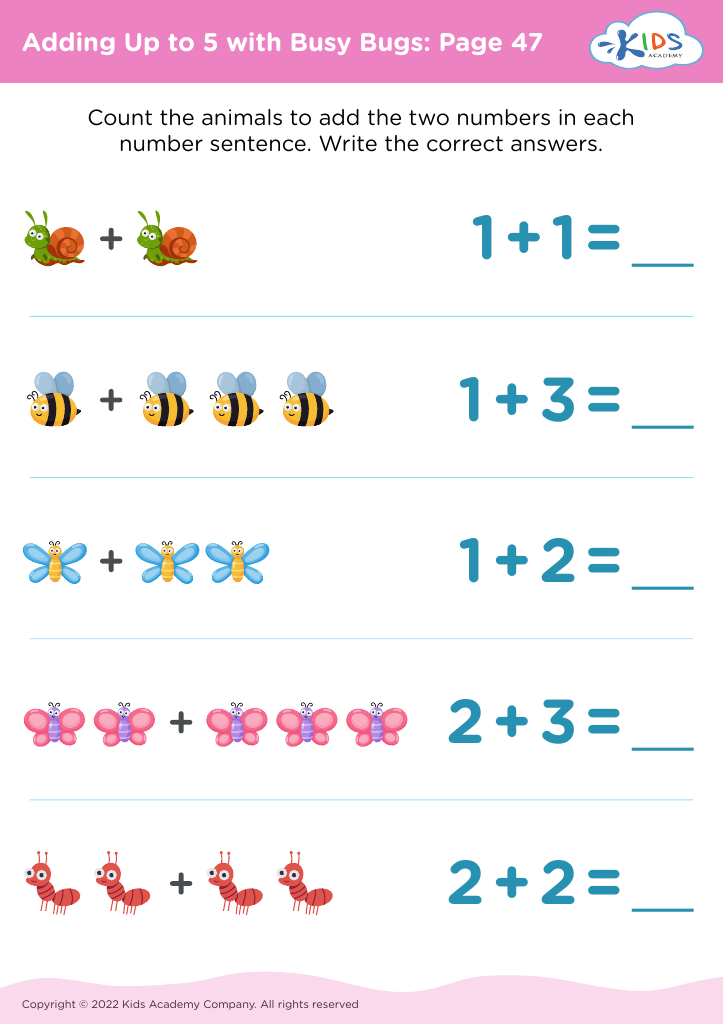
Adding Up to 5 with Busy Bugs: Page 47
Worksheet
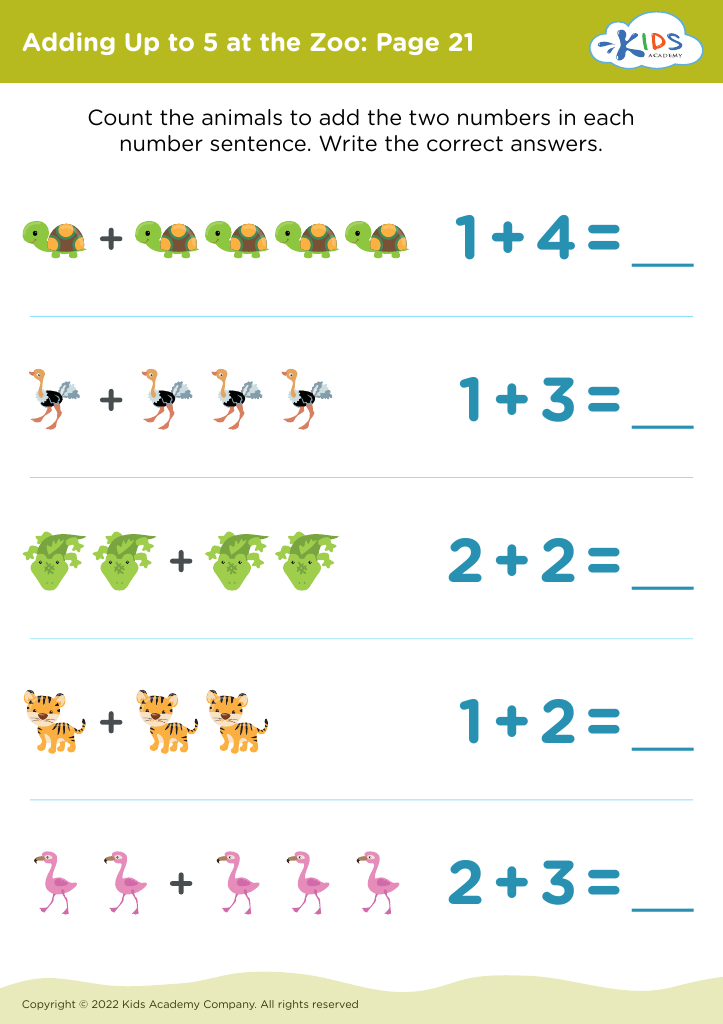
Adding Up to 5 at the Zoo: Page 21
Worksheet
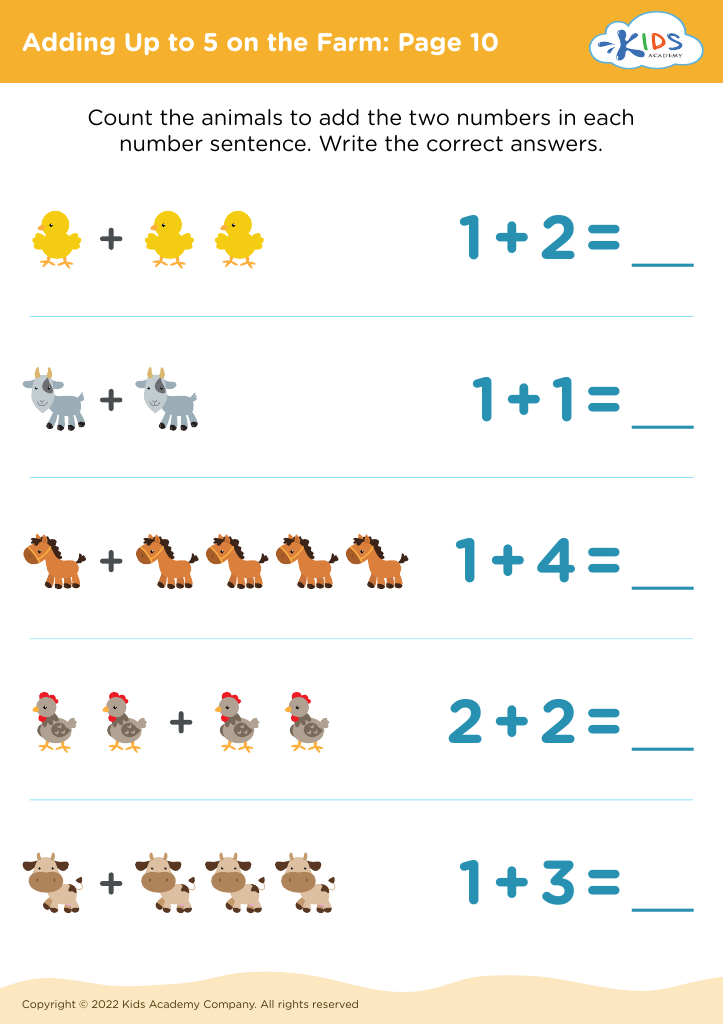
Adding Up to 5 on the Farm: Page 10
Worksheet
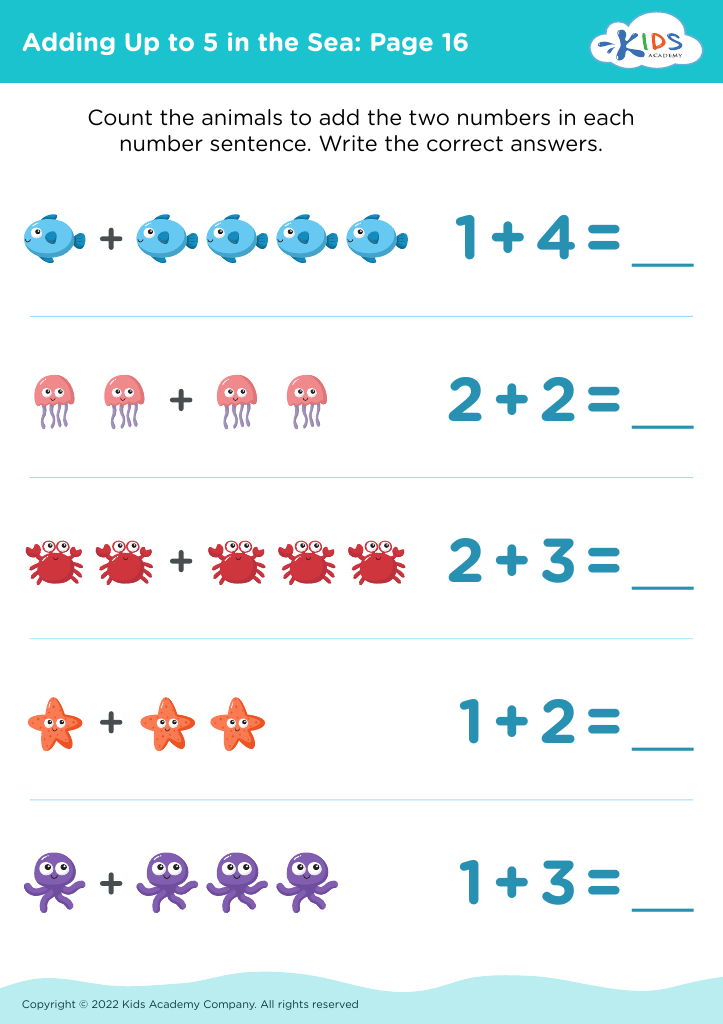
Adding Up to 5 in the Sea: Page 16
Worksheet
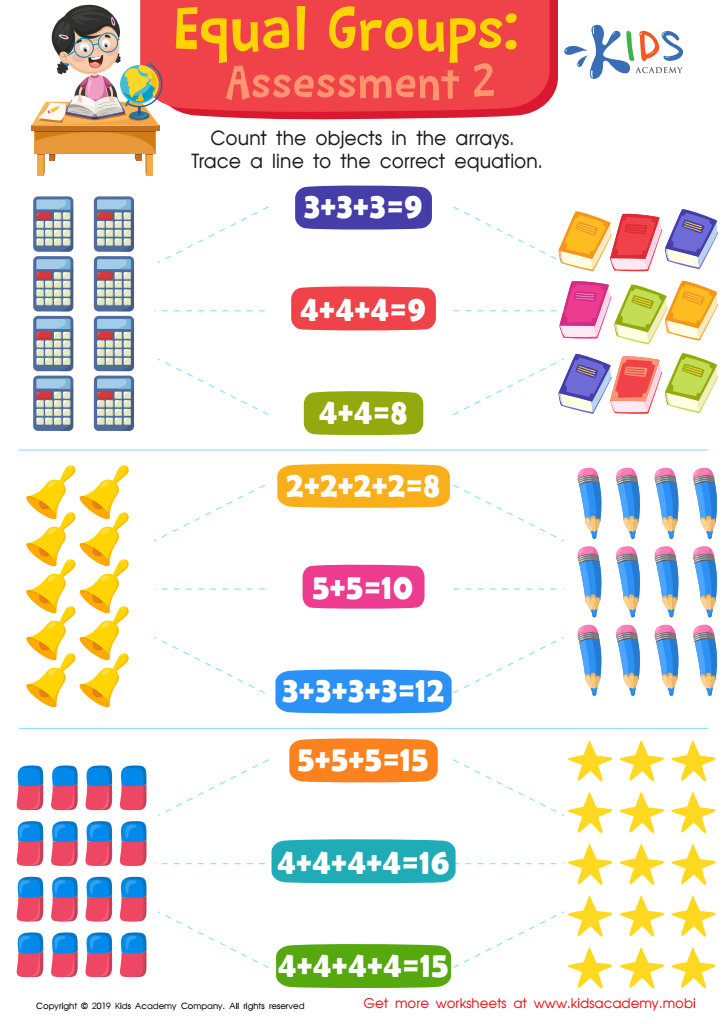
Equal Groups: Assessment 2 Worksheet

Equal Groups: Assessment 2 Worksheet

Get your kids to pay attention to learning with familiar objects, bright colors, and this worksheet. It has six arrays - ask kids to identify them and count the objects. Then, help them trace a line to the correct equation.
Equal Groups: Assessment 2 Worksheet

Worksheet
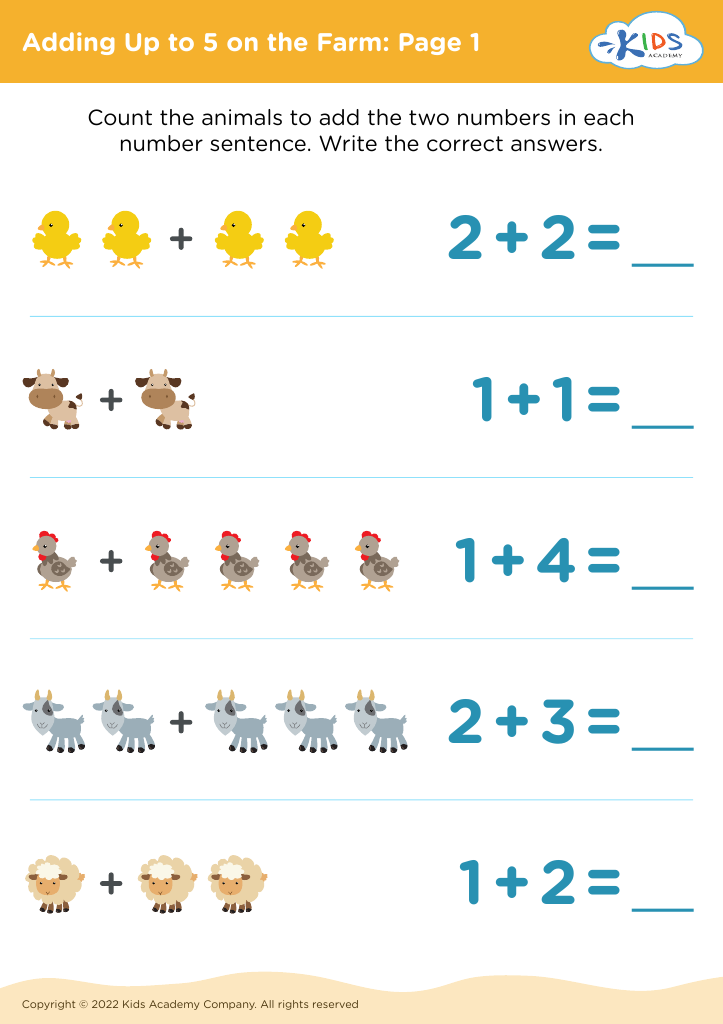
Adding Up to 5 on the Farm: Page 1
Worksheet


Counting practice, addition, and subtraction are foundational skills that form the building blocks of more advanced mathematical concepts. For children ages 5-9, developing strong numerical and arithmetic skills early on is crucial for several reasons.

First, mastering basic math promotes cognitive development. Engaging young minds in counting and simple calculations enhances problem-solving abilities, logical thinking, and reasoning skills. Children learn to recognize patterns, understand sequences, and develop a sense of order—all critical aspects of their overall intellectual growth.

Second, early math proficiency directly impacts academic achievement. Numerous studies have demonstrated that a solid understanding of basic math in early childhood correlates with better performance in later grades. This foundation helps ease the transition into more complex subjects like multiplication, division, and eventually, algebra and geometry.

Additionally, practical life skills benefit from strong early math knowledge. Basic arithmetic is used in everyday tasks such as telling time, measuring ingredients, handling money, and planning activities. Teaching these skills thus prepares children to handle real-world situations confidently and independently.

Finally, building confidence in math from a young age can prevent math anxiety. When children feel competent and experience success in early math, they are more likely to approach challenges with a positive attitude. Therefore, parents and teachers should prioritize counting practice, addition, and subtraction to foster a supportive and enriching learning environment.