Filters

254 filtered results

Clear all filters
Favorites
With answer key
Interactive

254 filtered results

Difficulty Level

Grade


Check out this FREE Trial Lesson on Addition & Subtraction for age 5-9!

My Family

Favorites
With answer key
Interactive
  • 5-9
  • Counting skills
  • Addition & Subtraction
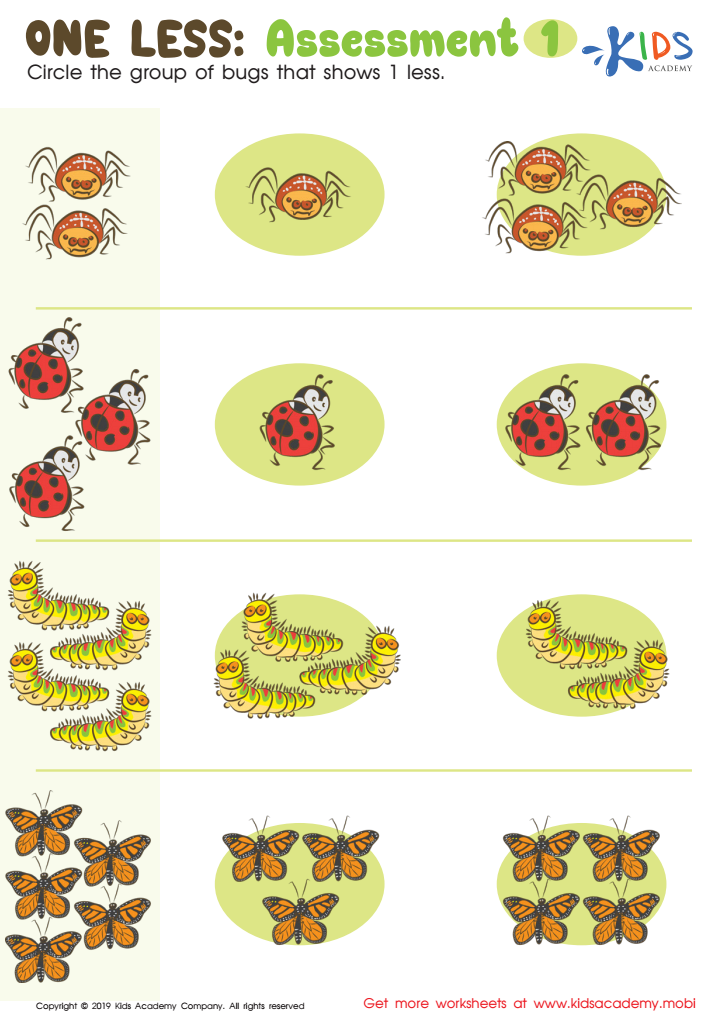
One Less: Assessment 1 Worksheet

One Less: Assessment 1 Worksheet

Help your kids with counting using this worksheet that has pictures of bugs! There are four different bugs and insects. Show them each one and ask them to count, then circle the group that has 1 less than the previous group. Don't worry if your kids don't like bugs - it's just a picture!
One Less: Assessment 1 Worksheet
Worksheet
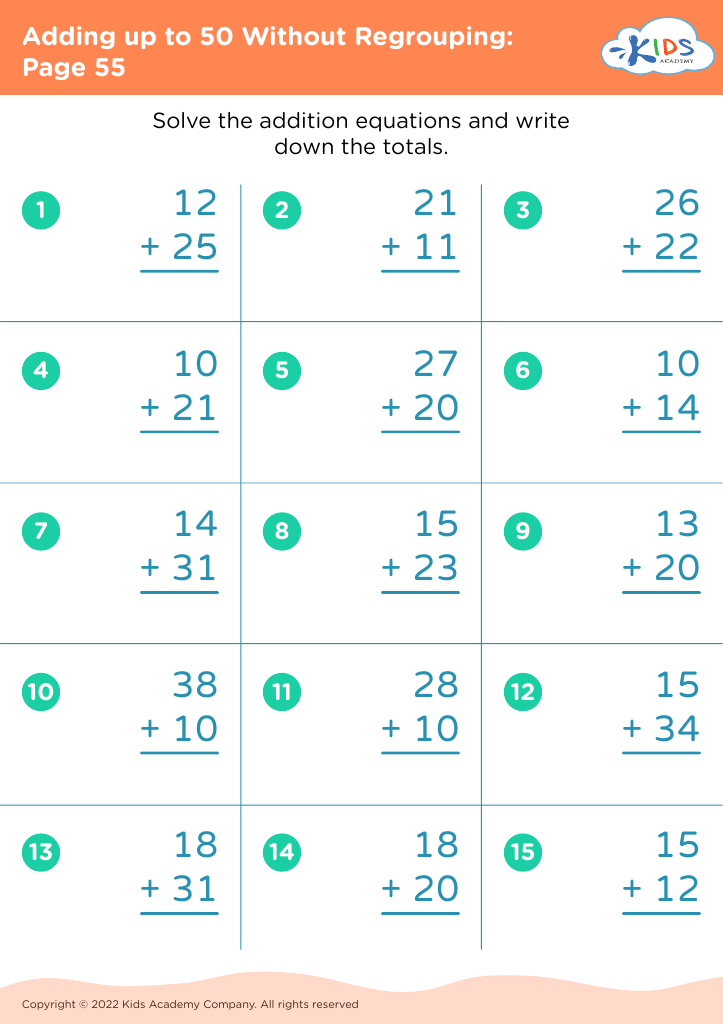
Adding up to 50 Without Regrouping: Page 55
Worksheet
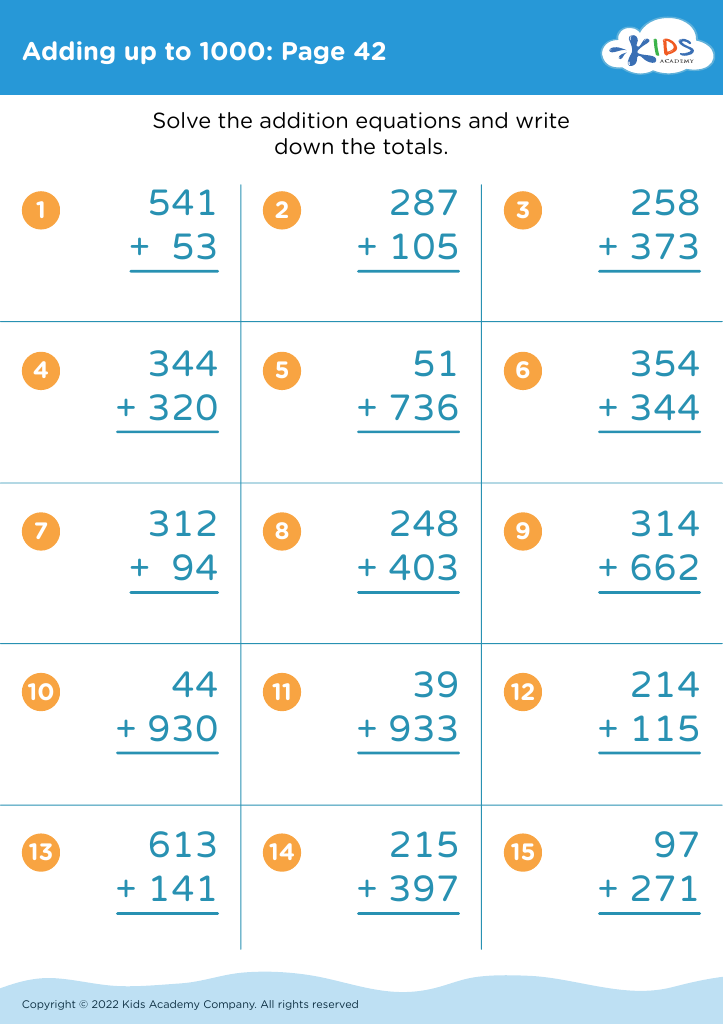
Adding up to 1000: Page 42

Adding up to 1000: Page 42

Adding up to 1000: Page 42
Worksheet
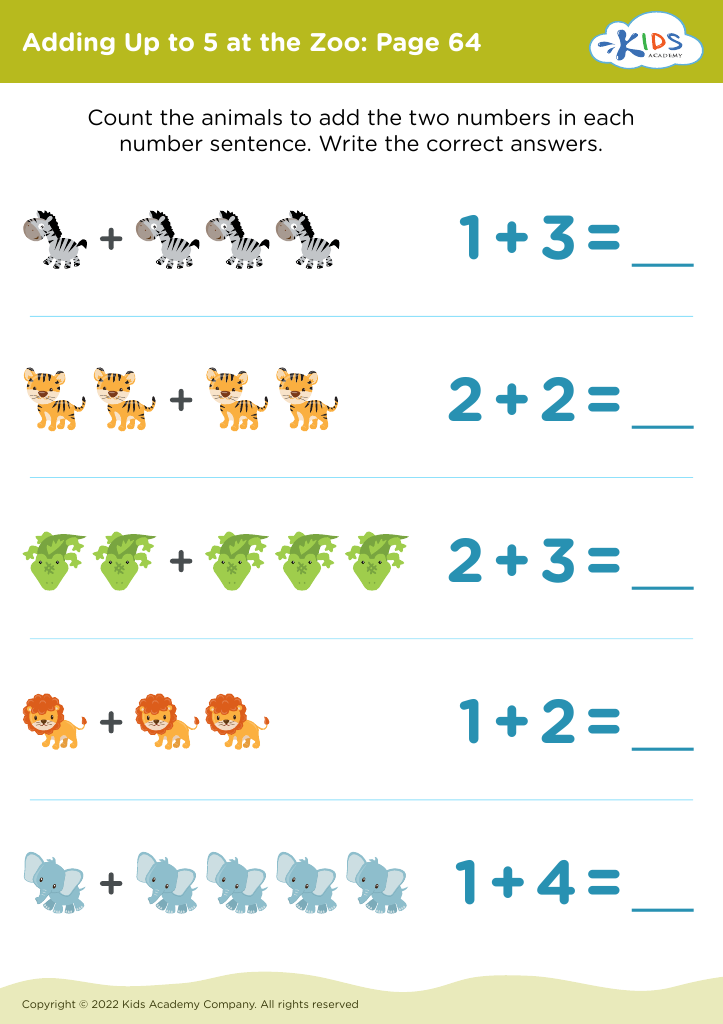
Adding Up to 5 at the Zoo: Page 64
Worksheet
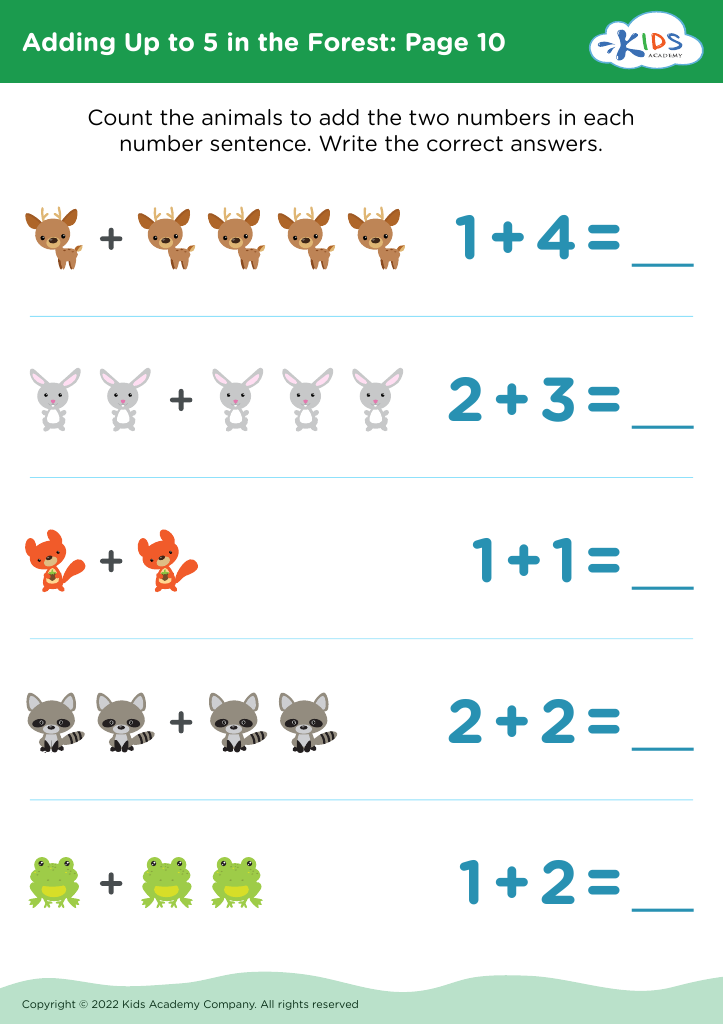
Adding Up to 5 in the Forest: Page 10
Worksheet
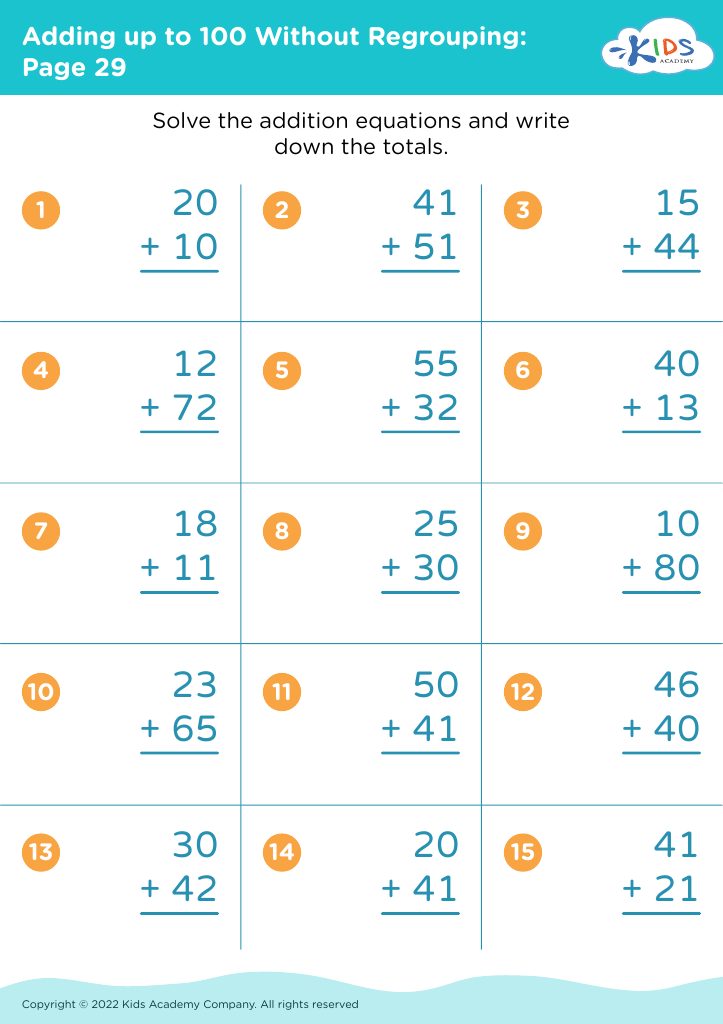
Adding up to 100 Without Regrouping: Page 29
Worksheet
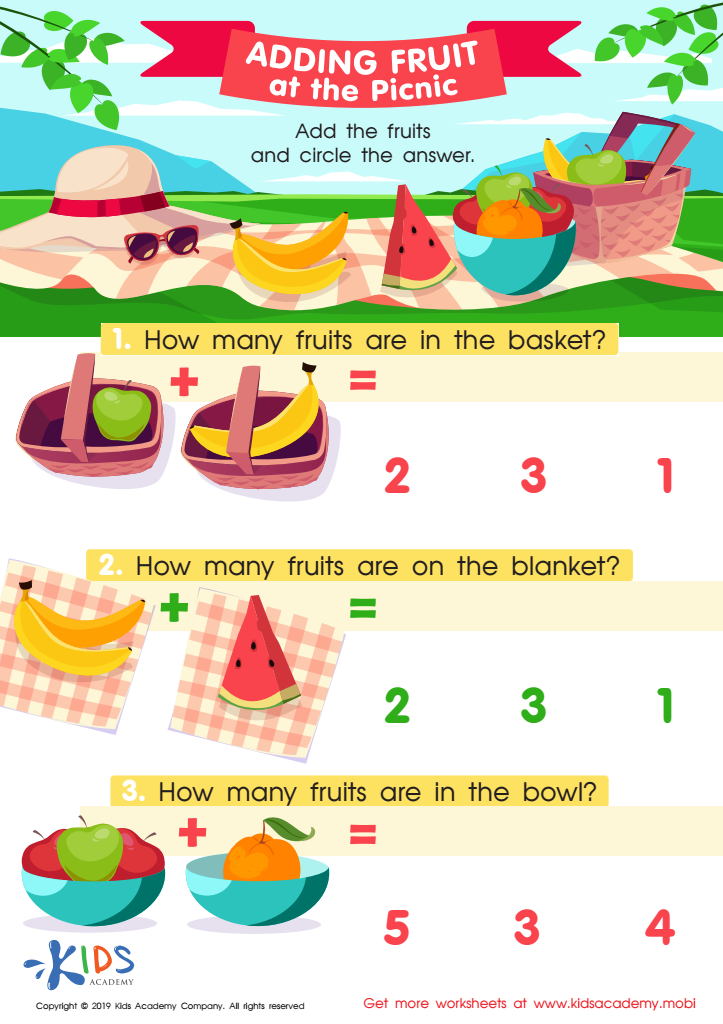
Adding Fruit at the Picnic Worksheet
Adding Fruit at the Picnic Worksheet
Picnics are a great way for the family to enjoy a fun day in the sun! Get your kids involved by having them help load the picnic basket and do this worksheet to practice their math skills while they get ready. Identify the fruits in the picture, add them up, and circle the correct answer.
Adding Fruit at the Picnic Worksheet
Worksheet
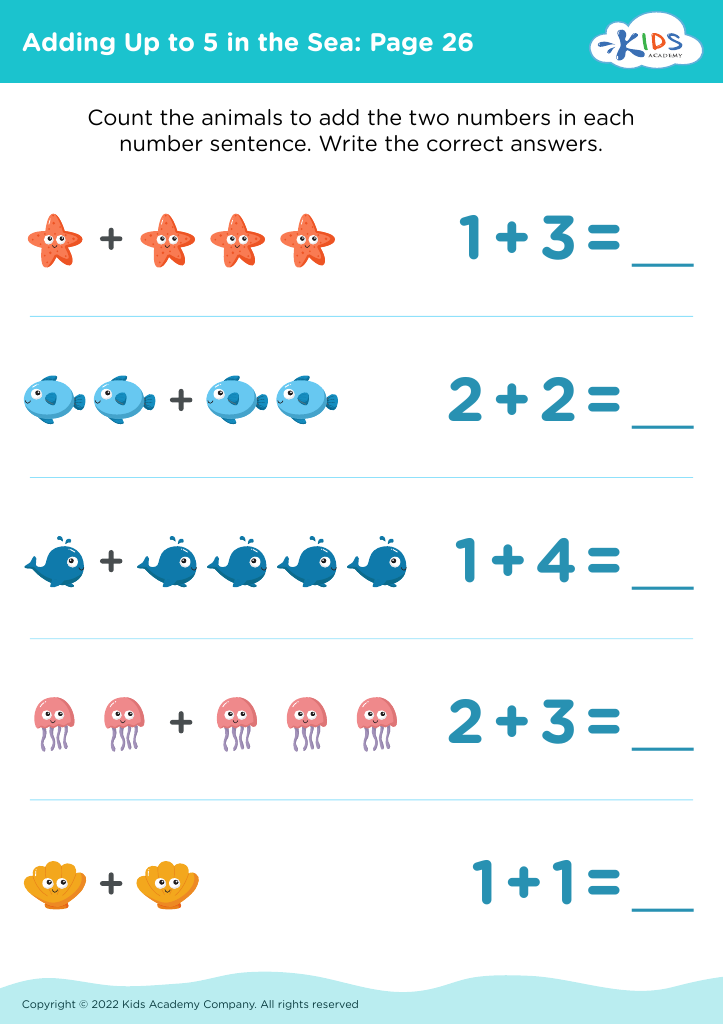
Adding Up to 5 in the Sea: Page 26
Worksheet
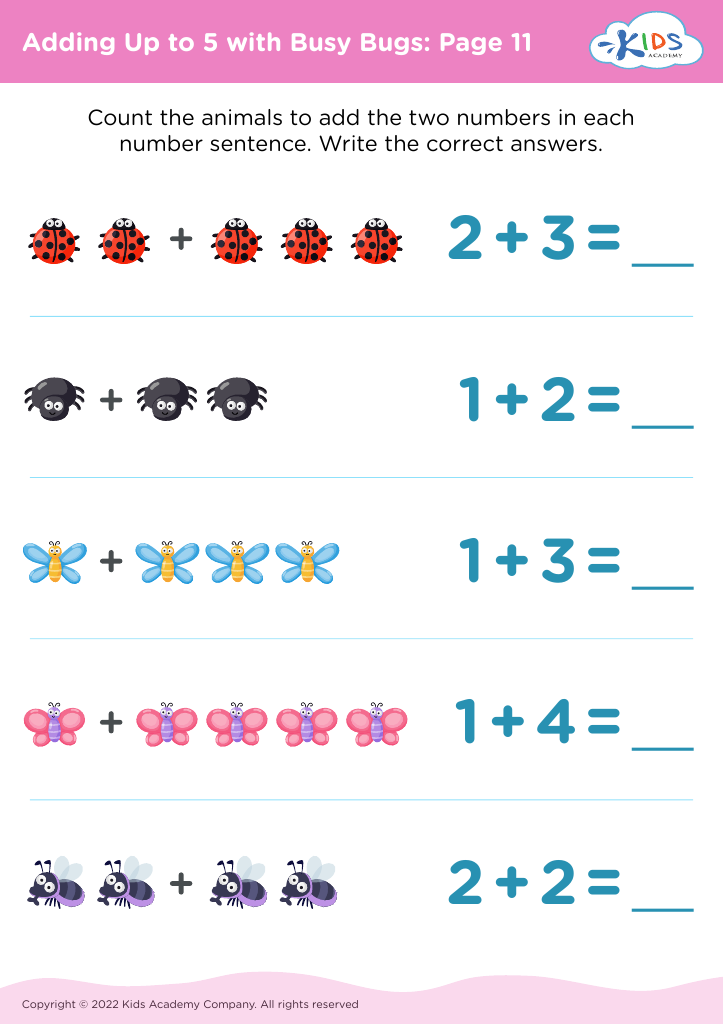
Adding Up to 5 with Busy Bugs: Page 11
Worksheet
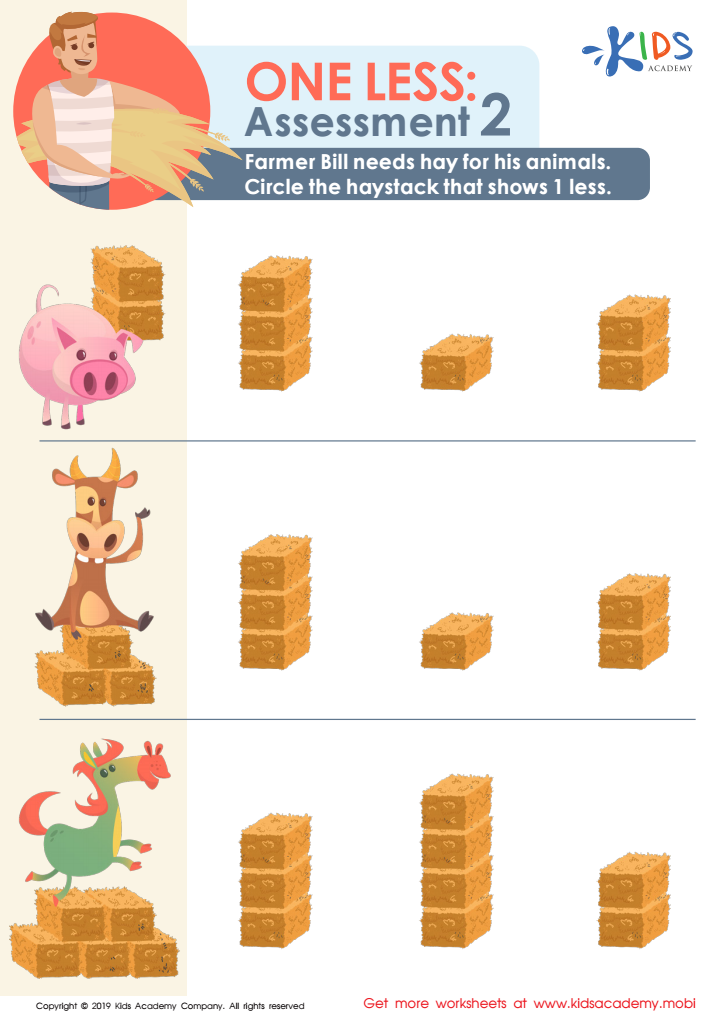
One Less: Assessment 2 Worksheet
One Less: Assessment 2 Worksheet
Farmers are vital to our community. They raise animals and crops which provide us with food. Kids can learn a lot by visiting a farm—ask them to name the animals and crops they saw! Farmer Bill in this worksheet needs hay. Point to the haystacks, and ask your child to circle the one with 1 less.
One Less: Assessment 2 Worksheet
Worksheet
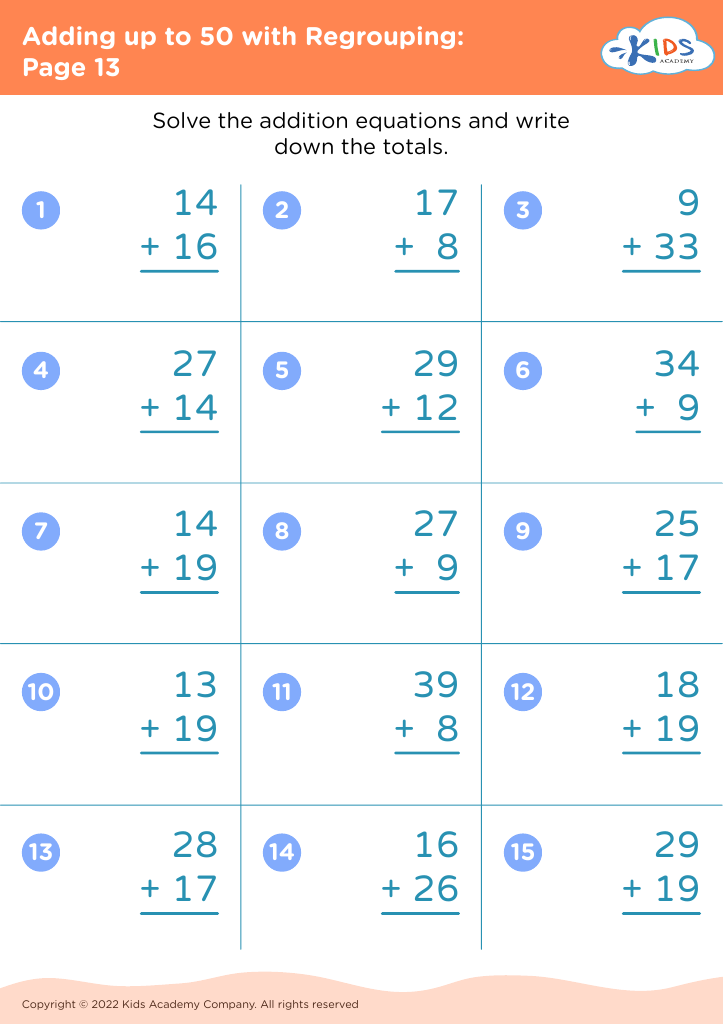
Adding up to 50 with Regrouping: Page 13
Worksheet
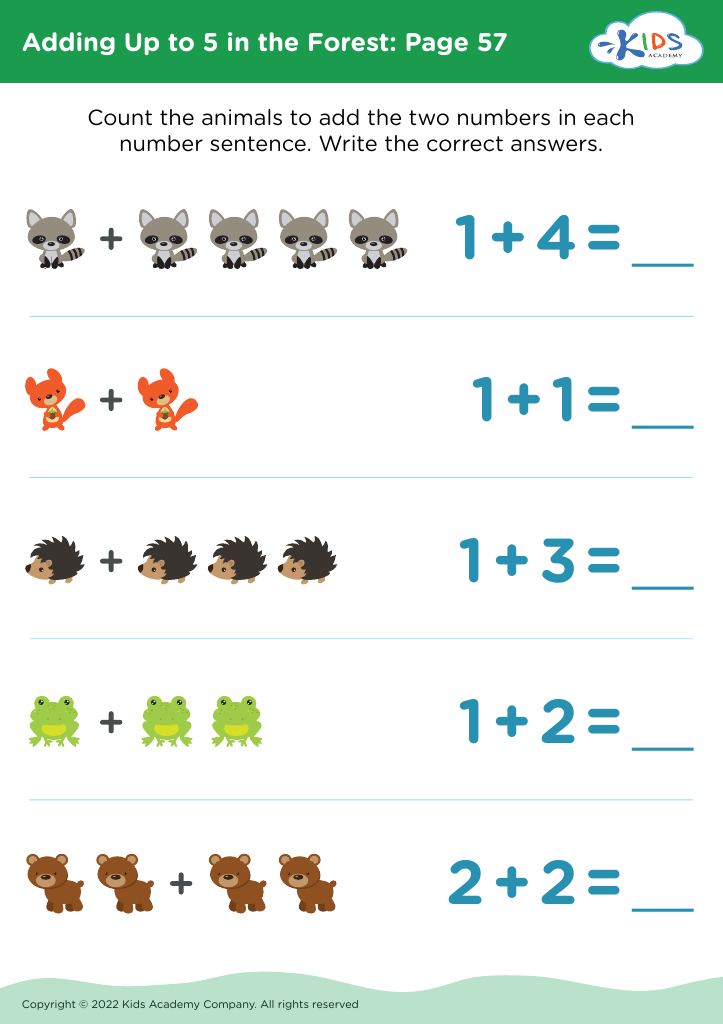
Adding Up to 5 in the Forest: Page 57
Worksheet
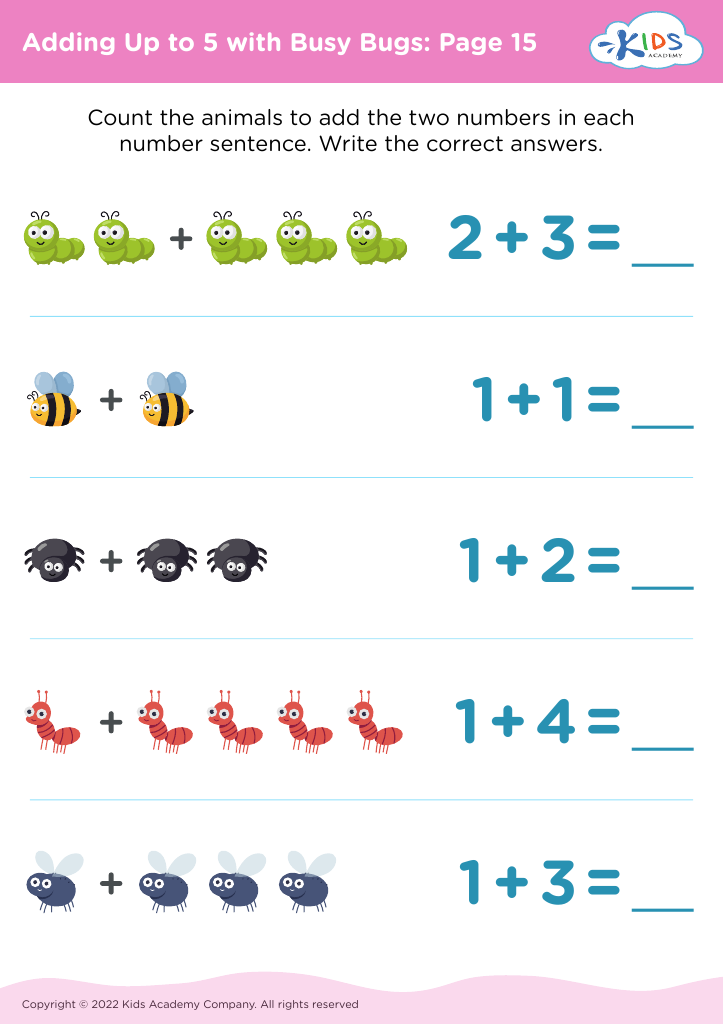
Adding Up to 5 with Busy Bugs: Page 15
Worksheet
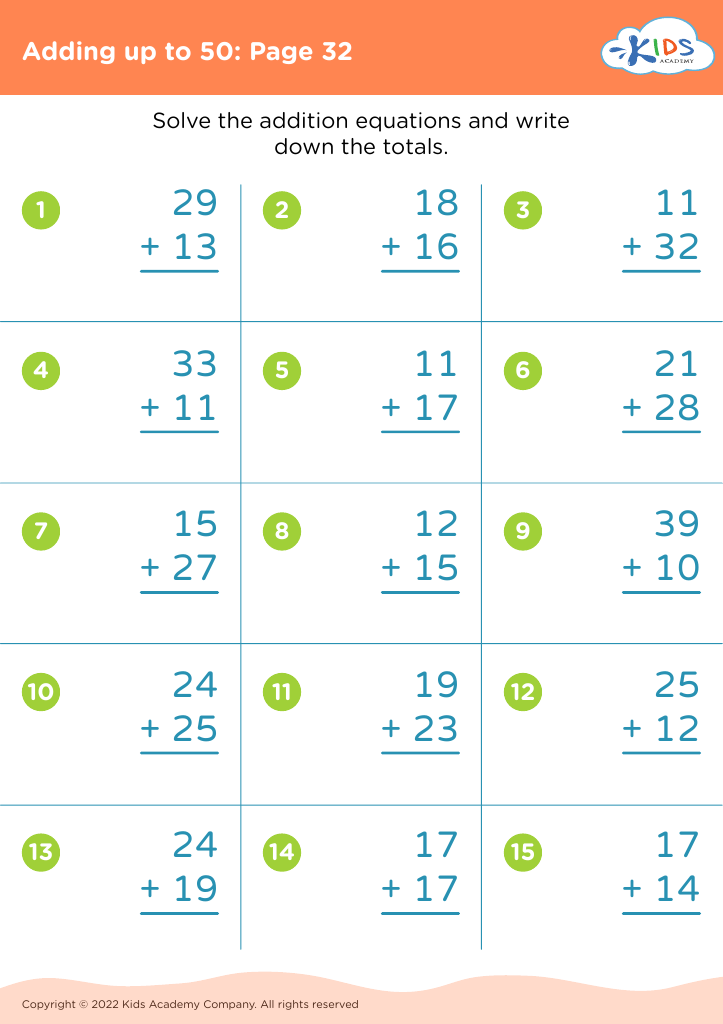
Adding up to 50: Page 32

Adding up to 50: Page 32

Adding up to 50: Page 32
Worksheet


... 10 11

Counting skills, along with addition and subtraction, are foundational for children aged 5-9. These skills form the cornerstone of mathematics and are essential for a child's overall cognitive development. First, mastering counting enables children to understand quantity, which paves the way for more complex mathematical concepts later on. Early success in these areas boosts self-confidence, fostering a positive attitude toward learning.

Moreover, addition and subtraction skills play a critical role in everyday life. Children use these skills during everyday activities, such as shopping or sharing, which helps them relate mathematics to the real world. This practical understanding encourages a sense of responsibility and builds critical thinking skills.

Teachers and parents should also be aware that these skills contribute significantly to a child's problem-solving abilities. They enhance logic and reasoning, which are vital for academic success beyond mathematics.

Additionally, fostering a supportive environment for developing these skills strengthens the caregiver-child bond, as engaging in counting games and solving problems together promotes communication and interaction. Ultimately, investing time and resources into nurturing these foundational skills sets the stage for lifelong learning and success in various academic and life pursuits.