
Develop analytical thinking Addition & Subtraction Worksheets for Ages 5-9
3 filtered results
Difficulty Level
Grade
Age
-
From - To
Subject
Activity
Standards
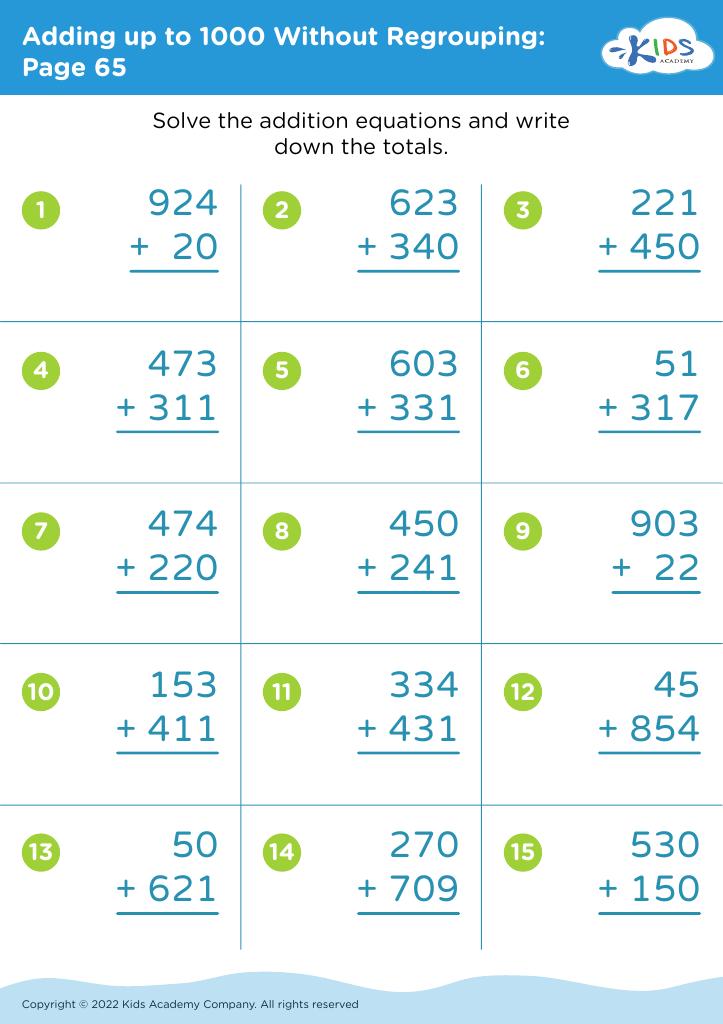
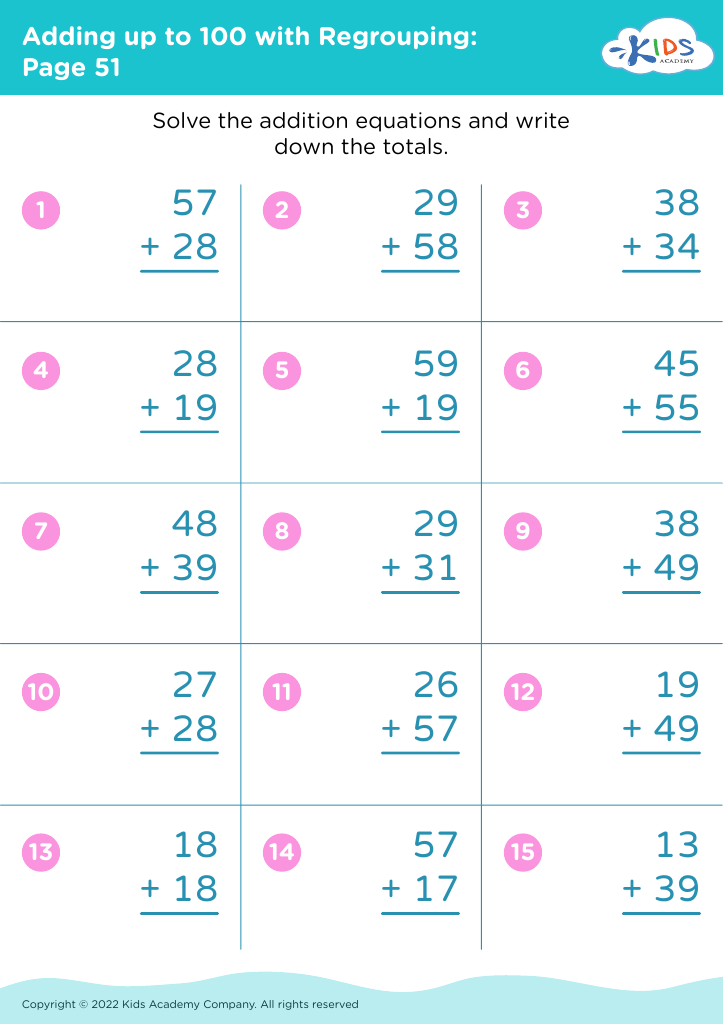
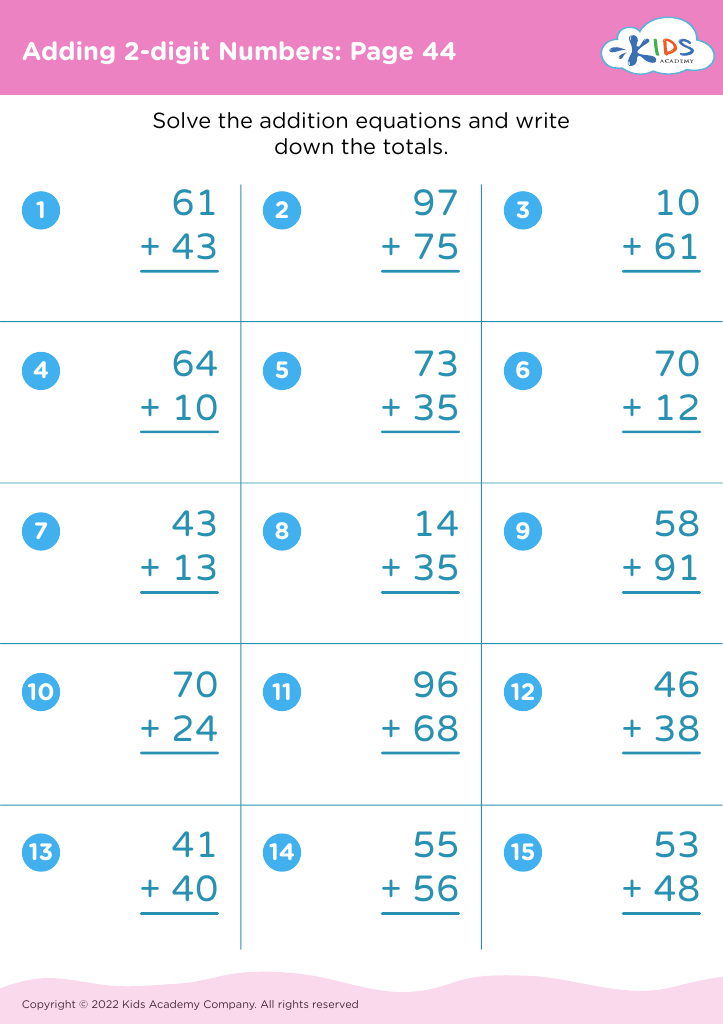
Enhance your child's analytical thinking with our engaging Addition & Subtraction Worksheets tailored for ages 5-9. These worksheets promote critical problem-solving skills while making math fun! Each activity is designed to challenge young minds and encourage them to think logically as they tackle various math problems. Our resources support educators and parents in fostering a deeper understanding of addition and subtraction, ensuring children build a strong foundation in mathematical concepts. Boost your child's confidence and skills today with our thoughtfully crafted worksheets, and watch them flourish in their early math journey, equipped with analytical skills they'll use for a lifetime!
Favorites
With answer key
Interactive
Join Kids Academy for Free
Who is primarily going to use this learning content?








Parents and teachers should prioritize developing analytical thinking in children aged 5-9, especially in foundational mathematical concepts such as addition and subtraction. This age group is crucial for cognitive development, as children refine their problem-solving skills and begin to understand abstract concepts. Analytical thinking enables them to explore different ways to solve math problems, enhancing their ability to reason, make connections, and think critically.
By fostering these skills in early education, we help children build a solid foundation for more complex mathematical concepts in the future. Mastery of addition and subtraction not only boosts their confidence but also encourages persistence and resilience in overcoming challenges. Moreover, analytical thinking promotes a deeper understanding of mathematics, moving beyond rote memorization and creating a more enriching learning experience.
Engaging students through games, puzzles, and real-world applications can stimulate their analytical thinking. This also fosters collaboration and communication skills, as they may work with peers to explore solutions. Ultimately, promoting analytical thinking in young learners supports their overall academic growth and prepares them for lifelong success in a rapidly evolving world that increasingly relies on critical reasoning and problem-solving abilities.








