Fraction representation Addition & Subtraction Worksheets for Ages 5-9
3 filtered results
-
From - To
Enhance your child's understanding of fractions with our engaging Fraction Representation Addition & Subtraction Worksheets, designed specifically for ages 5-9. These printable resources help young learners grasp the concept of fractions while practicing addition and subtraction skills. With colorful illustrations and fun exercises, your child will explore fractions through interactive activities that foster a love for math. From fraction bars to pie charts, our worksheets provide varied representations to accommodate different learning styles. Support your child's mathematical journey and build confidence by introducing this essential foundation in a playful, accessible way. Discover a world of fun with fractions today!
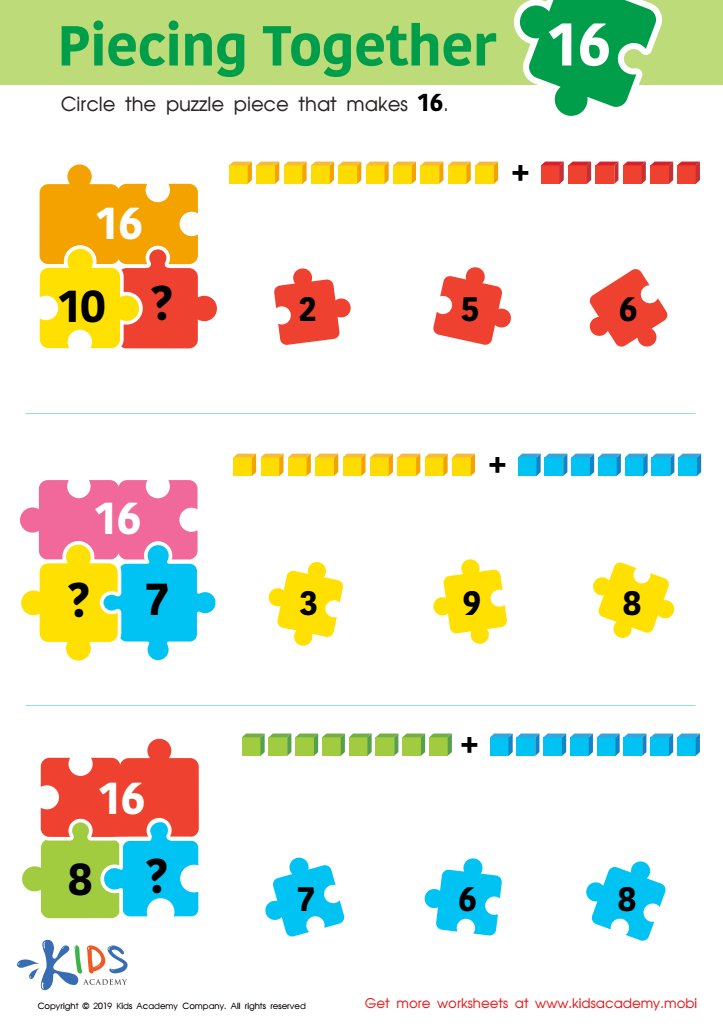
Piecing Together 16 Worksheet
 Assign to My Students
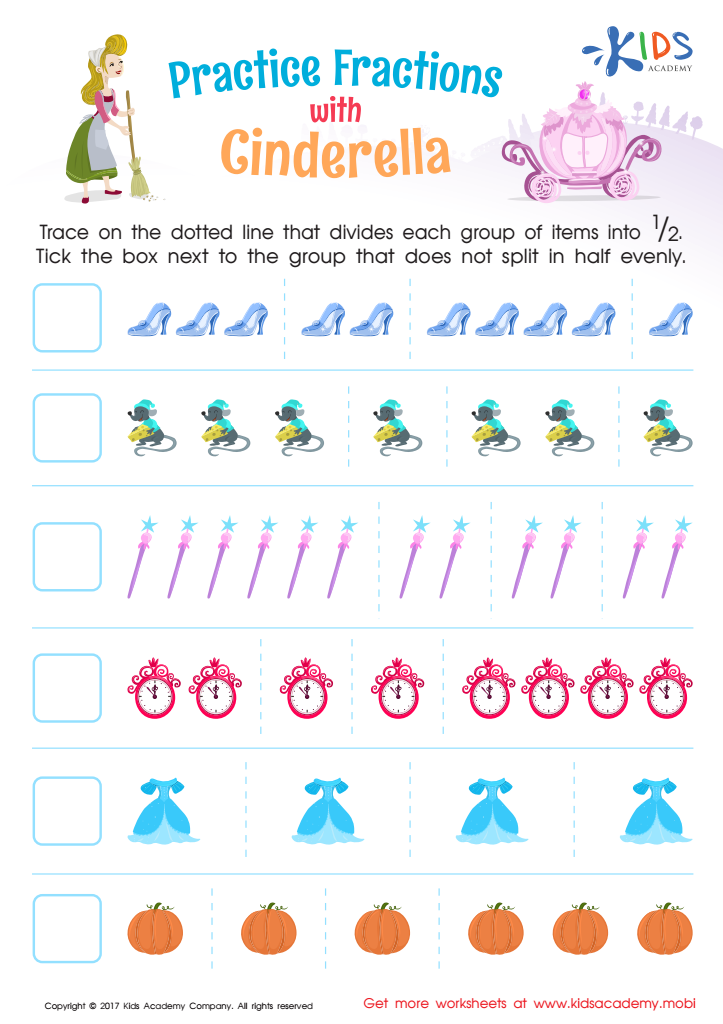
Fractions: Cinderella Printable








Understanding fraction representation, addition, and subtraction is essential for children aged 5-9 as it lays a foundation for future mathematical concepts and life skills. At this age, children are developing their number sense and critical reasoning skills, and fractions provide a crucial opportunity to explore the concept of part-to-whole relationships. When students learn to represent fractions, they gain a better grasp of how numbers can be divided, compared, and combined, fostering a more profound understanding of mathematics as a whole.
Additionally, mastering addition and subtraction of fractions helps children enhance their problem-solving skills. They can relate fractions to real-life situations, such as cooking, sharing, or measuring, which makes learning more relevant and engaging. This understanding promotes persistence and boosts confidence, key attributes for effective learning.
Parents and teachers should prioritize these skills because a firm grasp of fractions contributes not only to math proficiency but to overall cognitive development. Instilling a comfortable understanding of fractions can help prevent math anxiety and set the stage for more complex operations in later grades. By ensuring children understand these concepts early on, they empower them for continued academic success and everyday problem-solving challenges.








