
Improve counting Addition & Subtraction Worksheets for Ages 5-9
3 filtered results
Difficulty Level
Grade
Age
-
From - To
Subject
Activity
Standards
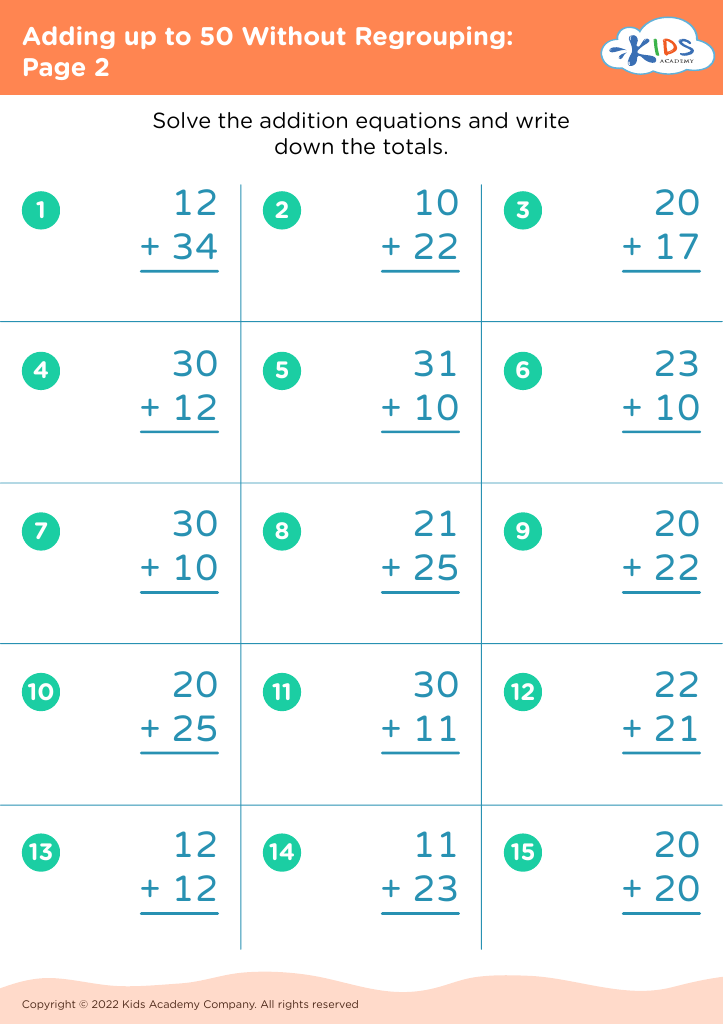
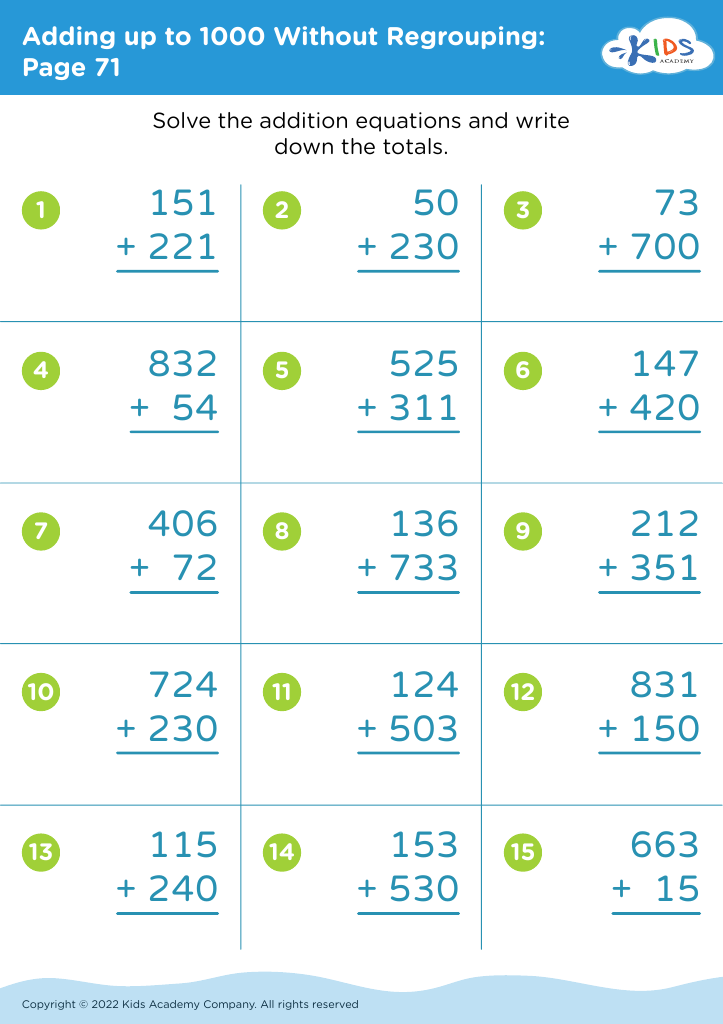
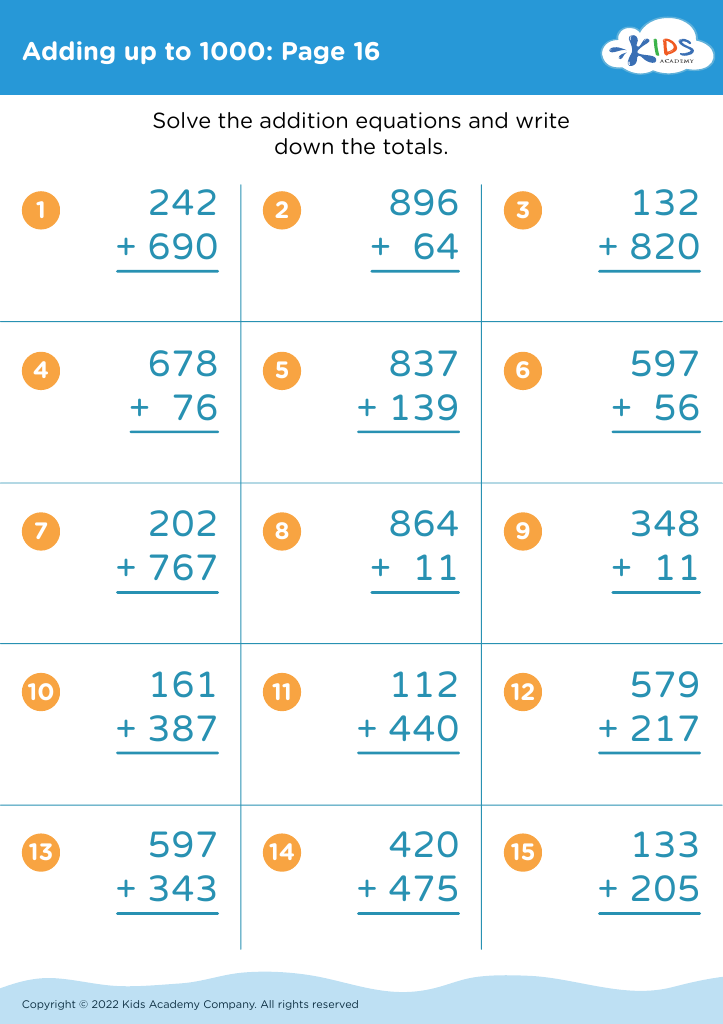
Enhance your child's math skills with our "Improve Counting Addition & Subtraction Worksheets" designed specifically for ages 5-9. These engaging worksheets focus on developing counting abilities while mastering essential addition and subtraction concepts. Each worksheet offers a variety of colorful and easy-to-follow exercises that keep young learners motivated and excited about math. As children progress through our carefully crafted activities, they will build confidence in their counting skills and improve their problem-solving abilities. Perfect for classroom reinforcement or at-home practice, our worksheets provide a fun, educational way to support your child's mathematical journey. Start their adventure today!
Favorites
With answer key
Interactive
Join Kids Academy for Free
Who is primarily going to use this learning content?








Improving counting, addition, and subtraction skills for children aged 5-9 is crucial for several reasons. First, these foundational math skills form the bedrock of all future learning in mathematics. Early mastery empowers children to tackle more complex problems confidently as they progress through school. When children grasp counting and basic operations like addition and subtraction, they enhance their problem-solving abilities and build critical thinking skills.
Second, these skills are tied to everyday life. Understanding numbers allows children to navigate real-world situations, from counting objects and measuring ingredients in cooking to managing money. By developing these skills early, parents and teachers can make learning more relatable and exciting.
Furthermore, strong numeracy skills are associated with higher academic achievement. Improved confidence in mathematics contributes to positive attitudes towards learning, leading to greater participation and academic success in school. Also, targeted practice in counting and basic operations can be fun and interactive, fostering a love for math at an early age.
Finally, when parents and teachers emphasize the importance of counting, addition, and subtraction, they lay the groundwork for collaborative learning, creating strong partnerships that support the child's overall development. The commitment to enhancing these skills at a young age is an investment in a child's future success.








