Improve fine motor skills Addition & Subtraction Worksheets for Ages 5-9
3 filtered results
-
From - To
Enhance your child's fine motor skills with our specially designed Addition & Subtraction Worksheets for ages 5-9. These engaging activities not only bolster mathematical abilities but also refine hand-eye coordination, dexterity, and precision. Perfect for young learners, our worksheets combine fun math exercises with the developmental practice kids need for writing and other daily tasks. Kids Academy's high-quality worksheets feature vibrant visuals and interactive problems that make learning an enjoyable adventure. Start building essential math and fine motor skills today — visit Kids Academy to download and print your worksheets!
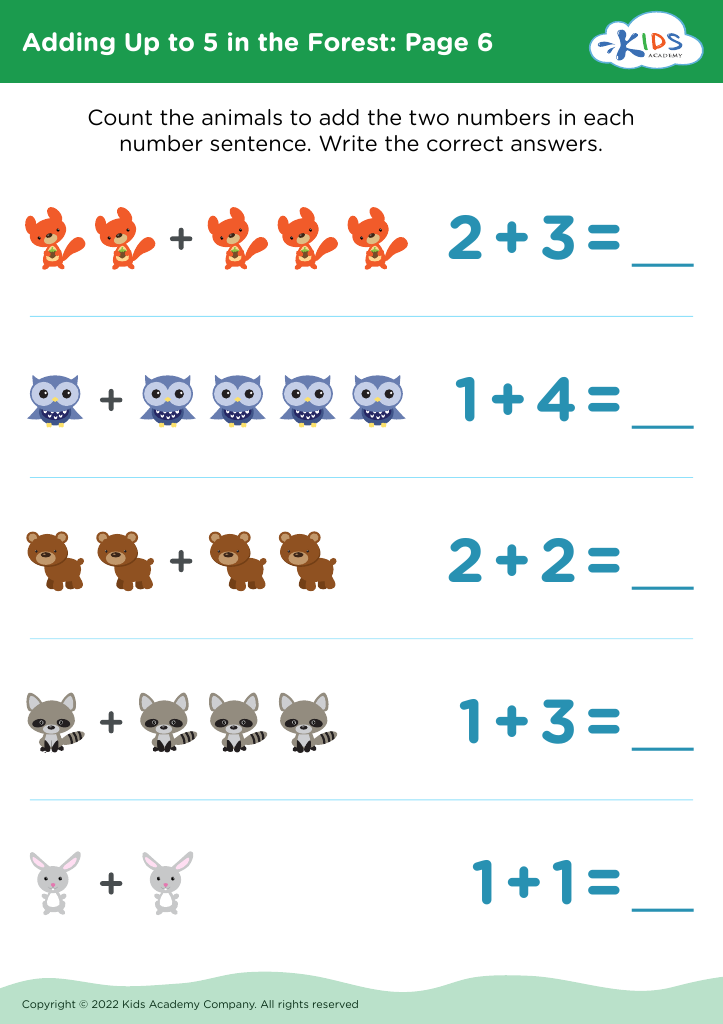
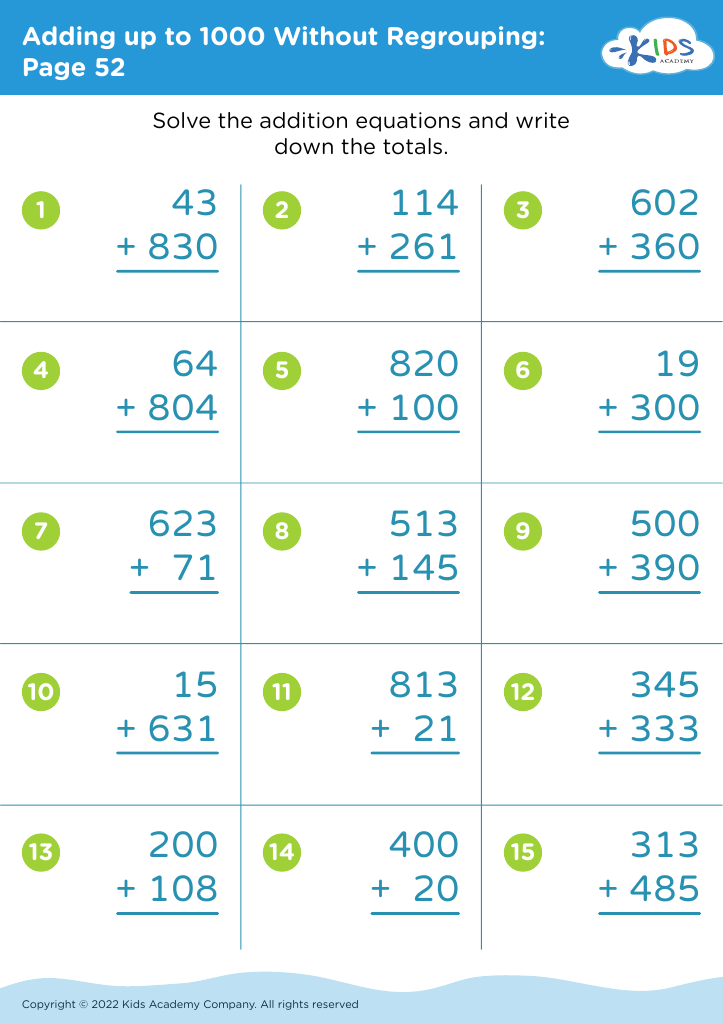
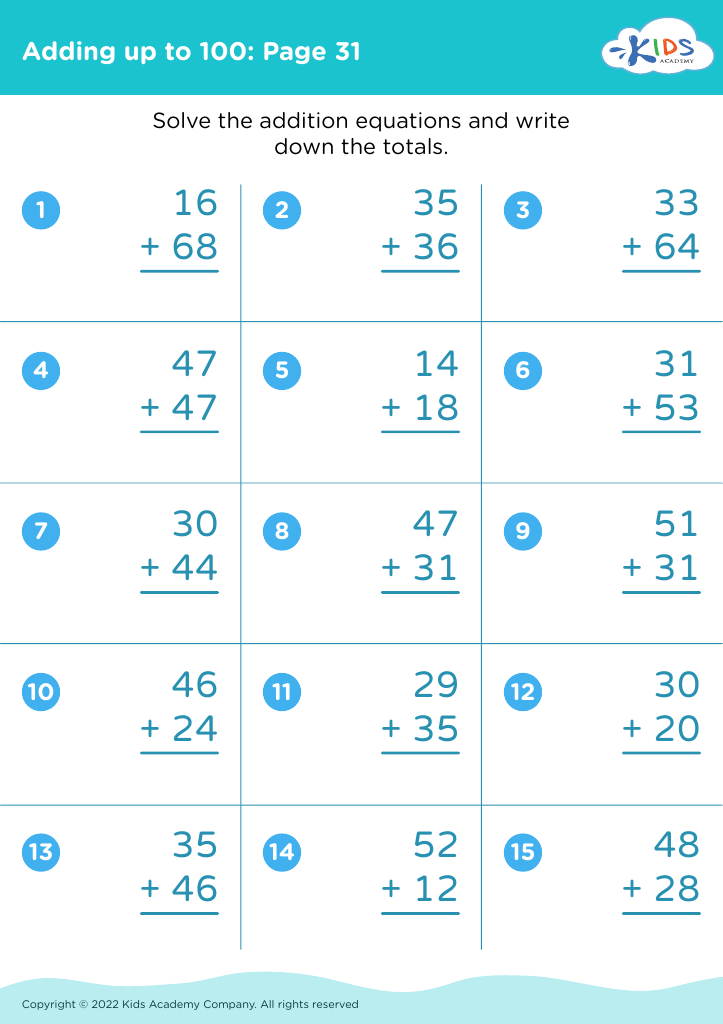








Parents and teachers should care about improving fine motor skills and basic math skills like addition and subtraction for children aged 5-9 because these foundational abilities are crucial for their overall development and academic success. Fine motor skills involve the coordination of small muscles, particularly in the hands and fingers, which are essential for everyday tasks such as writing, buttoning clothes, and tying shoelaces. By enhancing fine motor skills, children become more efficient in performing these tasks, which boosts their independence and confidence.
Additionally, mastering basic addition and subtraction is a cornerstone of early math education. These skills are fundamental for higher-level math and problem-solving abilities. Early proficiency in addition and subtraction helps children grasp more complex mathematical concepts later on, fostering a positive attitude towards math and reducing anxiety around the subject. Moreover, mathematical understanding enhances cognitive development, including critical thinking and logical reasoning skills.
Integrating activities that promote both fine motor skills and math competencies can be highly engaging for young learners. For instance, using manipulatives like beads or blocks for counting not only makes math tangible but also exercises fine motor control. Thus, nurturing these skills from an early age equips children with the tools they need for academic success and everyday life.








