
Mental math development Addition & Subtraction Worksheets for Ages 5-9
3 filtered results
Difficulty Level
Grade
Age
-
From - To
Subject
Activity
Standards
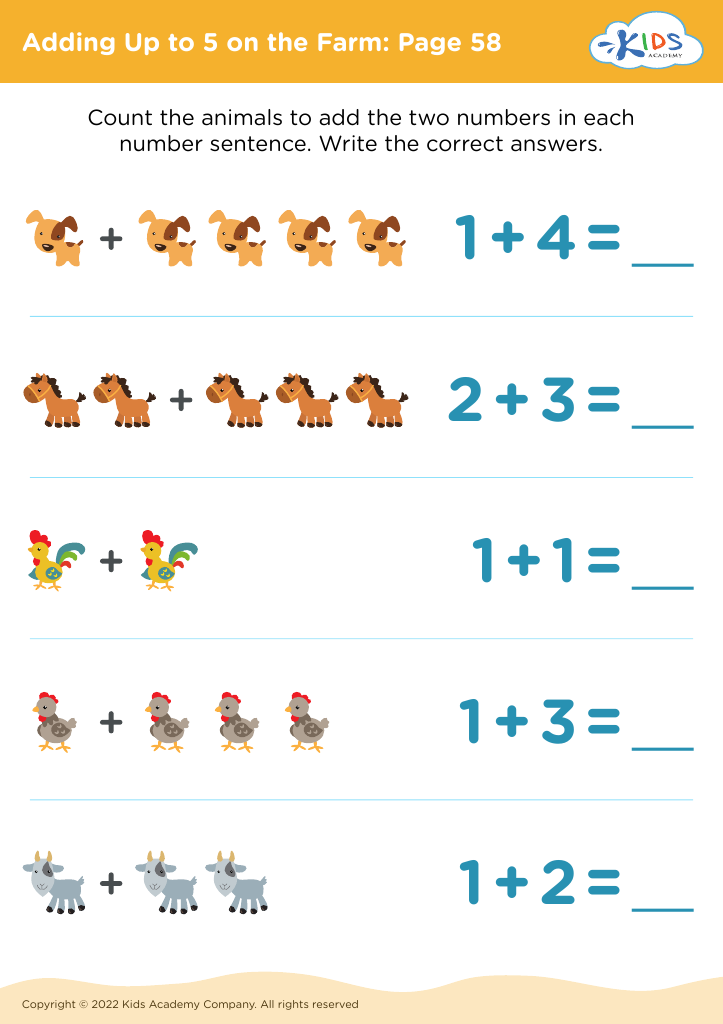
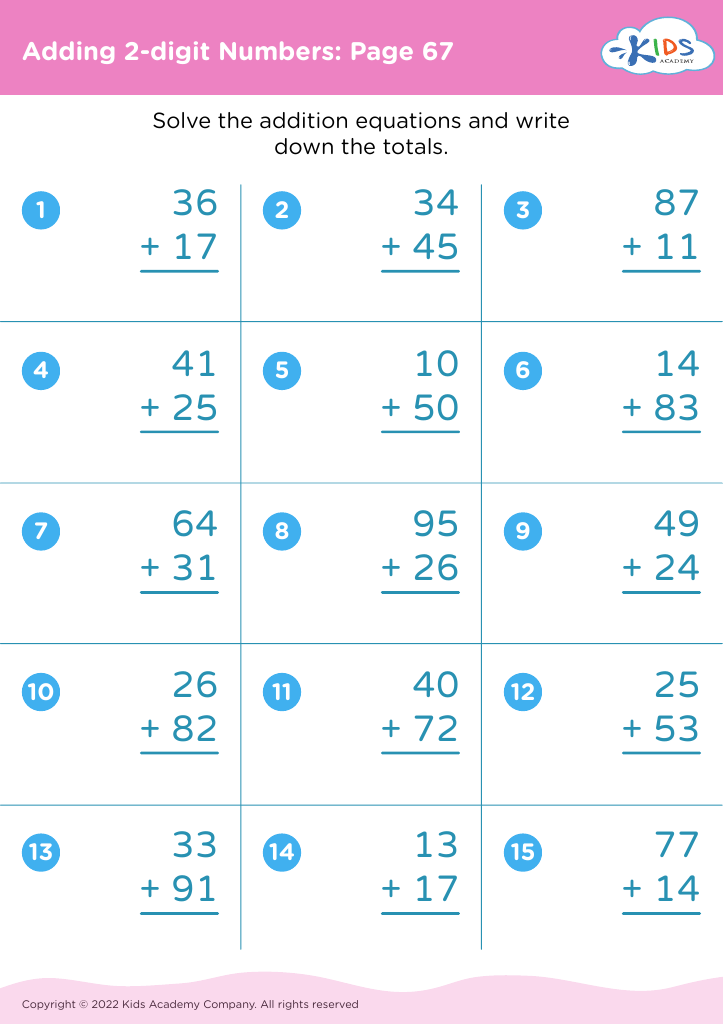
Enhance your child's math skills with our engaging Mental Math Development Addition and Subtraction Worksheets designed for ages 5-9. These interactive worksheets foster critical thinking and instinctive problem-solving by encouraging students to perform calculations mentally, rather than relying solely on paper and pencil. Carefully crafted to align with educational standards, our worksheets help children grasp foundational concepts of addition and subtraction through fun exercises that boost speed and accuracy. Ideal for classroom use or at-home practice, these resources make learning enjoyable, instilling confidence in young learners as they develop essential math skills essential for their academic journey. Start building mental math proficiency today!
Favorites
With answer key
Interactive
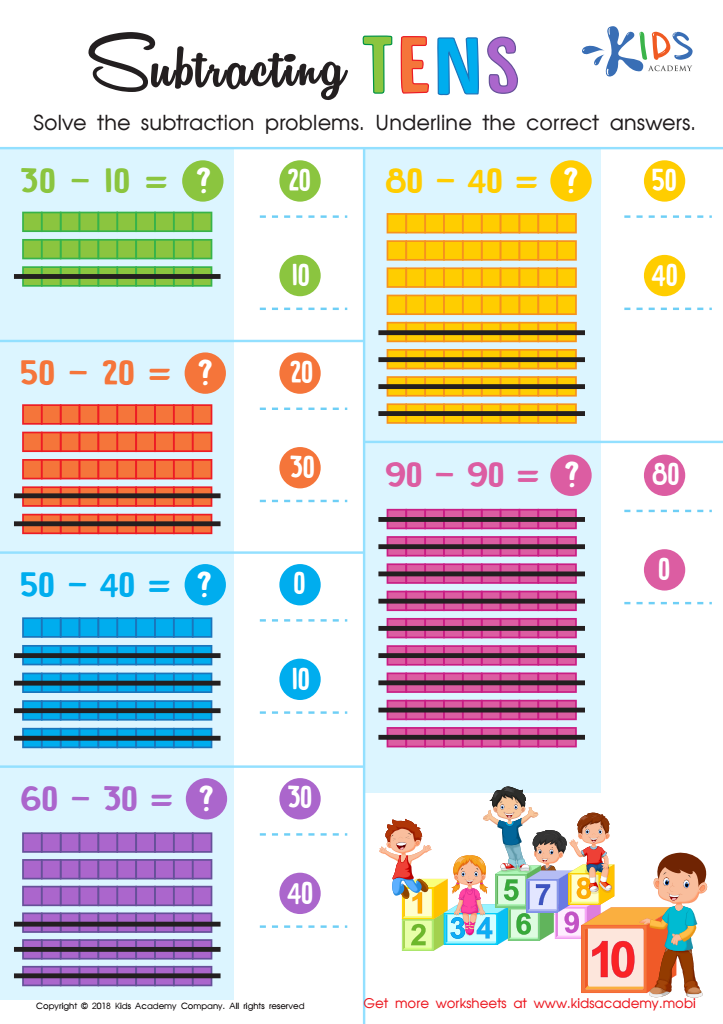
Subtracting Tens Worksheet
Base ten blocks enable kids to make practical math connections and develop number sense. This free worksheet, using bright-colored tens blocks, helps children learn to skip count and subtract. It lays a strong foundation for upcoming higher level math problems.
 Assign to My Students
Subtracting Tens Worksheet
Worksheet
Join Kids Academy for Free
Who is primarily going to use this learning content?








Mental math development in addition and subtraction for ages 5-9 is crucial for several reasons. First, it builds a strong foundation for more complex mathematical concepts. As children master basic calculations in their heads, they become more confident in their problem-solving abilities, which is essential for future success in math and related subjects.
Second, mental math encourages number sense, helping children understand the relationships between numbers. This understanding enables them to approach problems flexibly and strategically, rather than relying solely on rote learning or algorithms.
Third, developing mental math skills fosters independence. Children learn to tackle math problems without always needing a calculator or pen and paper, empowering them to have a sense of mastery over their skills.
Lastly, mental math can boost overall cognitive development. Engaging in mental calculations enhances memory, concentration, and critical thinking skills, which are valuable far beyond the realm of mathematics. As educators and parents, supporting mental math development not only enhances mathematical proficiency but also encourages a love for learning and problem-solving, laying the groundwork for a lifelong appreciation of knowledge.








