Nature awareness Addition & Subtraction Worksheets for Ages 5-9
8 filtered results
-
From - To
Introduce young learners to math and the wonders of nature with our engaging "Nature Awareness Addition & Subtraction Worksheets for Ages 5-9"! These worksheets seamlessly blend fundamental math skills with exciting nature themes, making learning both educational and fun. Ideal for children ages 5-9, each worksheet focuses on foundational addition and subtraction exercises enriched with elements of nature, such as animals and plants. Designed by experts, these printables enhance children's math skills while fostering a love for nature, critical thinking, and problem-solving abilities. Download our free, nature-themed worksheets today and watch your child enjoy an interactive and memorable learning experience!
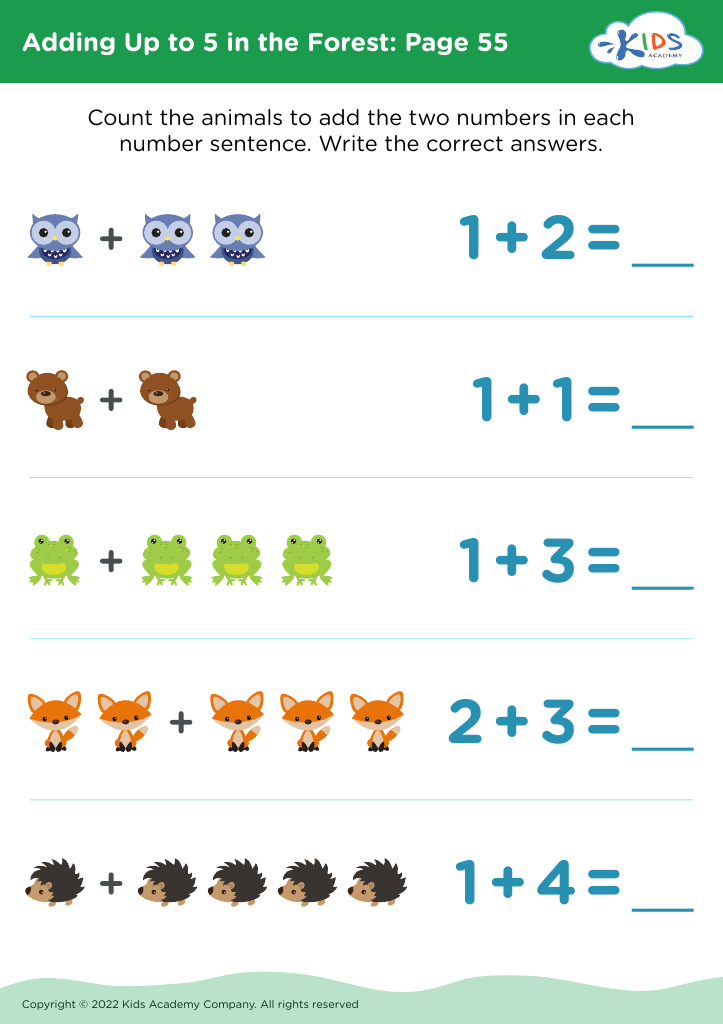
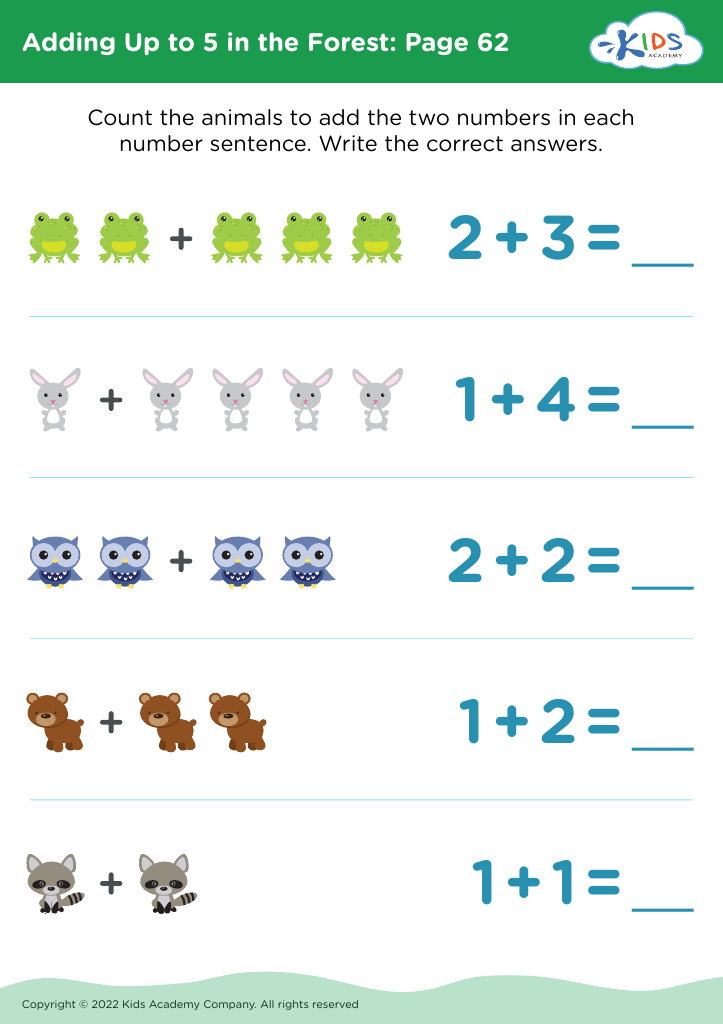
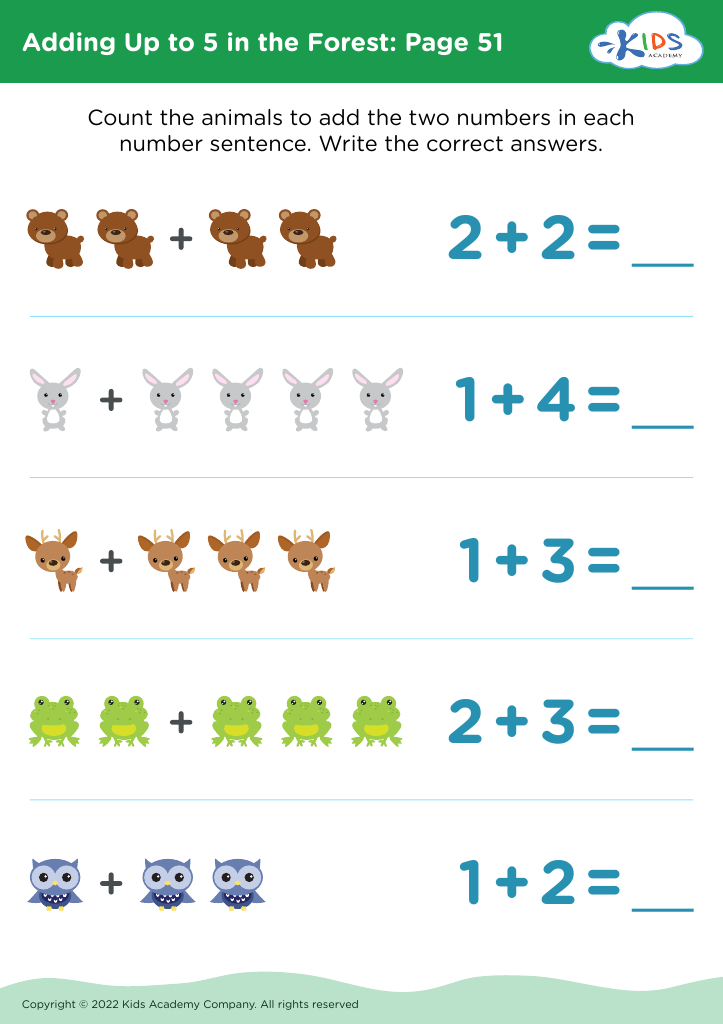
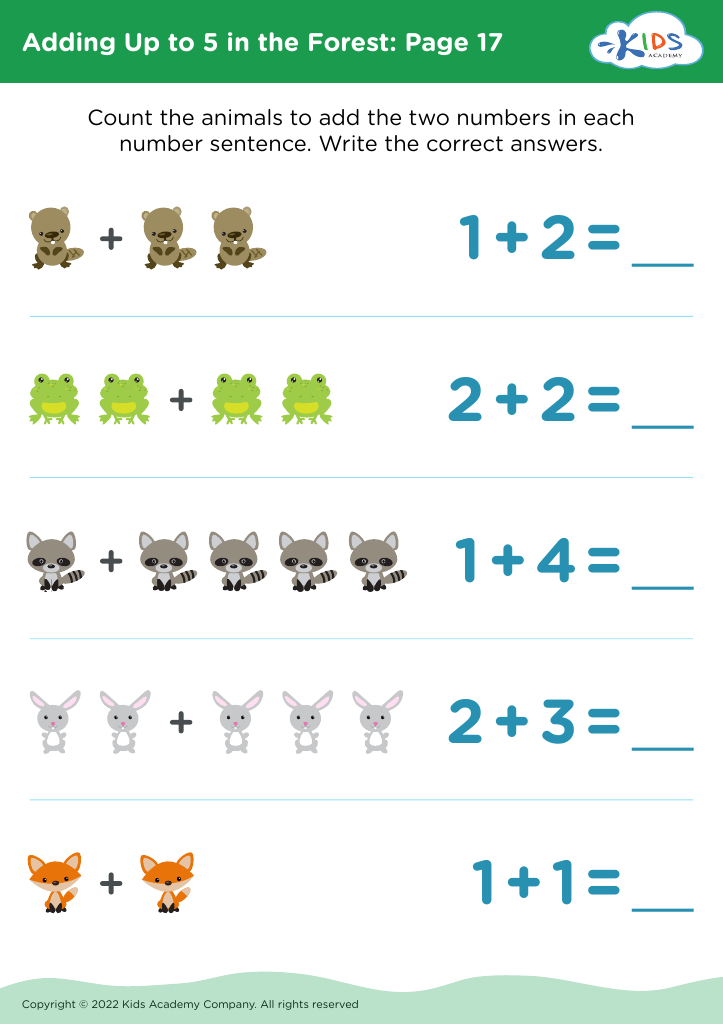
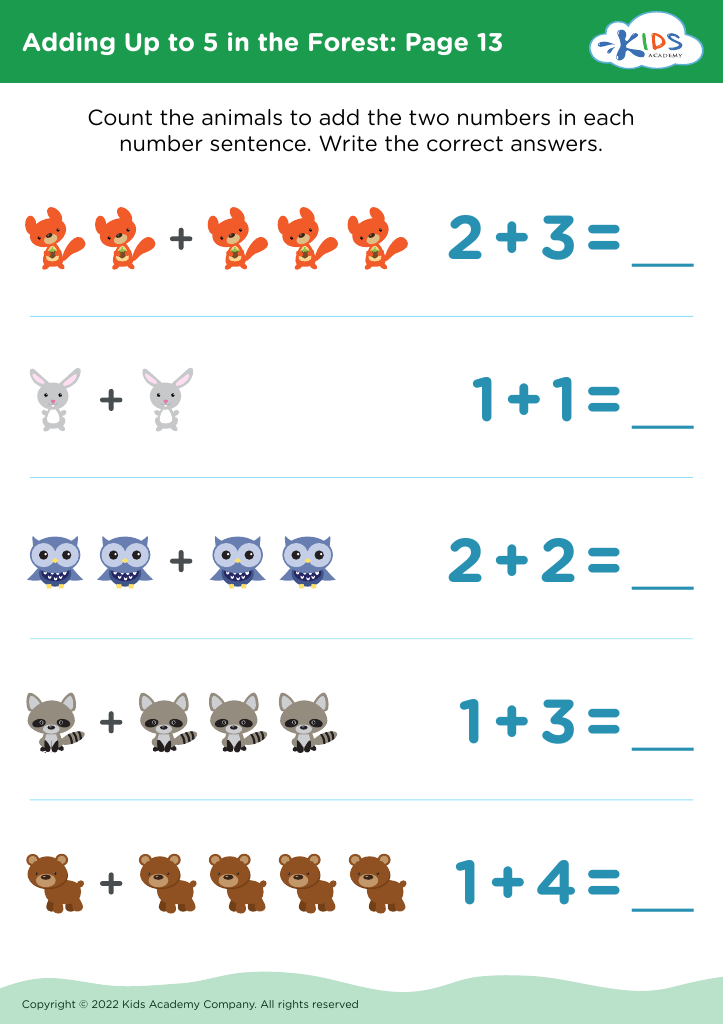
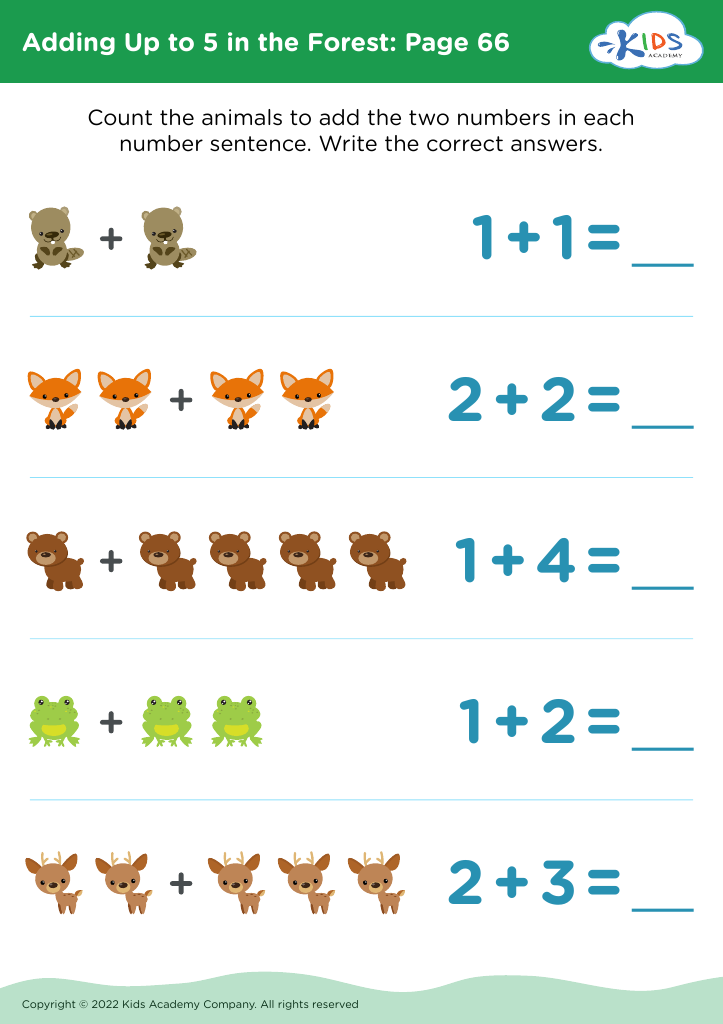
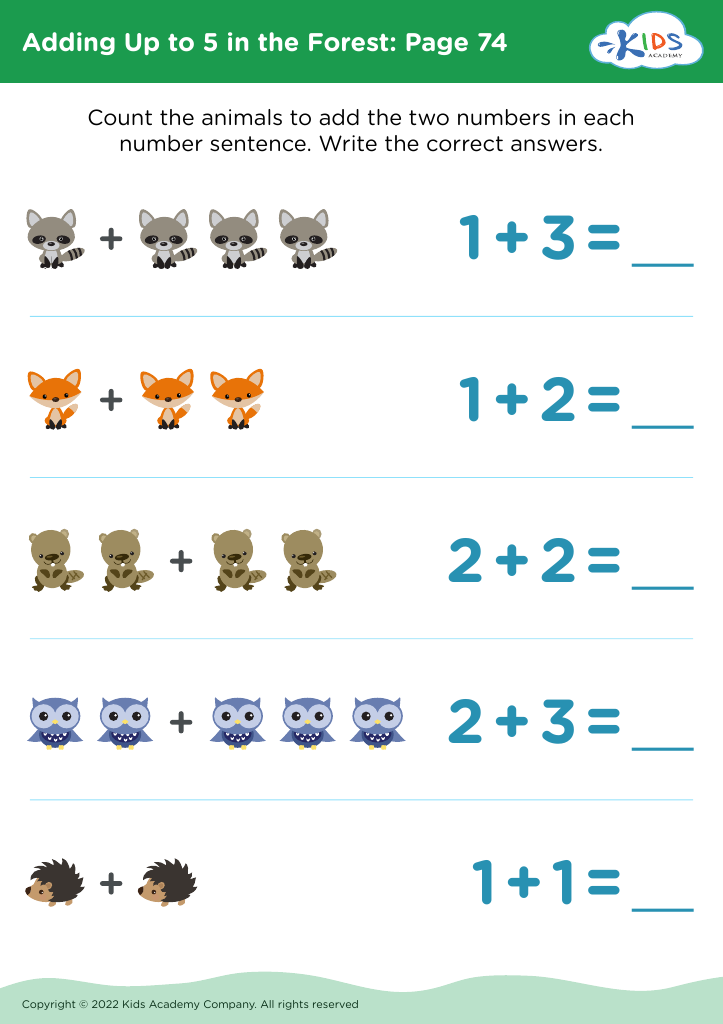
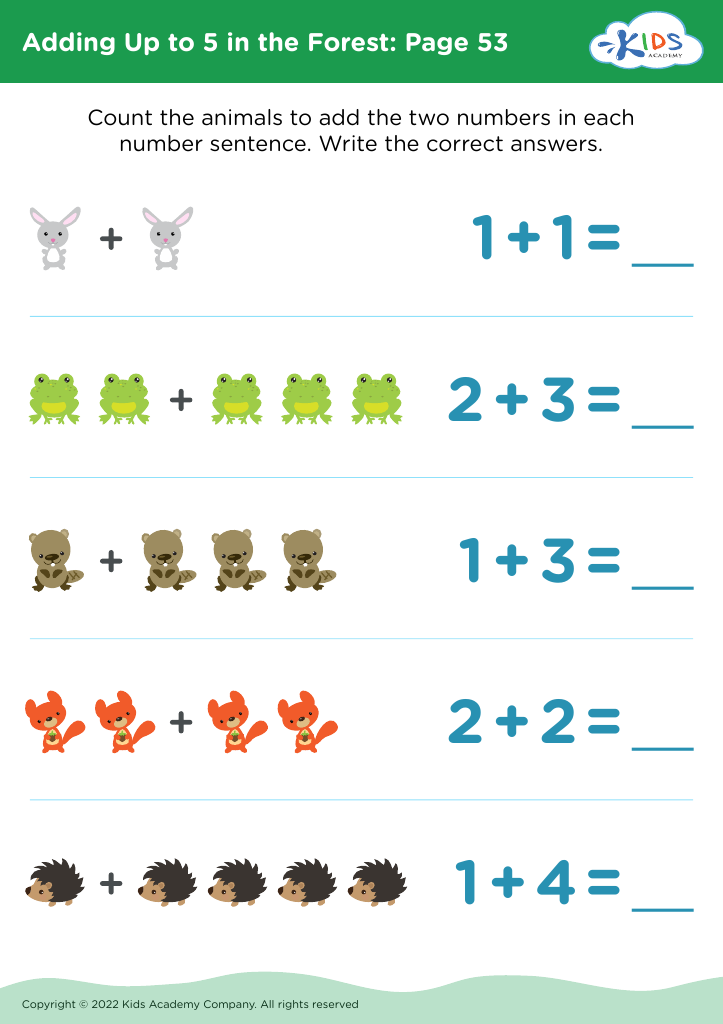








Nature awareness integrated with addition and subtraction for ages 5-9 fosters a holistic approach to learning that merges cognitive development with environmental consciousness. Firstly, these young learners experience hands-on math practice through activities such as counting flower petals, adding leaves, or subtracting fallen acorns. This contextual learning makes abstract concepts tangible and fun, enhancing comprehension and retention. Working with natural elements also engages multiple senses, reinforcing learning through sight, touch, and sometimes even smell.
Furthermore, incorporating nature into math lessons helps cultivate an awareness and appreciation for the environment at a formative age. This instills in children habits and tendencies to notice, respect, and engage with the natural world, which is crucial in an age where digital distractions are prevalent and environmental challenges like climate change are pressing.
Parents and teachers should support this synergy between nature and basic math skills because it nurtures curiosity and critical thinking. It encourages kids' natural instincts to explore, count, and question their surroundings. This method not only builds foundational academic skills but also promotes physical activity and outdoor play, assisting in broader development areas like social interaction, fine and gross motor skills, and emotional well-being. In brief, it lays down a rich, interdisciplinary educational foundation for young minds, intertwining academic growth with environmental stewardship.








