Sea creatures identification Addition & Subtraction Worksheets for Ages 5-9
3 filtered results
-
From - To
Explore the wonders of the ocean with our engaging Sea Creatures Identification Addition & Subtraction Worksheets, specially designed for children ages 5-9. These fun, interactive sheets combine math skills with marine biology, allowing kids to identify colorful sea creatures while practicing essential addition and subtraction. Each worksheet features vibrant illustrations to capture their interest, making learning exciting and enjoyable. These worksheets not only reinforce math concepts but also promote a love for marine life and environmental awareness. Perfect for classroom activities, homeschooling, or summer learning, our resources help young learners develop critical thinking skills in an entertaining way! Dive into math today!
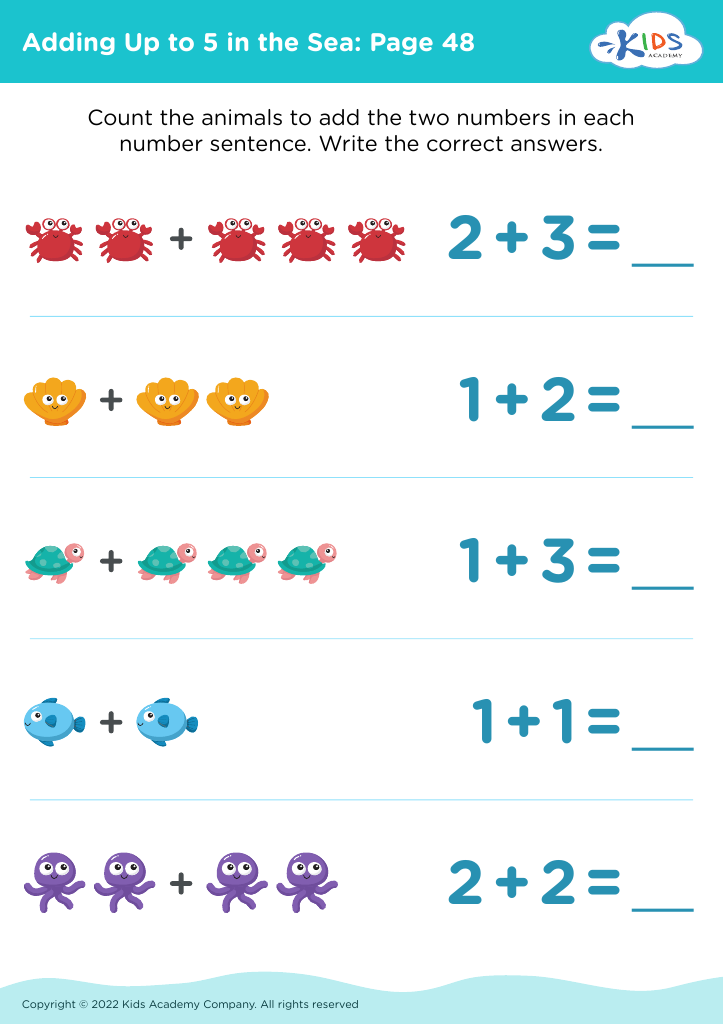
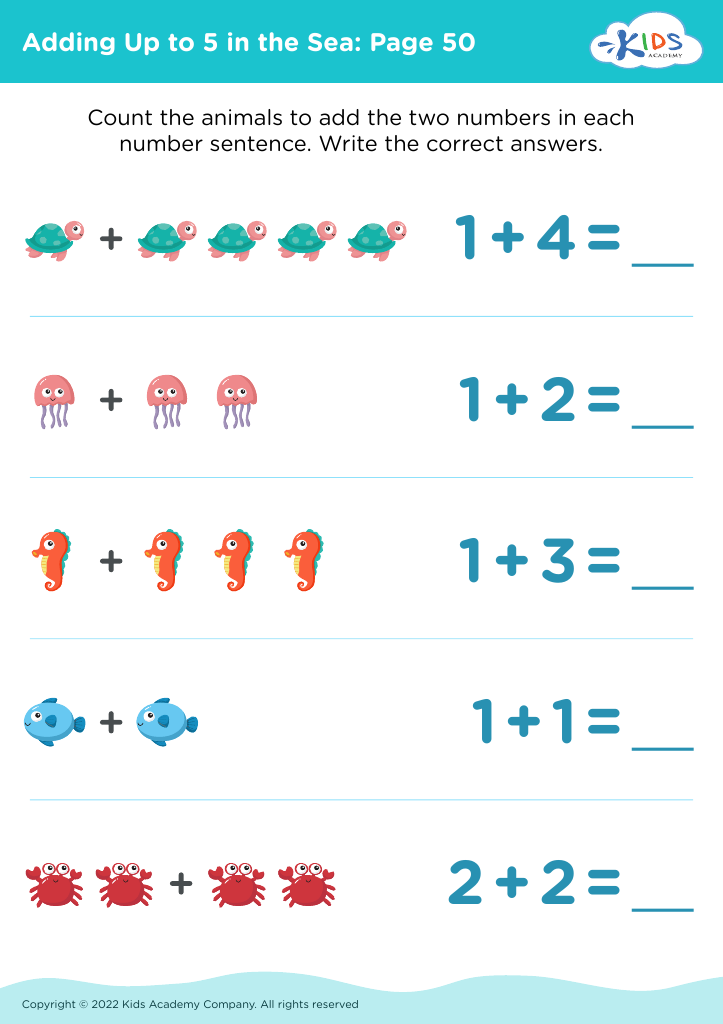
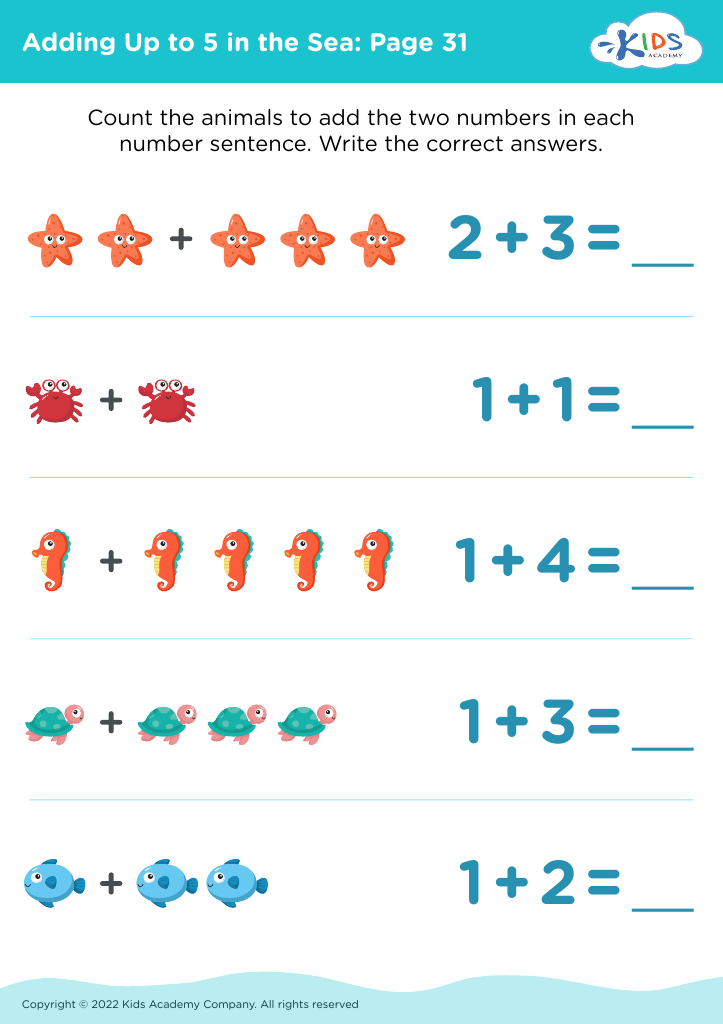








Teaching children about sea creatures identification alongside addition and subtraction is essential for several reasons. First, combining subjects enhances learning engagement; children are naturally curious about the ocean and its inhabitants. This curiosity can make math concepts like addition and subtraction more relatable and enjoyable. For instance, counting the number of different sea creatures spotted in an activity can seamlessly introduce basic math skills.
Second, understanding sea life helps raise ocean awareness and environmental stewardship among young learners. Identifying various species fosters curiosity and respect for marine ecosystems, essential for developing environmentally-conscious citizens.
Moreover, integrating science with math supports holistic education, helping children make connections across subjects. When students relate math to real-world contexts—like counting clownfish or measuring lengths of different shells—they can see the practical applications of those skills, reinforcing their learning.
Lastly, these activities promote critical thinking and problem-solving skills. Whether calculating the total number of jellyfish or figuring out how many more seahorses are needed to reach a goal, children develop essential skills that transcend academia. Overall, parents and teachers should prioritize these learning experiences, as they foster a more comprehensive understanding of both mathematics and the natural world.








