Understand number relationships Addition & Subtraction Worksheets for Ages 5-9
3 filtered results
-
From - To
Discover our engaging "Understand Number Relationships Addition & Subtraction Worksheets" tailored for children ages 5-9! These worksheets are designed to enhance young learners' comprehension of fundamental arithmetic concepts by exploring how numbers relate to one another. With vibrant visuals and age-appropriate exercises, kids will build a strong foundation in addition and subtraction while developing critical thinking skills. Our resources encourage interactive learning and are perfect for both home and classroom settings. Help your students grasp number relationships confidently and pave the way for future mathematical success. Start on the path to understanding math with our fun and educational worksheets today!
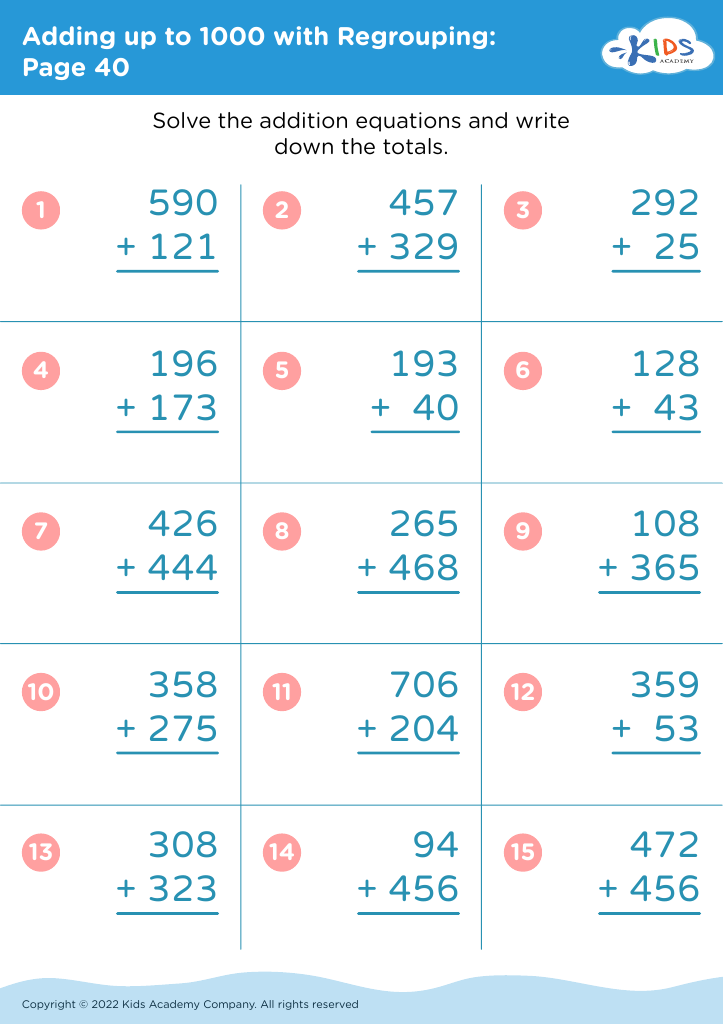
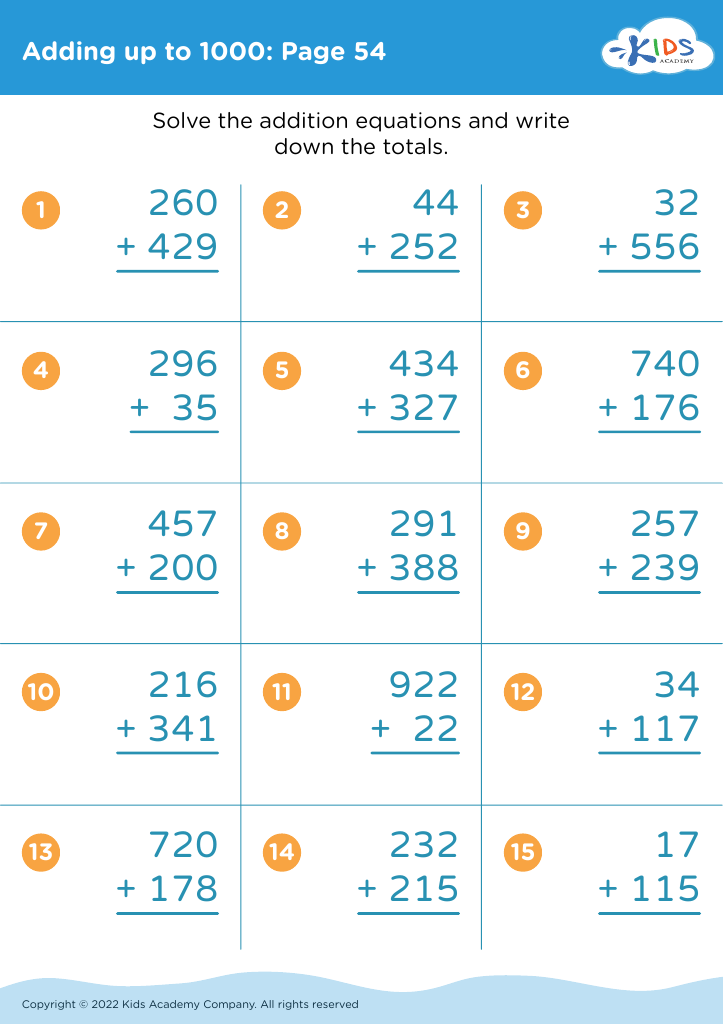
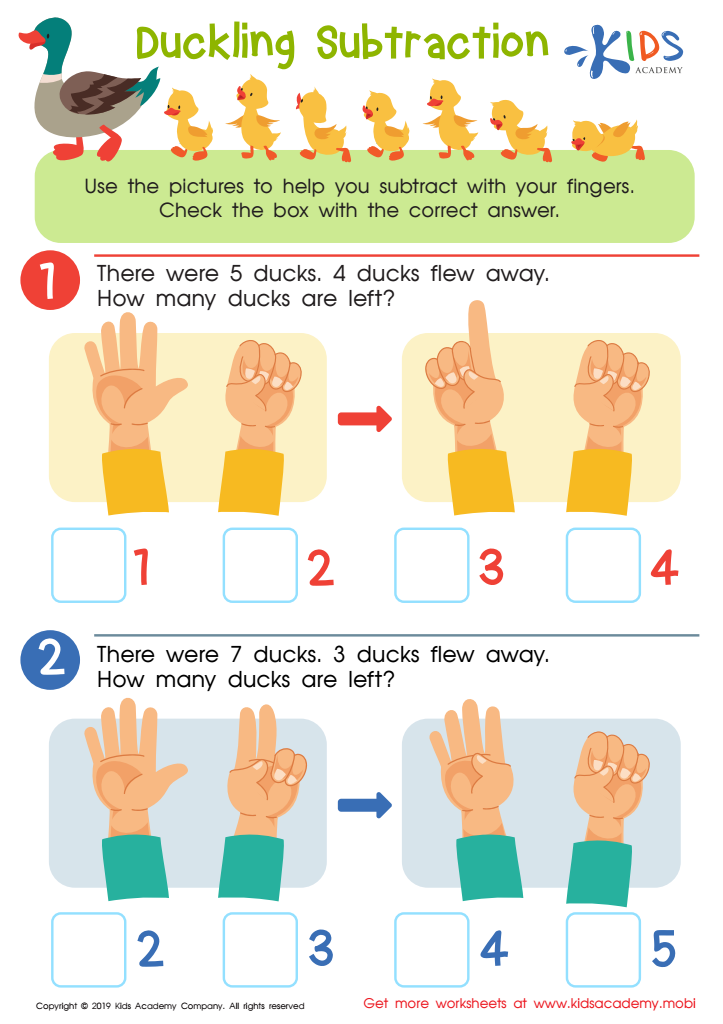
Duckling Subtraction Worksheet
 Assign to My Students








Understanding number relationships in addition and subtraction is crucial for children ages 5-9 as it forms the foundation for their mathematical development. At this age, students are not just memorizing facts but are beginning to grasp how numbers interact. This understanding helps them see the connections between addition and subtraction—such as recognizing that subtraction is the opposite of addition—which enhances their problem-solving skills.
Caring about this concept enables parents and teachers to create a more engaging learning experience. It fosters a deeper conceptual understanding, allowing children to explain their reasoning and approach problems with confidence. When children grasp number relationships, they can apply mathematical concepts to real-world situations, promoting critical thinking and decision-making skills.
Furthermore, a strong foundation in these relationships contributes to later success in more complex mathematical concepts, such as multiplication and division, as it nurtures number sense and the ability to estimate. Ultimately, fostering an early appreciation of number relationships prepares students not only for academic success but also for lifelong quantitative reasoning in everyday life. Engaging children in meaningful discussions about these concepts will inspire a love for learning and empower them as learners.








