Develop critical thinking Addition Worksheets for Ages 5-9
11 filtered results
-
From - To
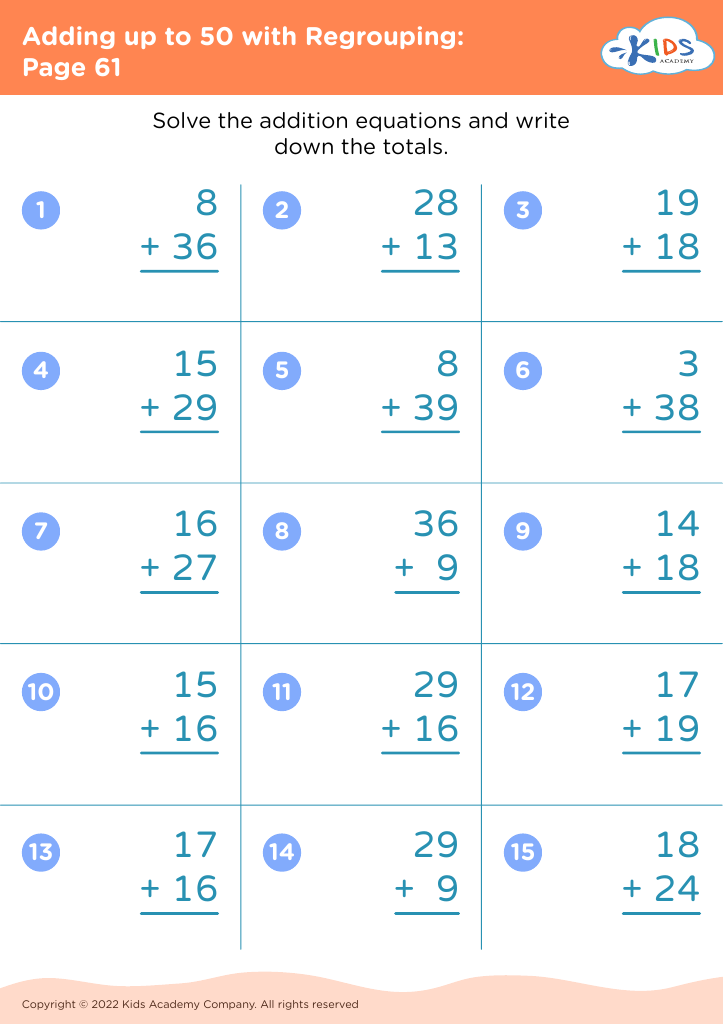
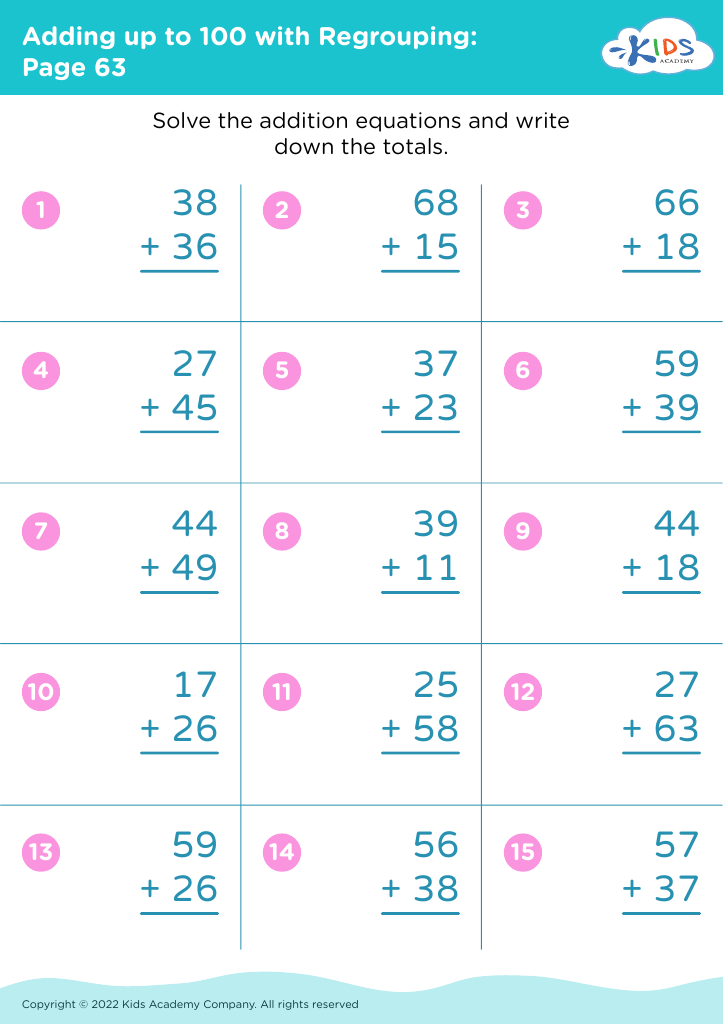
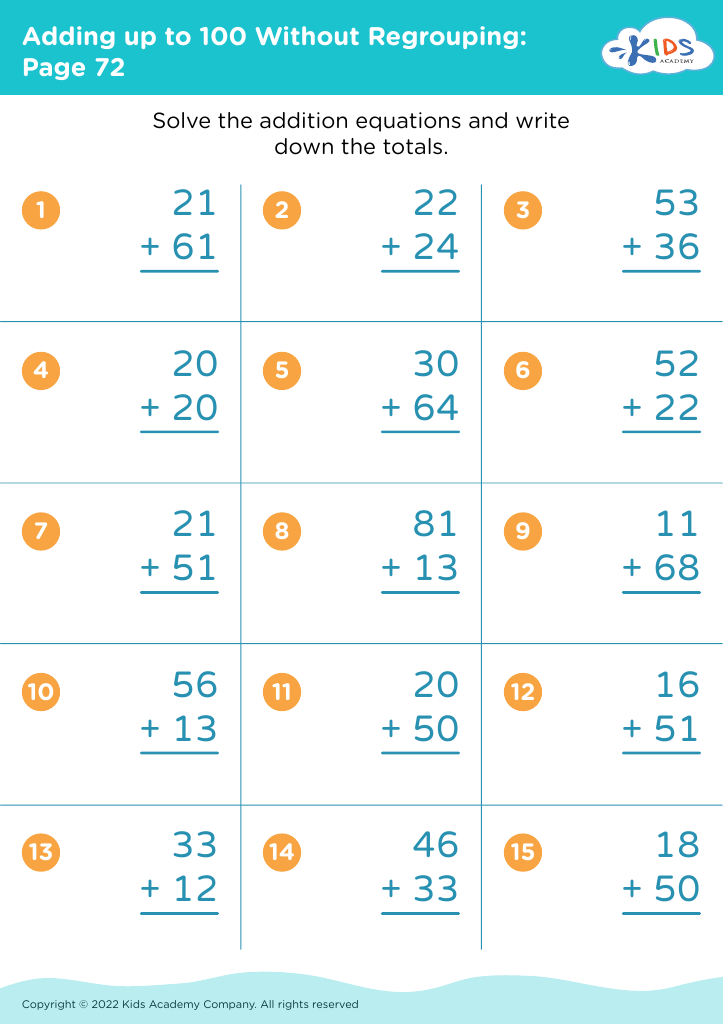
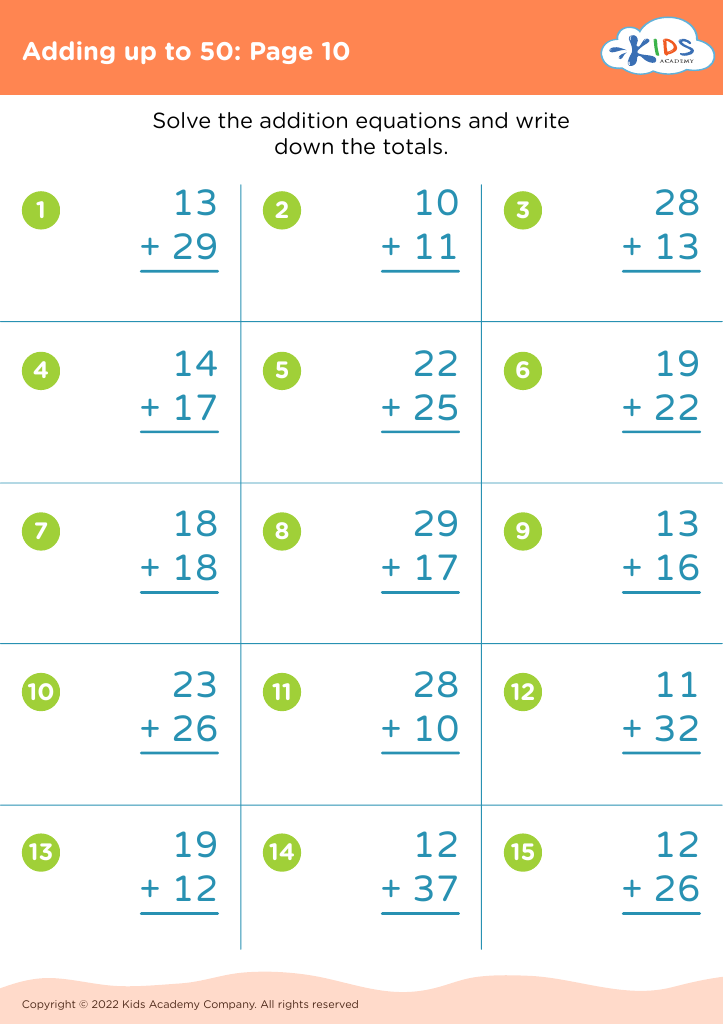
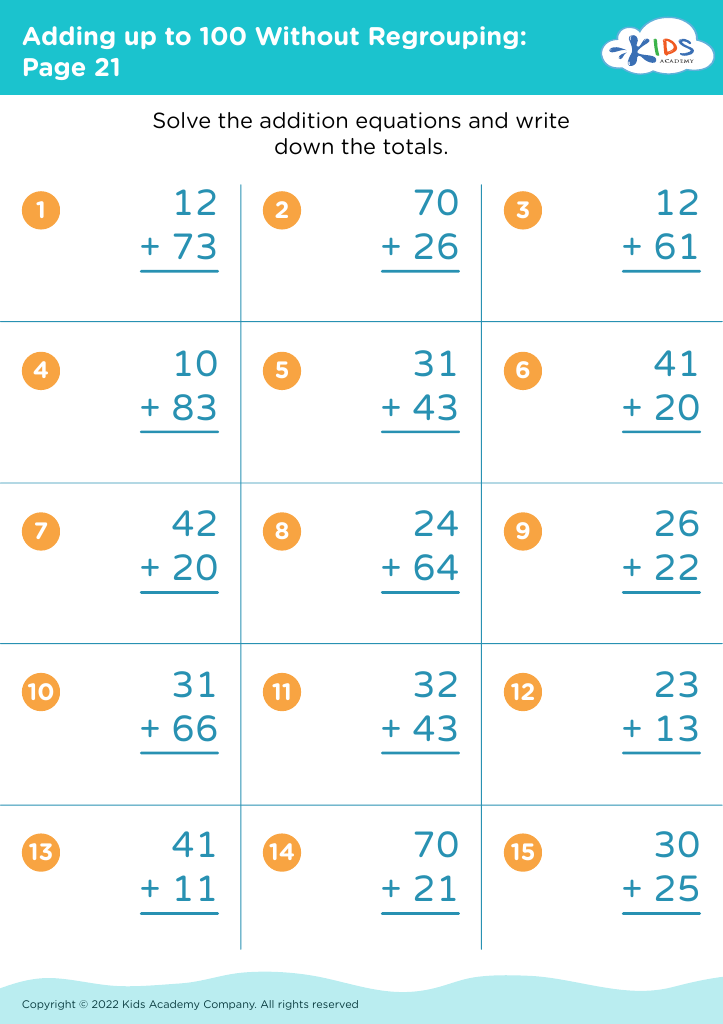
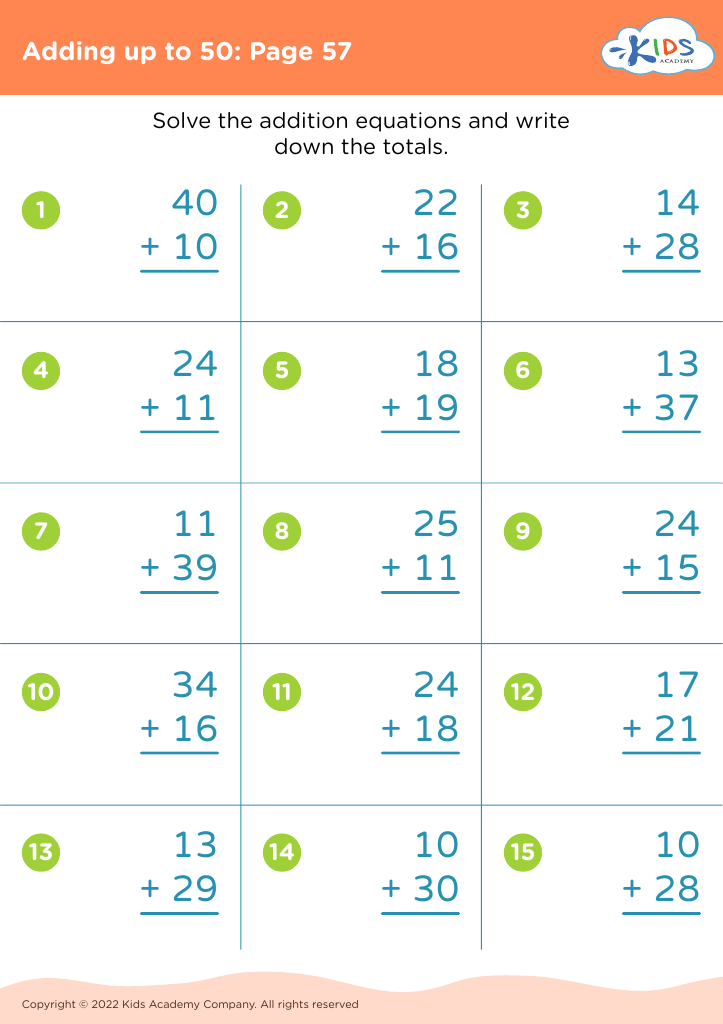
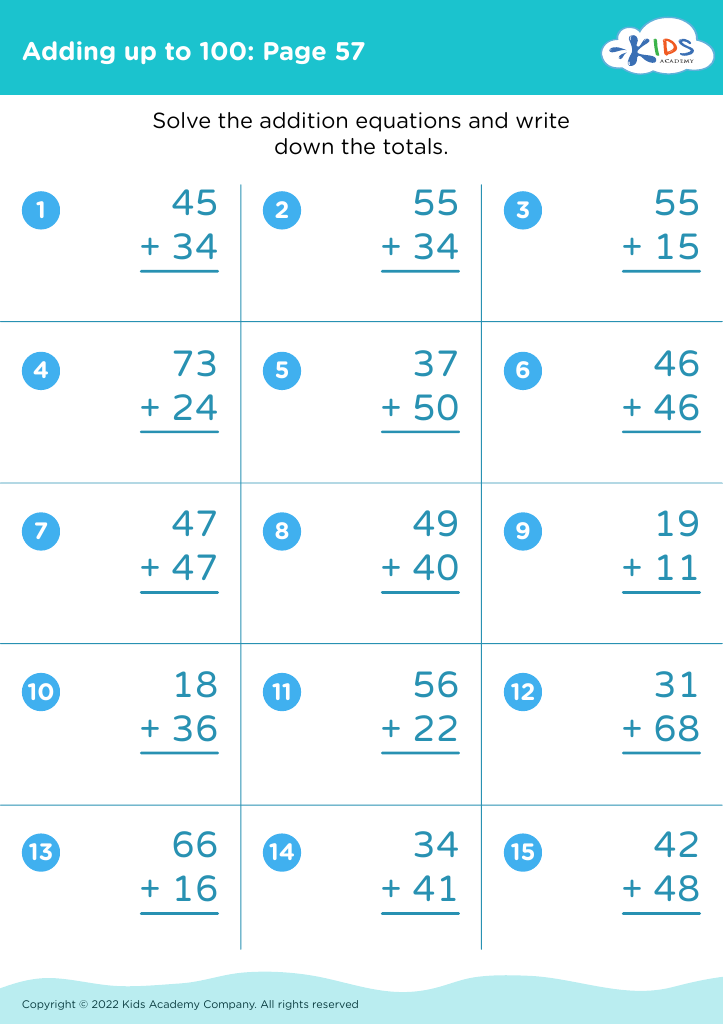
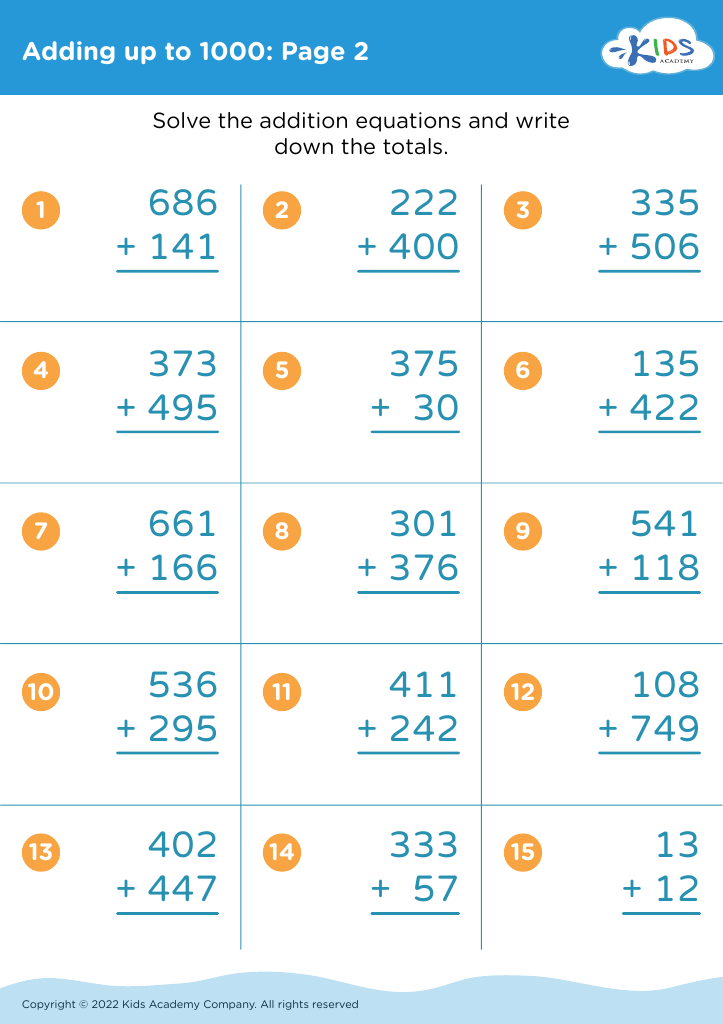
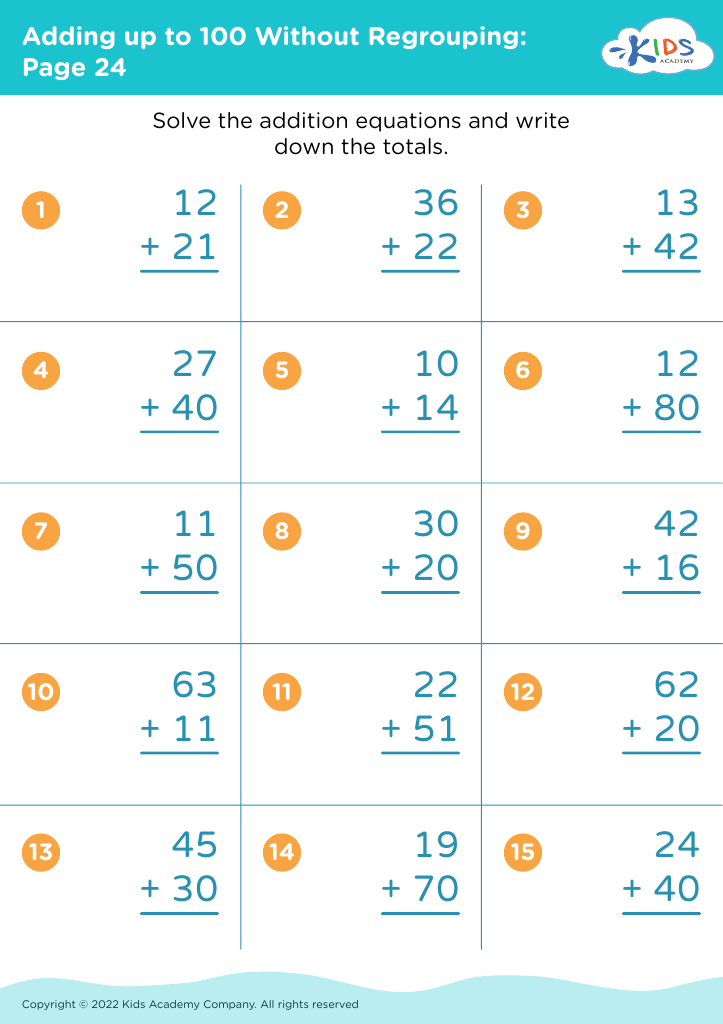
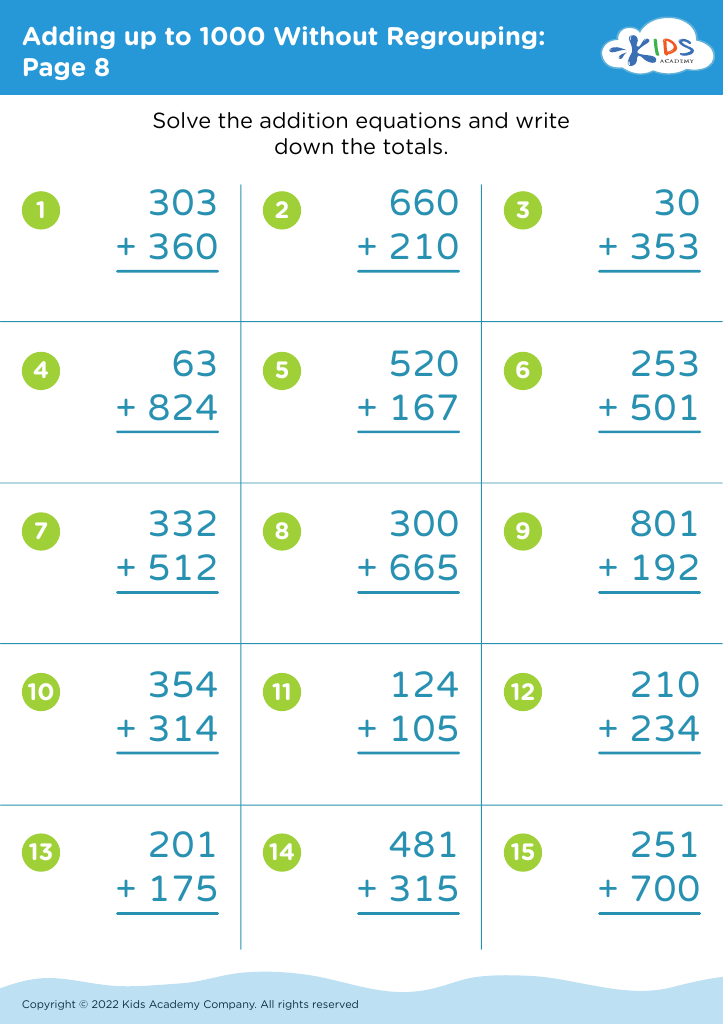
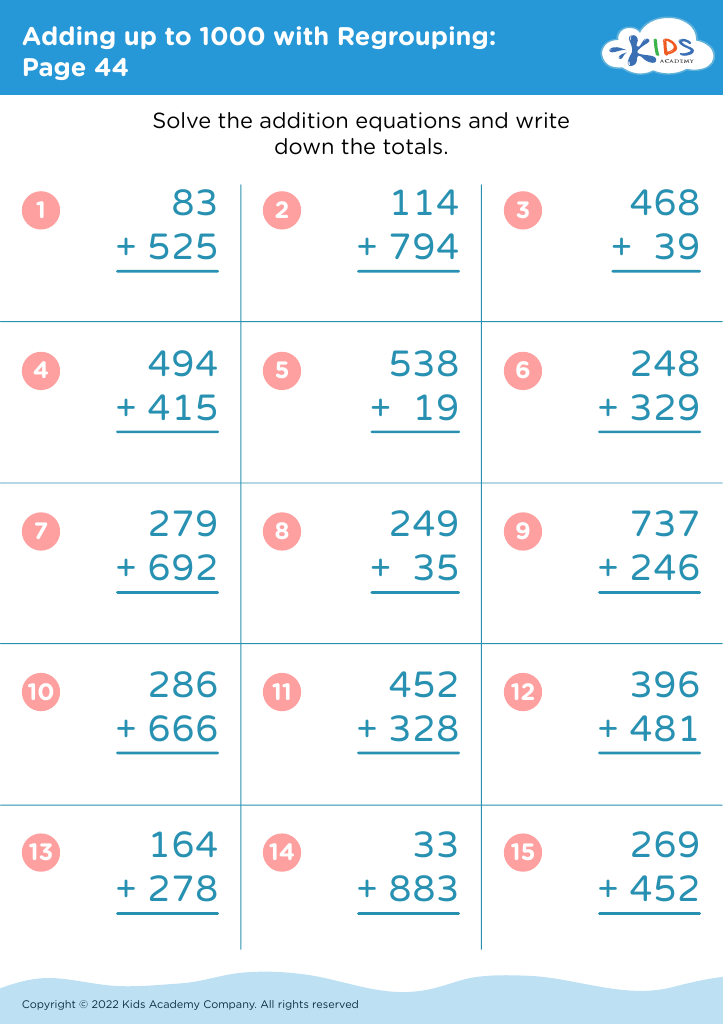
Enhance your child's mathematical journey with our expertly crafted addition worksheets designed for ages 5-9. These engaging and interactive worksheets focus on developing critical thinking and problem-solving skills, ensuring a strong foundation in basic math concepts. Each worksheet presents fun, varied addition challenges that stimulate young minds, fostering analytical and logical reasoning abilities. From simple single-digit problems to more complex equations, our resources cater to different skill levels, promoting confident and independent learning. Empower your child to think critically, solve problems efficiently, and enjoy the exciting world of math with our invaluable addition worksheets.








Parents and teachers should prioritize the development of critical thinking skills in children aged 5-9 because these skills are foundational for lifelong learning and problem-solving. At this impressionable age, children's brains are rapidly developing, making it an ideal time to introduce critical thinking exercises, such as logic puzzles, simple problem-solving scenarios, and age-appropriate discussions that challenge their reasoning abilities.
Critical thinking fosters independence, curiosity, and confidence. When children learn to analyze situations, question information, and consider multiple solutions, they become more adaptable and better equipped to handle complex situations in both academic and social contexts. Additionally, these skills improve their ability to understand math and science concepts, boosting overall academic performance.
Beyond academics, critical thinking nurtures social-emotional growth. Children learn to consider different perspectives, develop empathy, and interact more constructively with peers. This early focus lays a solid groundwork for future career skills such as complex decision-making, interpersonal communication, and innovation.
Implementing critical thinking activities doesn't have to be daunting. Parents and teachers can incorporate simple games, open-ended questions, and storytelling into daily routines to encourage inquisitive minds. By fostering this essential skill early on, adults empower children to become thoughtful, independent learners and thinkers.








