Learn addition Addition Worksheets for Ages 5-9
3 filtered results
-
From - To
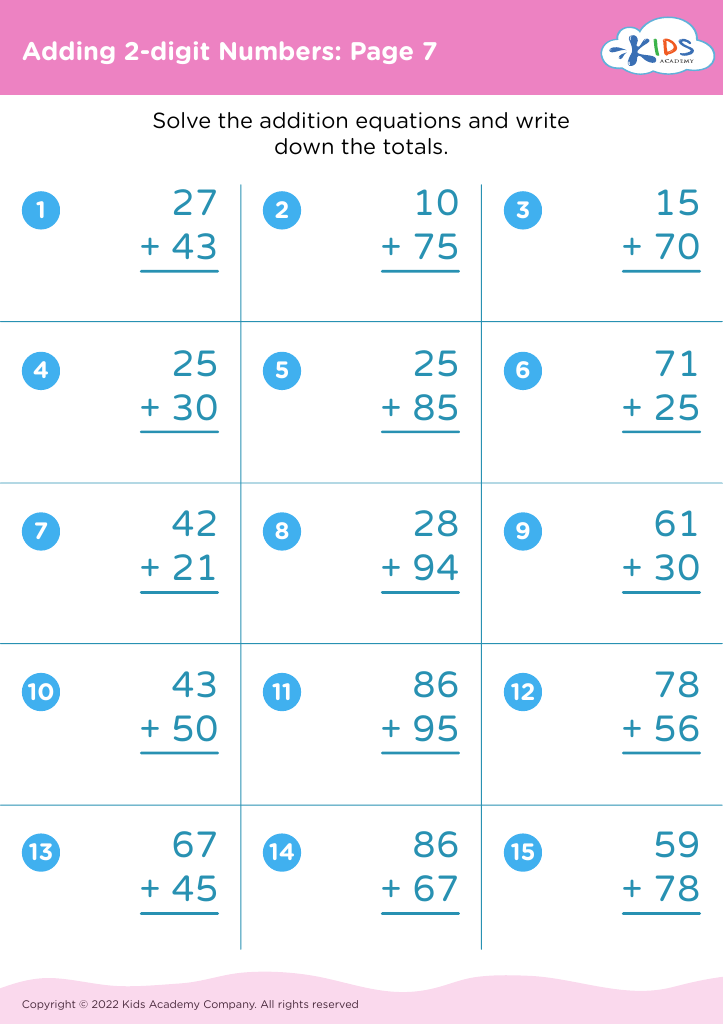
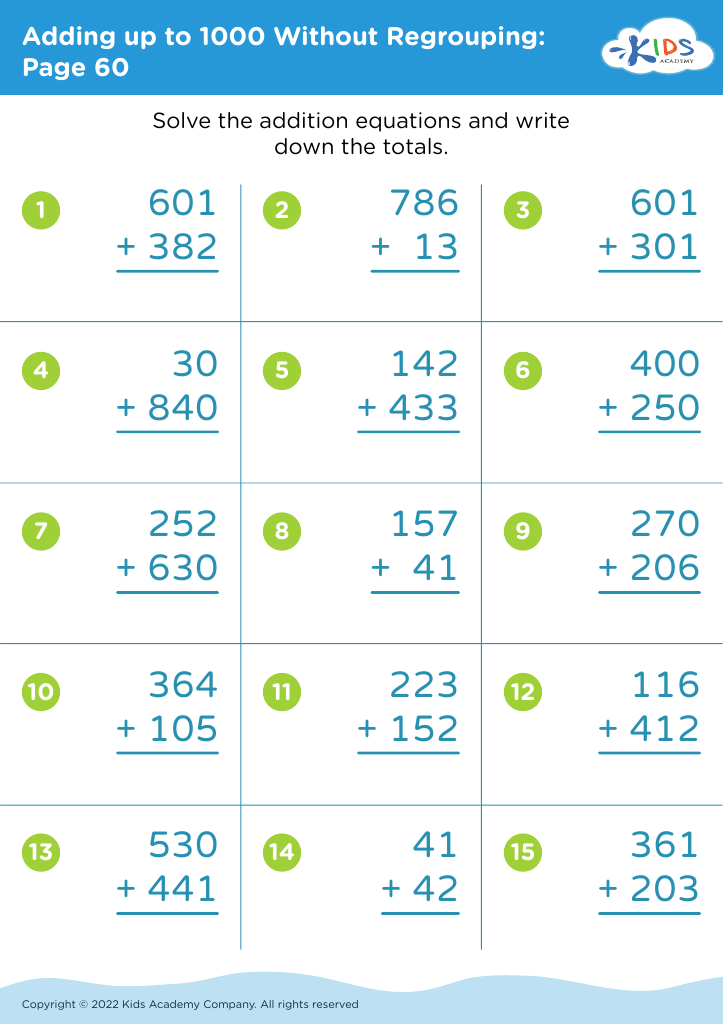
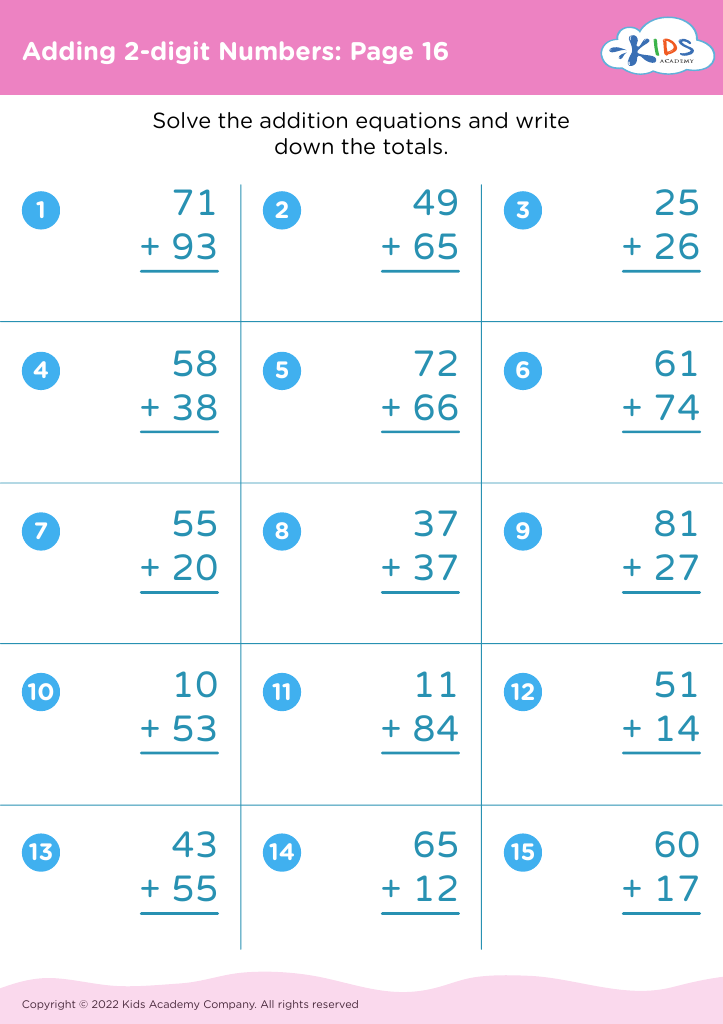
Welcome to our "Learn Addition Worksheets for Ages 5-9"! Designed to make math engaging and accessible, our printable worksheets help children grasp the fundamentals of addition. Each activity features colorful graphics and varying difficulty levels to cater to diverse learning styles. Kids will develop essential skills through fun exercises that promote number recognition, basic calculations, and problem-solving abilities. With step-by-step instructions and helpful examples, our worksheets ensure a solid foundation in addition while keeping learning enjoyable. Perfect for home use or classrooms, these resources will empower young learners to master addition confidently and prepare them for future math success!



.jpg)




Parents and teachers should care about teaching addition to children aged 5-9 because it lays a crucial foundation for future mathematical concepts and everyday problem-solving skills. Mastering addition during these formative years boosts not only academic performance but also builds confidence in a child’s ability to tackle more complex subjects.
Understanding addition enhances critical thinking and logic skills, enabling students to approach both mathematical riddles and real-life situations, such as budgeting or sharing items fairly. Moreover, this knowledge fosters positive learning habits; children who excel early in mathematics often develop a more favorable attitude towards learning in general.
At this age, children are naturally curious, and incorporating engaging methods—such as games and manipulatives—captures their attention and makes learning fun. Early mastery of addition involves not just memorizing facts but developing a deep understanding of number relationships, which serves as a springboard into subtraction, multiplication, and beyond.
Ultimately, supporting children in mastering addition enriches their cognitive development and prepares them for academic success, positioning them to become confident learners who are equipped to face challenges in the classroom and life. Investing time in teaching addition during early education yields long-term benefits for both children and society as a whole.








