Logical thinking development Addition Worksheets for Ages 5-9
8 filtered results
-
From - To
Unlock the power of logical thinking for your child with our engaging Addition Worksheets specifically designed for ages 5-9. These worksheets not only strengthen foundational math skills but also enhance critical thinking abilities through fun and interactive problems. Each activity challenges young learners to approach addition in creative ways, fostering cognitive development while making learning enjoyable. Parents and educators will appreciate the structured format that supports varied learning styles and helps children build confidence in their math skills. Perfect for home practice or classroom use, our worksheets encourage independent problem-solving and critical reasoning. Start nurturing your child's logical thinking today!
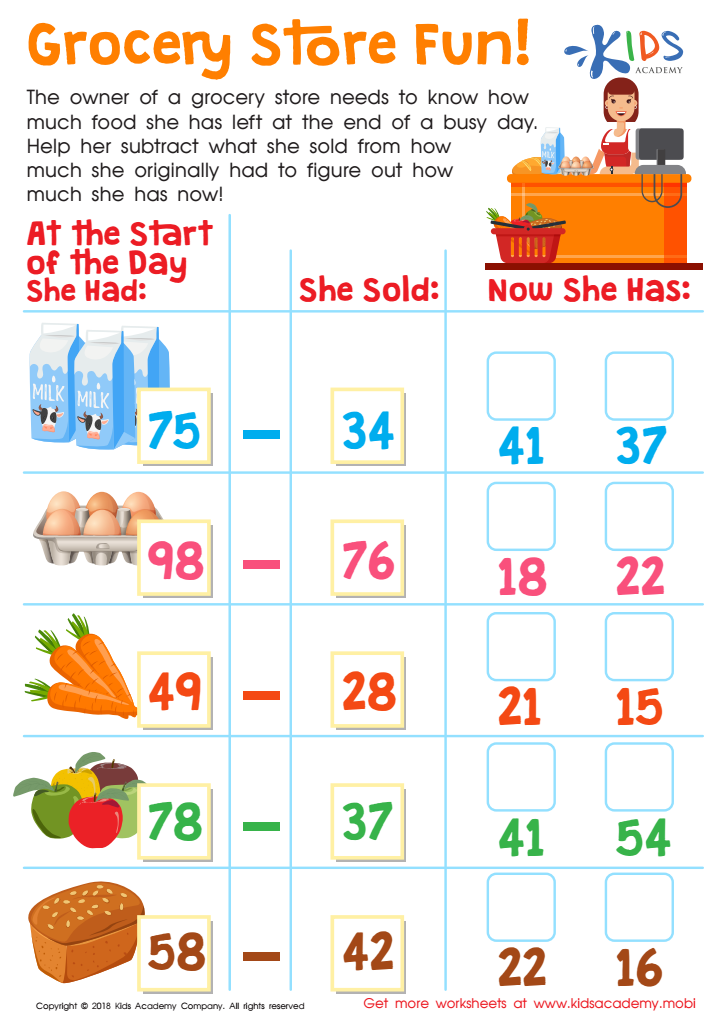
Grocery Store Fun! Worksheet
 Assign to My Students
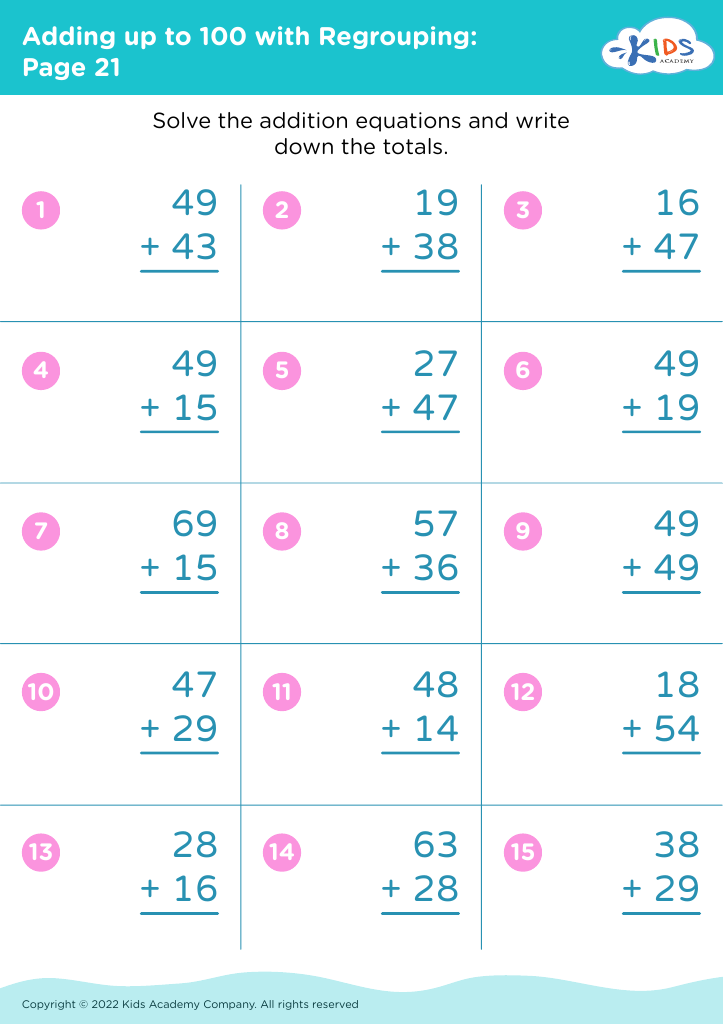
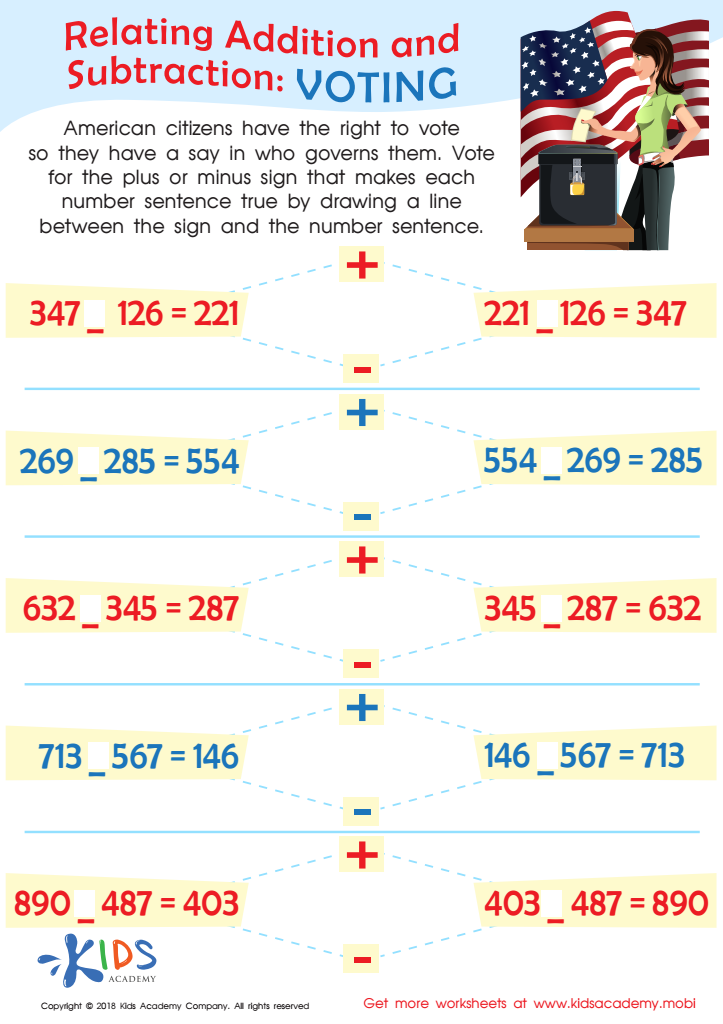
Voting Worksheet
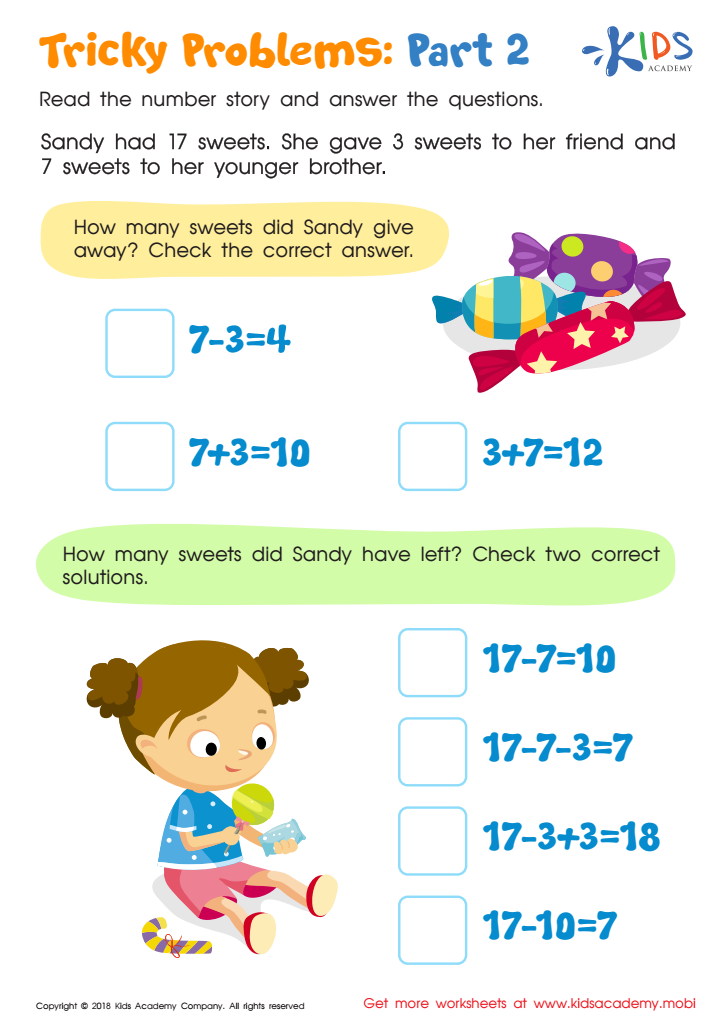
Tricky Problems Worksheet: Part 2
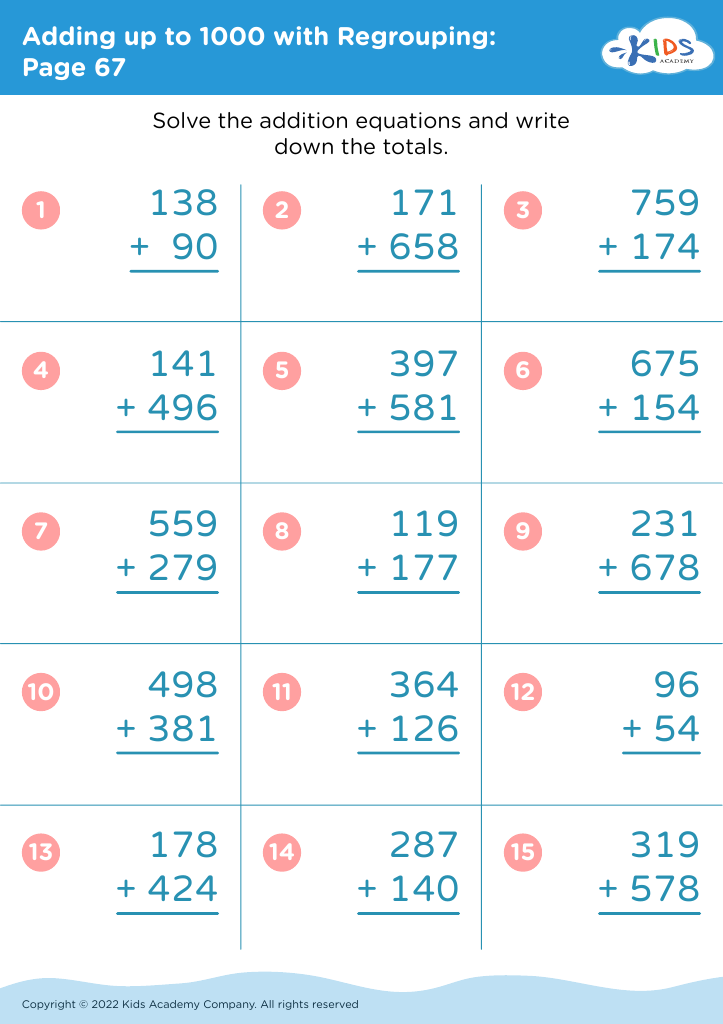
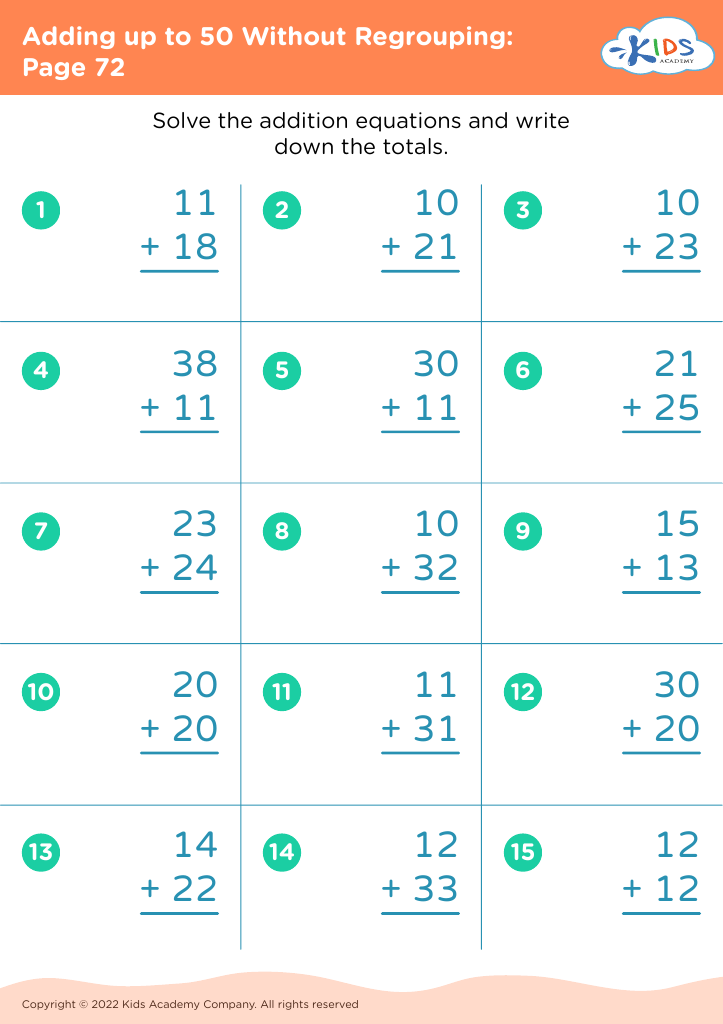
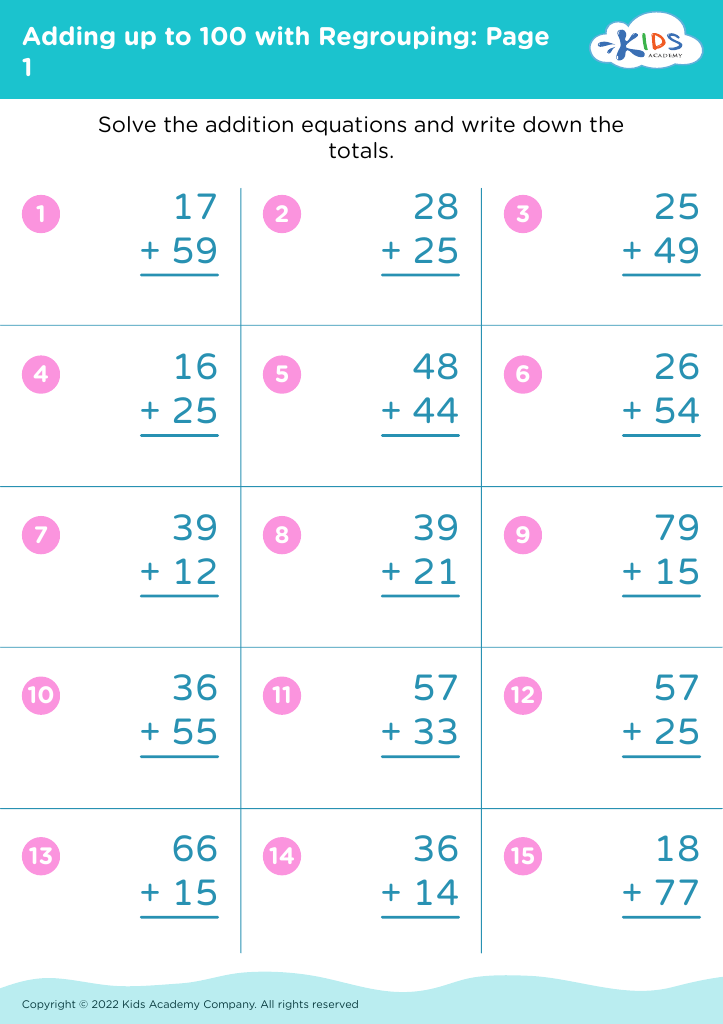
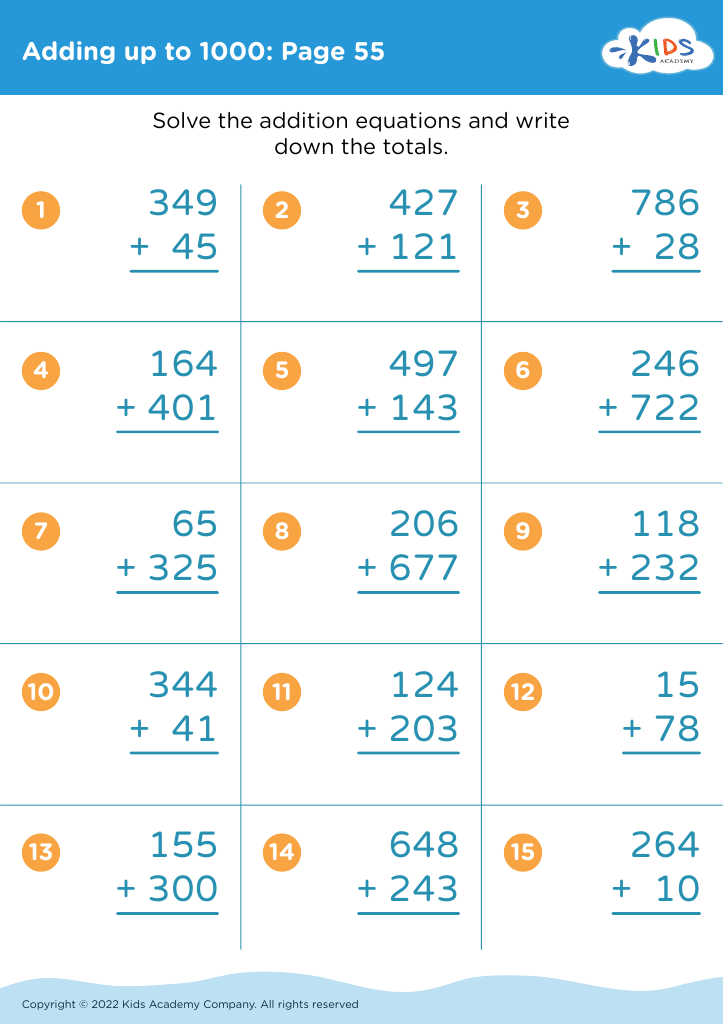







.jpg)
Logical thinking development through addition is crucial for children aged 5-9 as it lays a strong foundation for their overall cognitive skills. During these formative years, children's brains are highly receptive, making it an ideal time to foster critical thinking, problem-solving, and analytical abilities.
When children engage with addition, they don't just learn to compute numbers; they also practice reasoning through patterns, relationships, and strategies. Parents and teachers play a vital role in guiding children to explore different ways to solve problems, encouraging them to think creatively and approach challenges analytically.
Fostering logical thinking through addition also supports other areas of learning. Math skills are intertwined with literacy, scientific reasoning, and even social-emotional development, helping children navigate their world effectively. Mastery of addition builds confidence, reducing anxiety towards math and enhancing overall academic performance.
Furthermore, logical thinking is a skill that extends beyond academics. It helps children develop the ability to make decisions, segregate information, and approach situations systematically in daily life. Parents and teachers who nurture these skills empower children to become effective learners and problem solvers, setting them up for success throughout their educational journeys and beyond.








