Nature awareness Addition Worksheets for Ages 5-9
8 filtered results
-
From - To
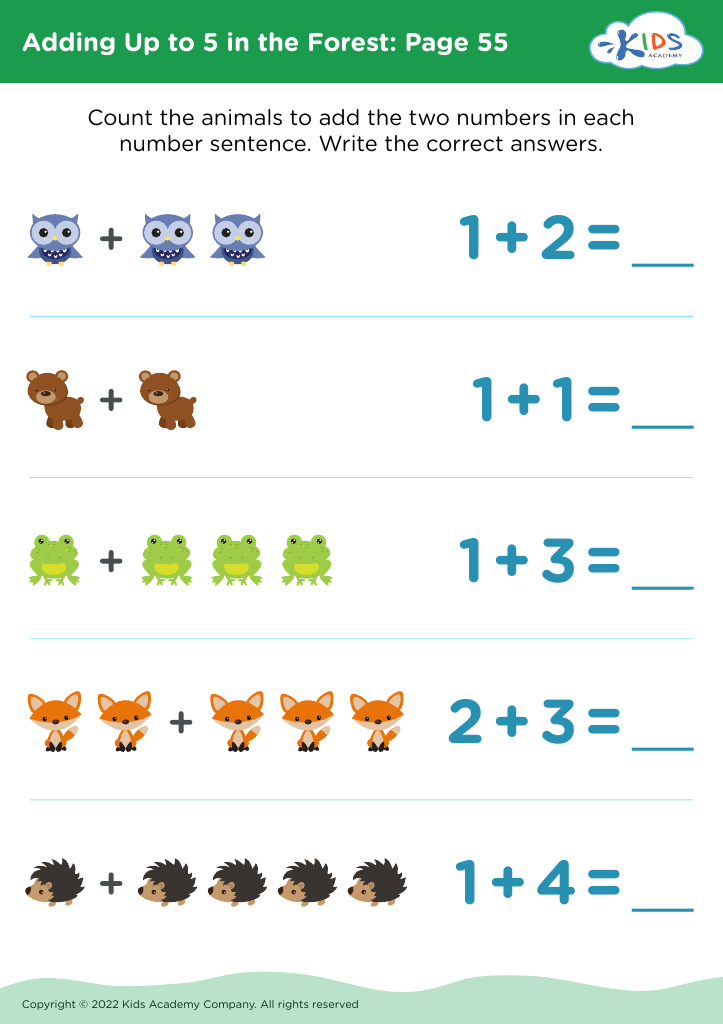
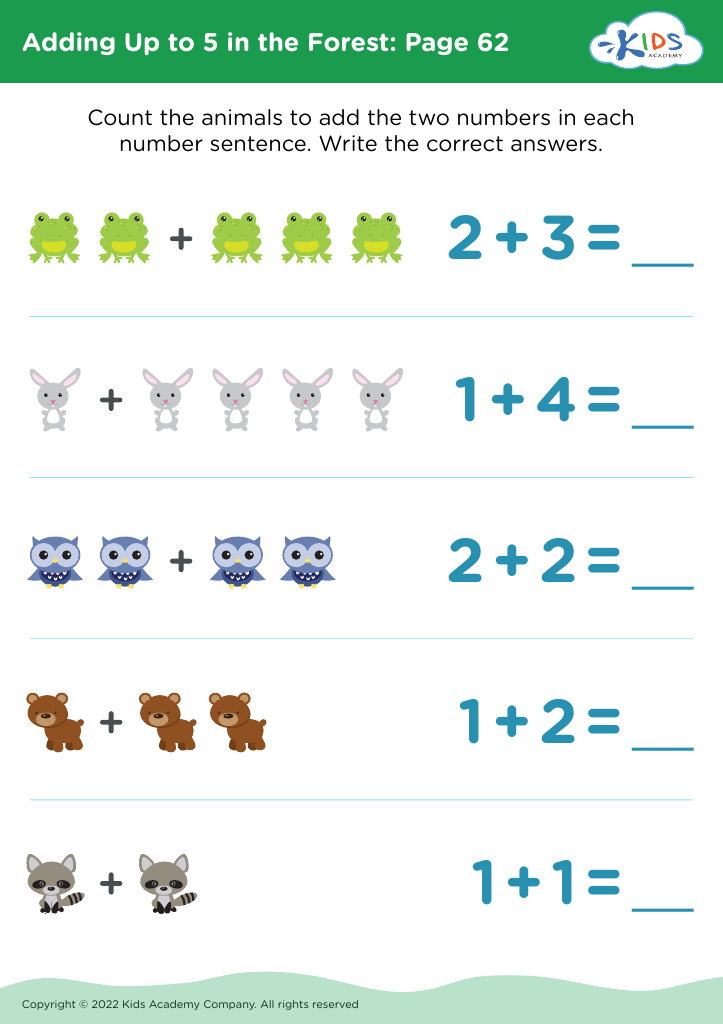
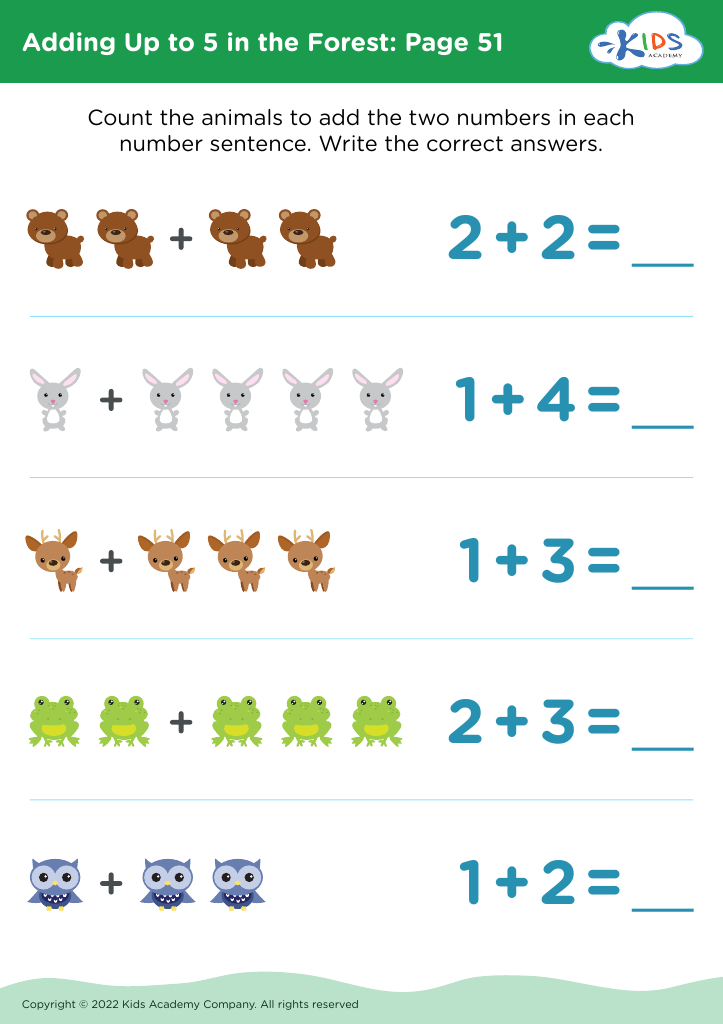
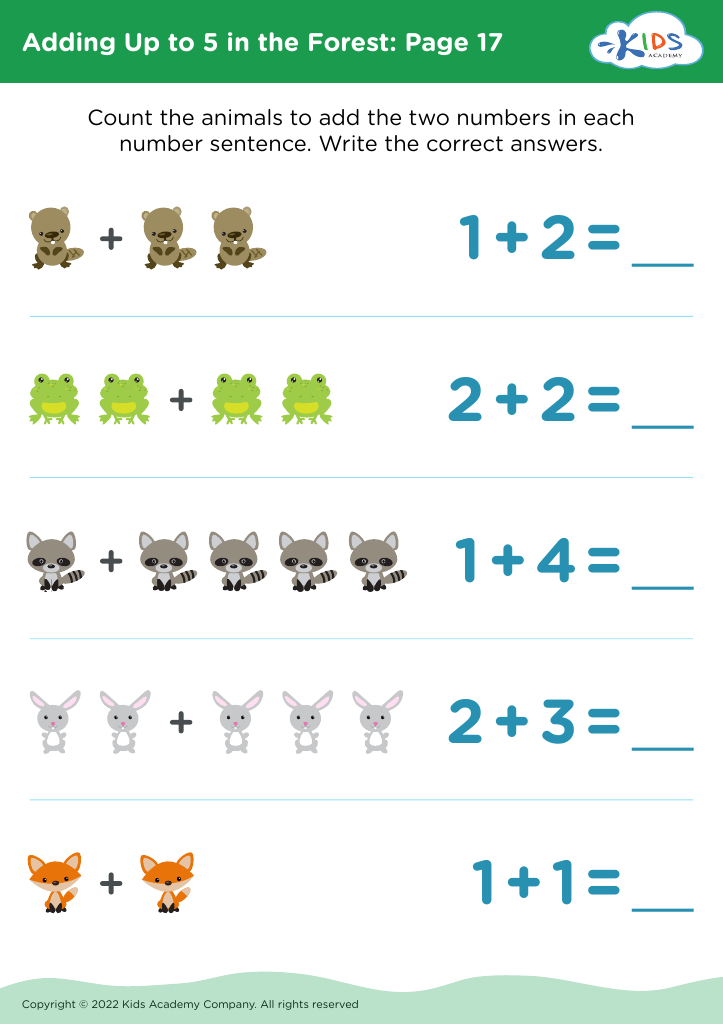
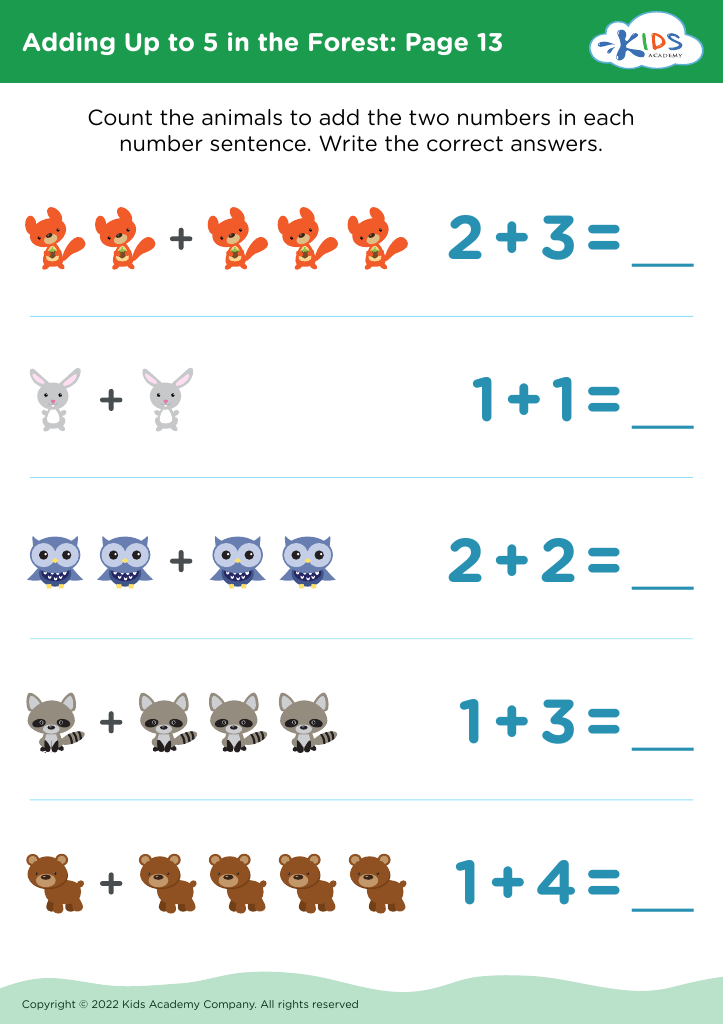
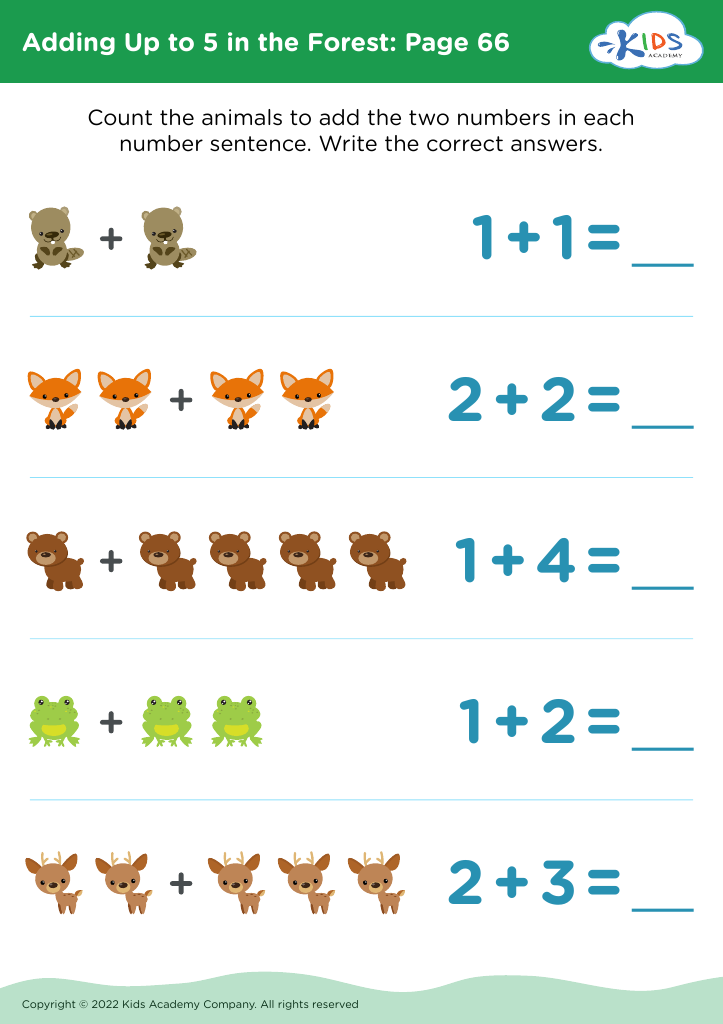
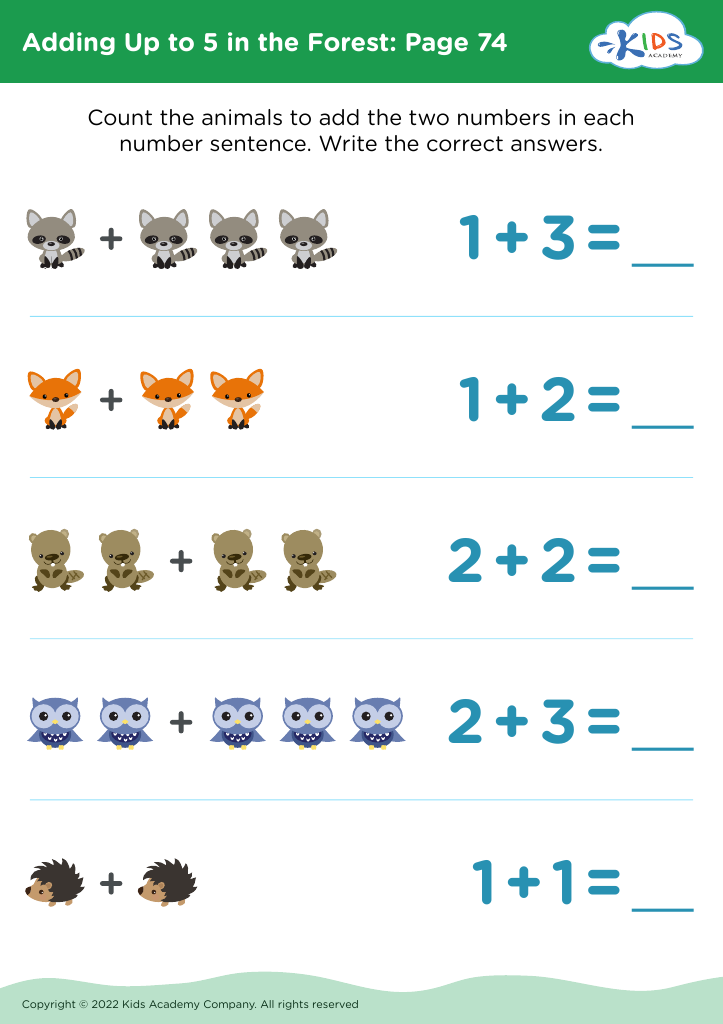
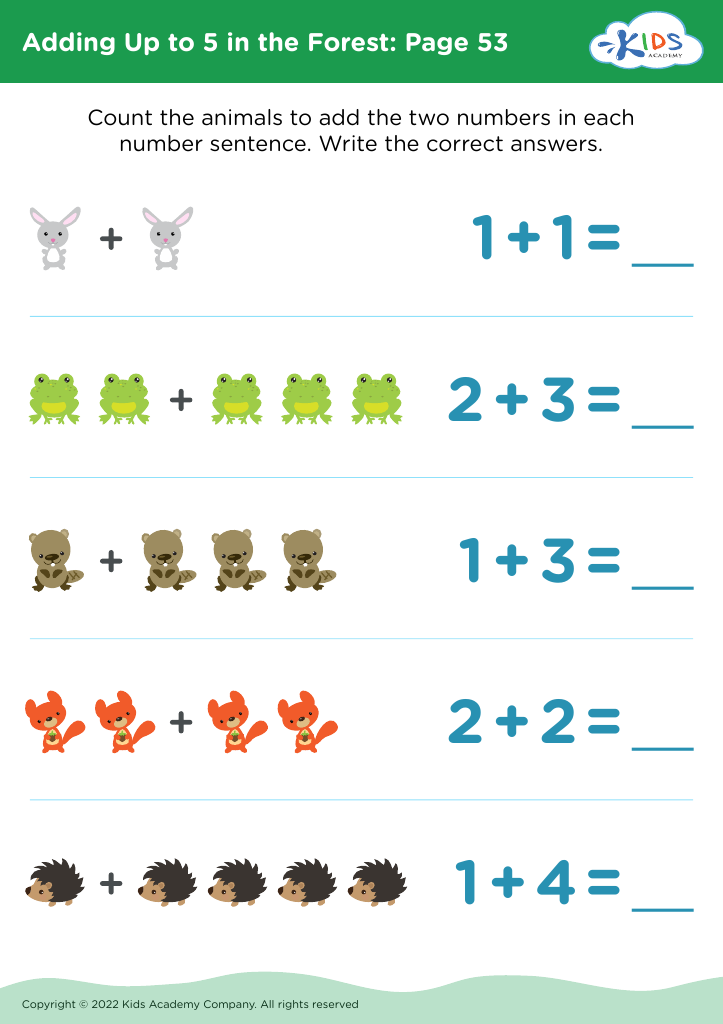
Discover a world where math meets nature with our Nature Awareness Addition Worksheets for ages 5-9! Our engaging worksheets combine the beauty of the outdoors with fundamental math skills, making learning addition fun and interactive. Designed by educational experts, each worksheet encourages young learners to explore nature items while practicing addition. Perfect for enhancing both math proficiency and environmental appreciation, these worksheets are beneficial for hands-on, curious minds. Elevate math practice into an exciting adventure with our specialized nature-themed addition worksheets, ideal for early elementary students who love to learn and explore. Join us in nurturing mathematicians and nature enthusiasts with every addition problem!








Nature awareness is a crucial part of early childhood education, especially for ages 5-9, because it fosters a child's overall development in significant ways. At this stage, children are naturally curious and more receptive to understanding the world around them. Exposure to nature helps cultivate this curiosity, promoting cognitive development as children explore and learn about plants, animals, weather patterns, and ecosystems. Such experiences can enhance their observational skills, critical thinking, and problem-solving abilities.
Moreover, nature awareness contributes positively to emotional well-being. Nature offers a calming environment that reduces stress and anxiety, which can improve focus and behavior in children. Unstructured play in natural settings encourages creativity, collaboration, and independence. Physical activity in nature also promotes motor skills and overall health, combating the increasing sedentary lifestyles influenced by screen time.
Socially, nature activities allow children to interact with peers in a cooperative and investigative manner, strengthening their communication and teamwork skills. It also instills a sense of responsibility and care for the environment, fostering an early appreciation for conservation and sustainability.
Parents and teachers who prioritize nature awareness are investing in well-rounded, environmentally conscious individuals. By integrating nature into education, they help children build a solid foundation for lifelong learning, personal growth, and stewardship of the planet.








