Numeracy development Addition Worksheets for Ages 5-9
3 filtered results
-
From - To
Enhance your child's mathematical skills with our engaging Numeracy Development Addition Worksheets, designed for ages 5-9. These carefully crafted worksheets offer a fun and interactive way for young learners to master addition, laying a strong foundation for future math success. Tailored to varying skill levels, the exercises blend vibrant visuals and practical problems to ensure children grasp core concepts while staying motivated. Ideal for both classroom and at-home use, our resource supports a smooth transition from basic counting to confident addition. Boost your child's numeracy skills today with our expertly designed addition worksheets!
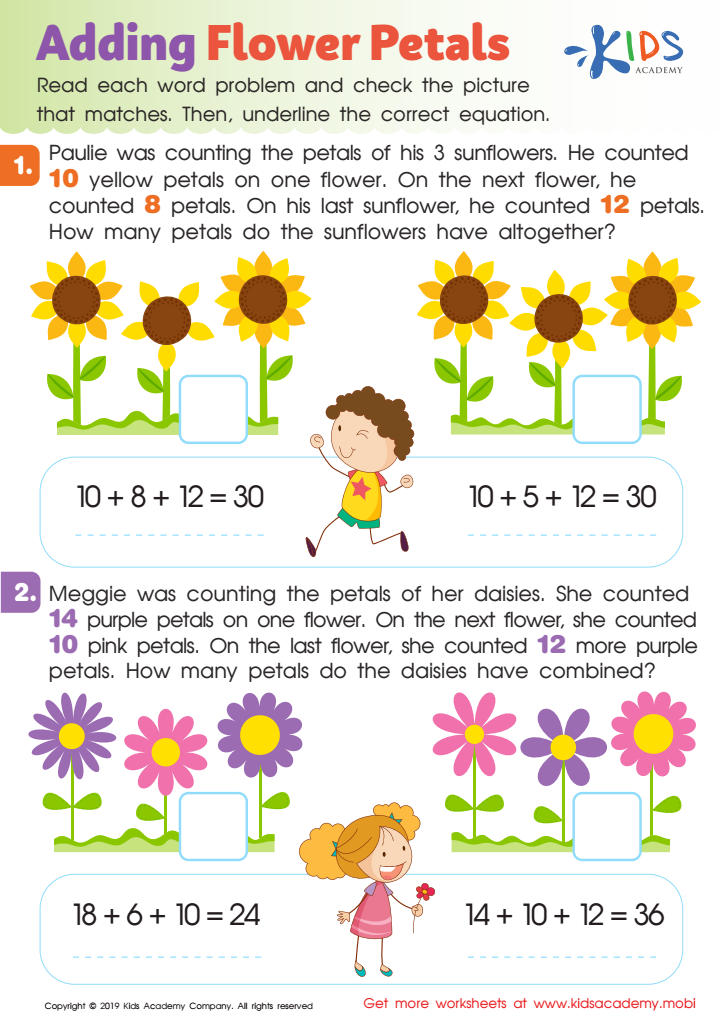
Adding Flower Petals Worksheet
 Assign to My Students
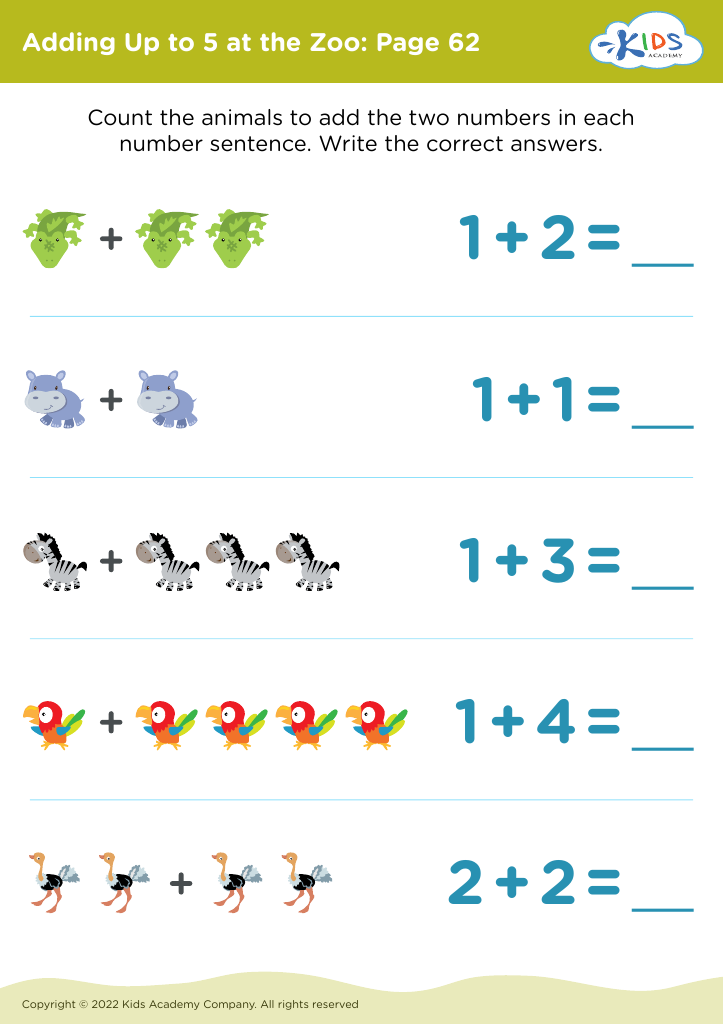
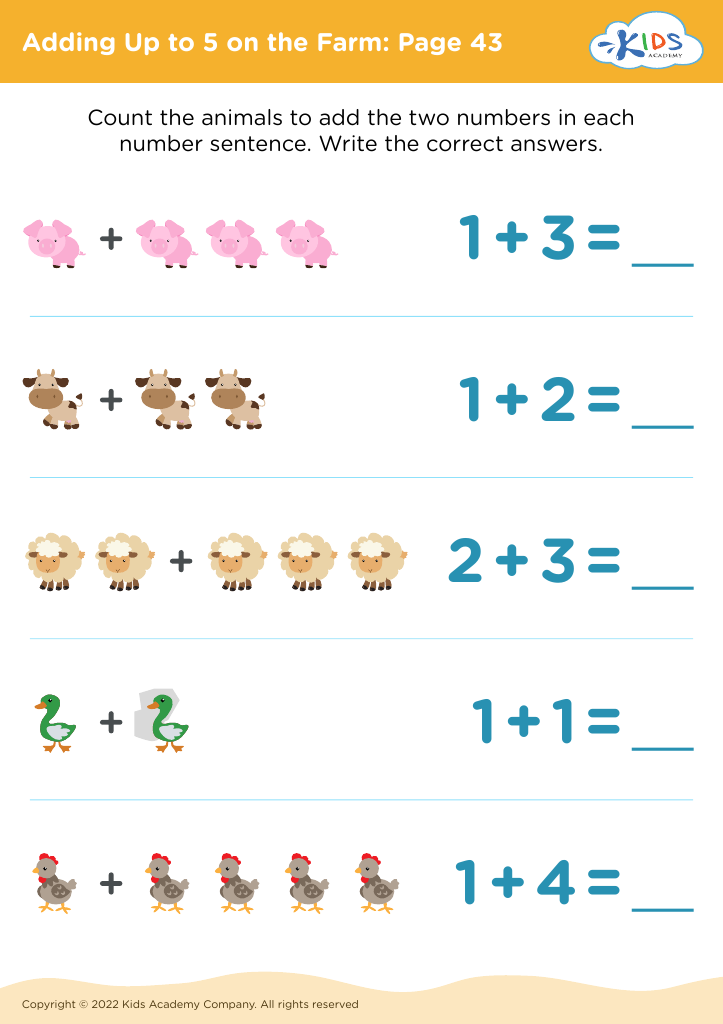








Numeracy development, particularly the concept of addition for ages 5-9, is foundational for a child's academic and daily life success. During these formative years, children's brains are highly receptive to learning and can absorb new information rapidly. By focusing on addition, parents and teachers can help children build a strong mathematical foundation that is crucial for more advanced arithmetic skills, such as subtraction, multiplication, and division.
Addition helps enhance problem-solving skills and logical thinking. As children learn to add numbers, they begin to understand patterns, relationships, and how numbers interact with one another. This understanding can foster analytical thinking, paving the way for aptitude in STEM (Science, Technology, Engineering, and Mathematics) subjects, which are increasingly essential in today's world.
Developing numerical skills also boosts a child's confidence and self-esteem. Success in math fosters a sense of achievement, which can translate into a positive attitude toward learning in general. Additionally, numeracy skills improve daily life functionality, such as managing time, handling money, and making informed decisions.
Involving parents and teachers in this process ensures that children receive consistent guidance and positive reinforcement both at home and in school, creating a harmonious learning environment. Ultimately, strong numeracy skills in early childhood set the groundwork for lifelong academic success and practical life skills.








