Understanding equality Addition Worksheets for Ages 5-9
3 filtered results
-
From - To
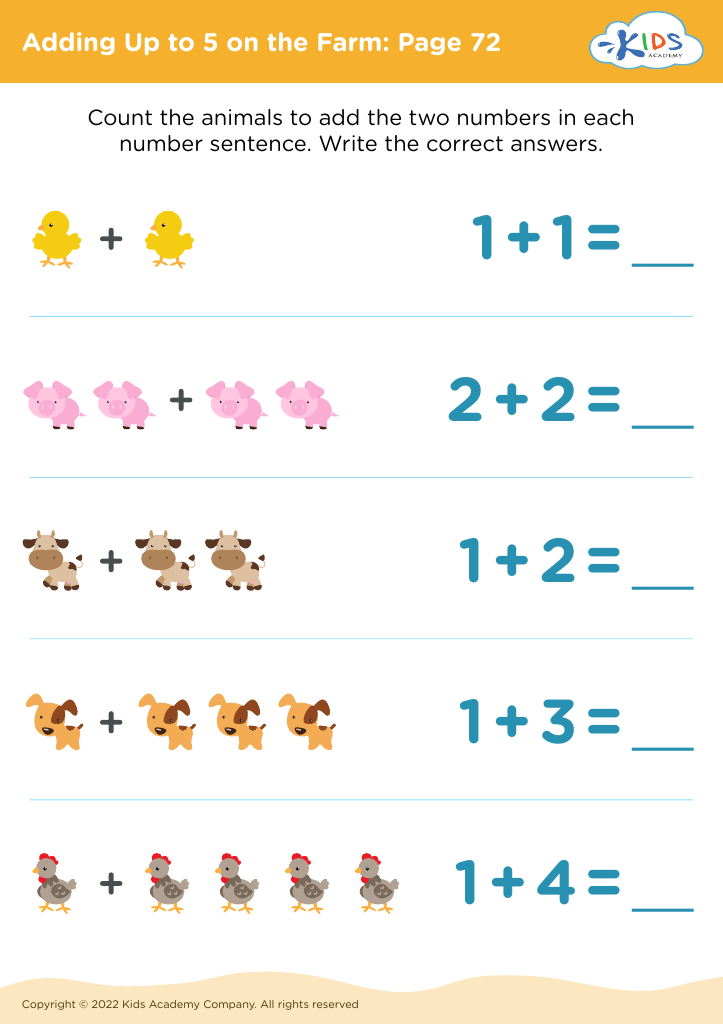
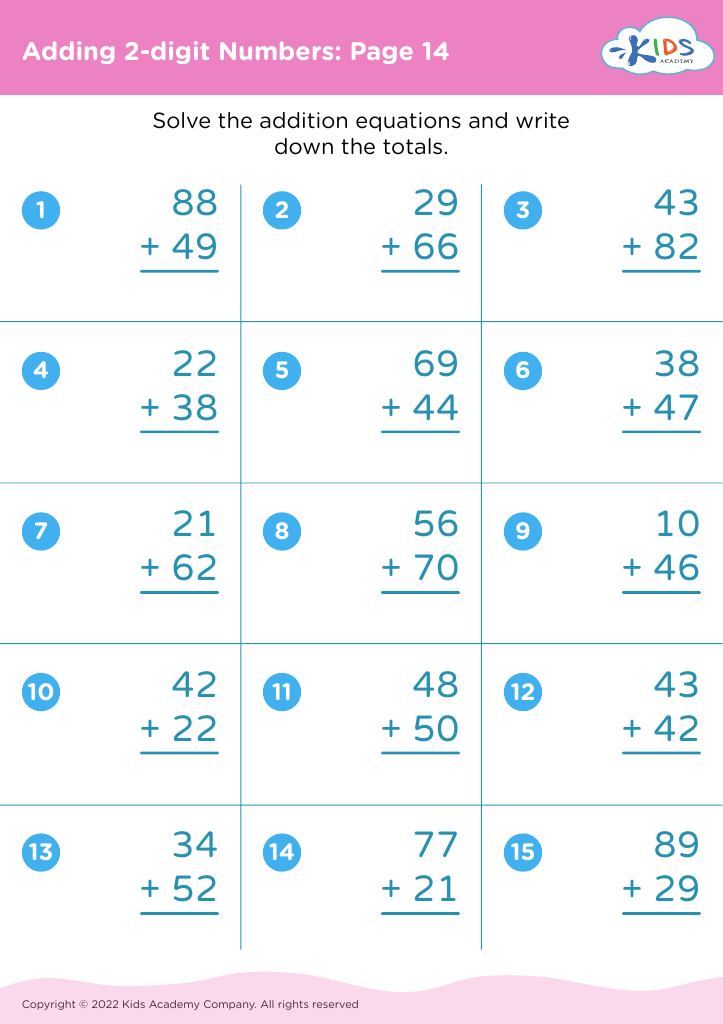
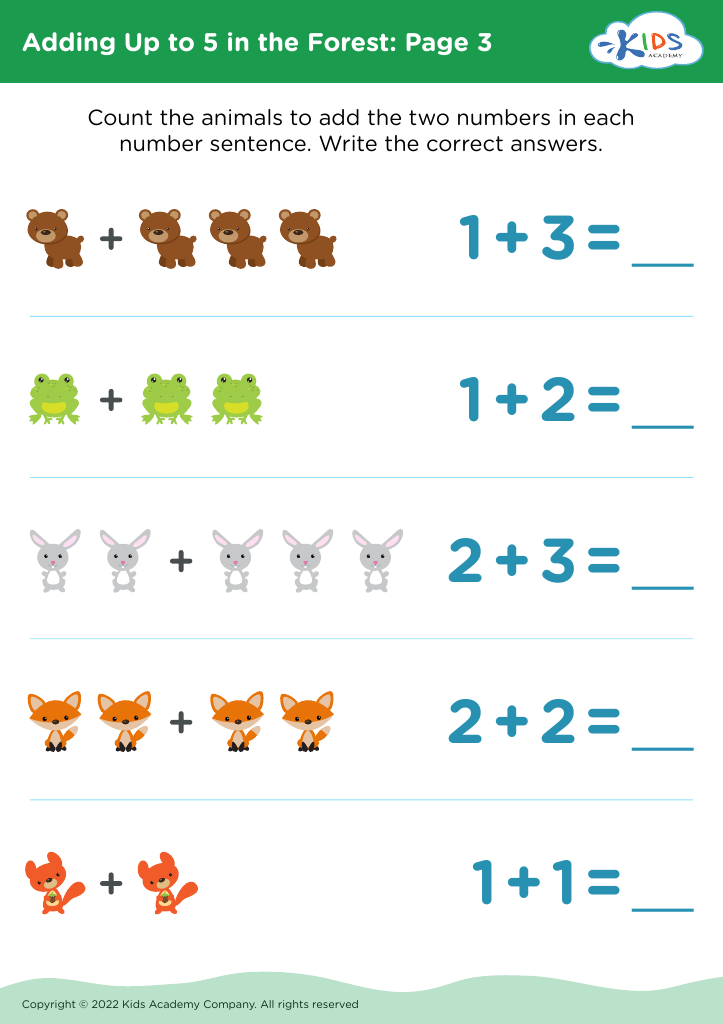
Discover the fun and engaging "Understanding Equality Addition Worksheets" designed specifically for kids aged 5-9. These worksheets aim to develop essential math skills while fostering a deep comprehension of equality through addition. Each activity encourages young learners to explore the concept of equivalency using hands-on exercises, visual aids, and relatable examples. Perfect for both classroom settings and at-home practice, these worksheets help reinforce essential addition skills while emphasizing the importance of balanced equations. With colorful designs and age-appropriate challenges, children will enjoy mathematical mastery in a playful way. Support your child's growth in math with our comprehensive resources today!


.jpg)





Understanding equality in addition is fundamental for children aged 5-9, as it lays the groundwork for their mathematical skills and critical thinking abilities. At this stage, students are developing their number sense and the ability to recognize patterns in mathematics. Teaching them about equality—specifically that both sides of an equation represent the same value—encourages them to think about numbers in a more abstract way.
Moreover, fostering an understanding of equality helps children grasp fundamental mathematical concepts that they will encounter throughout their education. It promotes logical reasoning and problem-solving skills, as students learn to analyze and interpret equations rather than just memorize facts or procedures. This foundational learning experience can bolster their confidence in tackling more complex concepts in the future.
Parents and teachers should prioritize these lessons because early understanding impacts children's attitudes toward mathematics. A solid foundation in equality can inspire a love for math, enhancing students’ overall academic performance. Additionally, these skills are integral to everyday life, enabling children to make sense of the world around them. Ultimately, helping children master equality in addition paves the way for lifelong learning and equips them with essential tools for future success.








