Understanding number relationships Addition Worksheets for Ages 5-9
5 filtered results
-
From - To
Unlock the power of early math with our "Understanding Number Relationships Addition Worksheets" designed for ages 5-9! These engaging worksheets help young learners explore fundamental addition concepts while building a strong mathematical foundation. Through fun activities and vibrant visuals, children will grasp number relationships, enhancing their ability to solve addition problems. Our carefully crafted exercises encourage critical thinking and foster a love for learning, making math enjoyable and accessible. Perfect for classroom settings or at-home practice, these worksheets cater to various learning styles. Equip your child with essential skills that pave the way for future mathematical success!
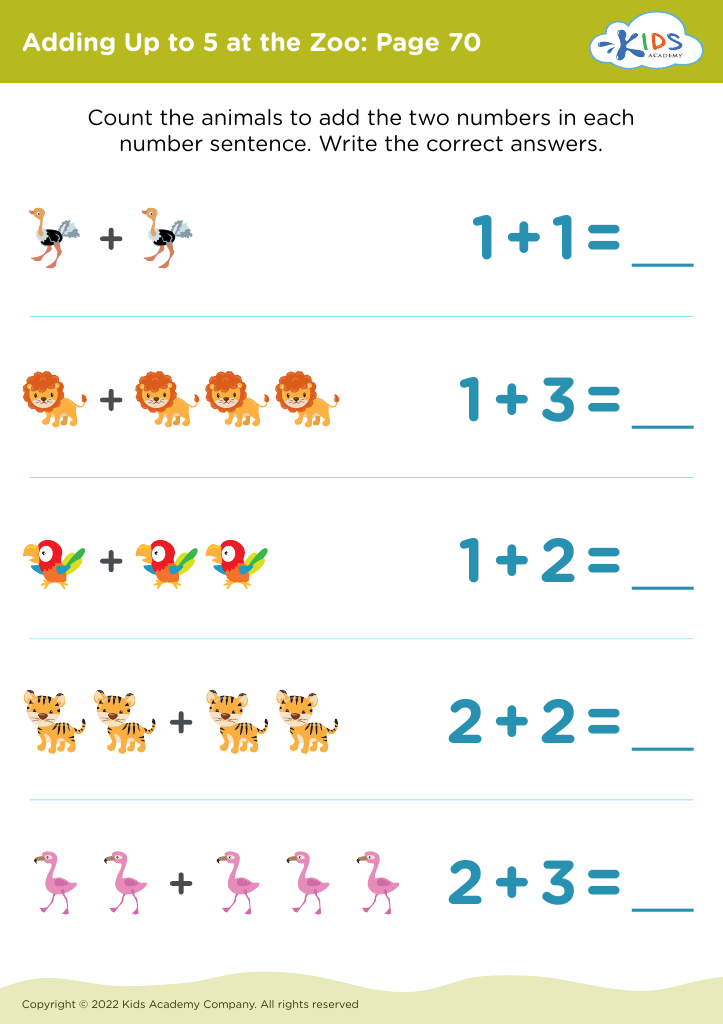
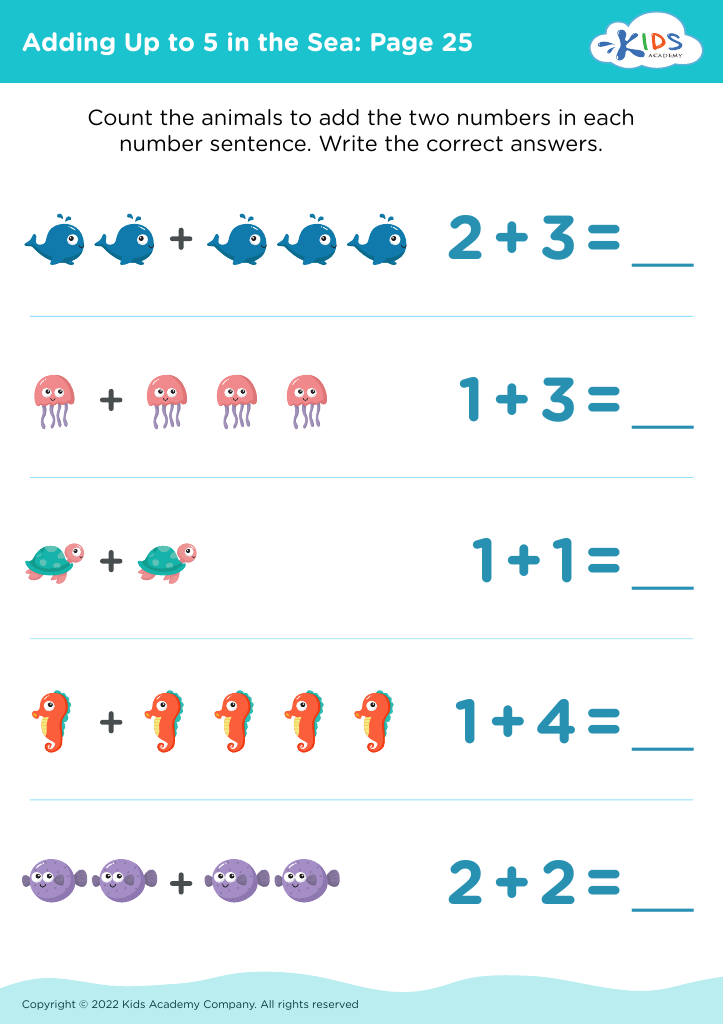
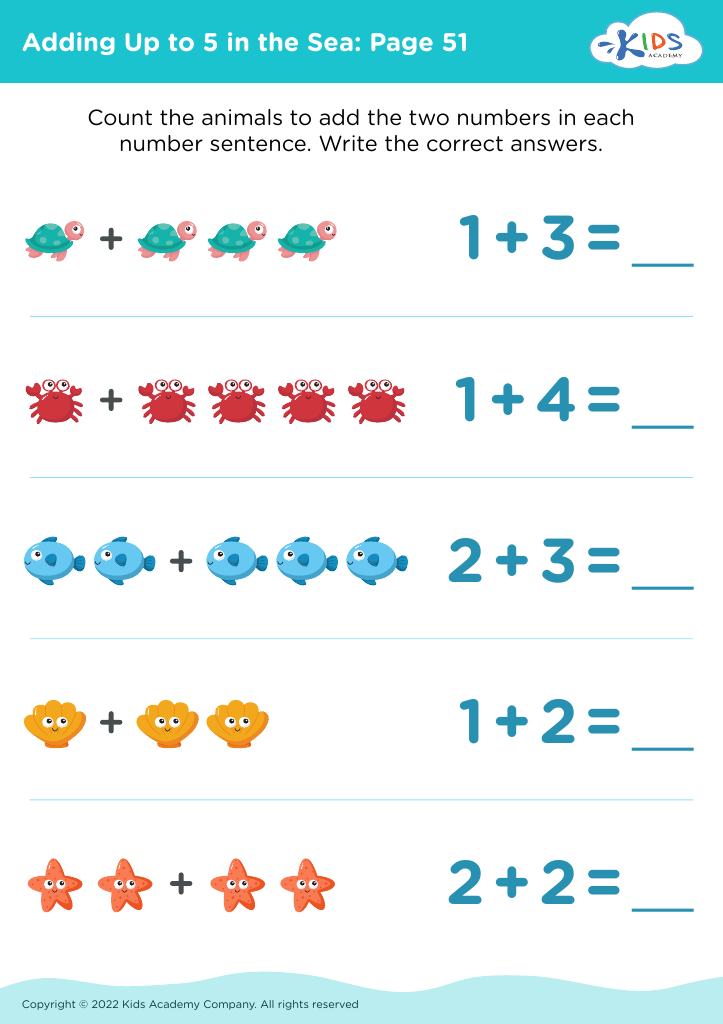
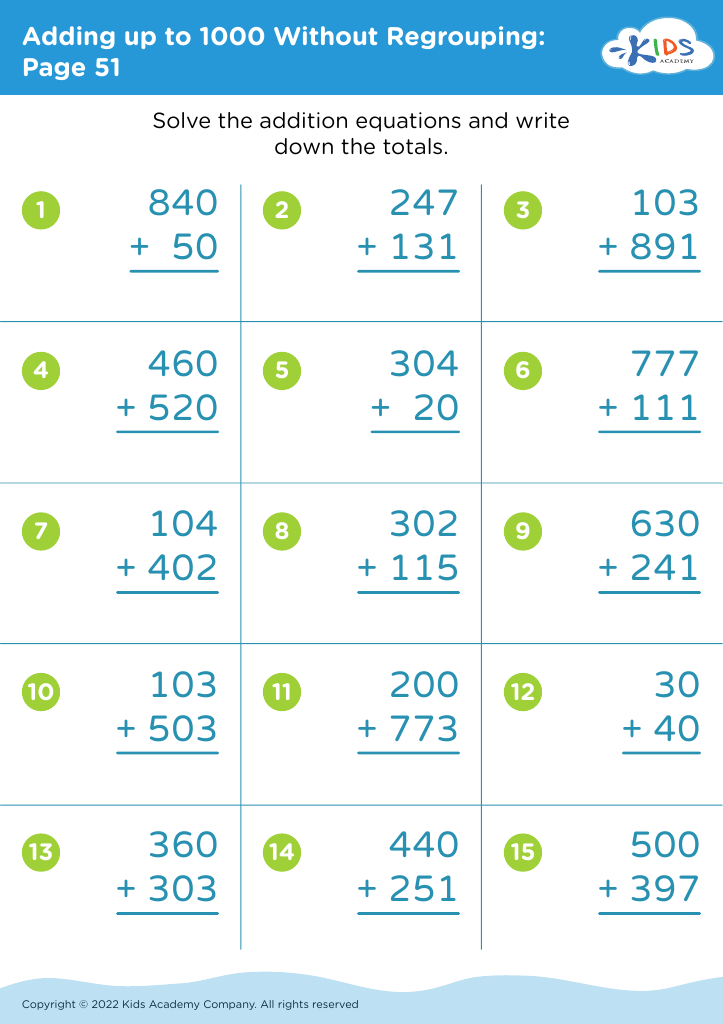
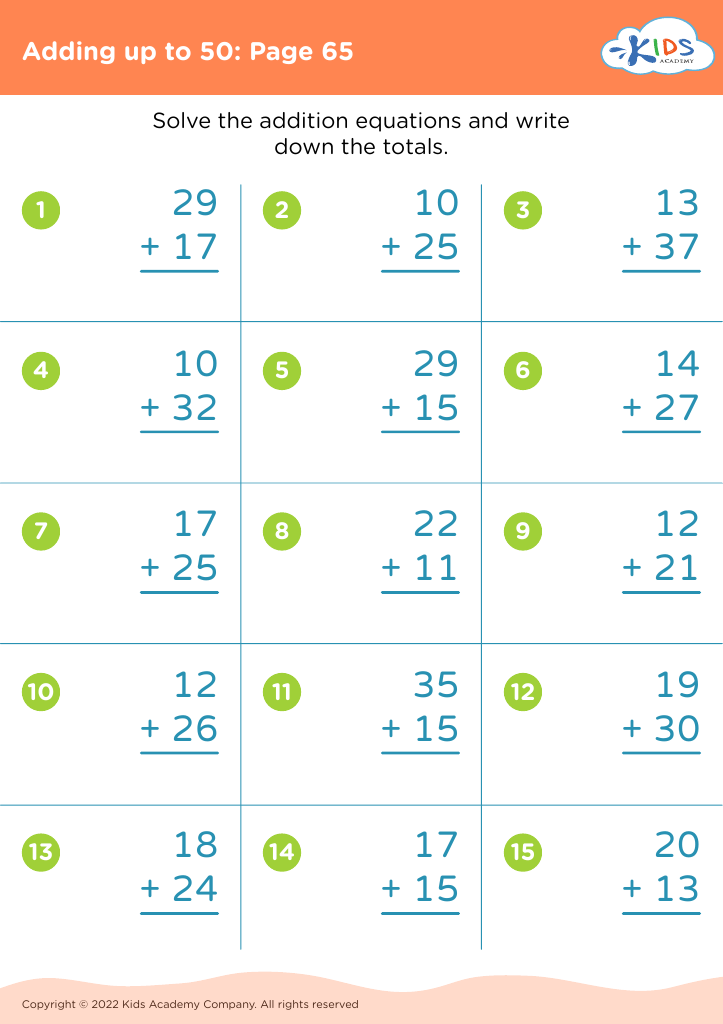








Understanding number relationships, particularly addition, is crucial for children's mathematical development between ages 5-9. During these formative years, children build a foundation that influences their future success in math and other academic areas. Recognizing how numbers relate to one another enhances cognitive skills, critical thinking, and problem-solving abilities.
When children grasp addition concepts, they not only learn to add numbers but also develop an understanding of the relationships between them—such as how adding creates a sum that can lead to new mathematical explorations like subtraction. This foundational knowledge fosters a positive attitude toward math, encouraging engagement and curiosity.
Moreover, strong number relationship skills contribute to a child's overall confidence and resilience in learning. As they encounter increasingly complex mathematical concepts in later grades, early understanding provides them with the necessary tools to tackle challenges effectively.
Parents and teachers play a pivotal role in this learning process. They can nurture children's curiosity about numbers through games, daily activities, and engaging discussions, ultimately ensuring that students develop essential skills that will benefit them throughout their educational journey and in everyday life. Early intervention in understanding number relationships establishes a love for learning that lasts a lifetime.








