Filters

26 filtered results

Clear all filters
Favorites
With answer key
Interactive

26 filtered results

Difficulty Level

Grade


Introduce your 5-9-year-old to the world of addition with our "Understanding Quantity Addition Worksheets"! Designed to bring math concepts to life, these engaging worksheets offer fun, interactive activities that help kids grasp the basics of quantity and addition. Students will explore visual representations of numbers, combining groups of objects, and solving simple sums, each aimed at building their foundational math skills. Created by education experts, these worksheets encourage logical thinking, enhance problem-solving abilities, and make learning math enjoyable. Perfect for classroom use or additional practice at home, give your child a head start with our tailor-made resources.
Check out this FREE Trial Lesson on Addition for age 5-9!

Breaking Down 8

Favorites
With answer key
Interactive
  • 5-9
  • Understanding quantity
  • Addition
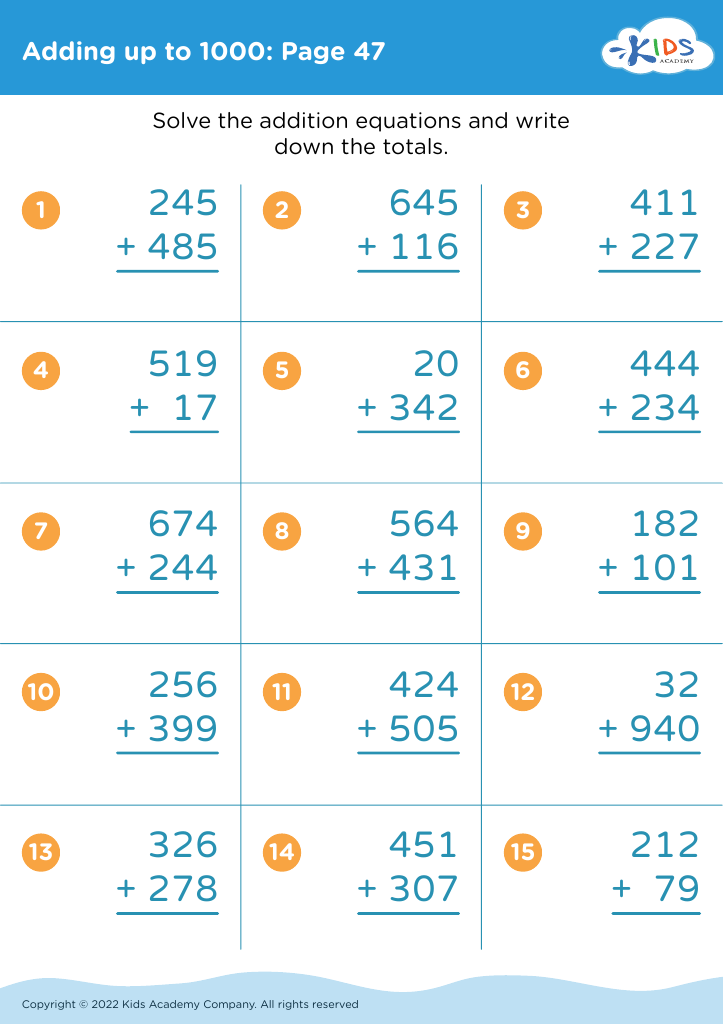
Adding up to 1000: Page 47

Adding up to 1000: Page 47

Adding up to 1000: Page 47
Worksheet
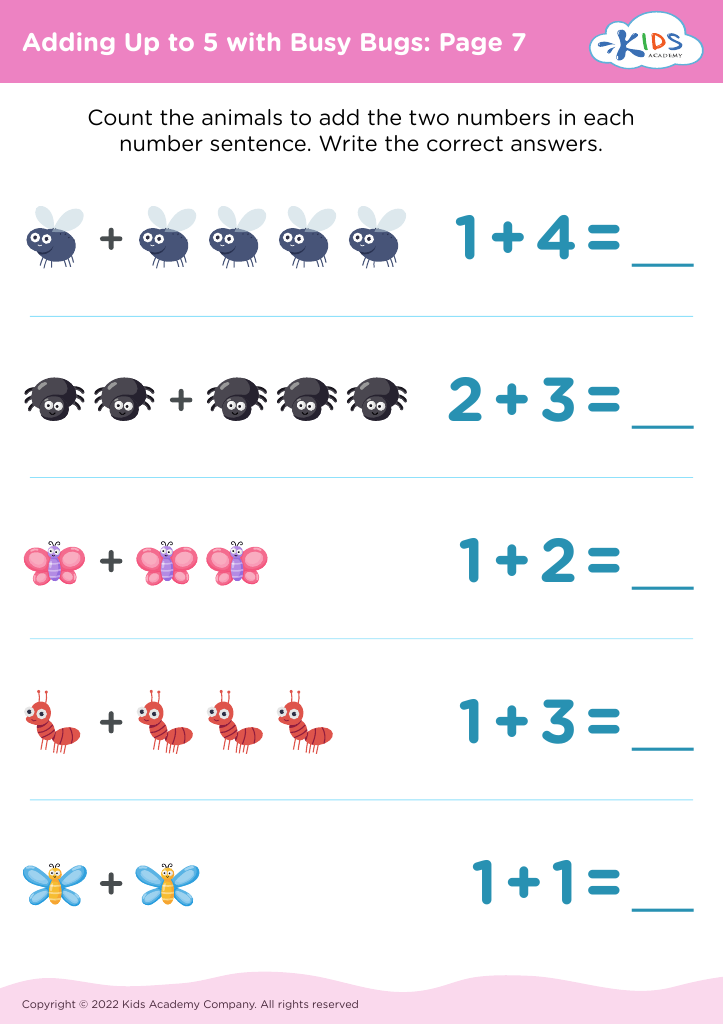
Adding Up to 5 with Busy Bugs: Page 7
Worksheet
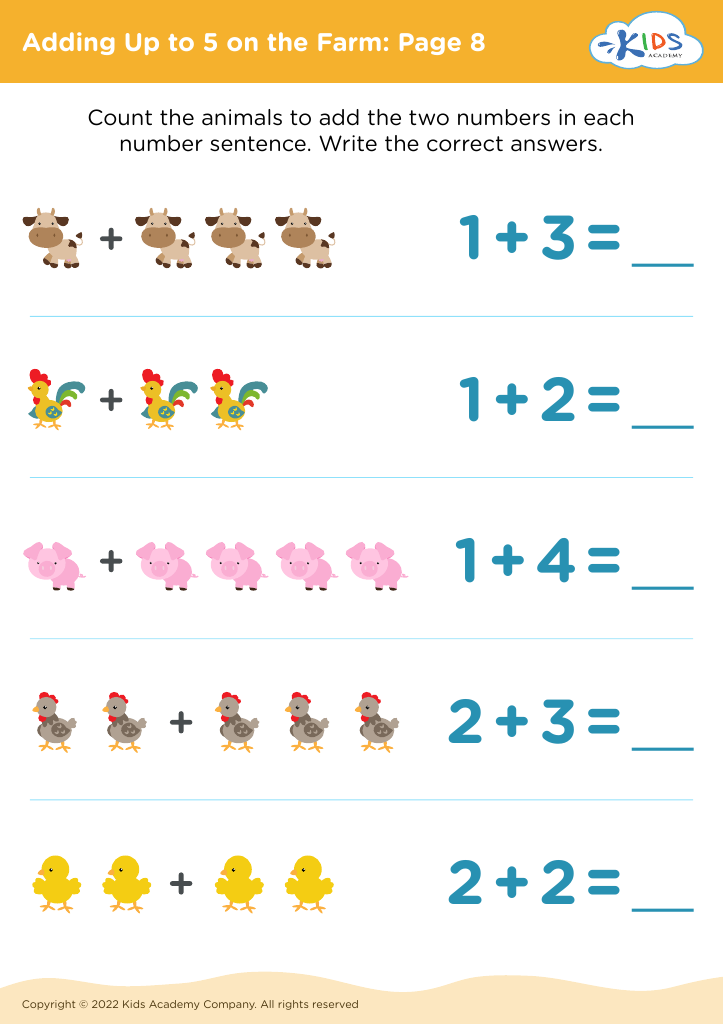
Adding Up to 5 on the Farm: Page 8
Worksheet
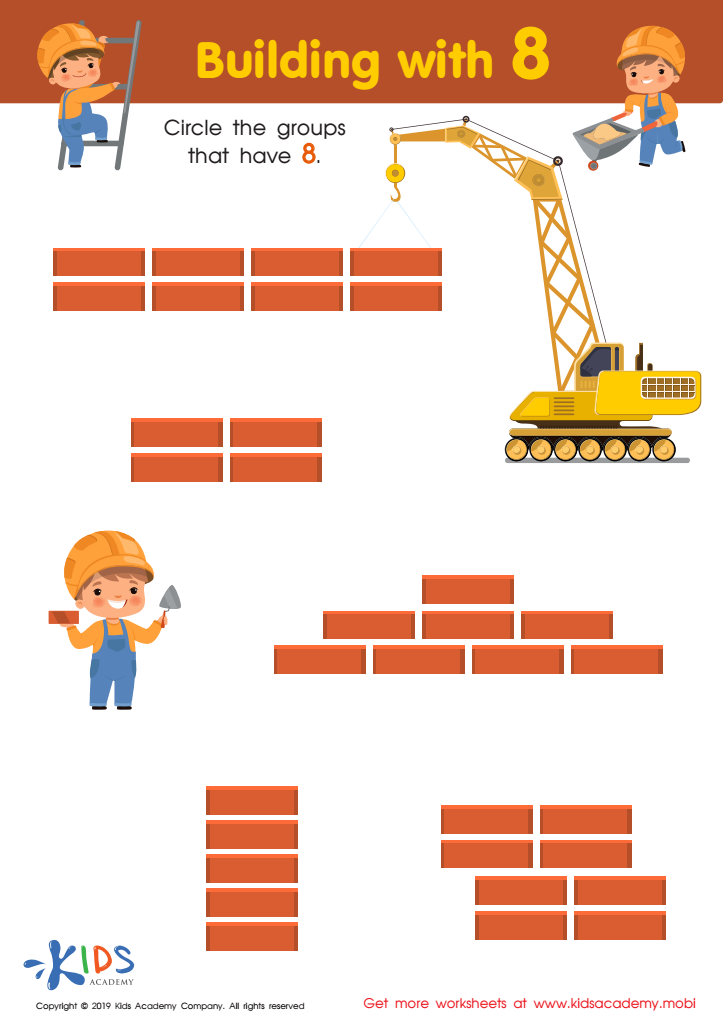
Building with 8 Worksheet

Building with 8 Worksheet

Your child can learn more with this simple exercise! Get them counting and help them circle the groups of 8 bricks. It's a great addition to their post-school lessons, supporting their counting skills. Plus, it's a fun way to learn!
Building with 8 Worksheet
Worksheet
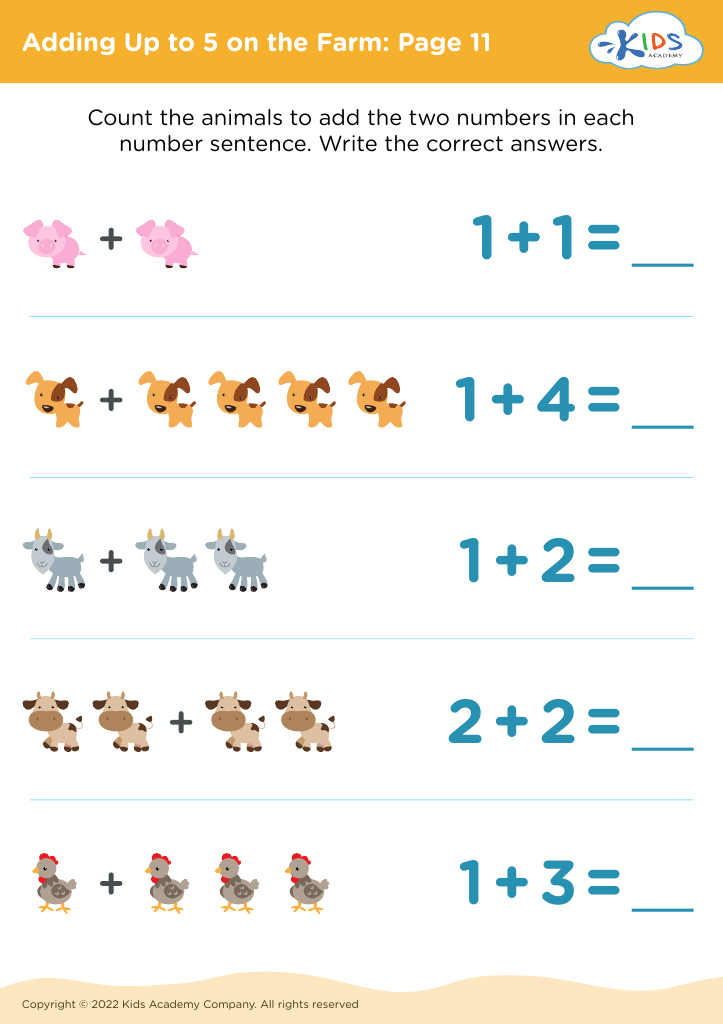
Adding Up to 5 on the Farm: Page 11
Worksheet
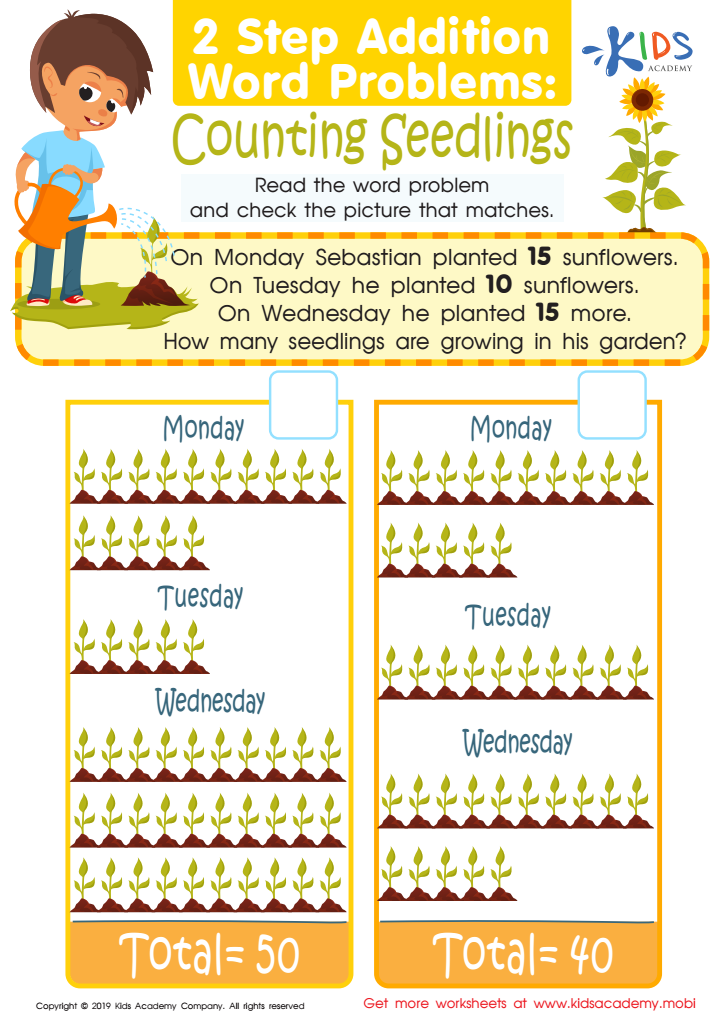
Counting Seedlings Worksheet
Counting Seedlings Worksheet
Understanding math word problems is key. Multiple steps can prove challenging - this free worksheet provides one-to-one picture representation to help kids solve multi-step addition word problems. Strengthen addition skills by choosing the matching picture to the answer.
Counting Seedlings Worksheet
Worksheet
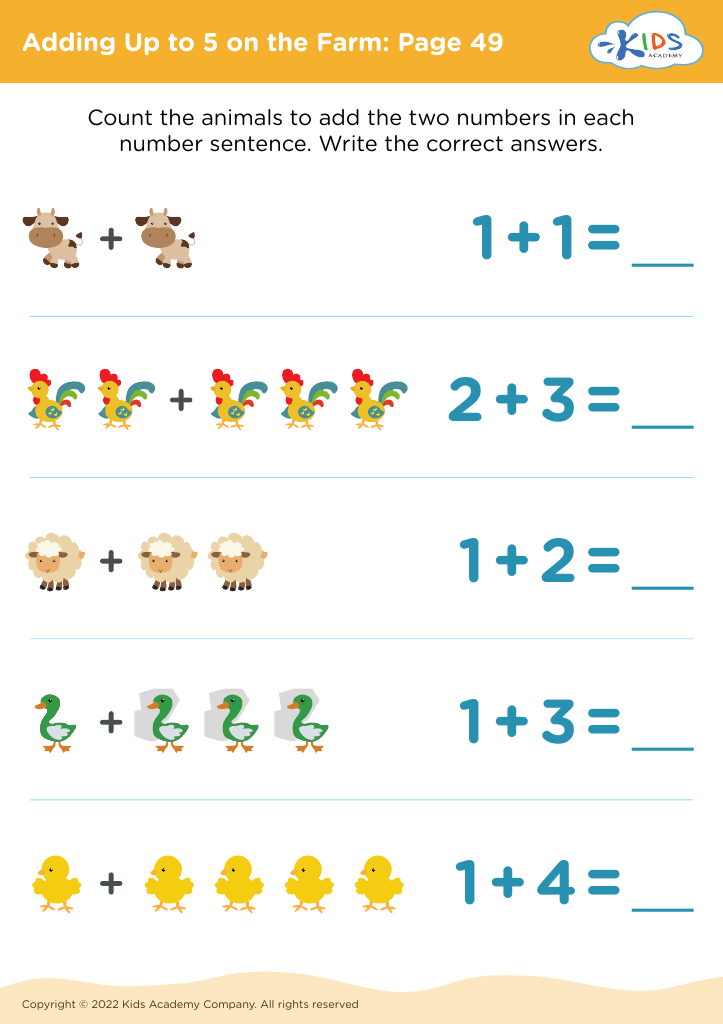
Adding Up to 5 on the Farm: Page 49
Worksheet
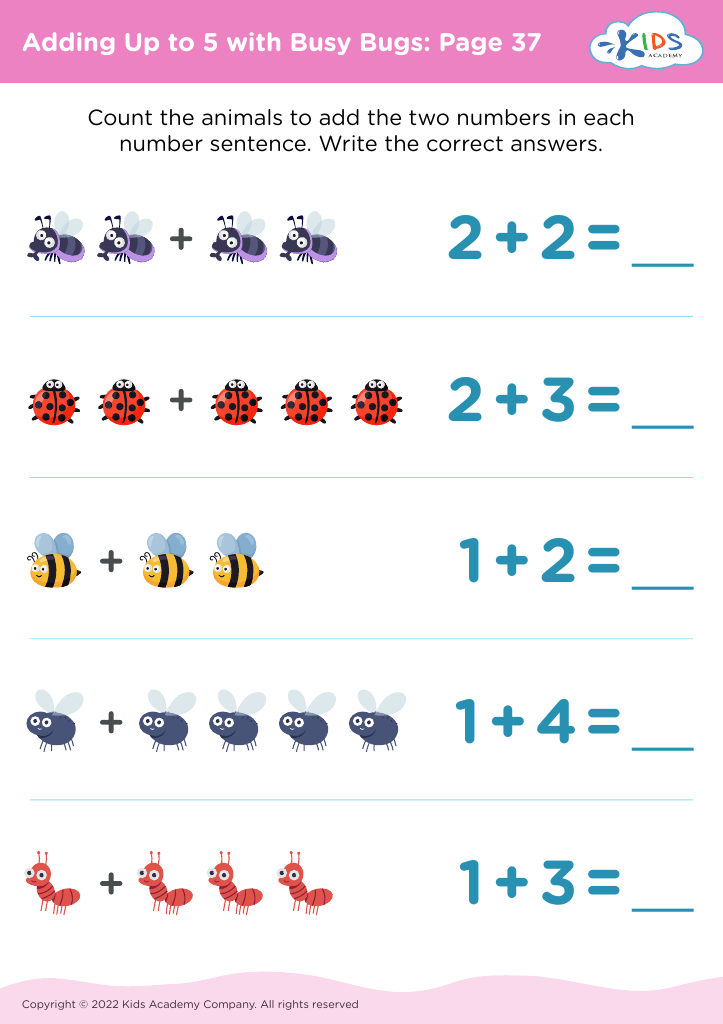
Adding Up to 5 with Busy Bugs: Page 37
Worksheet
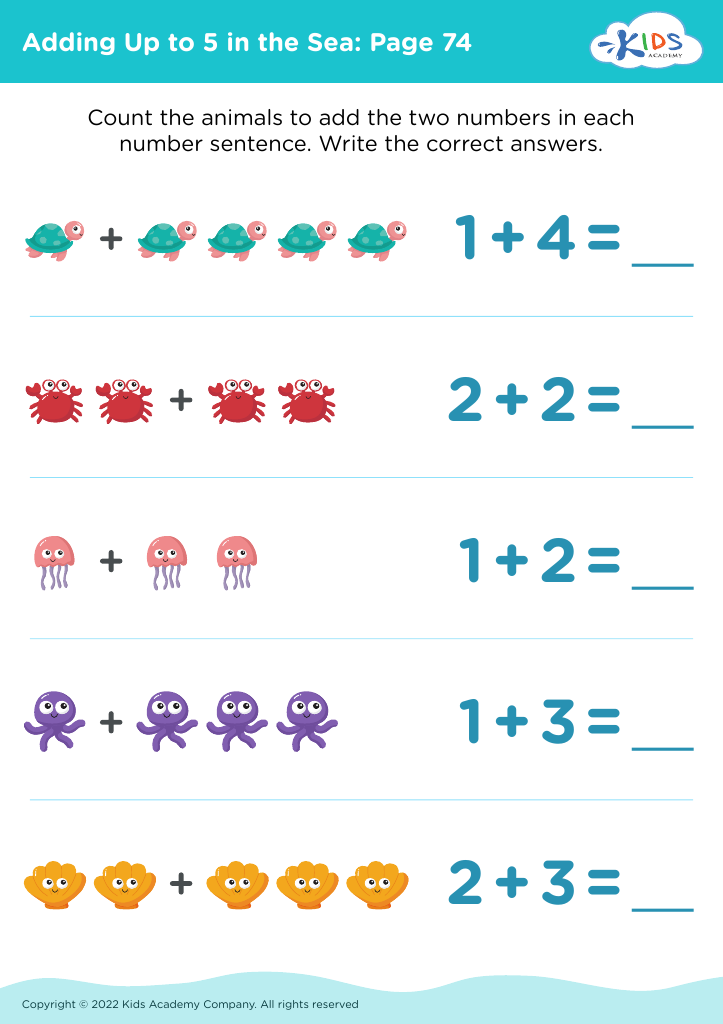
Adding Up to 5 in the Sea: Page 74
Worksheet
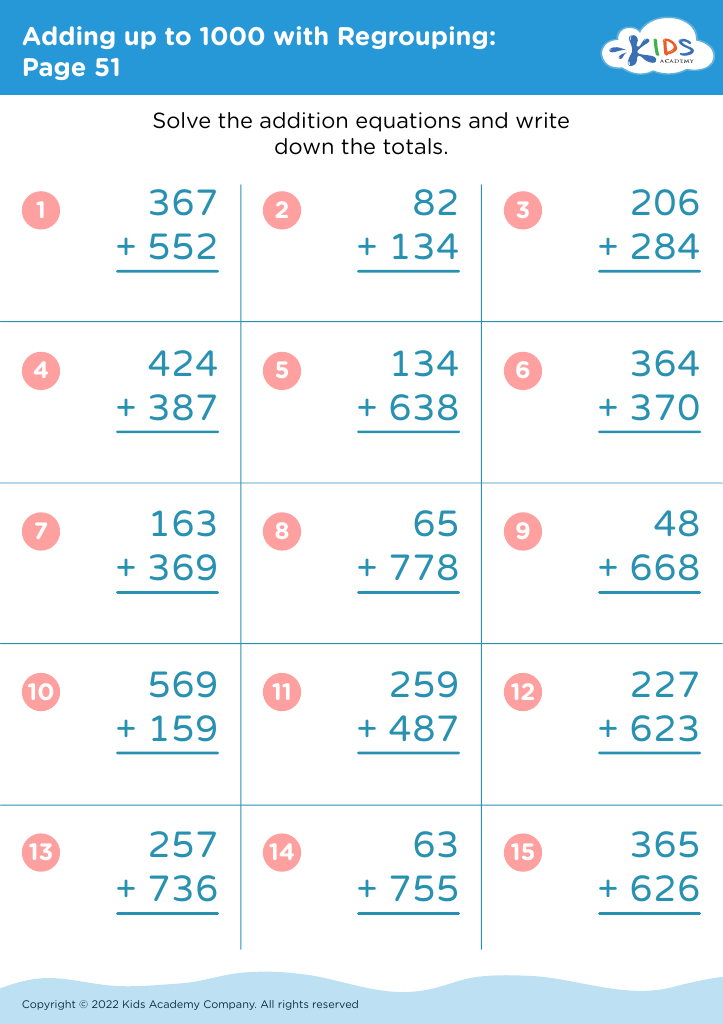
Adding up to 1000 with Regrouping: Page 51
Worksheet
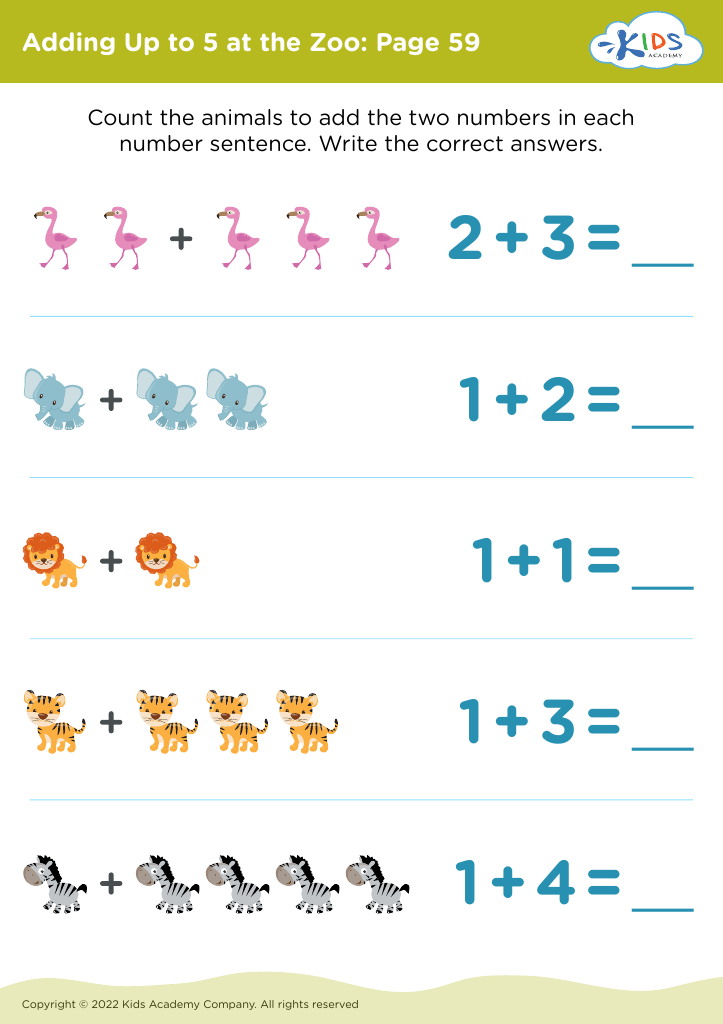
Adding Up to 5 at the Zoo: Page 59
Worksheet
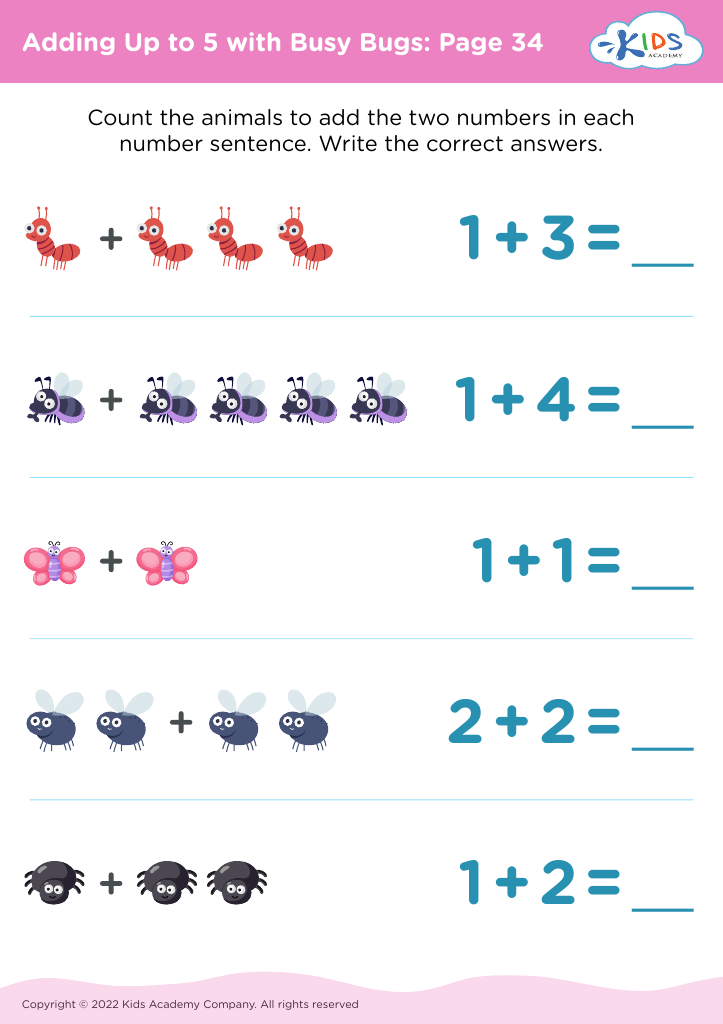
Adding Up to 5 with Busy Bugs: Page 34
Worksheet
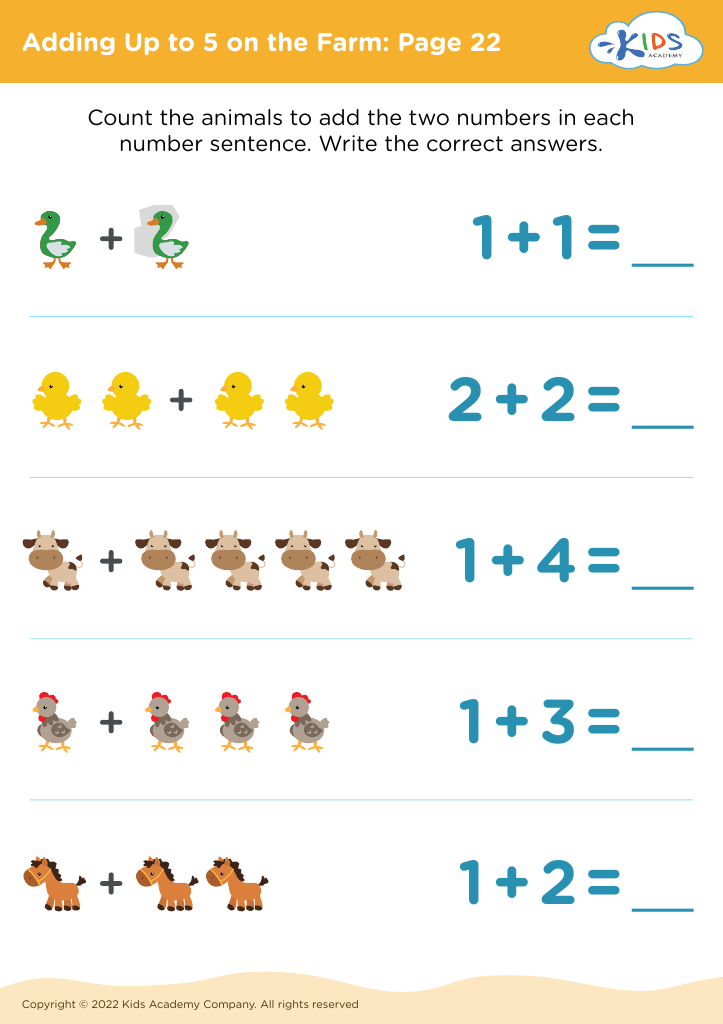
Adding Up to 5 on the Farm: Page 22
Worksheet
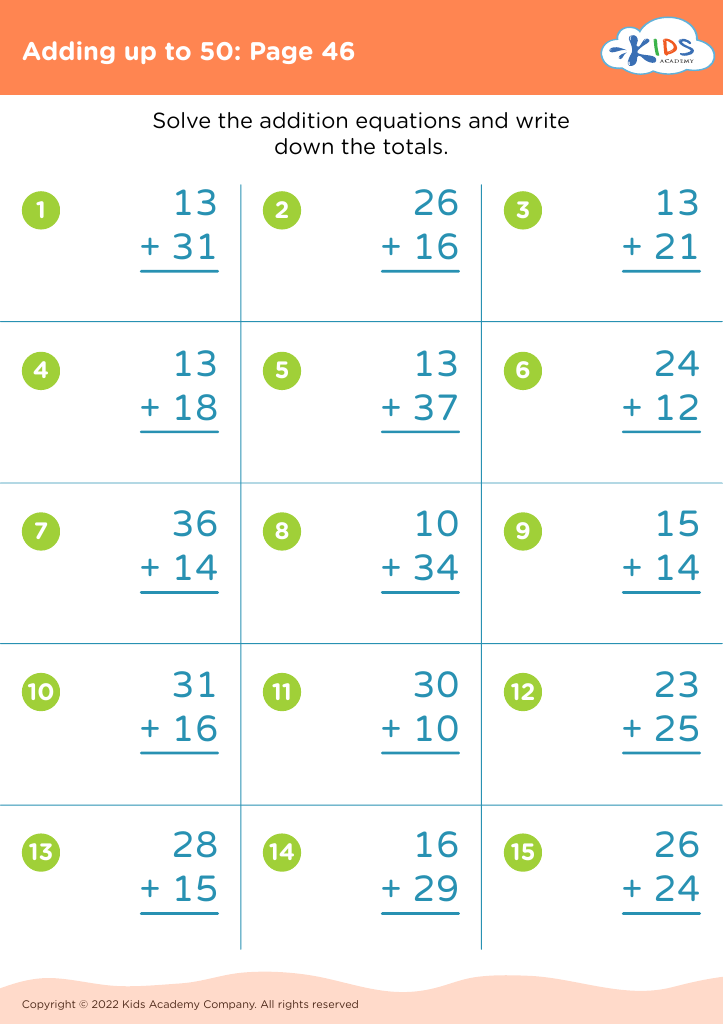
Adding up to 50: Page 46

Adding up to 50: Page 46

Adding up to 50: Page 46
Worksheet
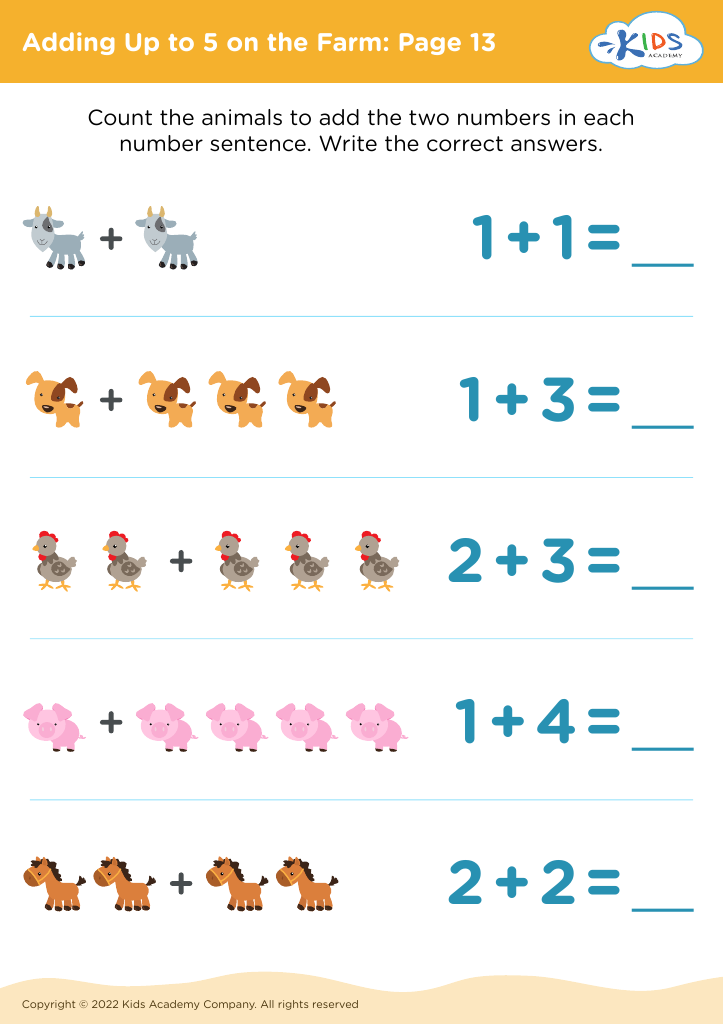
Adding Up to 5 on the Farm: Page 13
Worksheet
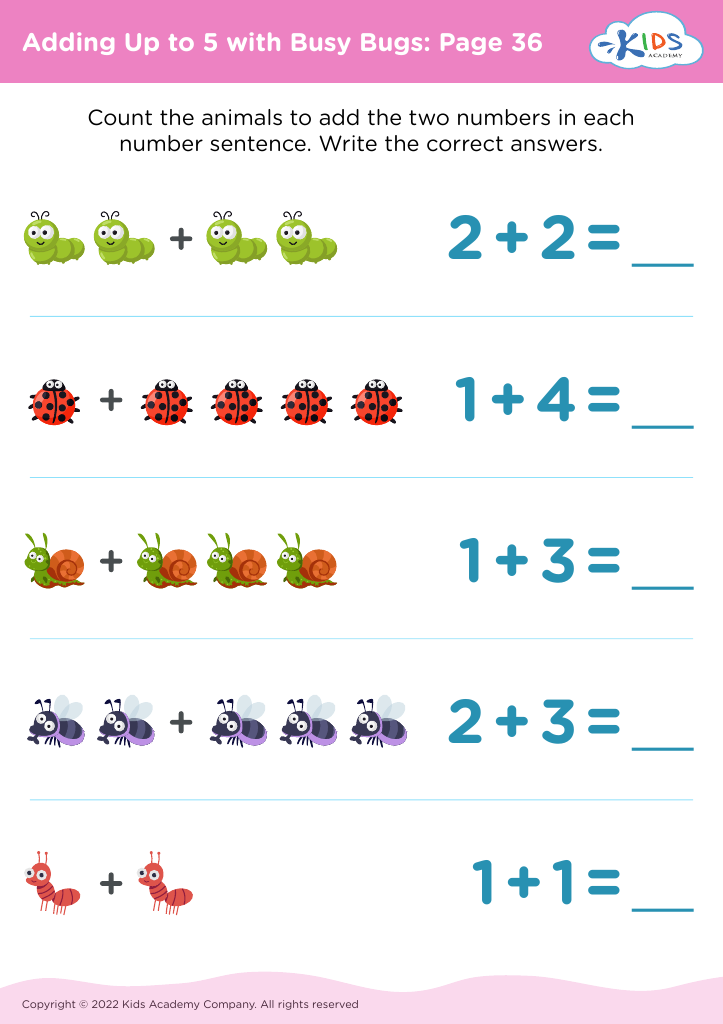
Adding Up to 5 with Busy Bugs: Page 36
Worksheet
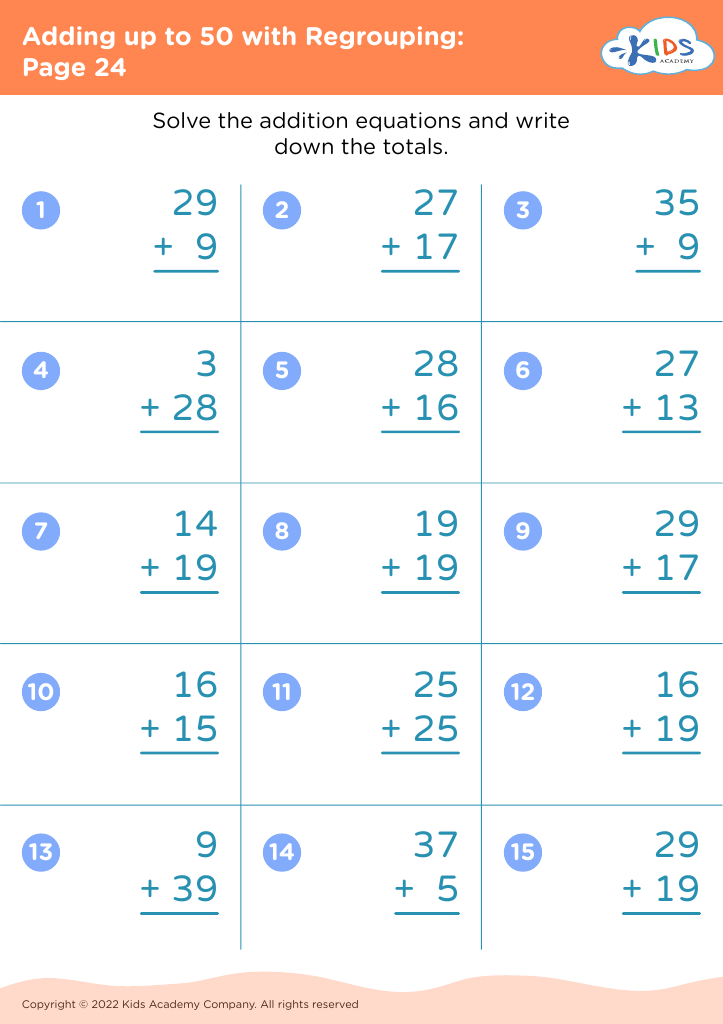
Adding up to 50 with Regrouping: Page 24
Worksheet
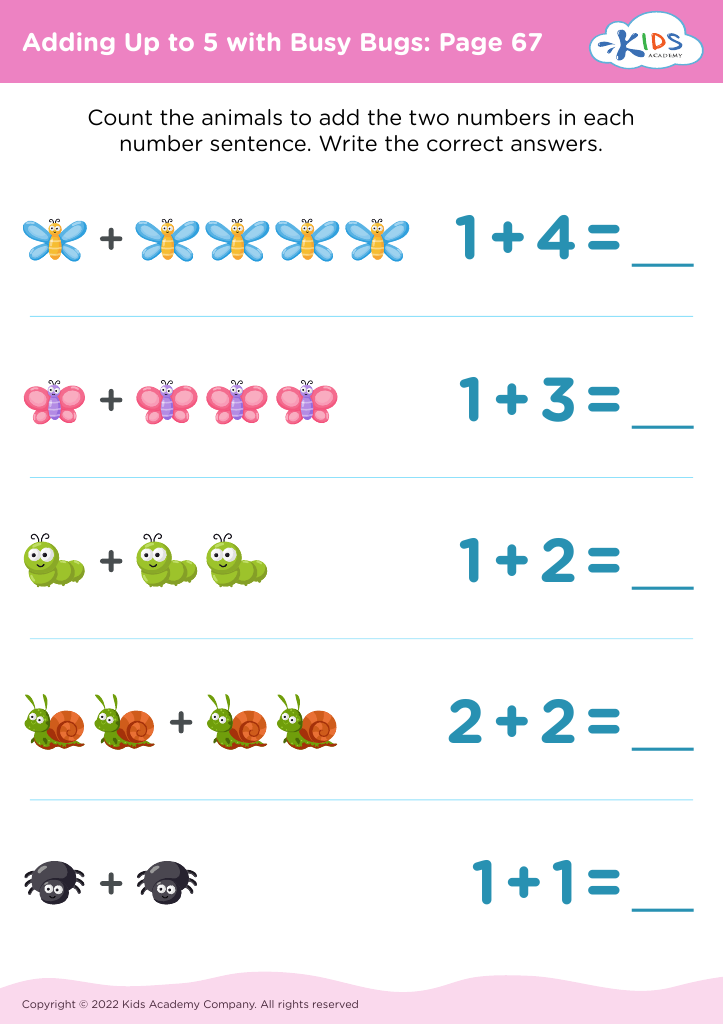
Adding Up to 5 with Busy Bugs: Page 67
Worksheet
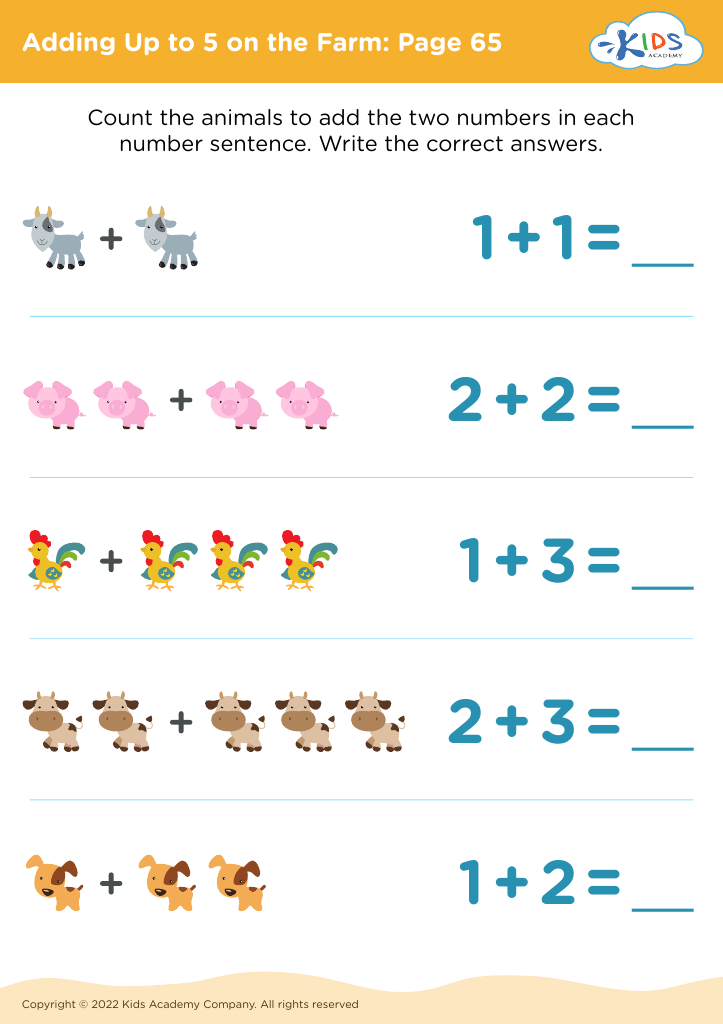
Adding Up to 5 on the Farm: Page 65
Worksheet
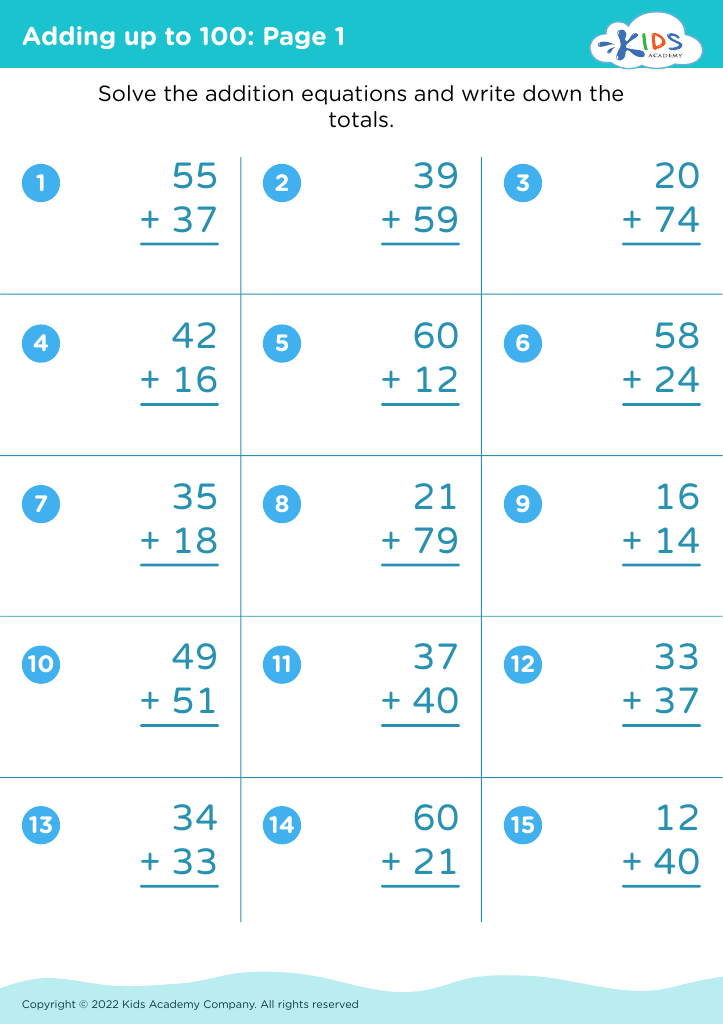
Adding up to 100: Page 1

Adding up to 100: Page 1

Adding up to 100: Page 1
Worksheet
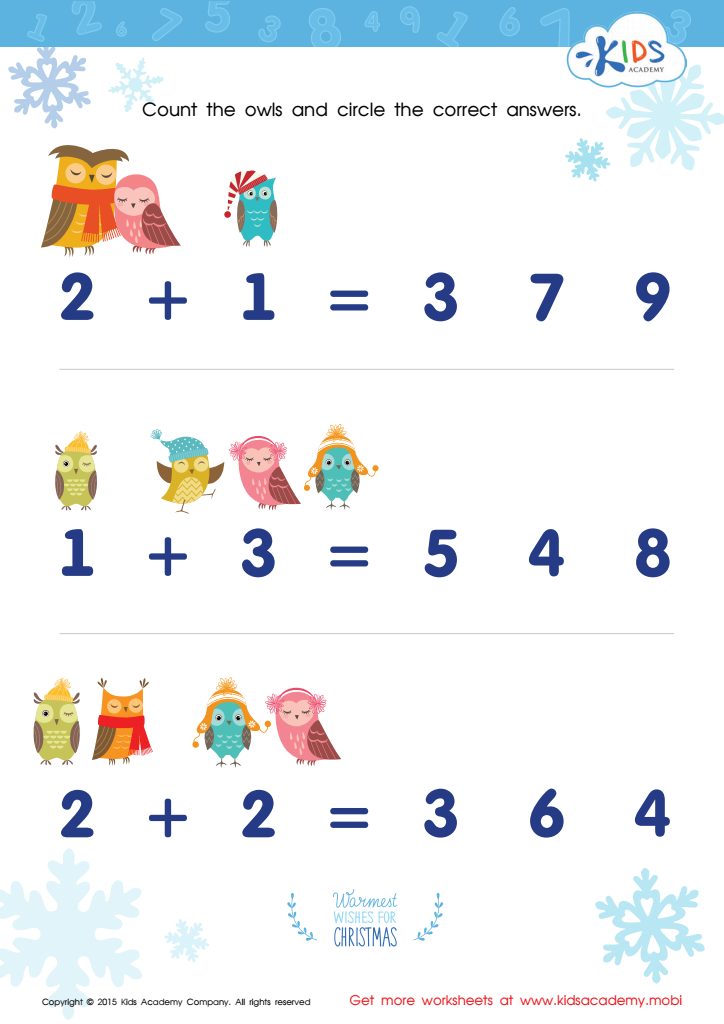
Math PDF Worksheet: Count Little Owls

Count Little Owls Worksheet
Math fun awaits! Count the cute little owls and practice adding single digits up to three indoors. Bright pictures help kids solve these simple problems. Get the free worksheets and enjoy the holiday season with Kids Academy!
Count Little Owls Worksheet
Worksheet
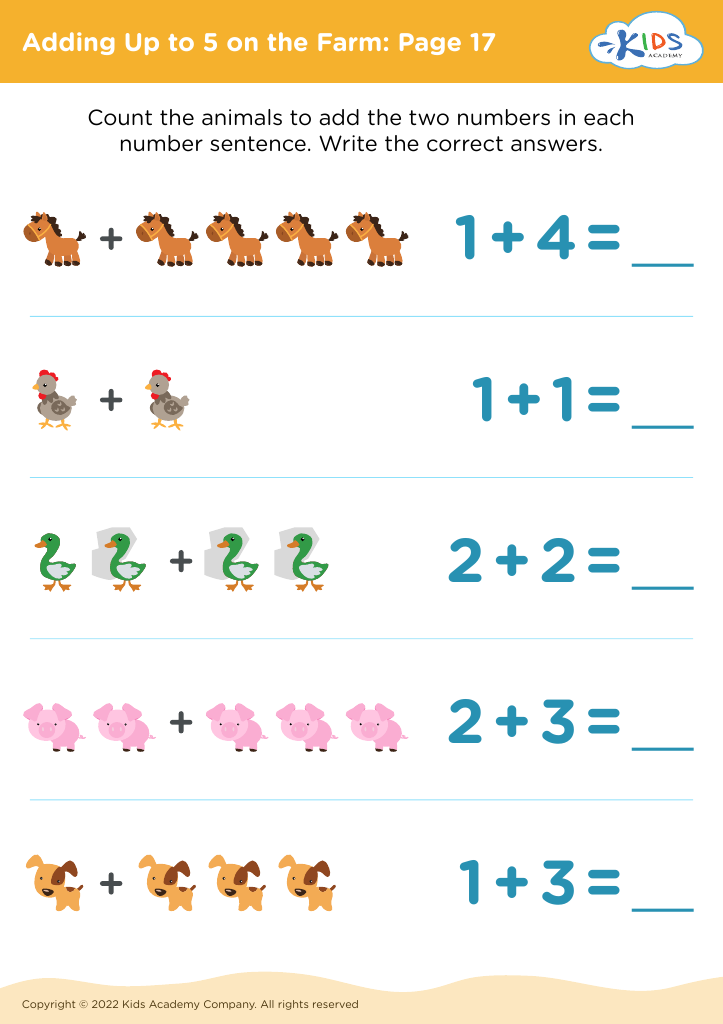
Adding Up to 5 on the Farm: Page 17
Worksheet
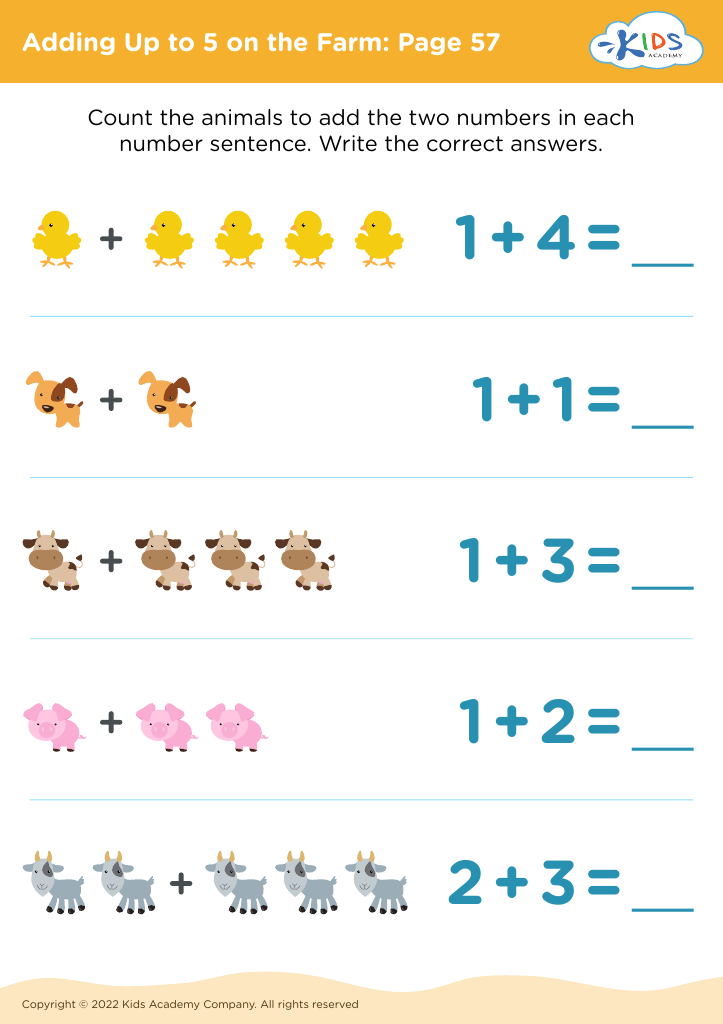
Adding Up to 5 on the Farm: Page 57
Worksheet
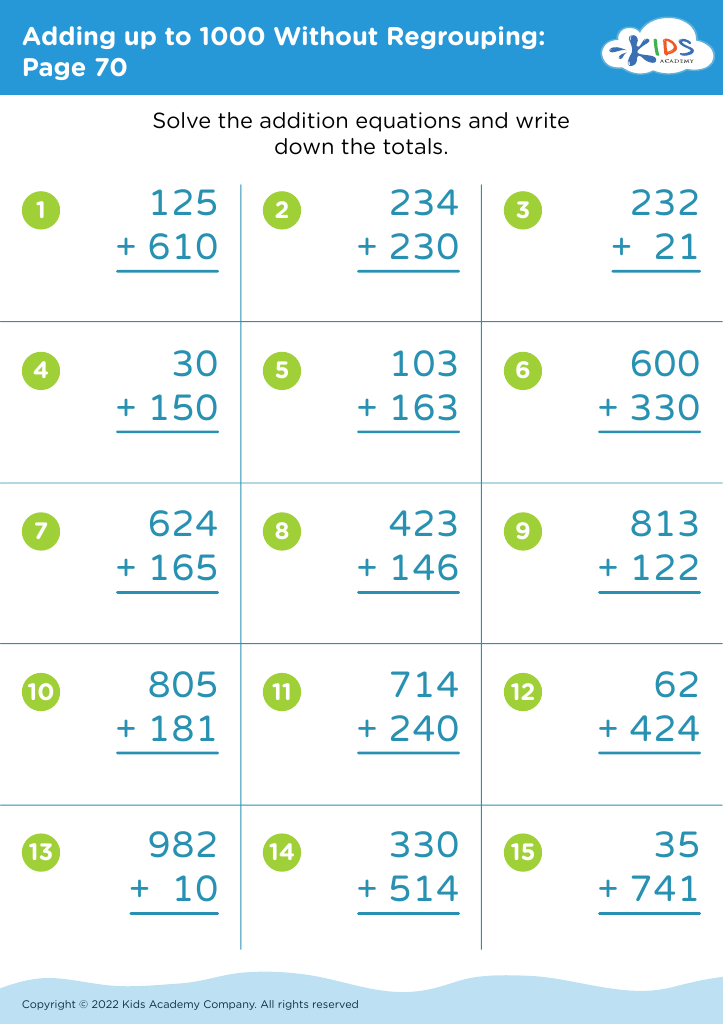
Adding up to 1000 Without Regrouping: Page 70
Worksheet


Understanding quantity addition is foundational for children ages 5-9 because it sets the stage for future mathematical learning and life skills. At this developmental stage, kids transition from concrete to more abstract thinking. Recognizing how quantities combine helps them grasp the concept of addition naturally and intuitively. This understanding is crucial for building number sense, an essential component of early math literacy that informs their ability to solve problems and perform calculations accurately.

For parents, fostering an understanding of quantity addition can enhance daily interactions and educational support. Engaging children in simple counting games or involving them in everyday activities like cooking or shopping can make learning fun and practical. This involvement demystifies math and positions it as an integral part of life rather than an isolated subject.

For teachers, developing a solid base in quantity addition leads to more substantial performance in higher-level math. Introducing activities that involve visual aids, manipulatives, and real-life scenarios can make abstract concepts tangible and accessible. A strong grasp of these basics reduces math anxiety, promotes enthusiasm for future subjects, and instills confidence, creating positive attitudes towards learning overall.

In essence, understanding quantity addition not only prepares children for advanced mathematics but also enhances critical thinking, problem-solving skills, and practical daily functioning.