Visual interpretation Addition Worksheets for Ages 5-9
5 filtered results
-
From - To
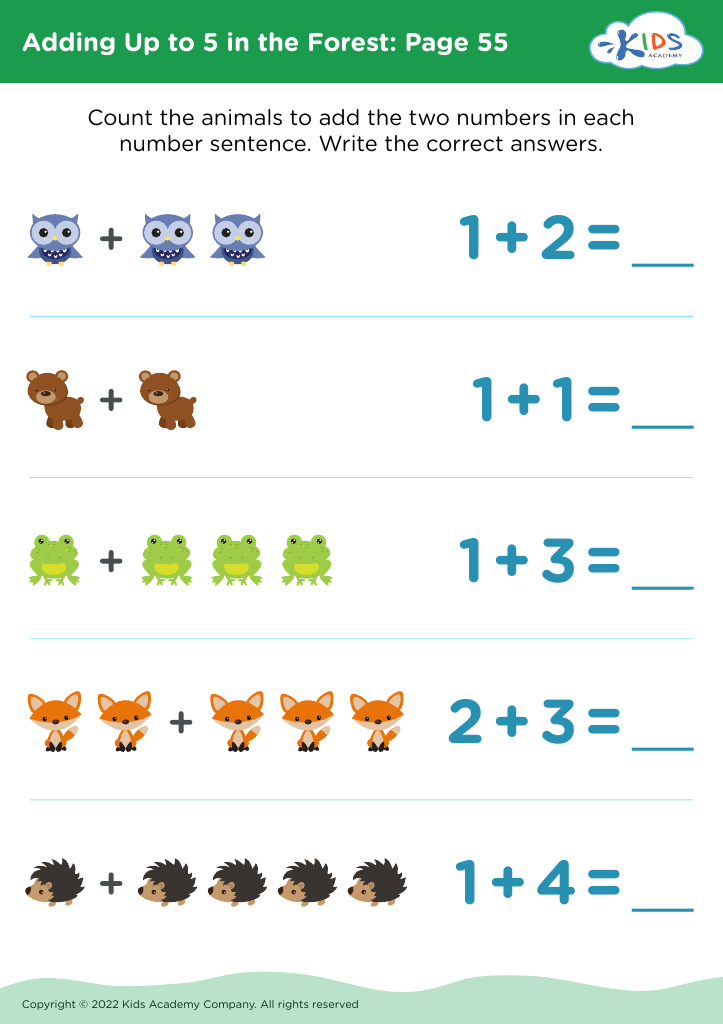
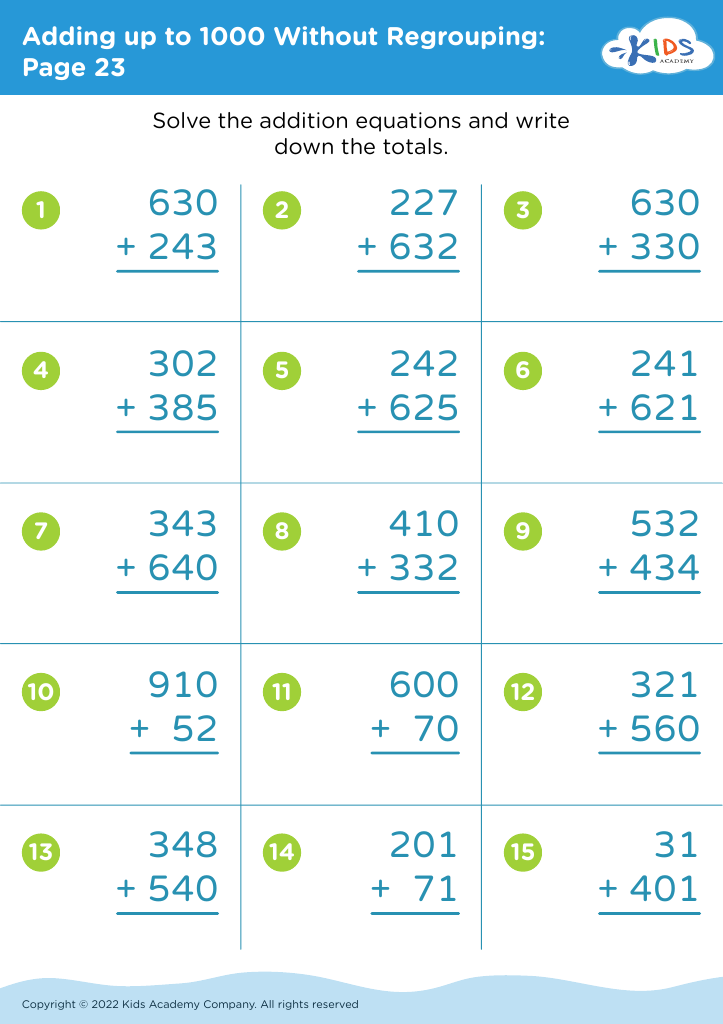
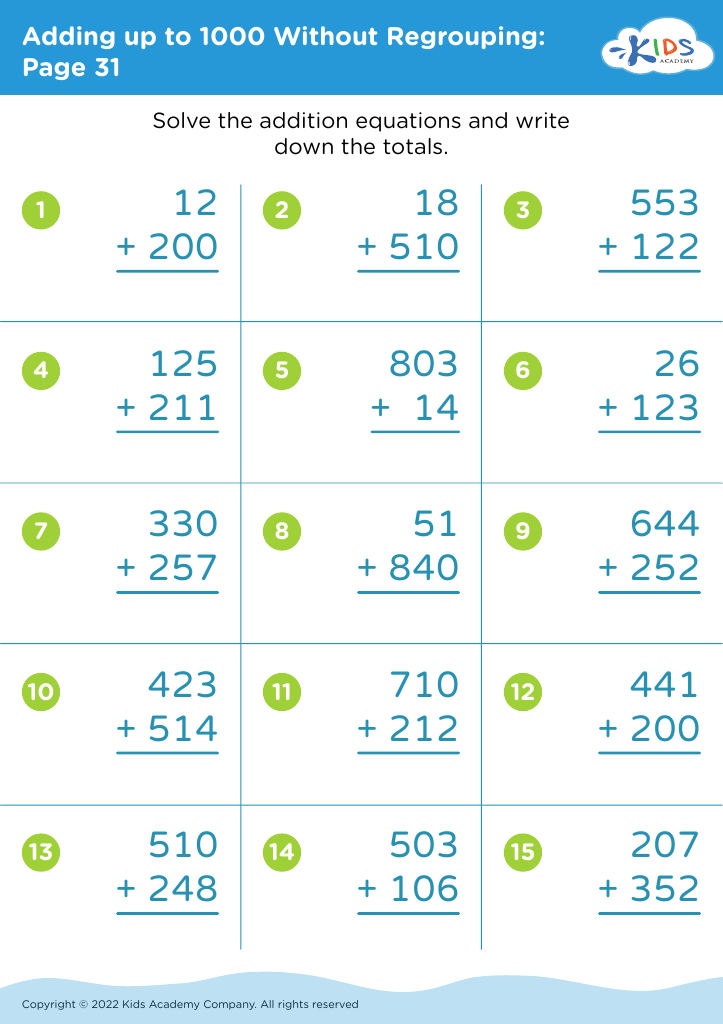
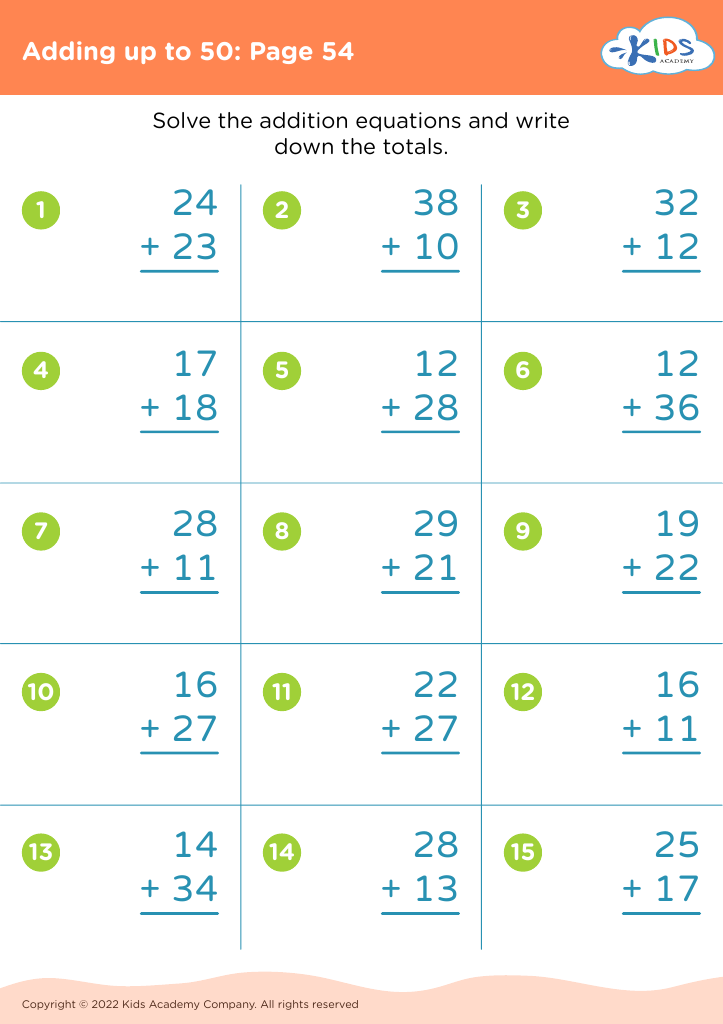
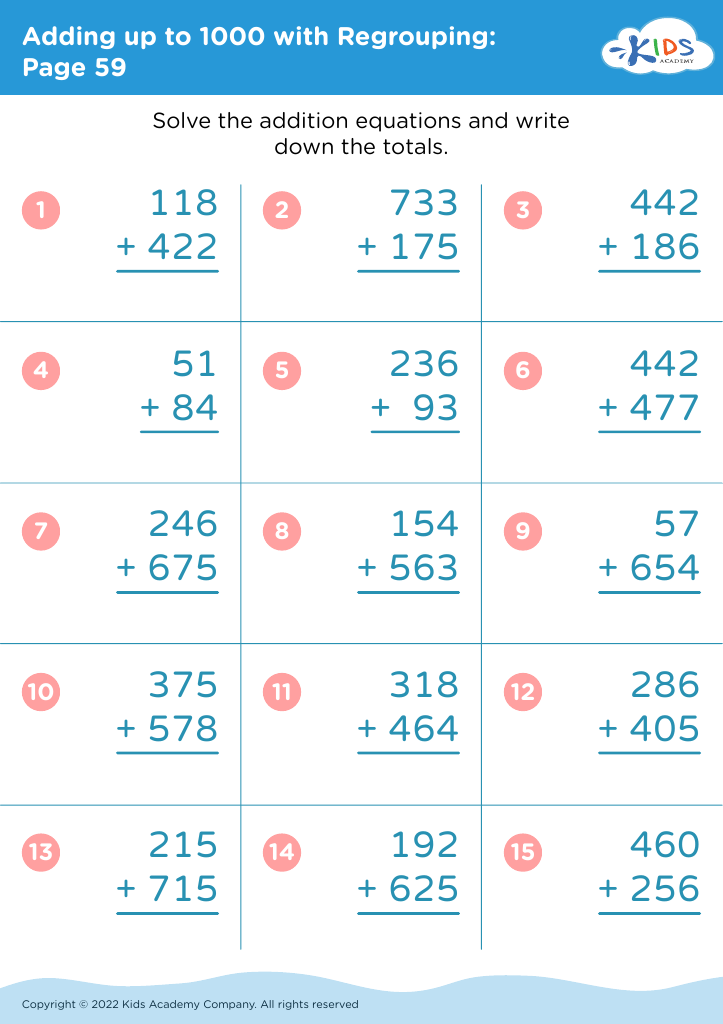
Enhance your child's understanding of addition with our engaging Visual Interpretation Addition Worksheets, designed specifically for ages 5-9! These interactive worksheets feature colorful visuals and illustrations that help young learners grasp mathematical concepts effectively. By visually representing addition problems, children can better understand how numbers come together, making learning more enjoyable and intuitive. Our worksheets cater to varying skill levels, ensuring every child can develop their math abilities at their own pace. Perfect for classroom use or at-home practice, these resources foster a solid foundation in mathematics while encouraging a love for learning. Start unlocking your child's potential today!


.jpg)





Parents and teachers should prioritize visual interpretation in teaching addition to children aged 5-9 because it helps build a strong mathematical foundation critical for future learning. Visual aids, such as number lines, stop signs, or manipulatives (e.g., blocks, counters), enable young learners to grasp abstract concepts by providing concrete representations. This approach engages students, catering to different learning styles and aligning with their developmental stage.
Additionally, visual methods promote comprehension of addition beyond rote memorization. By visualizing problems, children can better see the relationships between numbers, gain confidence in problem-solving, and improve their reasoning skills. Understanding addition visually also develops their capacity for mental math, as it encourages them to picture calculations instead of relying solely on written methods.
Furthermore, early mastery of addition through visual interpretation supports overall mathematical proficiency, enhancing students' ability to tackle more complex topics in the future. Creating a positive learning experience strengthens children's attitudes toward math, fostering a lifelong interest in the subject. Overall, by emphasizing visual strategies, educators and parents equip children with essential skills that fuel their independence and success in mathematics and beyond.








