Filters

88 filtered results

Clear all filters
Favorites
With answer key
Interactive

88 filtered results

Difficulty Level

Grade


Check out this FREE Trial Lesson on Addition for age 5-9!

Z

Favorites
With answer key
Interactive
  • 5-9
  • Visual Learning
  • Addition
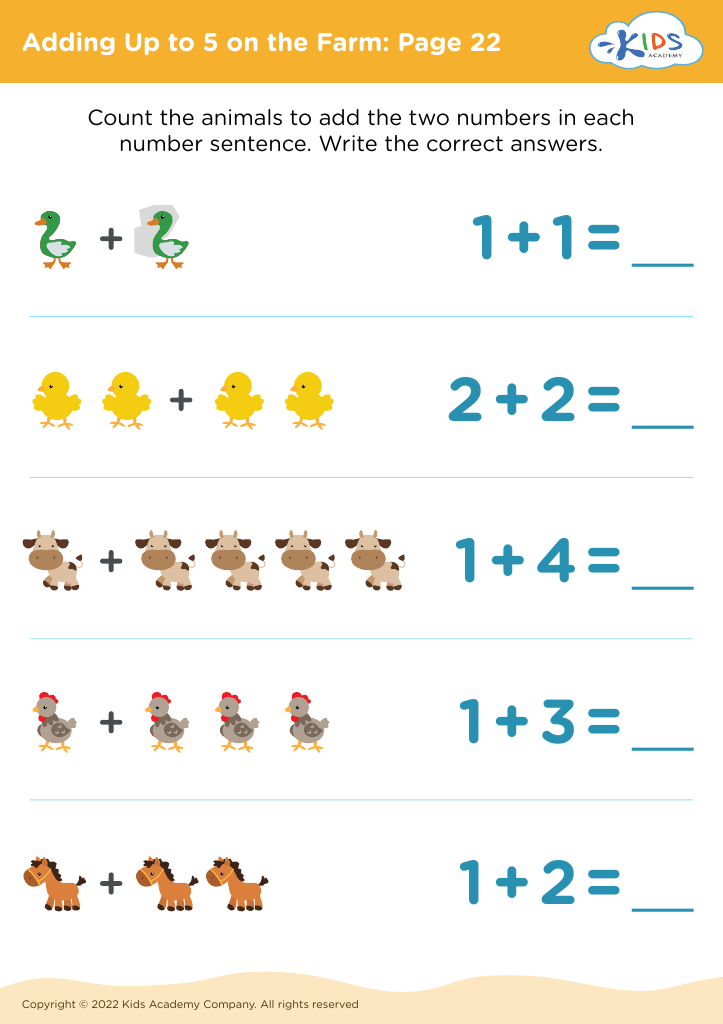
Adding Up to 5 on the Farm: Page 22
Worksheet
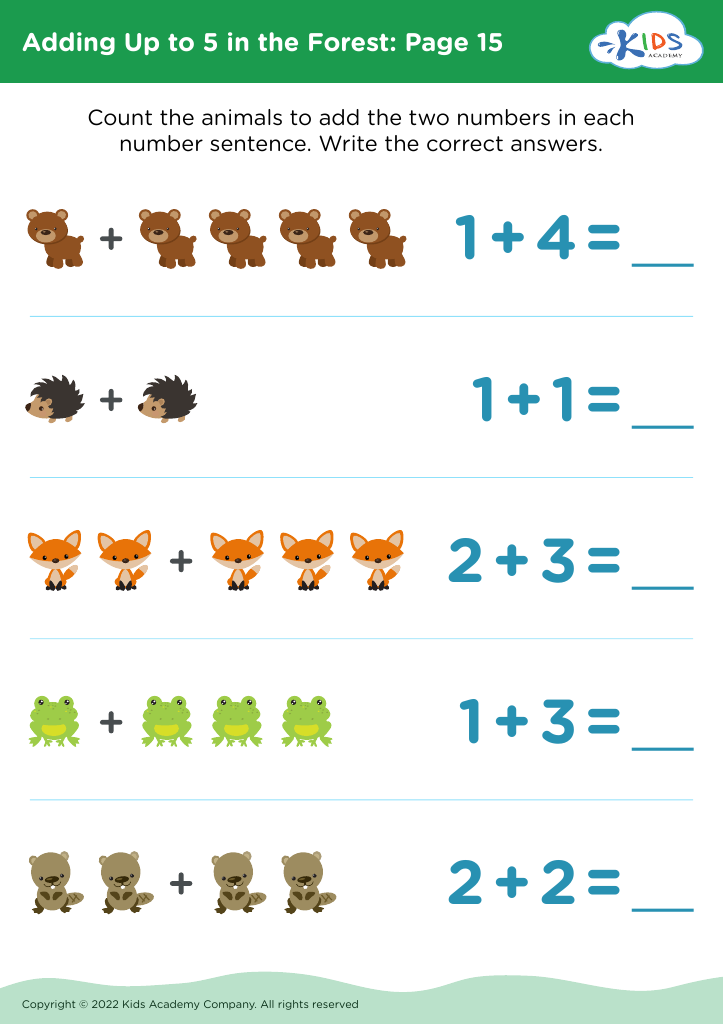
Adding Up to 5 in the Forest: Page 15
Worksheet
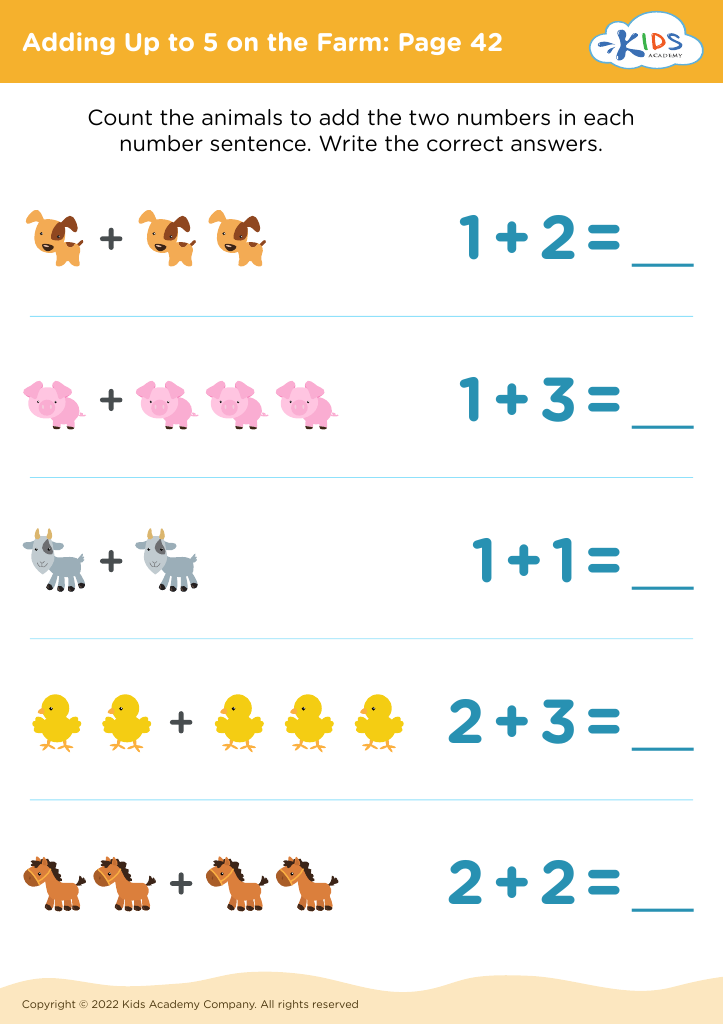
Adding Up to 5 on the Farm: Page 42
Worksheet
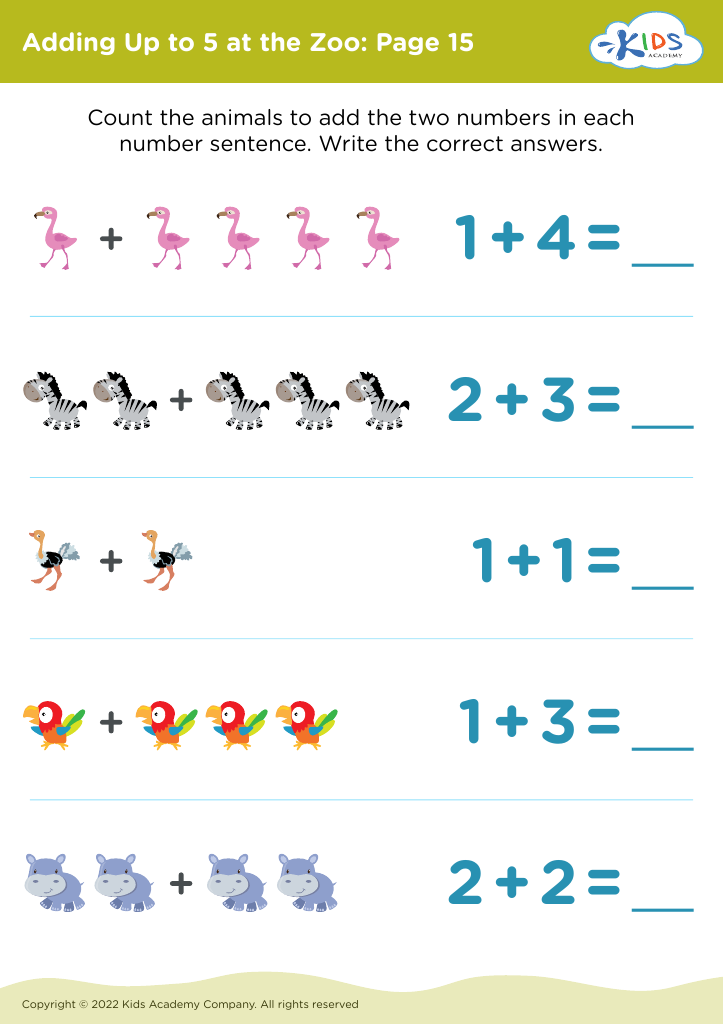
Adding Up to 5 at the Zoo: Page 15
Worksheet
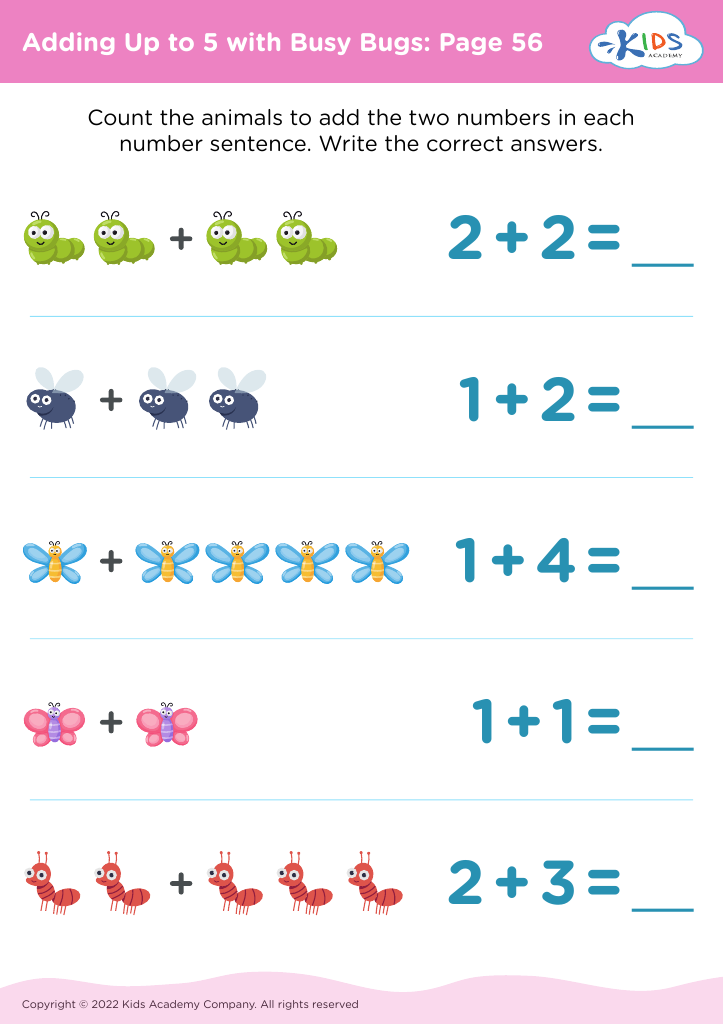
Adding Up to 5 with Busy Bugs: Page 56
Worksheet
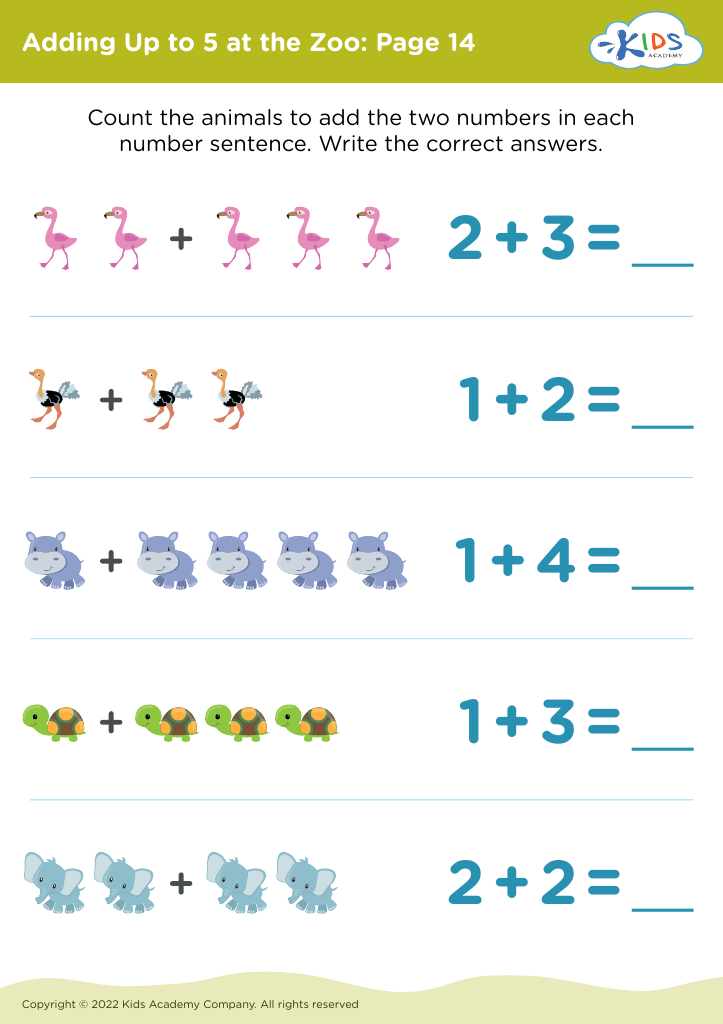
Adding Up to 5 at the Zoo: Page 14
Worksheet
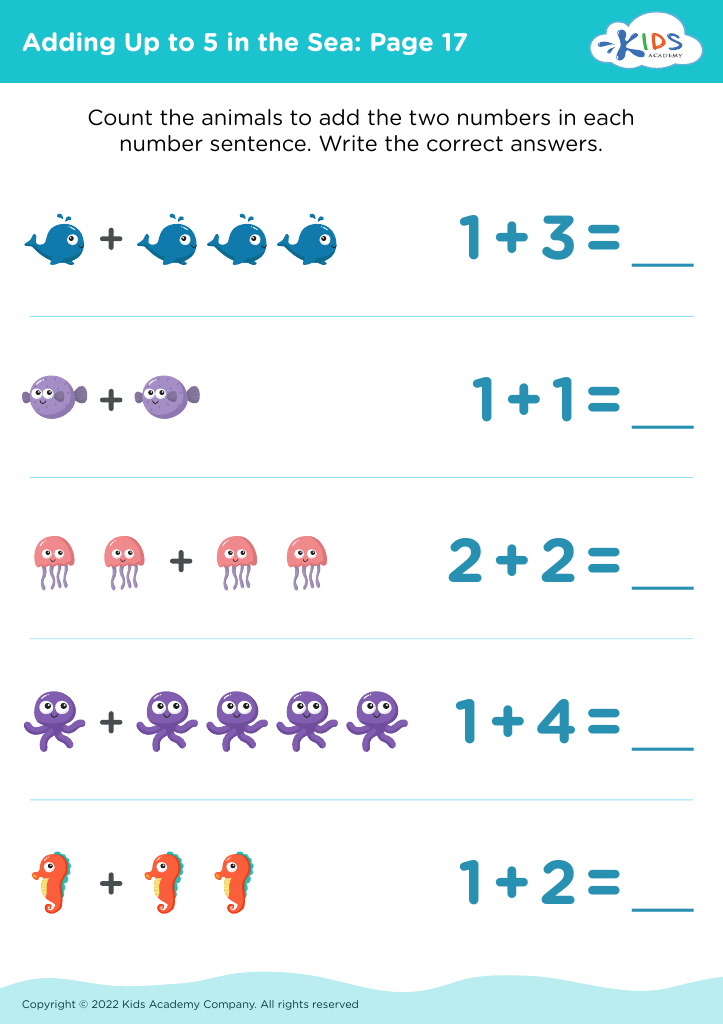
Adding Up to 5 in the Sea: Page 17
Worksheet
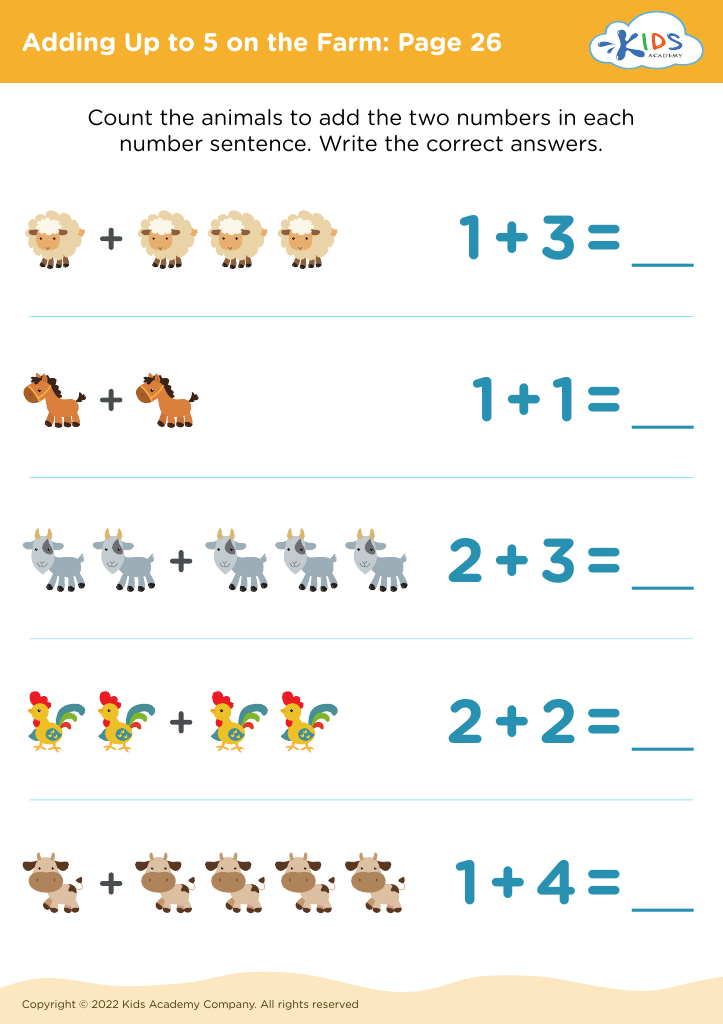
Adding Up to 5 on the Farm: Page 26
Worksheet
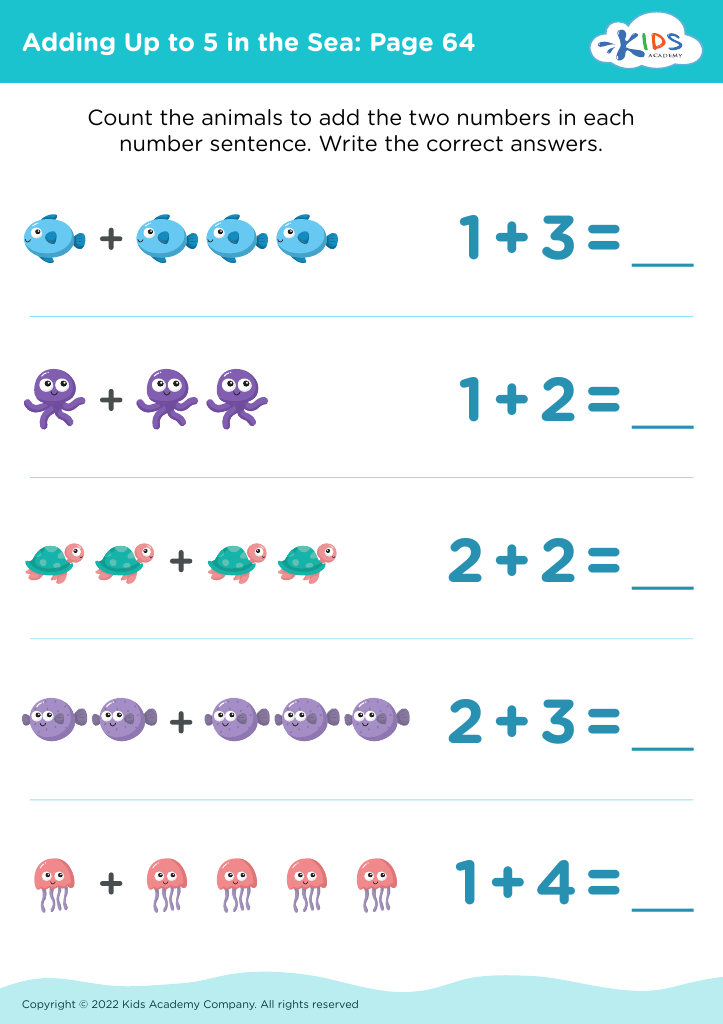
Adding Up to 5 in the Sea: Page 64
Worksheet
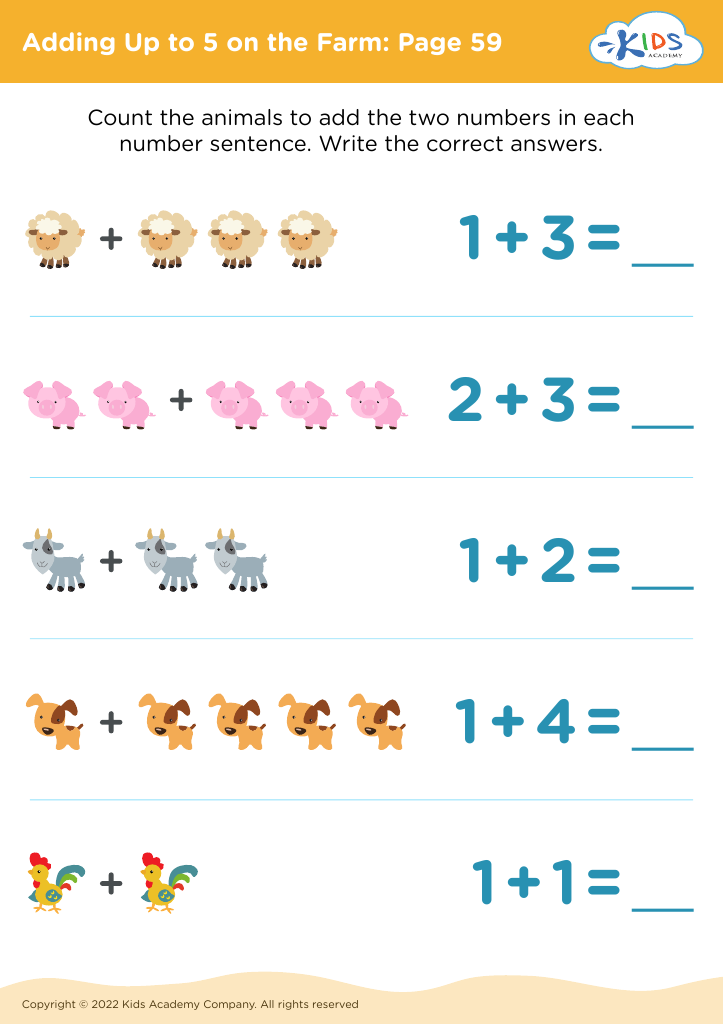
Adding Up to 5 on the Farm: Page 59
Worksheet
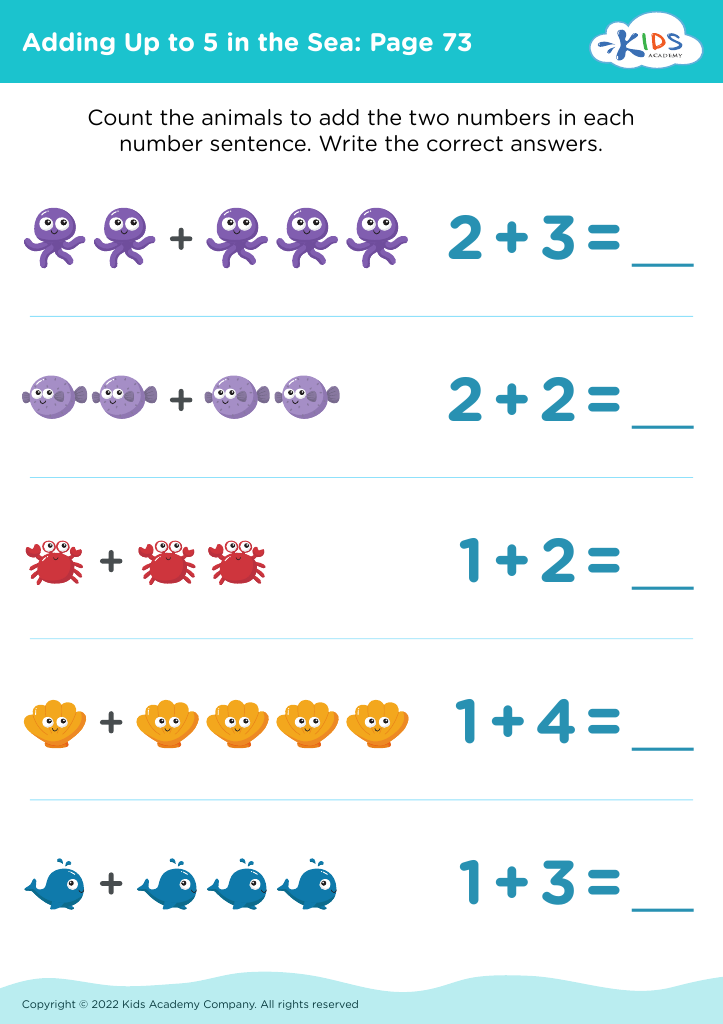
Adding Up to 5 in the Sea: Page 73
Worksheet
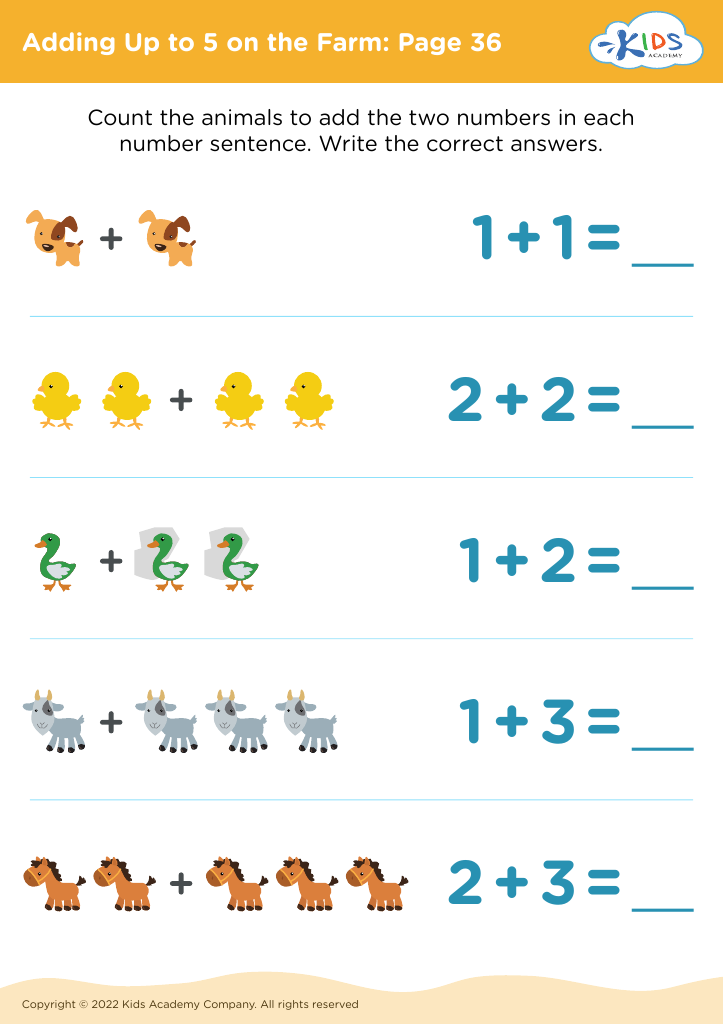
Adding Up to 5 on the Farm: Page 36
Worksheet
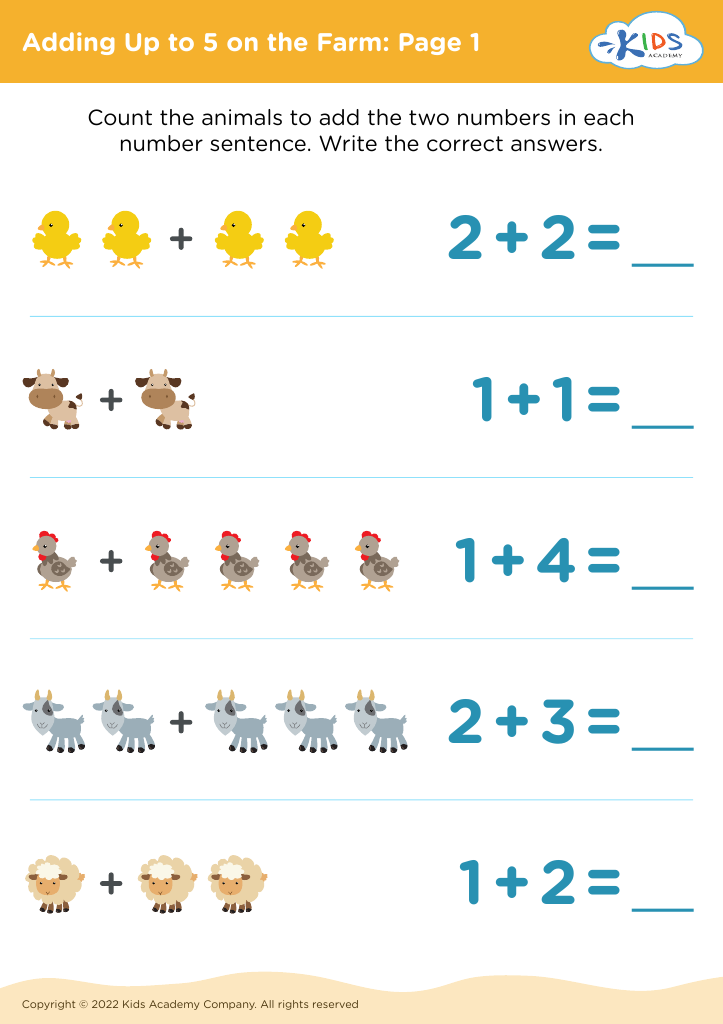
Adding Up to 5 on the Farm: Page 1
Worksheet
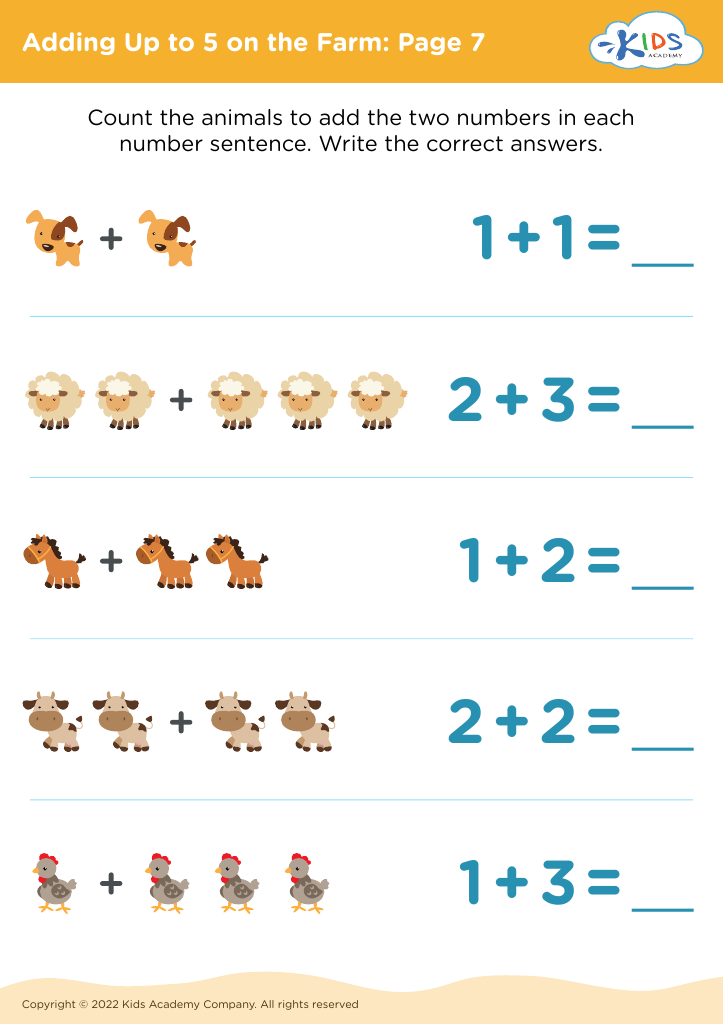
Adding Up to 5 on the Farm: Page 7
Worksheet
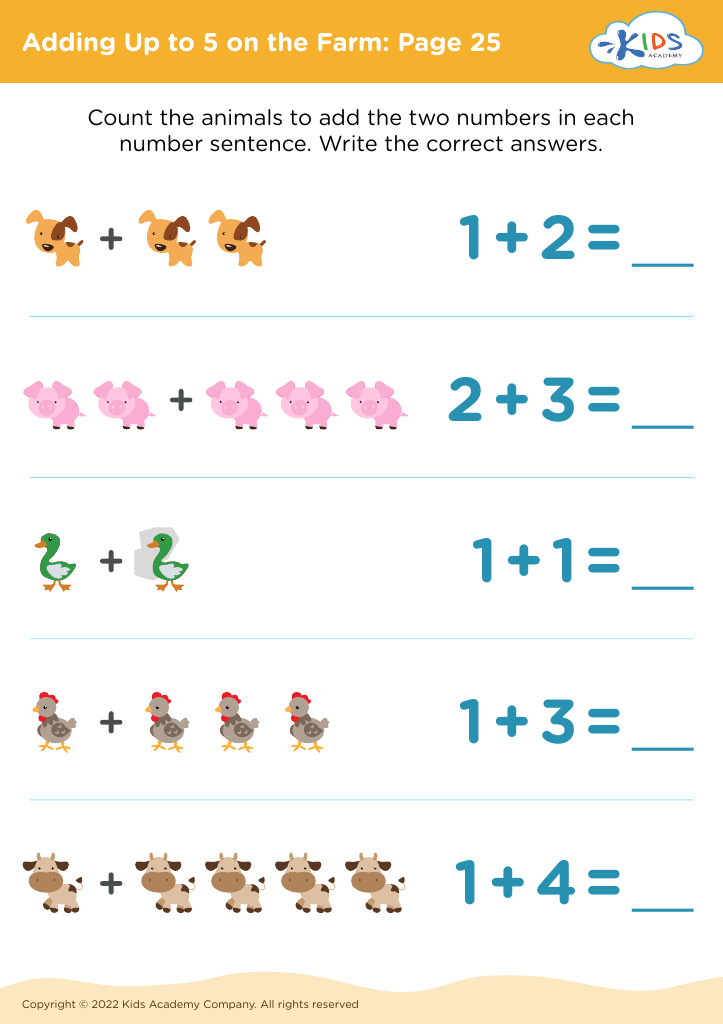
Adding Up to 5 on the Farm: Page 25
Worksheet
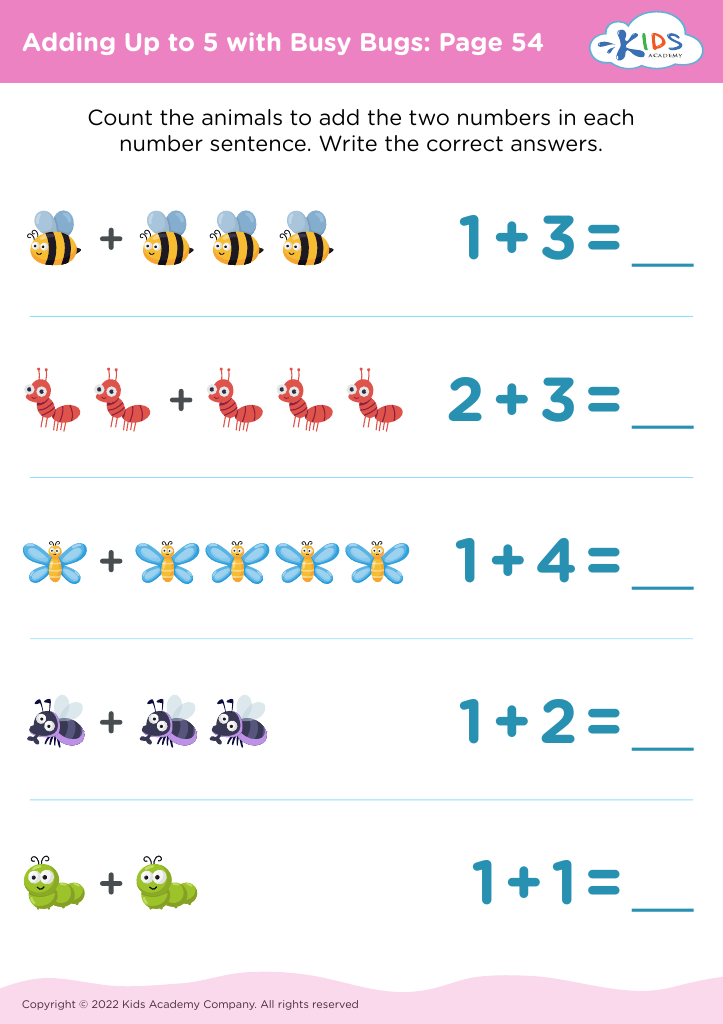
Adding Up to 5 with Busy Bugs: Page 54
Worksheet
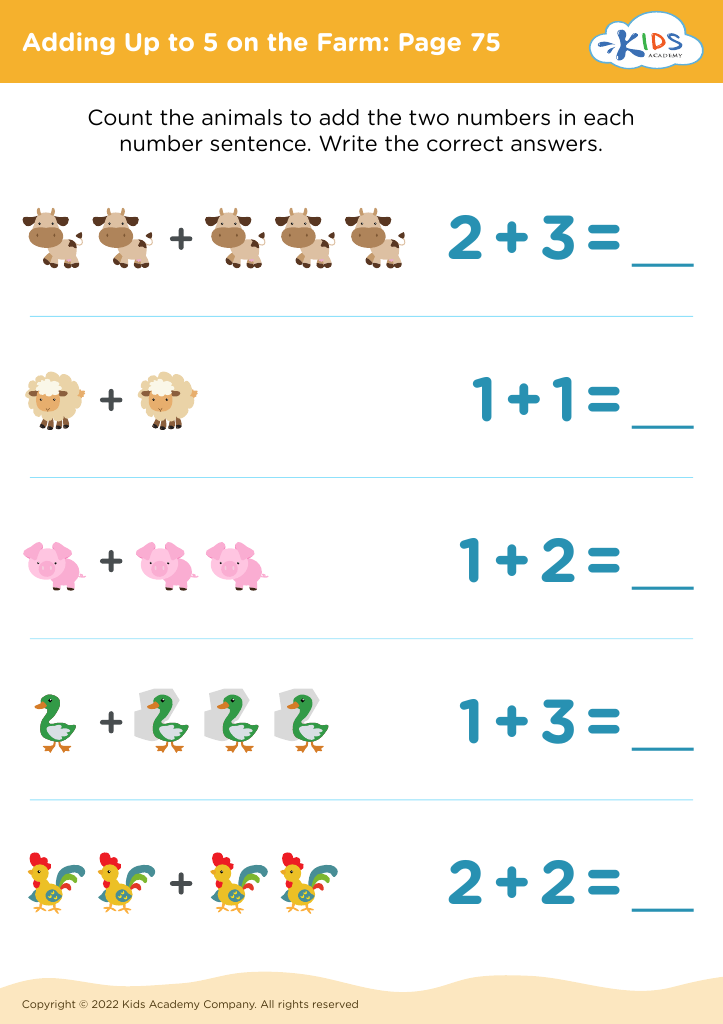
Adding Up to 5 on the Farm: Page 75
Worksheet
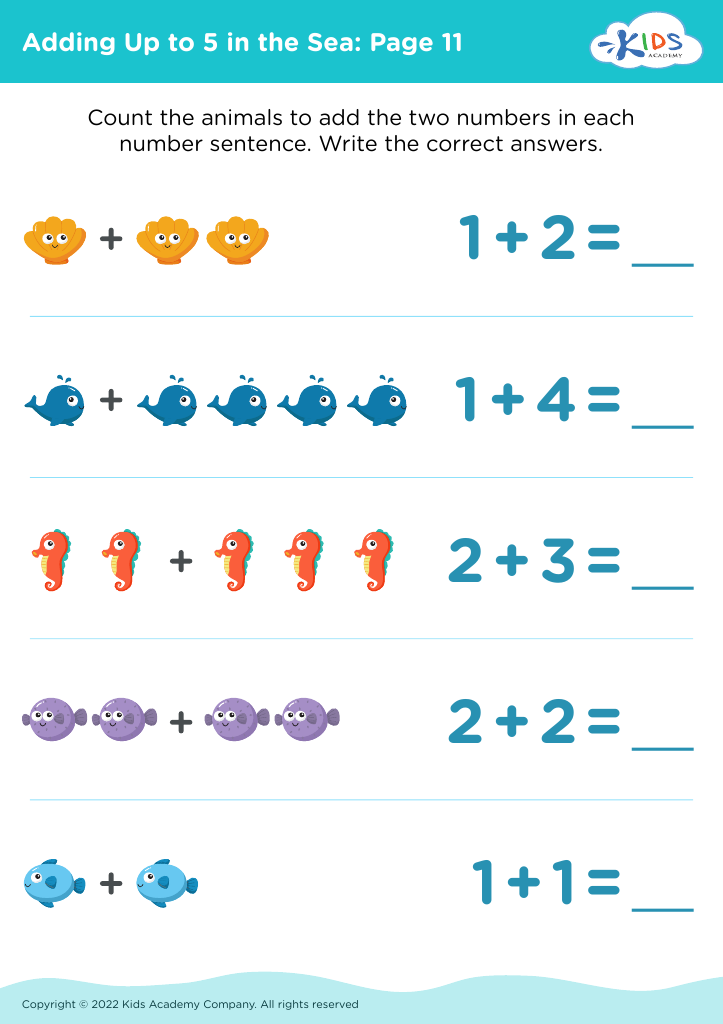
Adding Up to 5 in the Sea: Page 11
Worksheet
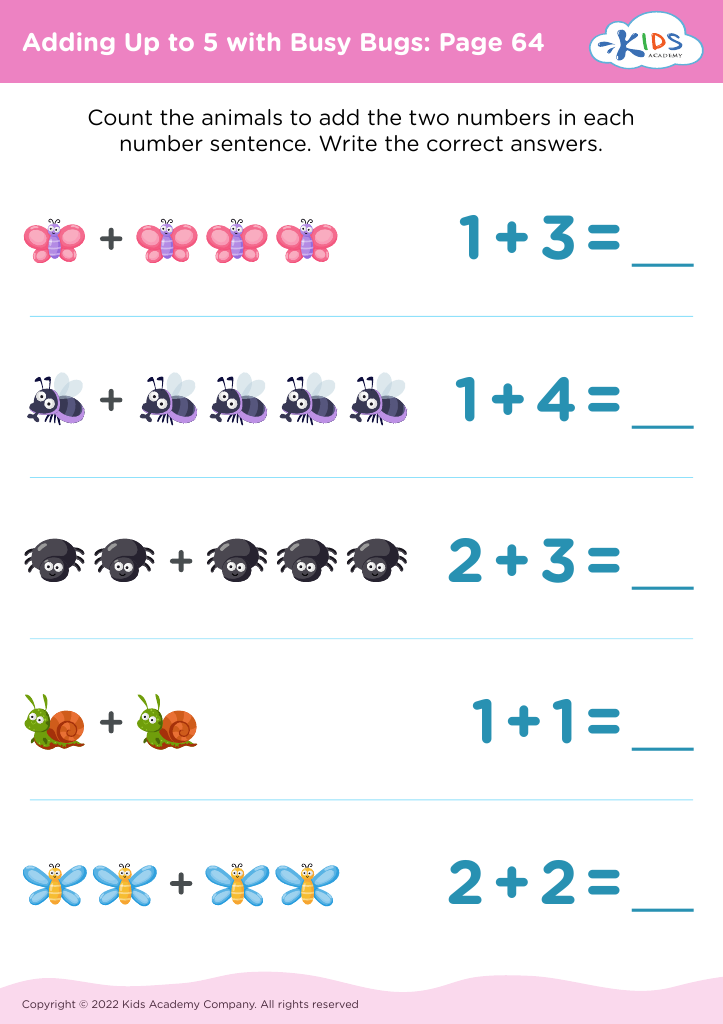
Adding Up to 5 with Busy Bugs: Page 64
Worksheet
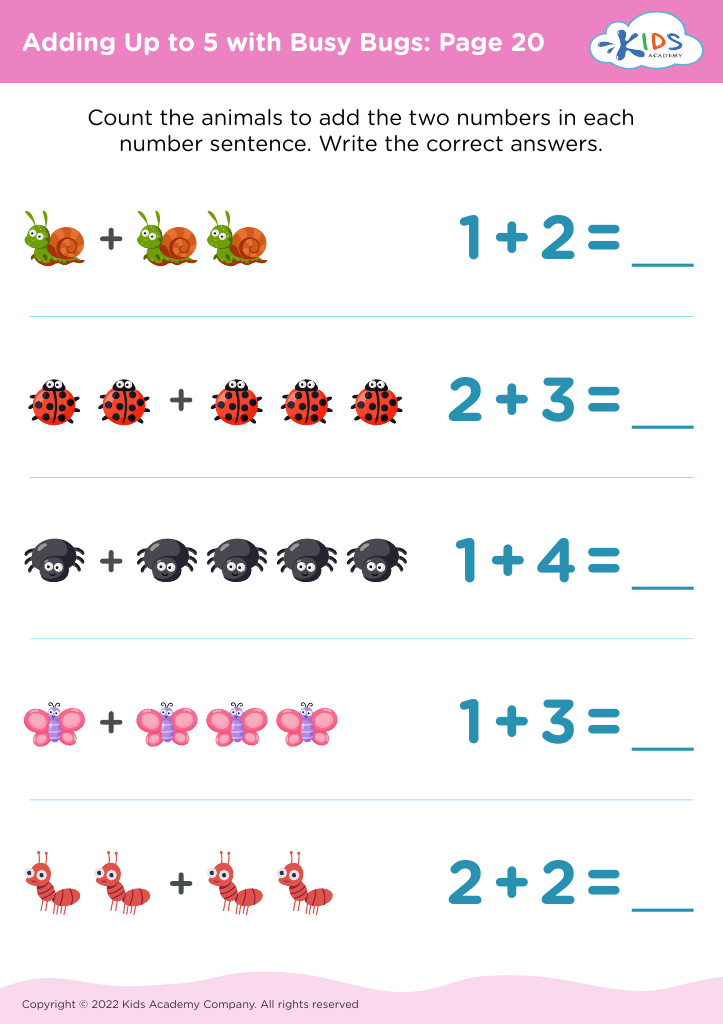
Adding Up to 5 with Busy Bugs: Page 20
Worksheet
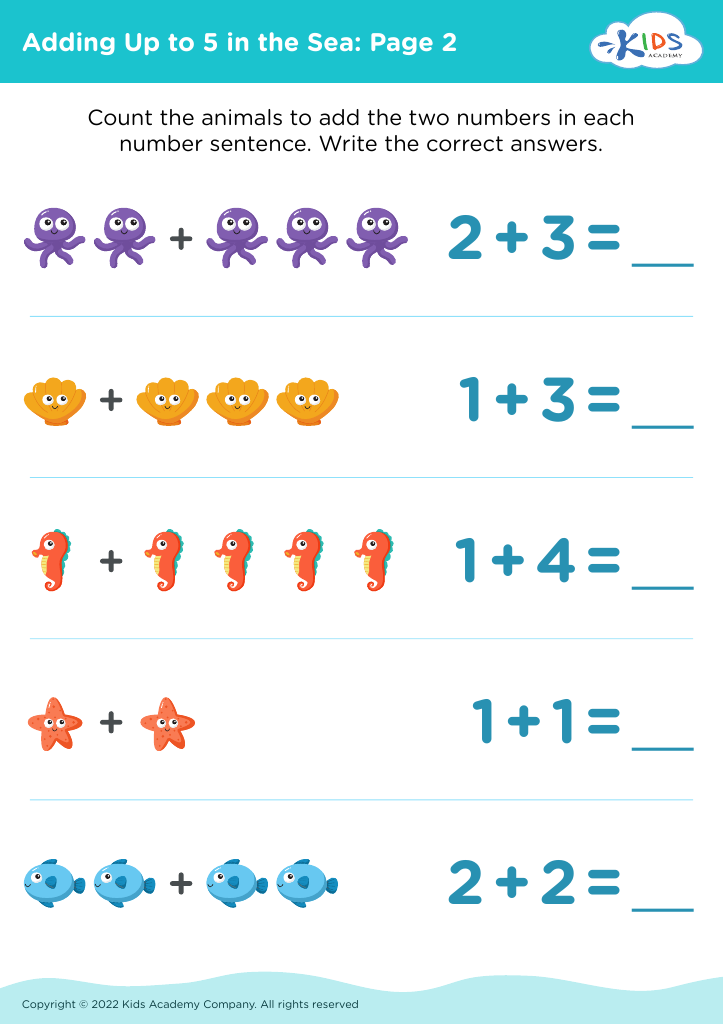
Adding Up to 5 in the Sea: Page 2

Adding Up to 5 in the Sea: Page 2

Adding Up to 5 in the Sea: Page 2
Worksheet
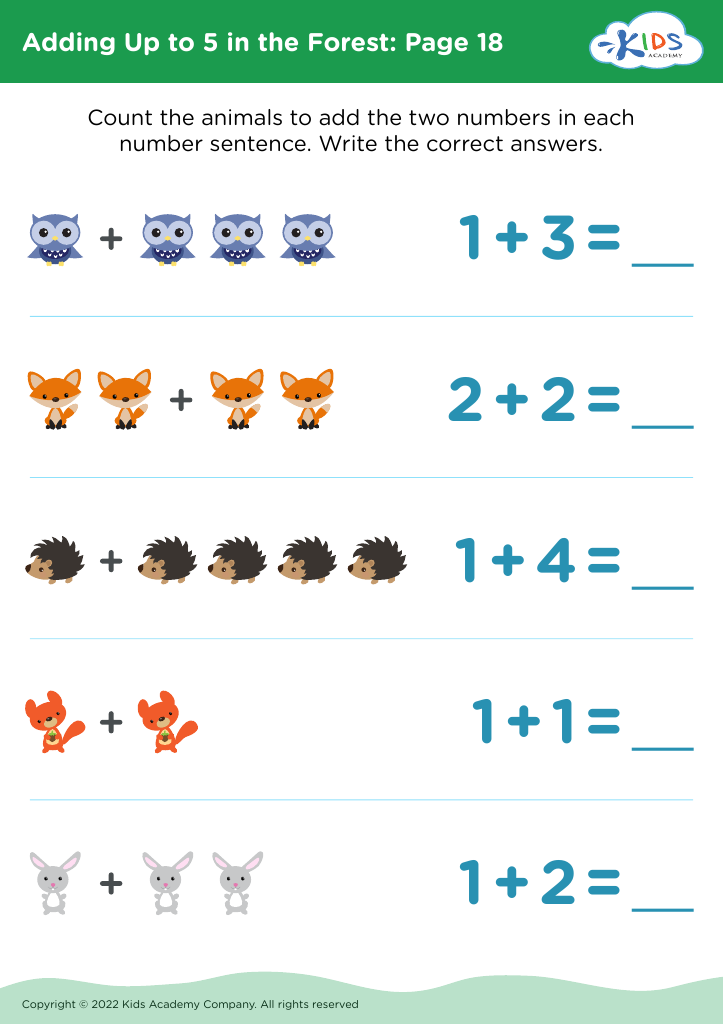
Adding Up to 5 in the Forest: Page 18
Worksheet
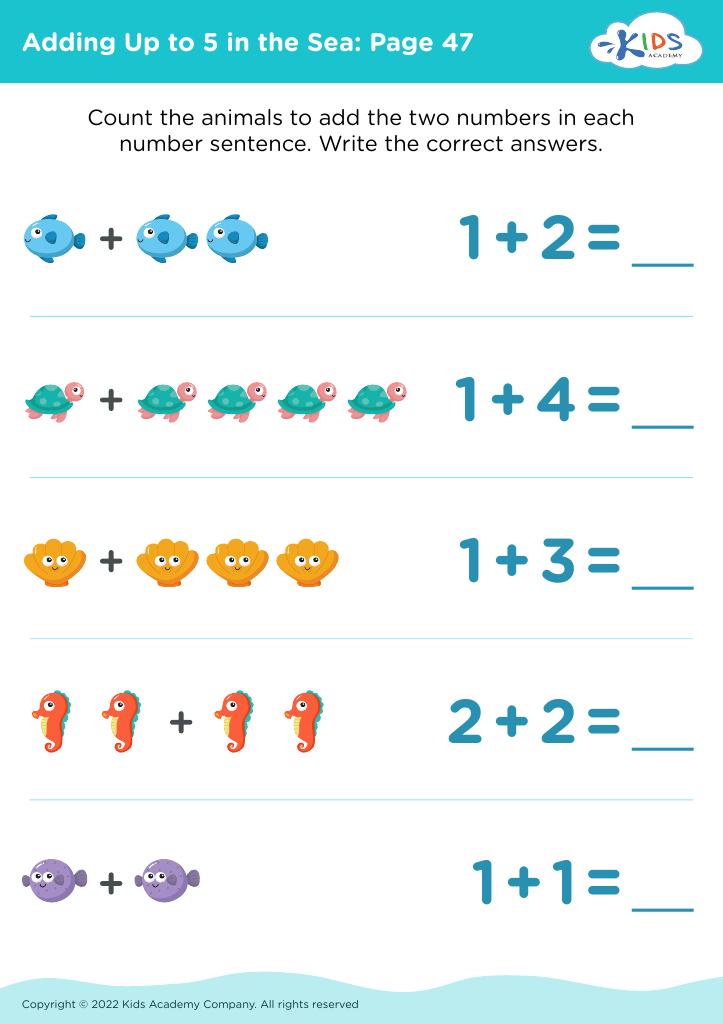
Adding Up to 5 in the Sea: Page 47
Worksheet
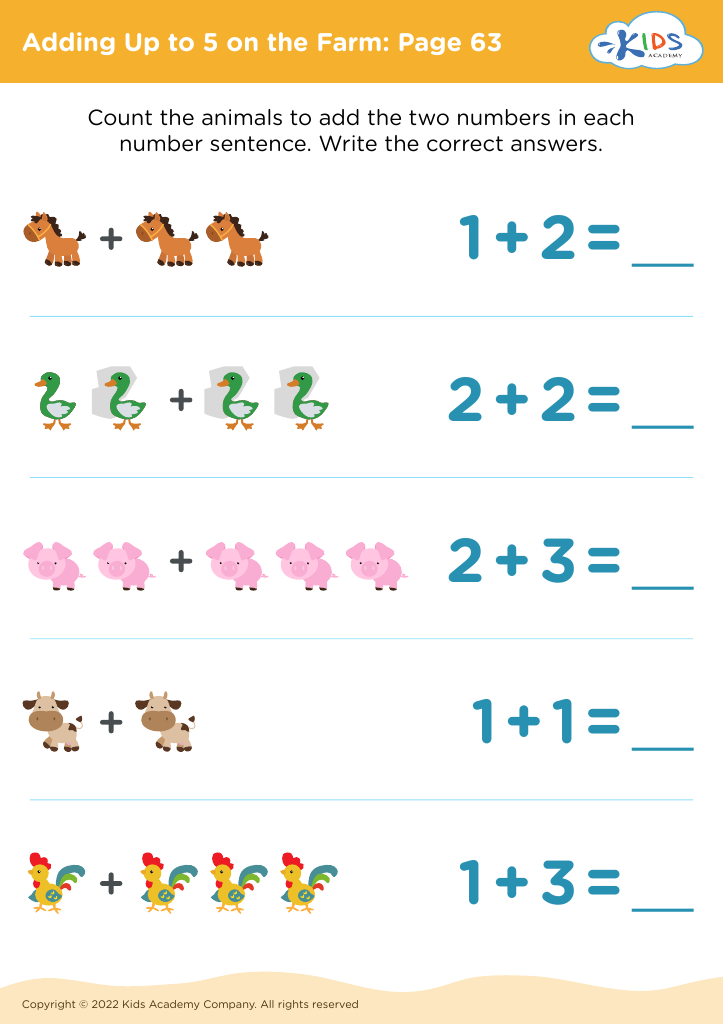
Adding Up to 5 on the Farm: Page 63
Worksheet


Visual learning plays a crucial role in teaching addition to children aged 5-9. During these formative years, young learners significantly benefit from visuals, as their cognitive development is highly receptive to images and manipulatives. Visual learning addition transforms abstract numbers into concrete, comprehendible concepts, easing the journey toward numerical fluency.

By integrating visual aids like counters, number lines, and pictorial representations, children can better understand the relationships between numbers. These tools help them visualize the process of combining amounts, enhancing their ability to solve problems independently. This method is particularly beneficial for children who are visual or kinesthetic learners, providing them with an alternative route to grasping mathematical concepts.

Parents and teachers supporting visual learning addition can also foster a positive attitude toward mathematics. Often, math anxiety develops when children struggle to understand abstract concepts, but visual tools break down complexities, making learning enjoyable and accessible. Engaging with visual aids promotes interaction and discussion, creating a collaborative learning environment that can vastly improve children's confidence and enthusiasm for the subject.

Early mastery of addition through visual learning lays a strong foundation for more advanced mathematical skills, as children are more likely to retain concepts learned in a fun, understandable way. Therefore, investing in visual learning strategies at these early stages can lead to long-term academic success and a lasting love for mathematics.