
Number Recognition Counting Worksheets for Ages 5-9
19 filtered results
Difficulty Level
Grade
Age
-
From - To
Subject
Activity
Standards
Boost your child's math skills with our engaging Number Recognition Counting Worksheets designed for ages 5-9! These fun and educational worksheets help kids master number identification and counting with colorful designs and interactive activities. Tailored for young learners, each sheet makes learning numbers enjoyable through games, puzzles, and hands-on exercises. Perfect for both classroom instruction and at-home practice, our worksheets align with educational standards, ensuring a solid foundation in essential math skills. Download now to support your child's journey to mastering number recognition and counting, setting them up for future academic success!
Favorites
With answer key
Interactive
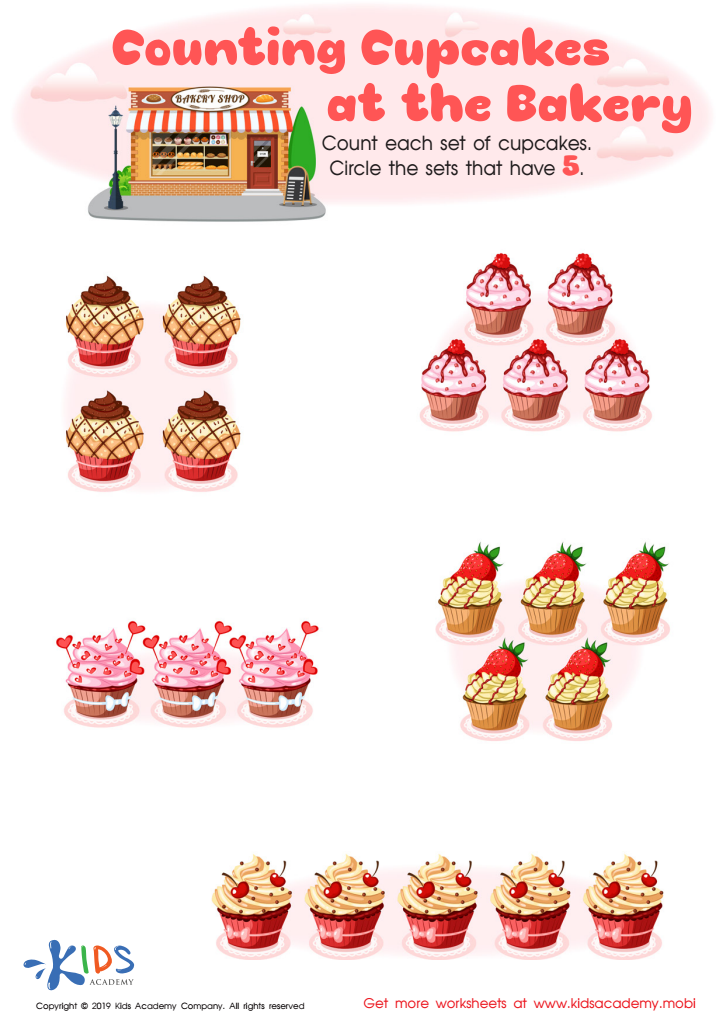
Counting Cupcakes Worksheet
This fun worksheet for preschoolers uses cupcakes to teach counting. Kids must circle the groups of cupcakes that add up to 5. The delicious treats make learning fun and engaging!
Counting Cupcakes Worksheet
Worksheet

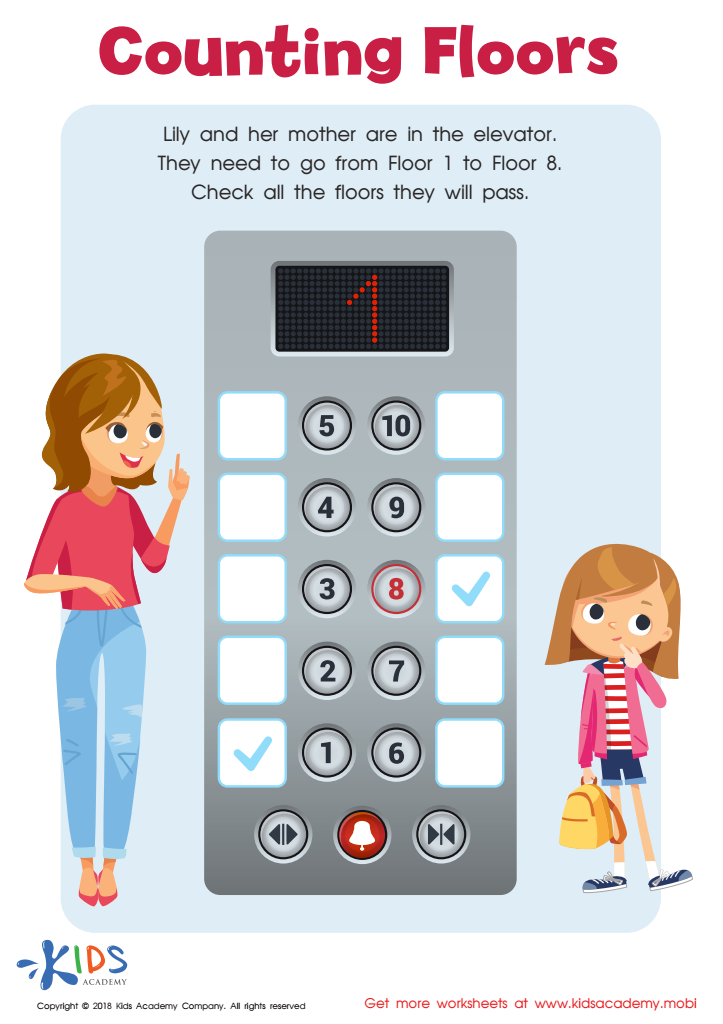
Counting Floors Worksheet
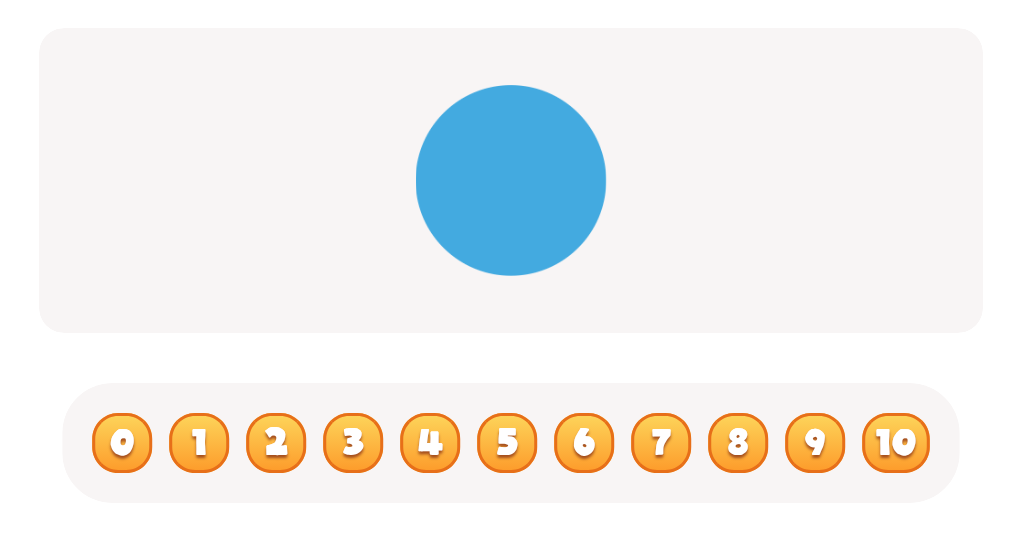
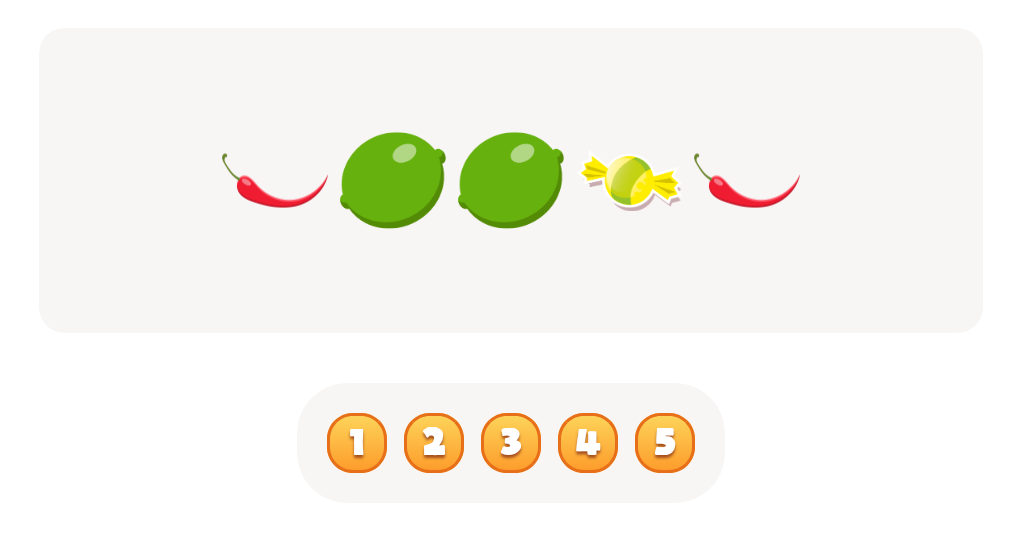
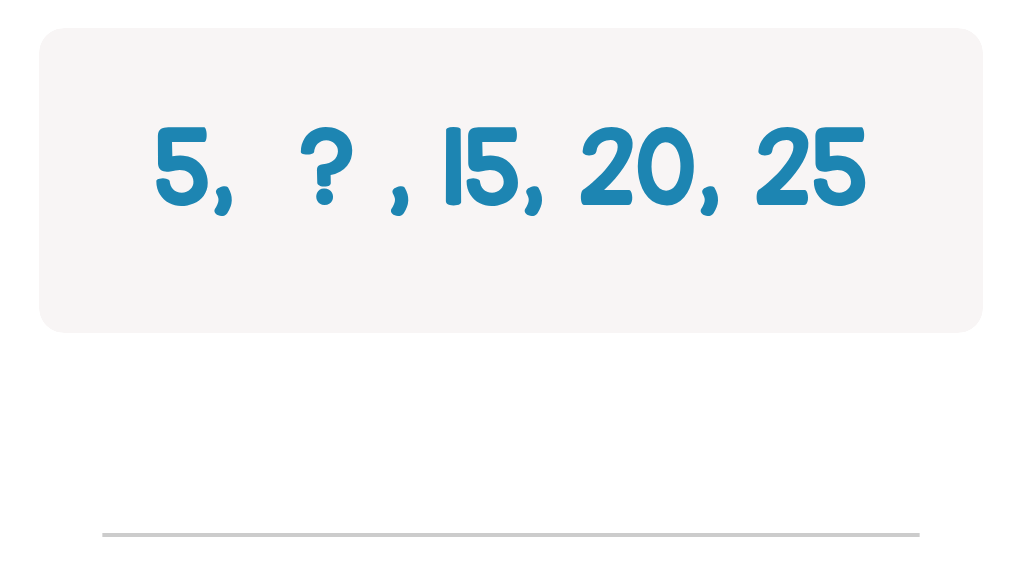
Take your kids on an elevator ride and have them help you. With this worksheet, little ones meet Lily and her mom. They're taking an elevator from Floor 1 to Floor 8. Ask them to check the floors they pass and help the two reach their destination.
Counting Floors Worksheet
Worksheet
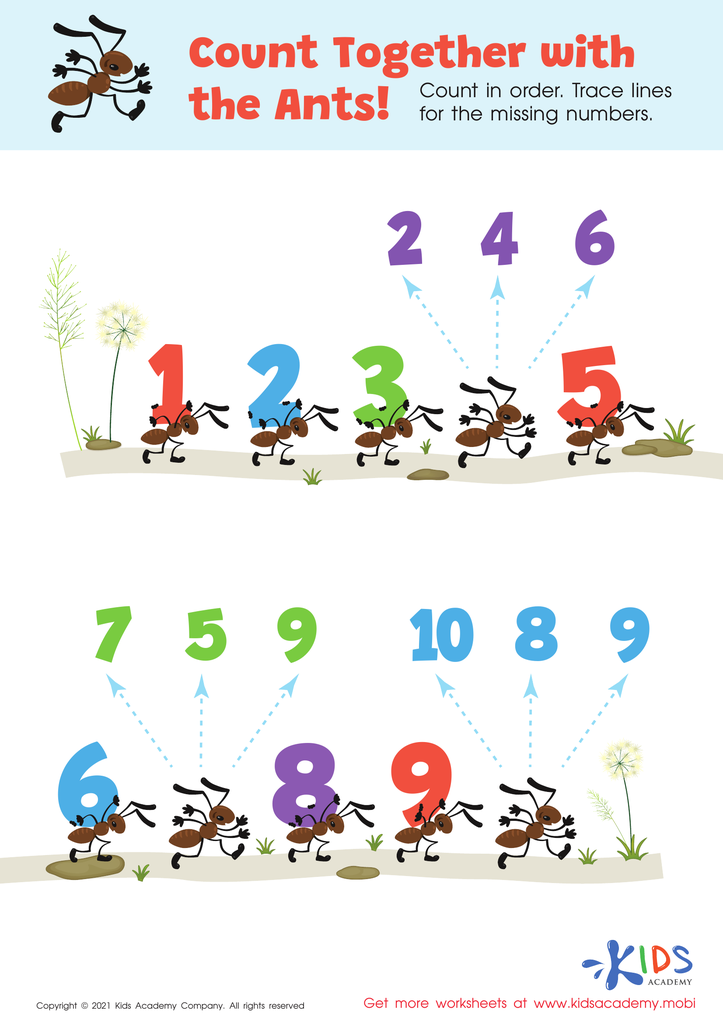
Count Together with the Ants Worksheet
Rather than letting kids get too deep in online games, keep them engaged with learning worksheets. Ask them to identify the insect in the picture, then count the ants. Help them trace lines to the missing numbers. It's simple and straightforward for young children to comprehend.
Count Together with the Ants Worksheet
Worksheet
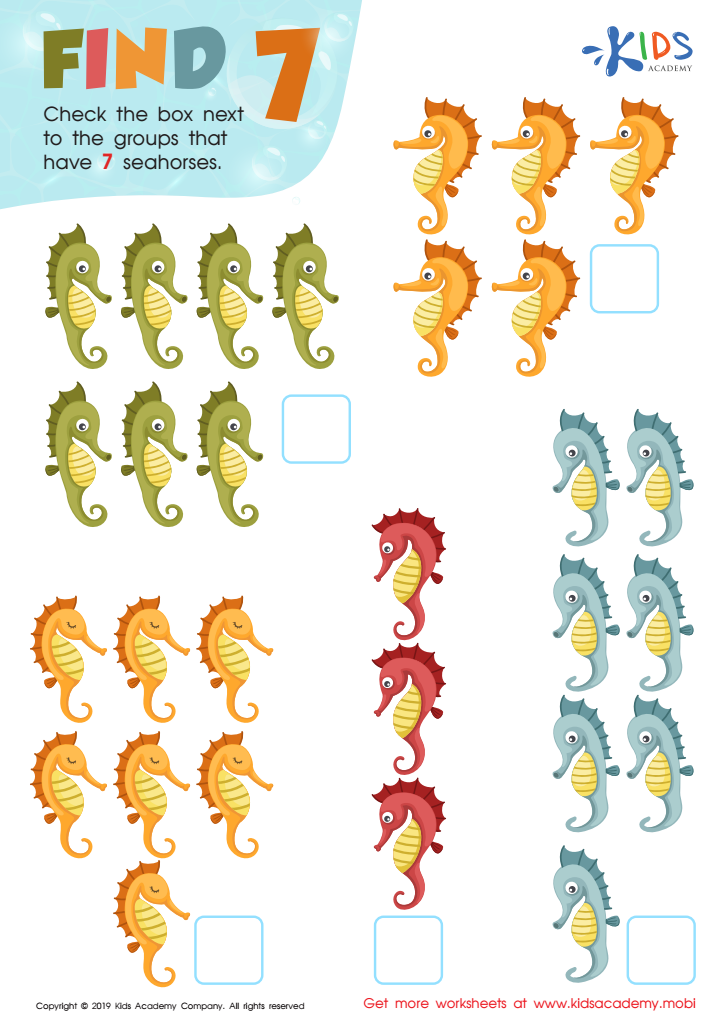
Find 7 Worksheet
Counting seahorses in groups of 7 is fun and educational with this free worksheet. Kids practice counting, one-to-one number representation, and check off the correct answers, all while admiring the brightly colored seahorses. A great way to make learning enjoyable!
Find 7 Worksheet
Worksheet
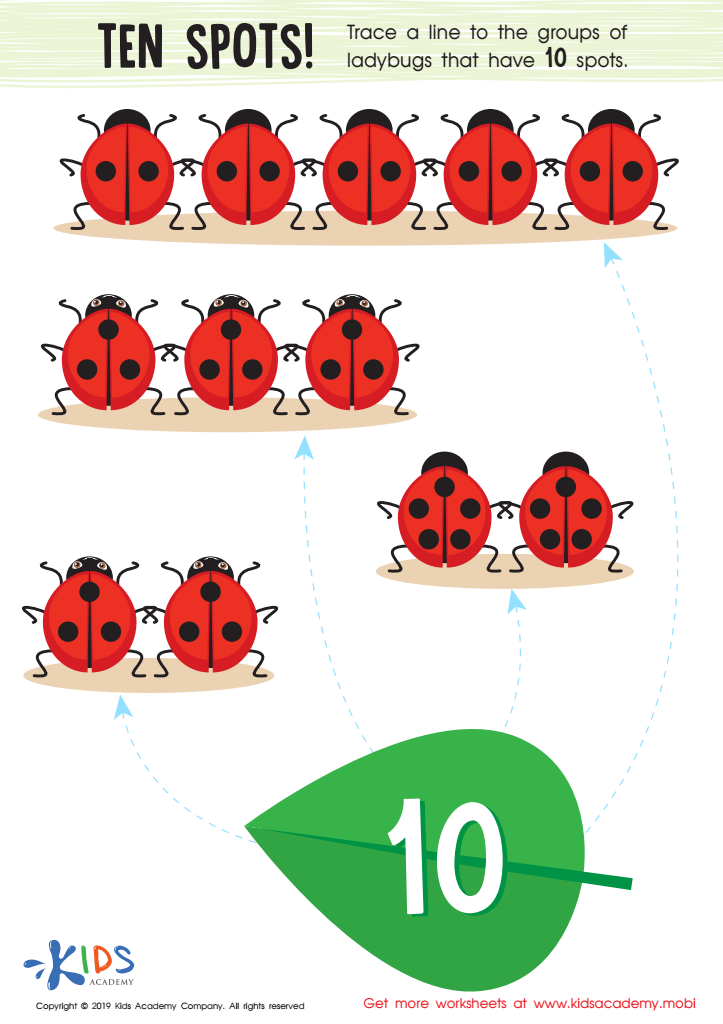
Ten Spots Worksheet
Kids love ladybugs! Ask them to tell you what stands out most--the spots. Show them a picture and help them count the spots. Trace a line to the group with 10 spots for a fun counting lesson.
Ten Spots Worksheet
Worksheet
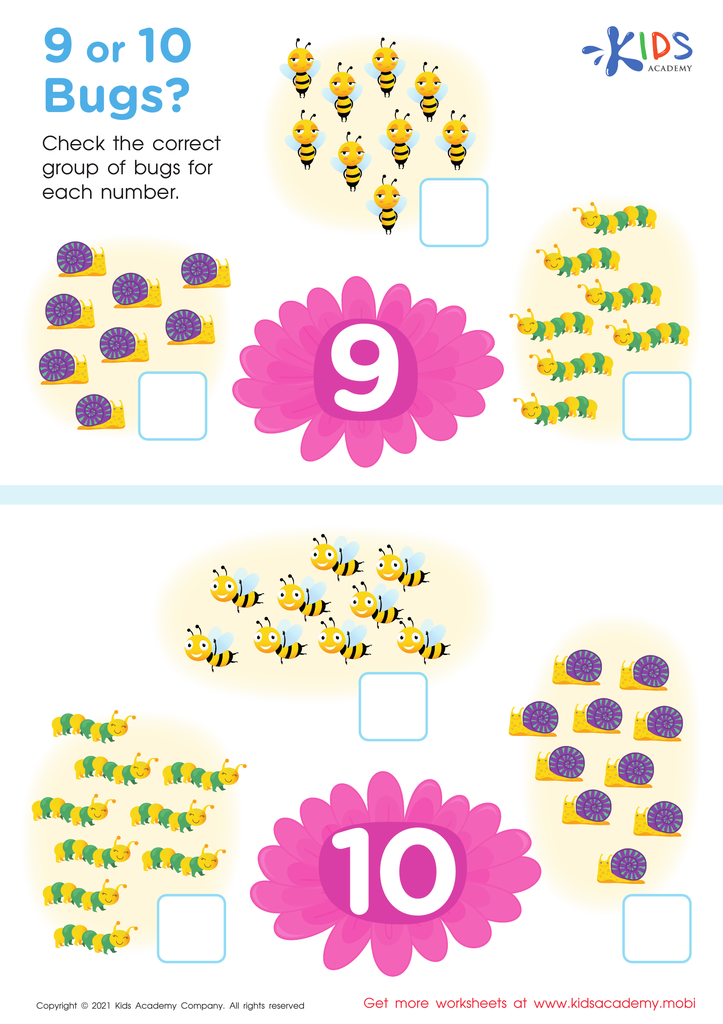
9 or 10 Bugs Worksheet
Help your kids count faster and better by turning everyday tasks into counting lessons. With this worksheet, they'll count and match the group of bugs to the given number. Kids who love insects will have a blast completing the tasks and practicing their counting skills.
9 or 10 Bugs Worksheet
Worksheet
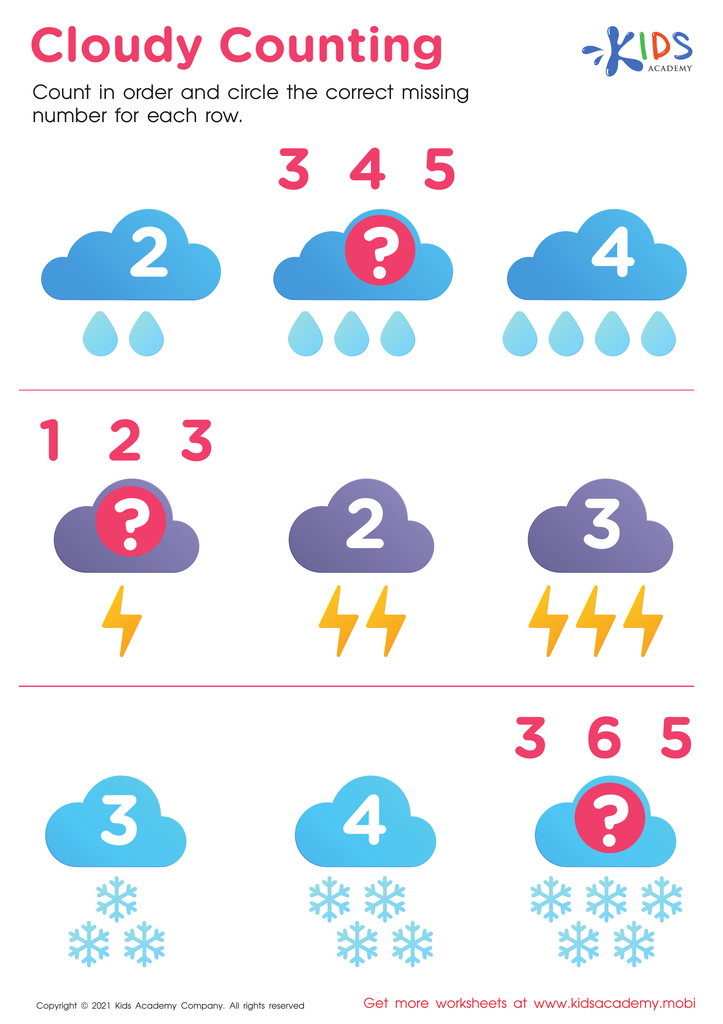
Cloudy Counting Worksheet
This worksheet is a fun way to help your children learn math and weather. Ask your child to identify the weather in the picture before they start counting. Then, help them count the numbers on the clouds and circle the right missing numbers.
Cloudy Counting Worksheet
Worksheet
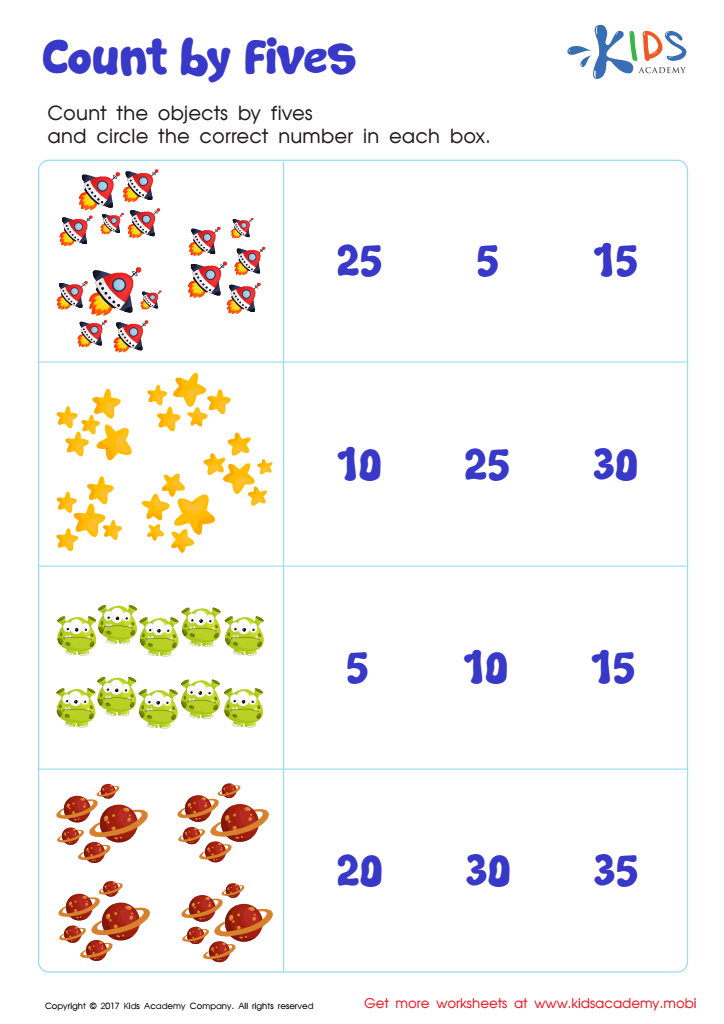
Skip Counting by 5s: Space Math Printable
This worksheet will provide your child with fun and practice counting by 5's. It'll help them visually count numbers, use problem solving skills and make connections between individual and groups of numbers. Counting money and various math concepts will become easier with this invaluable skill. Blast off with this fun and educational worksheet featuring space graphics.
Skip Counting by 5s: Space Math Printable
Worksheet
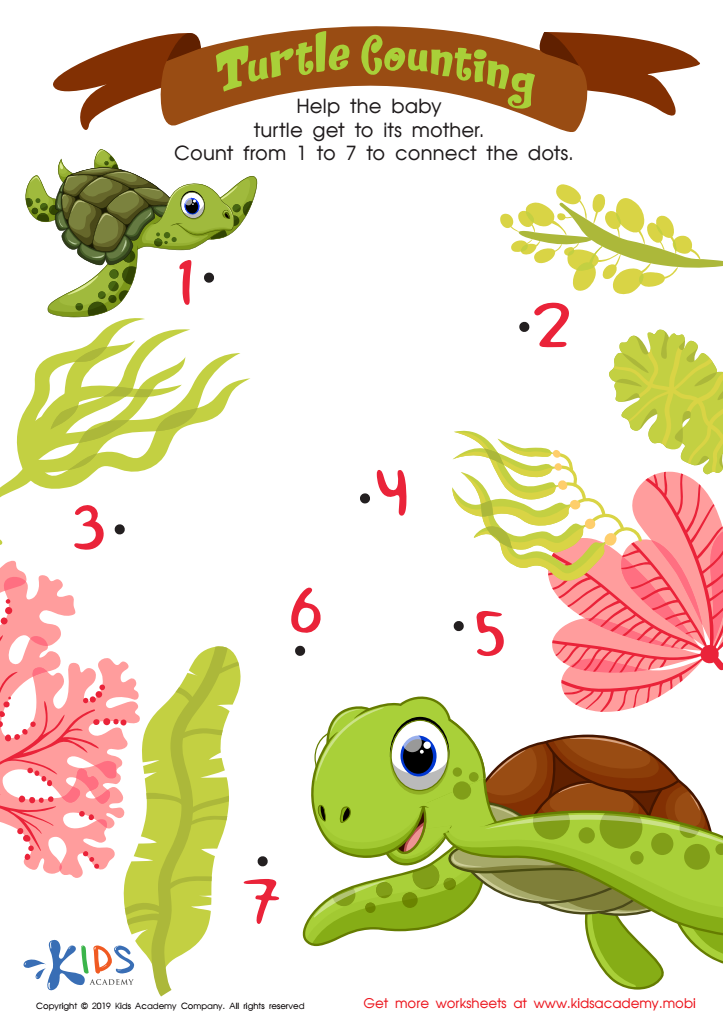
Turtle Counting Worksheet
Help your child identify the turtle in the picture and teach them about turtles. From their diet to the life cycle, they'll learn a lot. Now, help the baby turtle return to its mother. Count from 1 to 7, then connect the dots on the printout.
Turtle Counting Worksheet
Worksheet
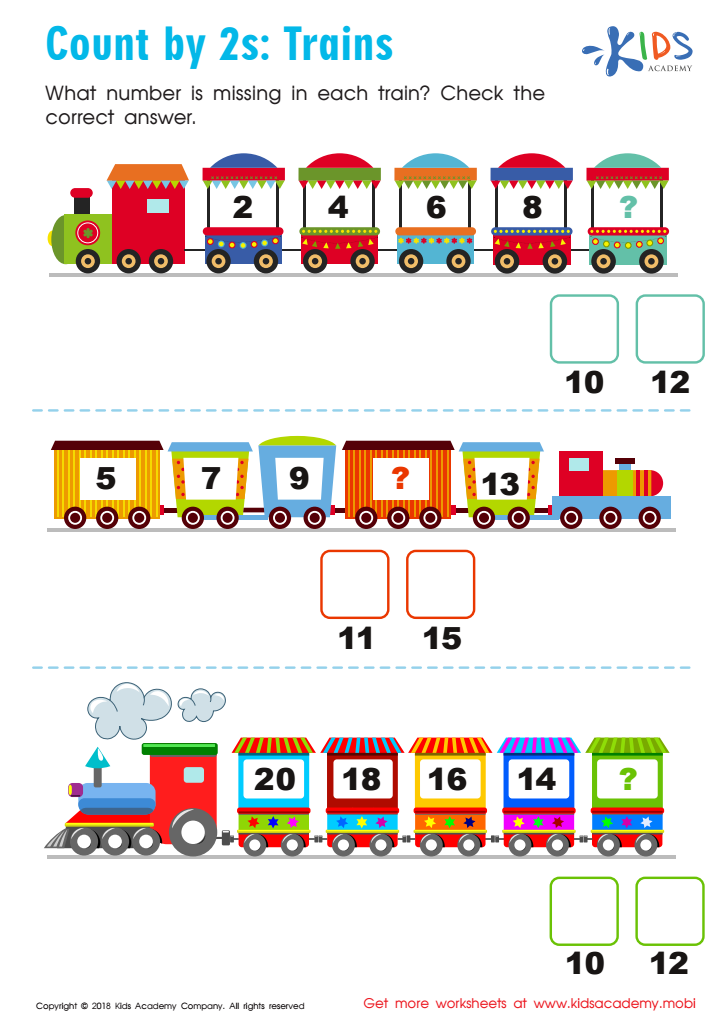
Count by 2's: Trains Worksheet
Teaching your kids quick computations? Get them skip-counting by 2s! They'll love filling in the colors of the train while counting, and it will help with 'counting up' or backward on paper or in their heads - essential for quick computations later.
Count by 2's: Trains Worksheet
Worksheet
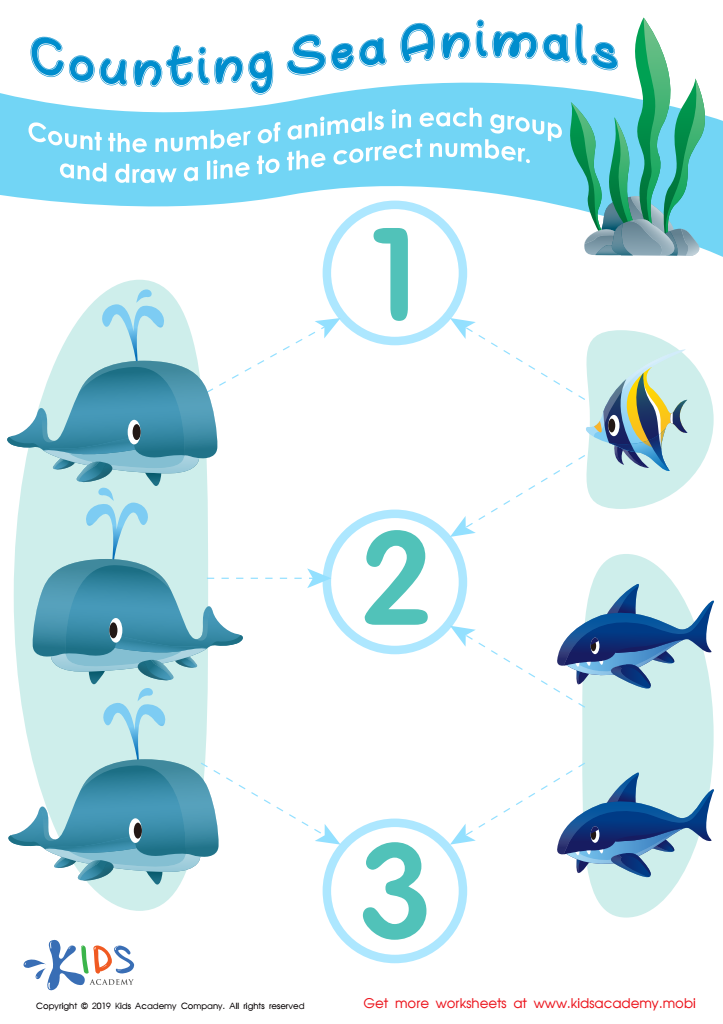
Counting Sea Animals Worksheet
Kids adore sea creatures for their captivating, unknown nature. Let them use this free worksheet to practice counting, where they match numbers to groups of animals. Through traceable lines, they'll easily connect numbers to sea creatures and learn math with vibrant, underwater fun!
Counting Sea Animals Worksheet
Worksheet
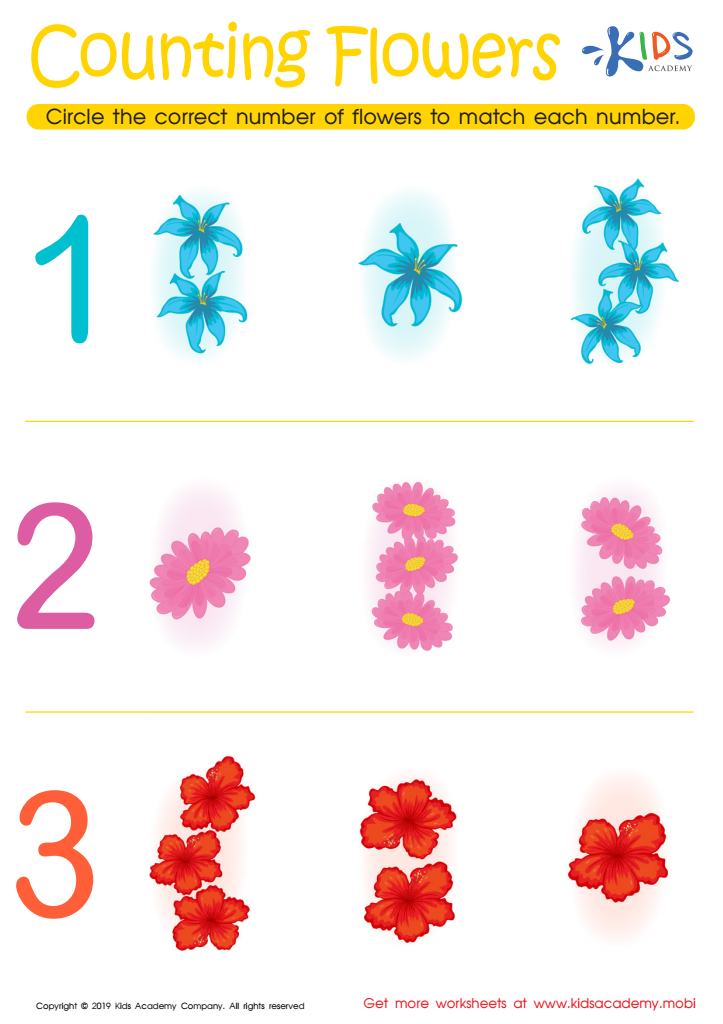
Counting Flowers Worksheet
Kids love Flower Power! This free PDF helps kids practice basic number sense and counting. They match the correct number of colorful flowers to the corresponding numeral. An enjoyable game that improves basic number sense - perfect!
Counting Flowers Worksheet
Worksheet
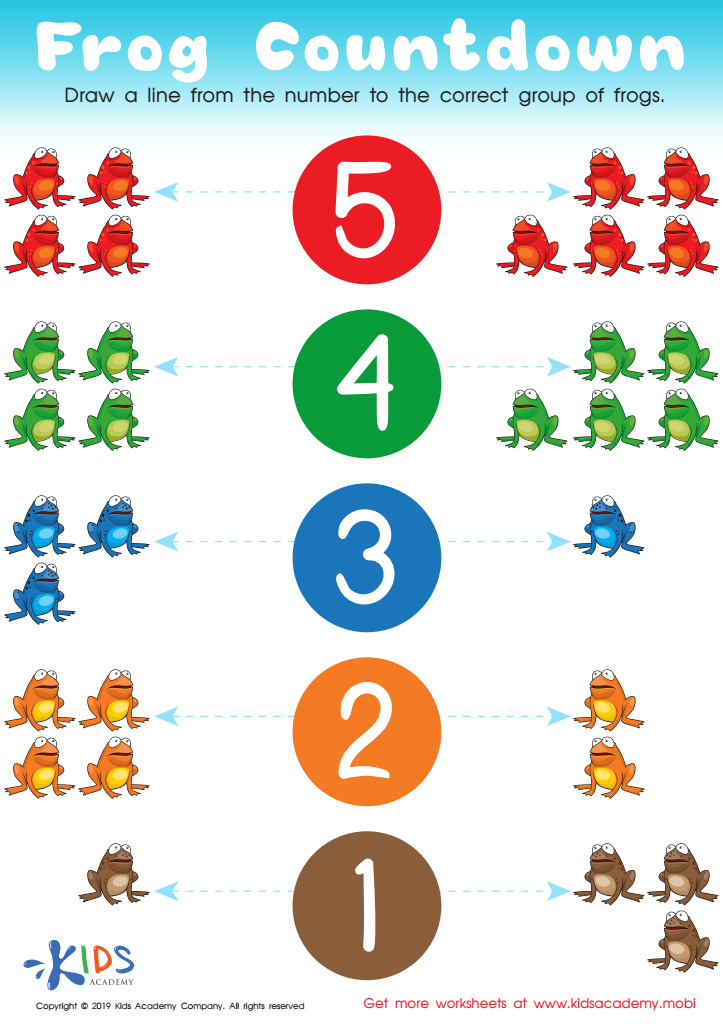
Frog Countdown Worksheet
Make learning fun for kids with traceable printouts! This exercise has kids counting frogs and drawing a line to match the number. Expand their knowledge with activities like this, beyond the basics they learn in school. Help them explore new ways of learning and make it enjoyable.
Frog Countdown Worksheet
Worksheet
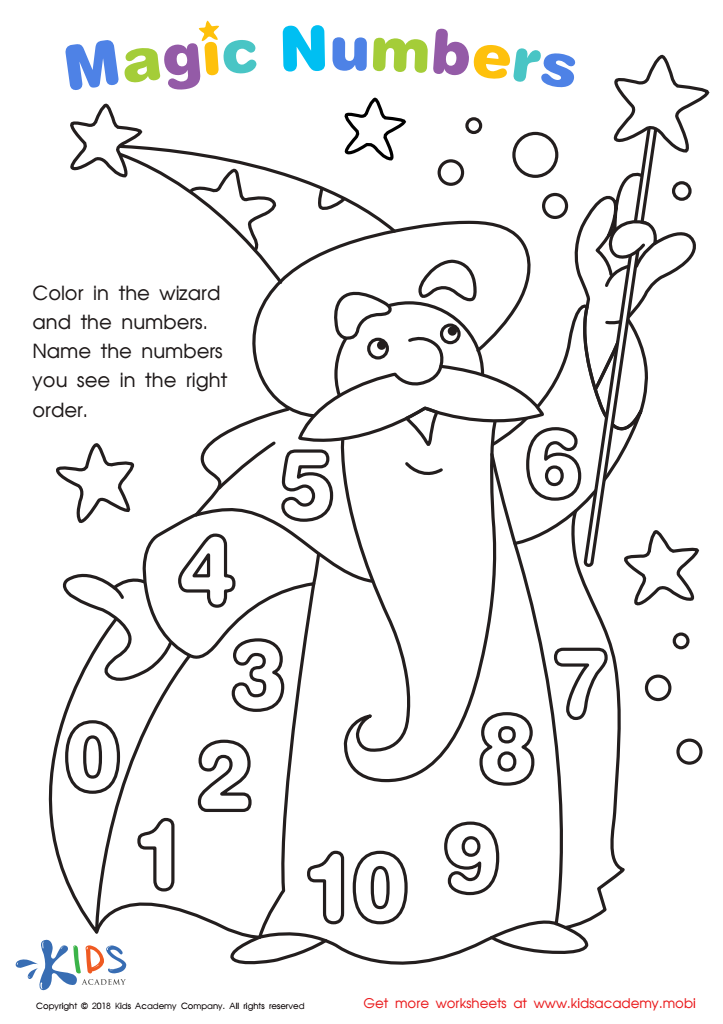
Magic Numbers Worksheet
Does your child have an interest in magic? Here's something they'll love - a coloring sheet featuring a wizard! Ask them to name the numbers from smallest to highest, then let them pick colors to color in the wizard and the numbers. It's sure to excite them!
Download (PDF)
 Assign to My Students
Assign to My Students
Magic Numbers Worksheet
Worksheet
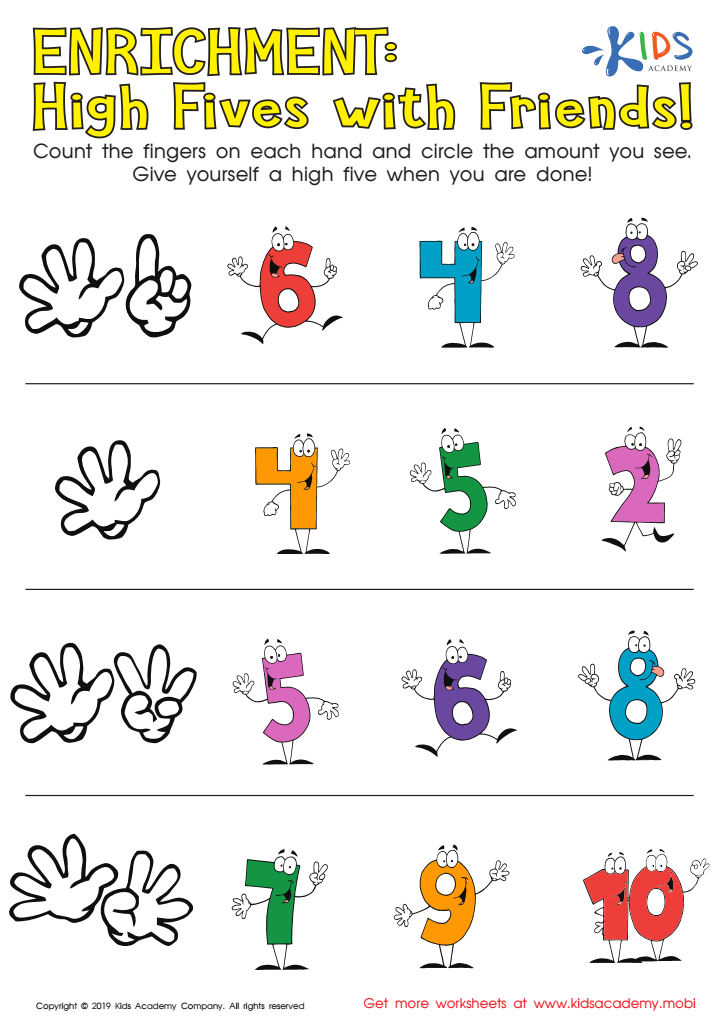
Enrichment: High Fives with Friends! Worksheet
Get your kids learning and having fun with this coloring worksheet! Kids can get practice counting and identifying numbers by looking at the fingers on each hand. Help them circle the amount they see, then reward them with a high five for getting the answers right - learning has never been so much fun!
Enrichment: High Fives with Friends! Worksheet
Worksheet
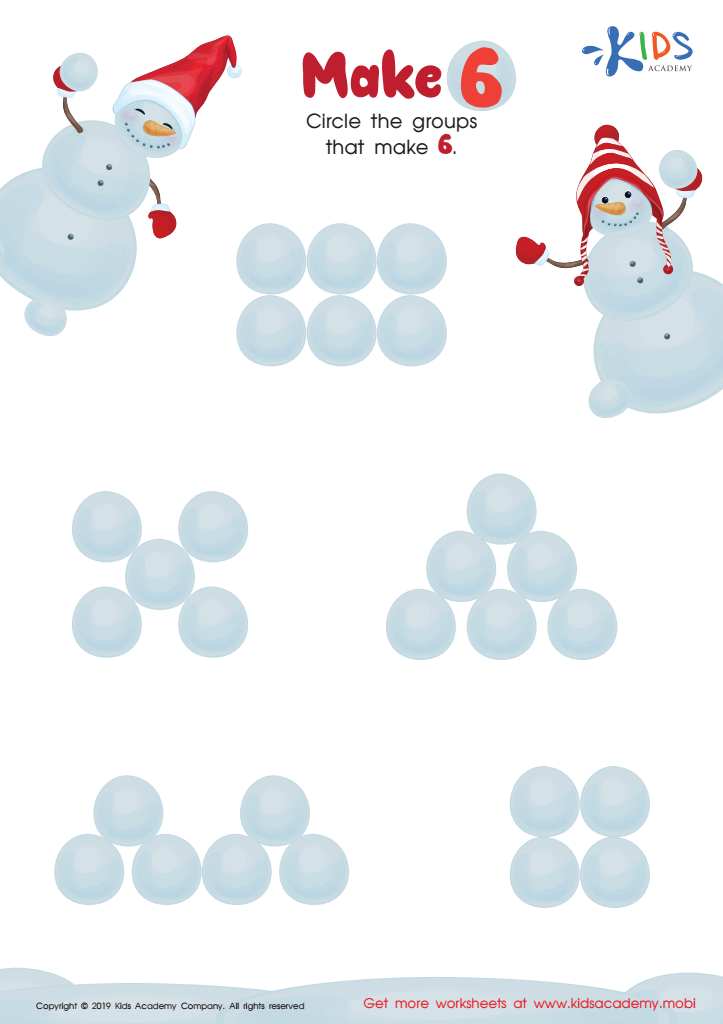
Make 6 Worksheet
Fun snowball fights are great! With lots of ammo, kids can join their snowman friends and count out groups of six. Through number sense practice, and seeing one-to-one picture representation, your child can strengthen their skills while having a blast. Don't forget to bundle up as they may ask for more!
Make 6 Worksheet
Worksheet
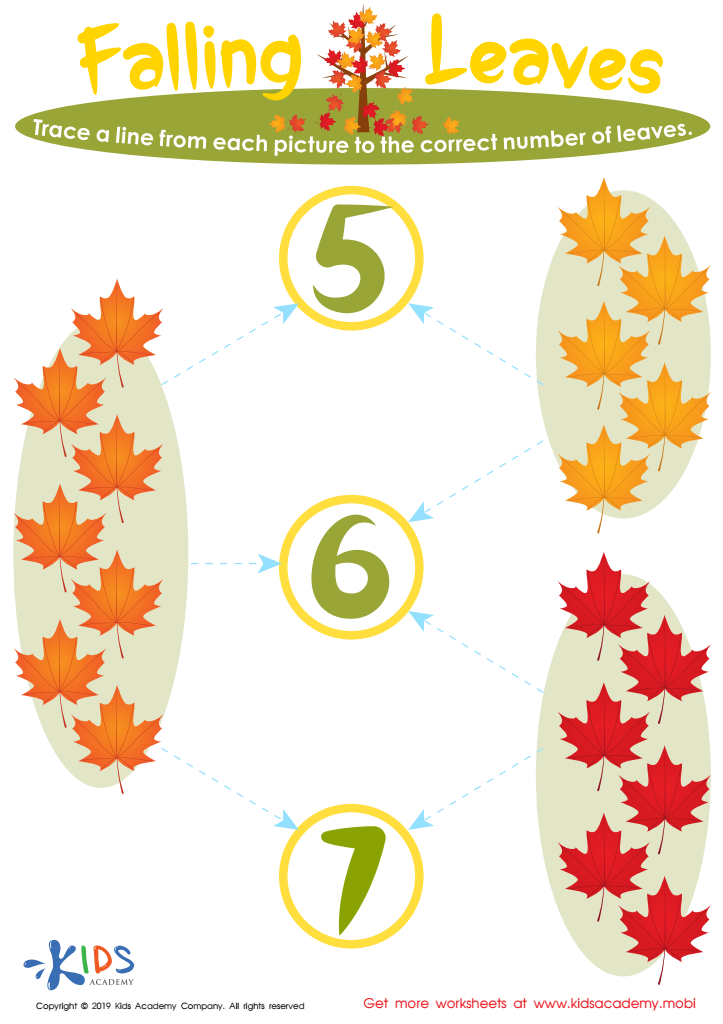
Falling Leaves Worksheet
Do your kids know the seasons? Ask them to name each one, then test their counting skills with a fun worksheet. Have them count from 1 to 10, then trace a line from each picture to the corresponding number of leaves. It's a great way to check their counting ability!
Falling Leaves Worksheet
Worksheet
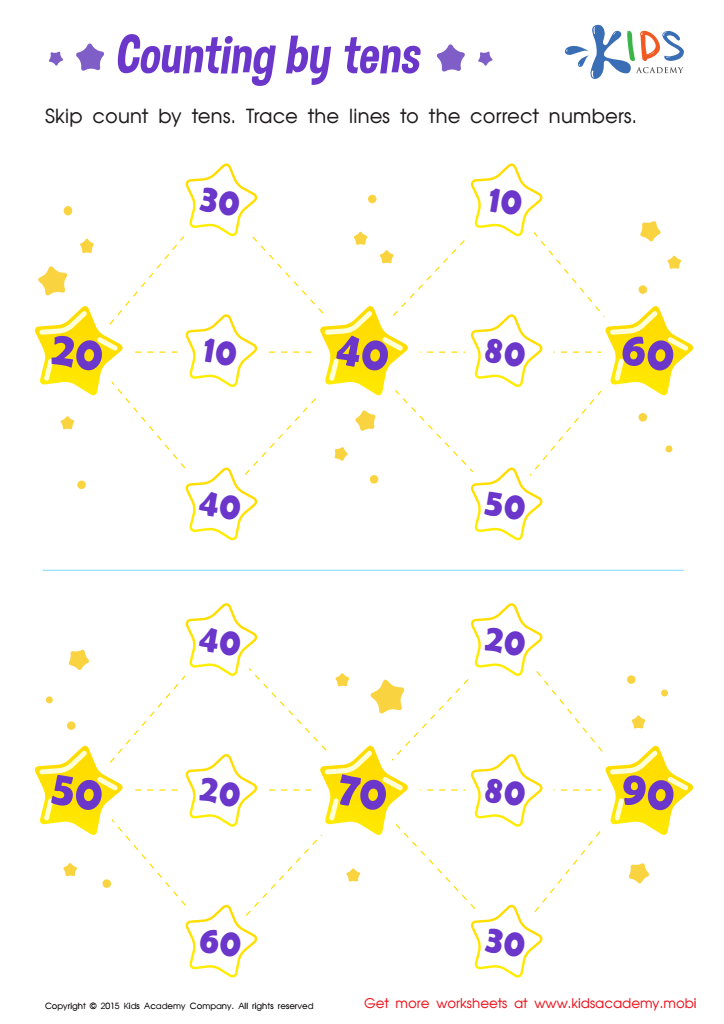
Learn Dozens: Counting by Tens Printable
Kindergartners need to learn skip counting - counting in number groups - to increase number sense and be ready for more advanced math. Our kindergarten worksheet featuring a starry trip to outer space will help your child practice this valuable skill. Your child will choose correct answers to trace the lines to the stars, building fluency in skip counting. They'll also strengthen problem solving and see the pattern it creates. Get your little learner to the next level with this skip counting worksheet!
Learn Dozens: Counting by Tens Printable
Worksheet
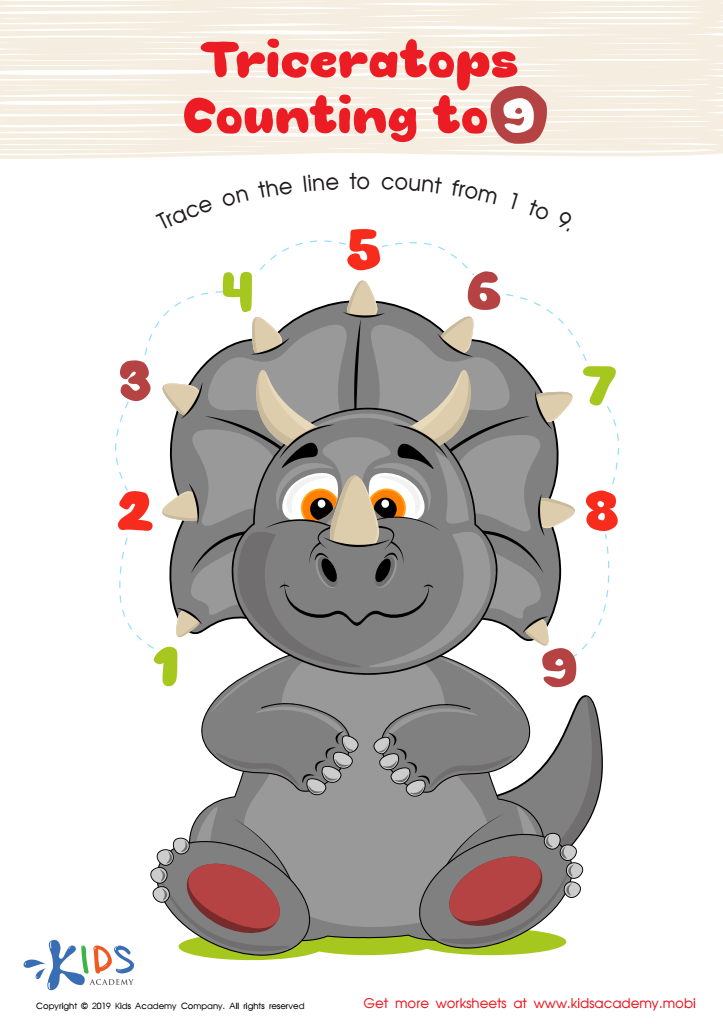
Triceratops Counting to 9 Worksheet
This little triceratops is here to help kids learn to count! Dinosaurs lived long before us and we've never seen one alive, but through research, we know a lot about them. Let the dinosaur help trace on the line from 1 to 9 for a fun counting practice.
Triceratops Counting to 9 Worksheet
Worksheet
Join Kids Academy for Free
Who is primarily going to use this learning content?








Parents and teachers should care about number recognition and counting for children ages 5-9 because these skills lay the fundamental groundwork for mathematical proficiency essential in everyday life and advanced learning requirements. Developing these skills at an early age helps children understand the concept of numbers, their order, and their relationship to quantities and operations like addition and subtraction.
Number recognition allows children to familiarize themselves with the numeral symbols and their corresponding quantities, building confidence in dealing with numbers. It is a fundamental step for all future mathematical learning, enabling children to read, write, and identify numbers correctly within different contexts.
Counting, on the other hand, introduces essential mathematical concepts such as sequencing, one-to-one correspondence, and the cardinality principle where the last number counted represents the total number of objects. Mastery in counting also enhances cognitive development, memory, and problem-solving abilities.
Early proficiency in number recognition and counting contributes to a child’s readiness for formal education, ensuring they meet curriculum standards and build a positive attitude towards math. Consequently, children are better equipped to tackle more complex mathematical concepts as they progress in their education, increasing their overall academic success and functional skills in daily life.








