Basic counting skills Geometry Worksheets for Ages 5-9
3 filtered results
-
From - To
Enhance your child's understanding of basic counting and geometry with our engaging worksheets designed for ages 5-9. Our collection provides fun activities that seamlessly blend counting skills with geometric concepts, making learning enjoyable and effective. From counting shapes to identifying geometric figures, these worksheets foster early math skills essential for future success. Each activity is thoughtfully crafted to cater to young learners, promoting critical thinking and problem-solving abilities. Perfect for home or classroom use, our Basic Counting Skills Geometry Worksheets build a strong foundation in mathematics while sparking creativity and imagination in young minds. Start counting and learning today!
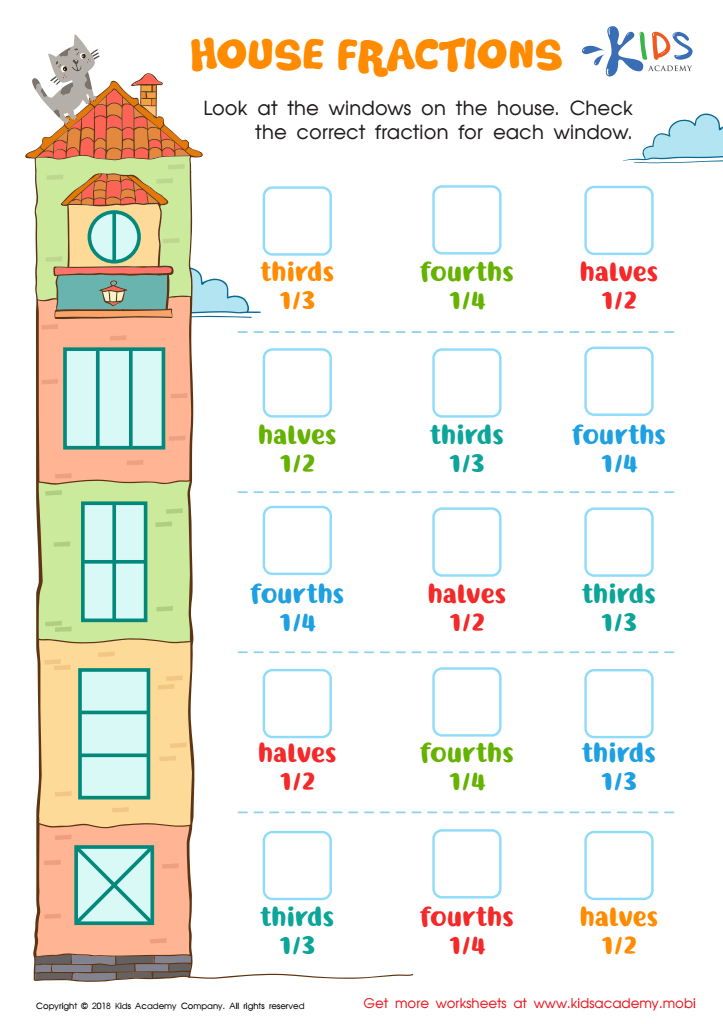
House Fractions Worksheet
 Assign to My Students











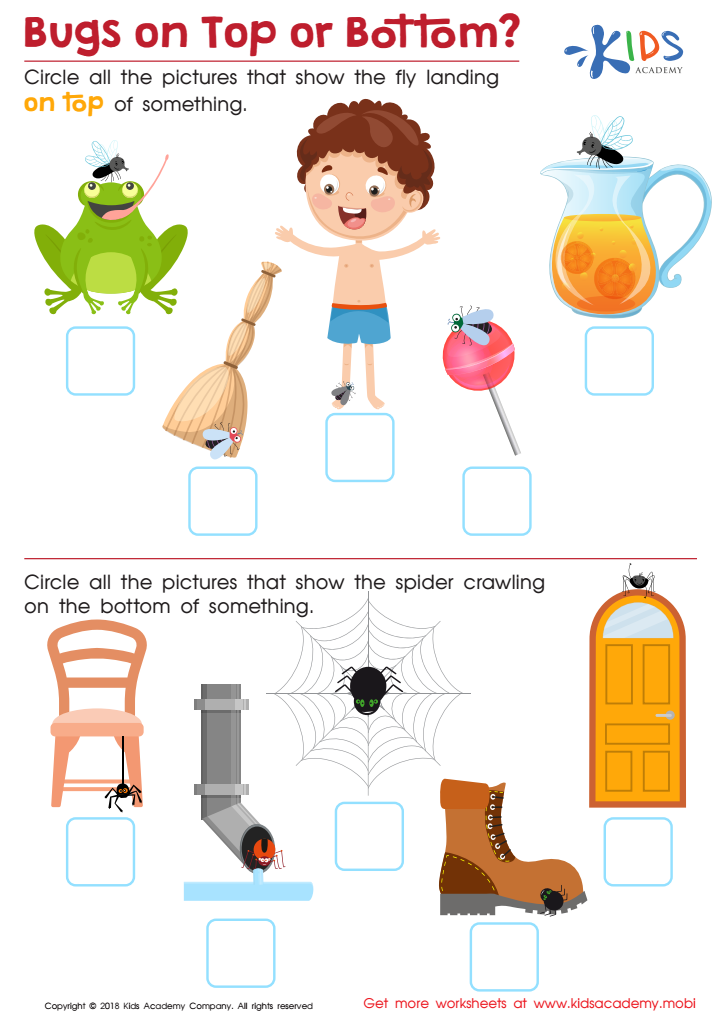
Bugs on Top or Bottom? Worksheet
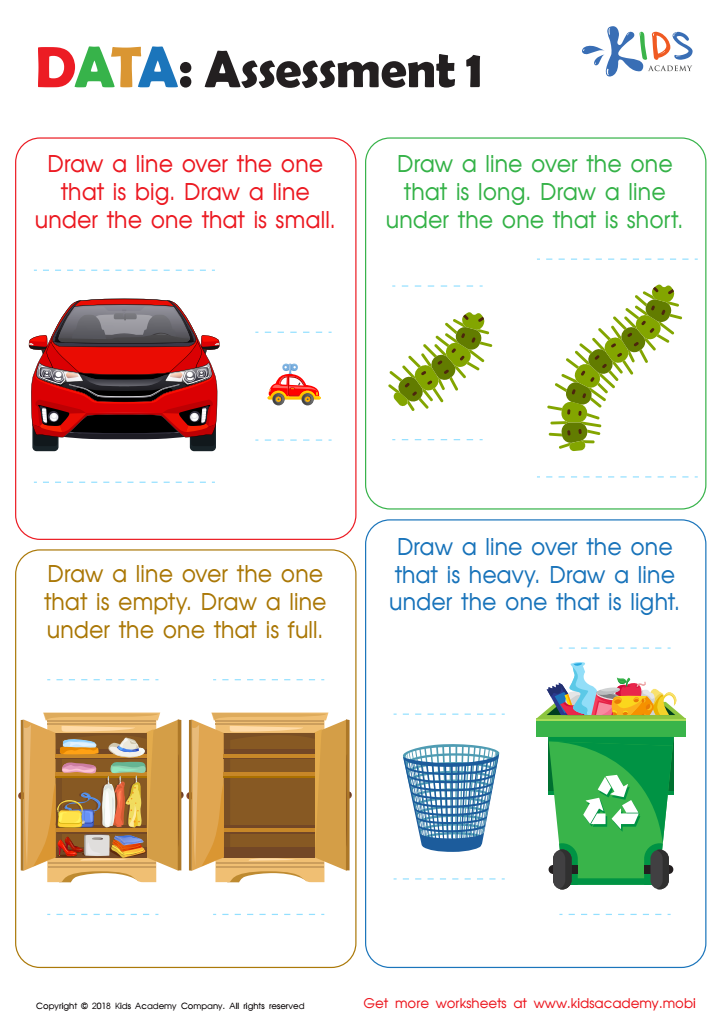
Data: Assessment 1 Worksheet








Basic counting skills and an introduction to geometry are essential components of early education for children aged 5-9. These foundational skills form the building blocks for more advanced mathematical concepts, enhancing a child’s problem-solving abilities and critical thinking.
First, counting is integral to understanding number concepts, which are crucial not only in mathematics but also in everyday life. It helps children in tasks such as measuring, designing, and organizing. Mastering counting fosters confidence and competence in arithmetic, preparing them for future academic challenges.
Geometry introduces children to shapes, spaces, and spatial relationships, skills that are vital for a comprehensive understanding of mathematics. Recognizing patterns, symmetry, and dimensions cultivates analytical thinking and stimulates creativity. For instance, understanding shapes can enhance a child’s ability to visualize and manipulate objects in their environment, an important skill used in various domains, including science, design, and engineering.
Moreover, these skills lay the groundwork for later subjects like algebra and trigonometry, showing that early investment in counting and geometry equips children with essential tools for lifelong learning. By fostering these skills, parents and teachers are not just teaching math but empowering children with confidence, creativity, and critical thinking abilities that extend well beyond the classroom.








