Differentiating shapes Geometry Worksheets for Ages 5-9
3 filtered results
-
From - To
Explore our engaging "Differentiating Shapes" geometry worksheets tailored for ages 5-9! At Kids Academy, these printable resources empower young learners to identify, compare, and categorize various shapes with fun, interactive activities. Our expertly designed worksheets help children grasp essential geometry concepts while enhancing critical thinking and problem-solving skills. Suitable for classroom use or at-home practice, these colorful pages keep kids captivated and eager to learn. Give your child a head start in geometry with Kids Academy – where education is an adventure! Download your worksheets today and watch your child's geometry skills soar!
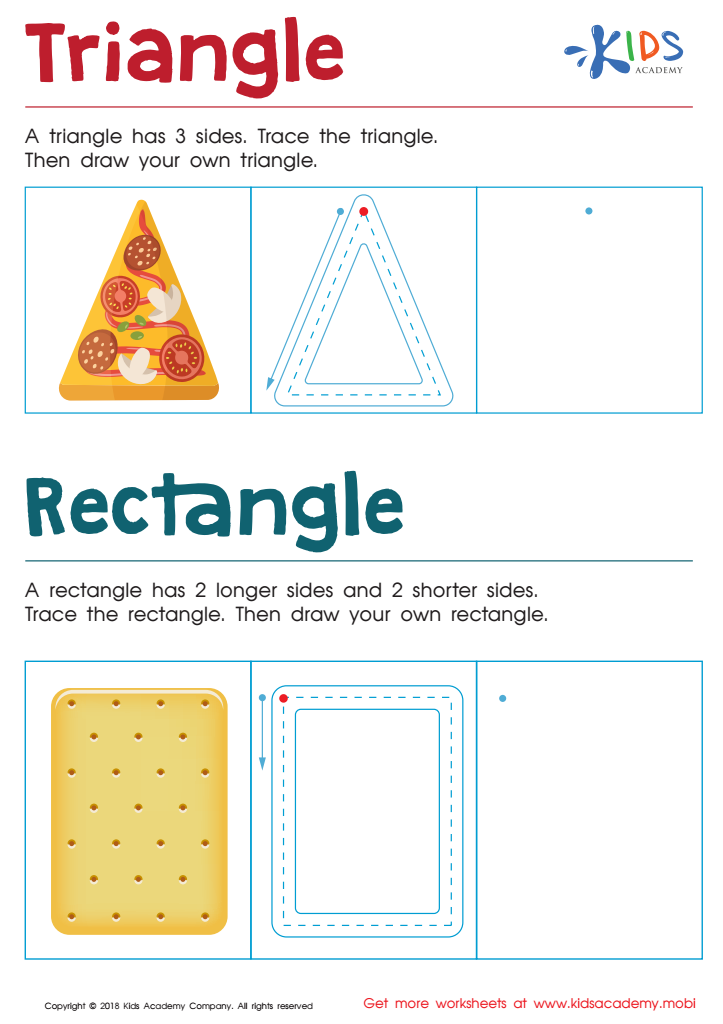
Triangle Rectangle Worksheet
 Assign to My Students











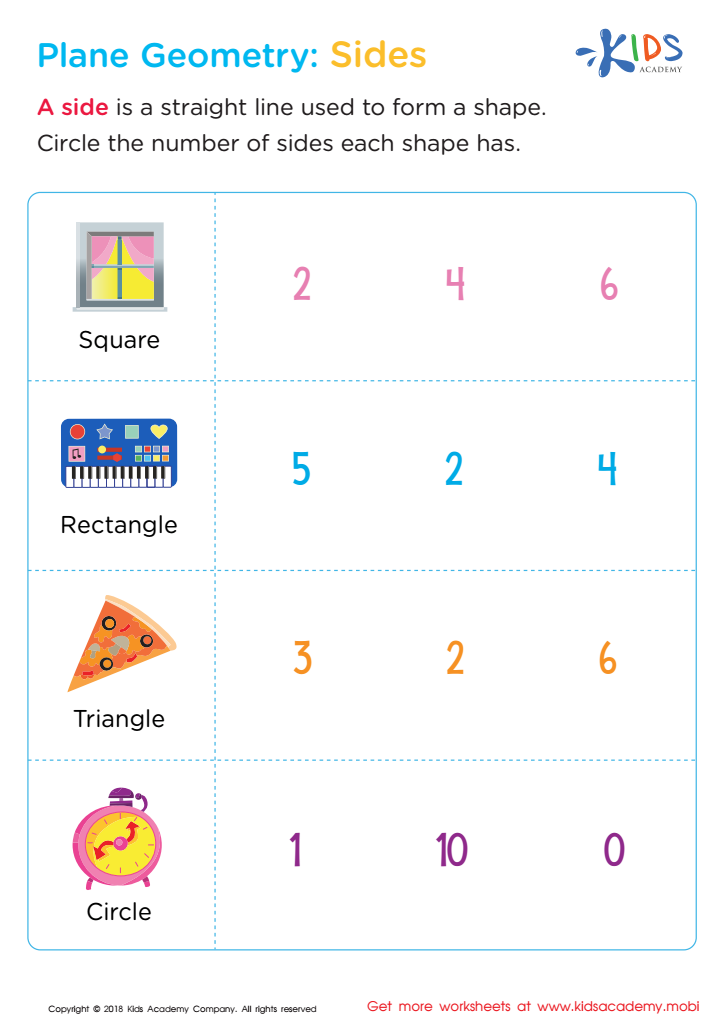
Plane Geometry: Sides Worksheet
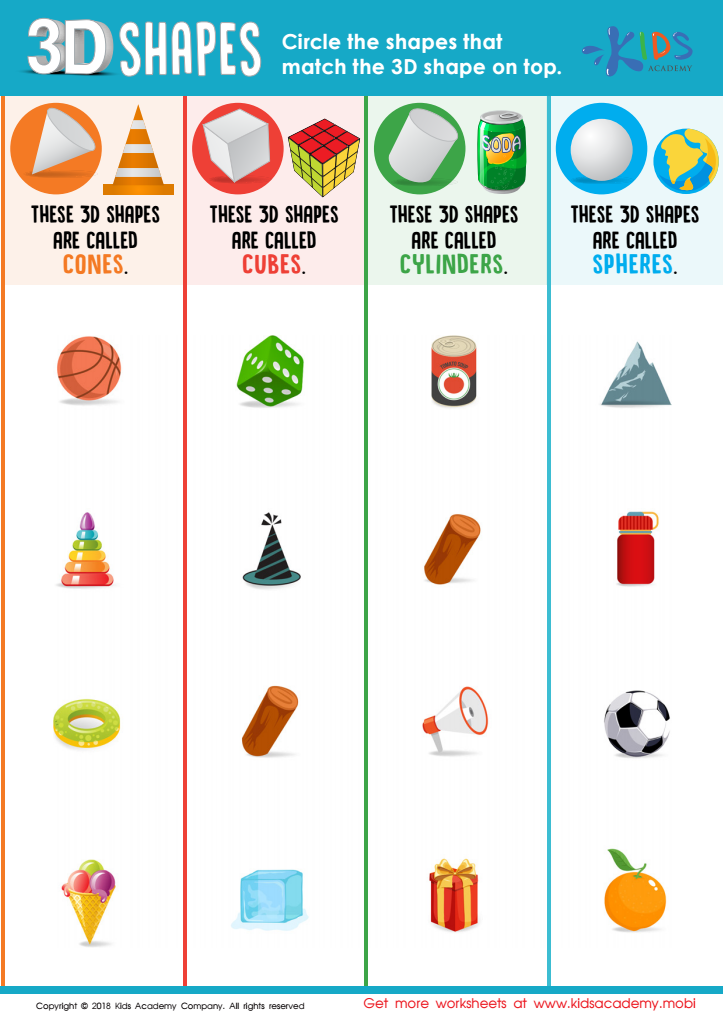
3D Shapes Worksheet








Differentiating shapes is a fundamental aspect of early education geometry for children aged 5-9, with numerous benefits that justify the care and attention of parents and teachers. At this developmental stage, children are honing their visual-spatial skills, which are crucial for more complex mathematical concepts later on. Understanding and recognizing shapes lay the groundwork for problem-solving abilities and spatial reasoning. These skills are not limited to math; they extend to science, art, and even everyday tasks such as following a map or organizing objects.
Moreover, as children learn to differentiate shapes, they also began to grasp other fundamental concepts such as symmetry, congruence, and area, all of which form a basis for advanced geometrical thinking. This foundational knowledge eases their transition into more complicated subjects later in their academic careers.
Additionally, engaging with geometry can be highly interactive and fun, making children more inclined to enjoy learning. Sorting and classifying shapes improves both fine motor skills and cognitive abilities. Activities like building with blocks, creating tangrams, or even recognizing shapes in the environment also promote observational skills and creativity.
Parents and teachers who emphasize shape differentiation during these formative years help equip children with important tools for academic success, fostering a proactive and enthusiastic approach to learning.








