Fraction comparison Geometry Worksheets for Ages 5-9
4 filtered results
-
From - To
Explore our engaging Fraction Comparison Geometry Worksheets, specially designed for children aged 5-9! These interactive worksheets promote essential math skills by helping young learners understand and compare fractions through fun and relatable activities. Whether your child is sorting fractions, identifying equivalent fractions, or creating visual representations, our resources make learning enjoyable and effective. Each worksheet is tailored to enhance critical thinking and problem-solving skills, laying a solid foundation for future math concepts. Perfect for home or classroom use, these worksheets encourage children to explore geometry in a hands-on way while building confidence in their mathematical abilities. Download yours today!
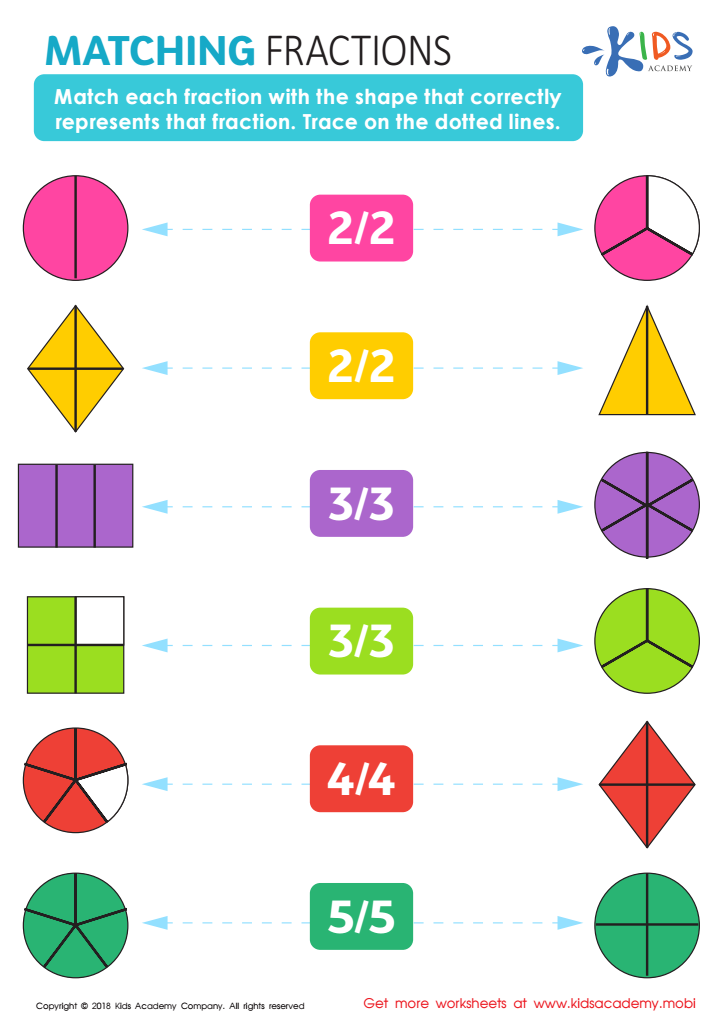
Matching Fractions Worksheet
 Assign to My Students











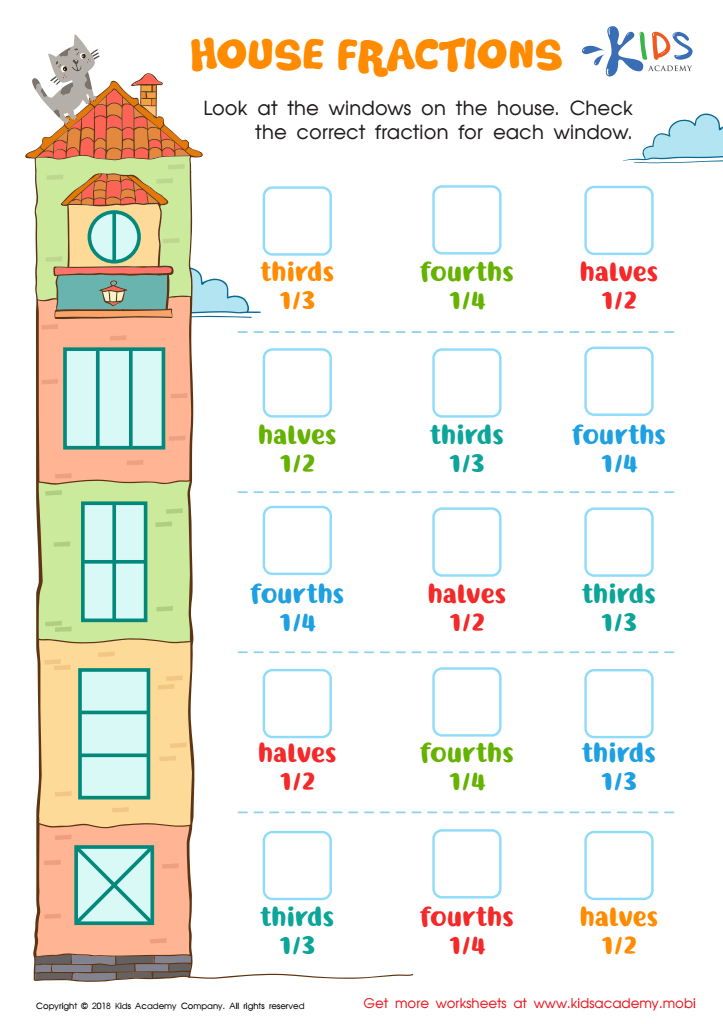
House Fractions Worksheet
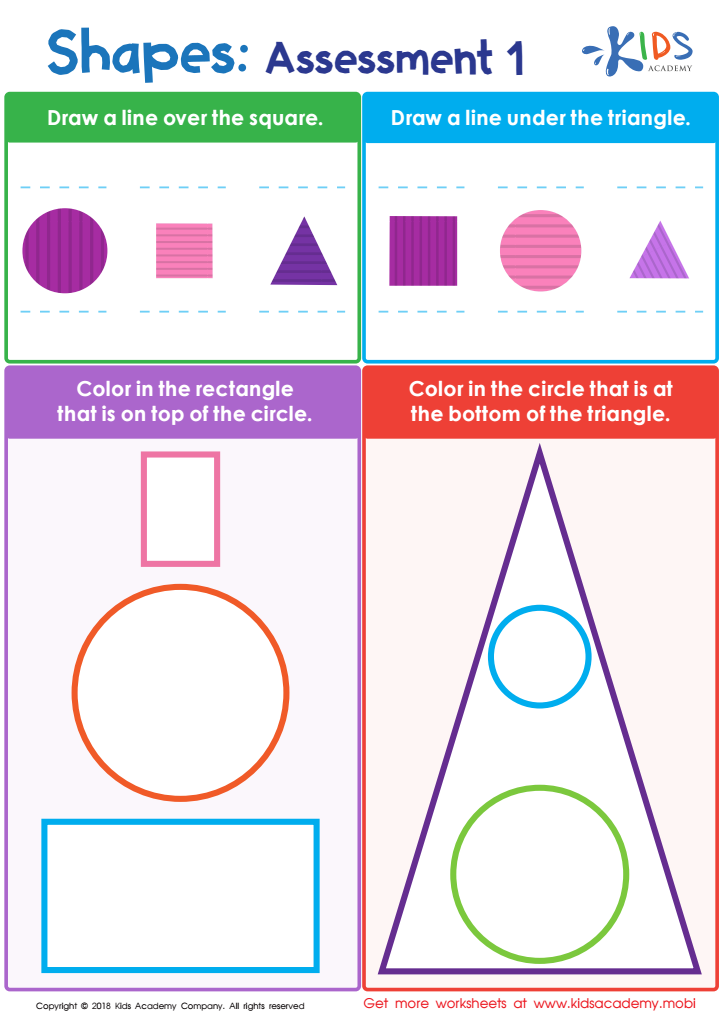
Shapes: Assessment 1 Worksheet
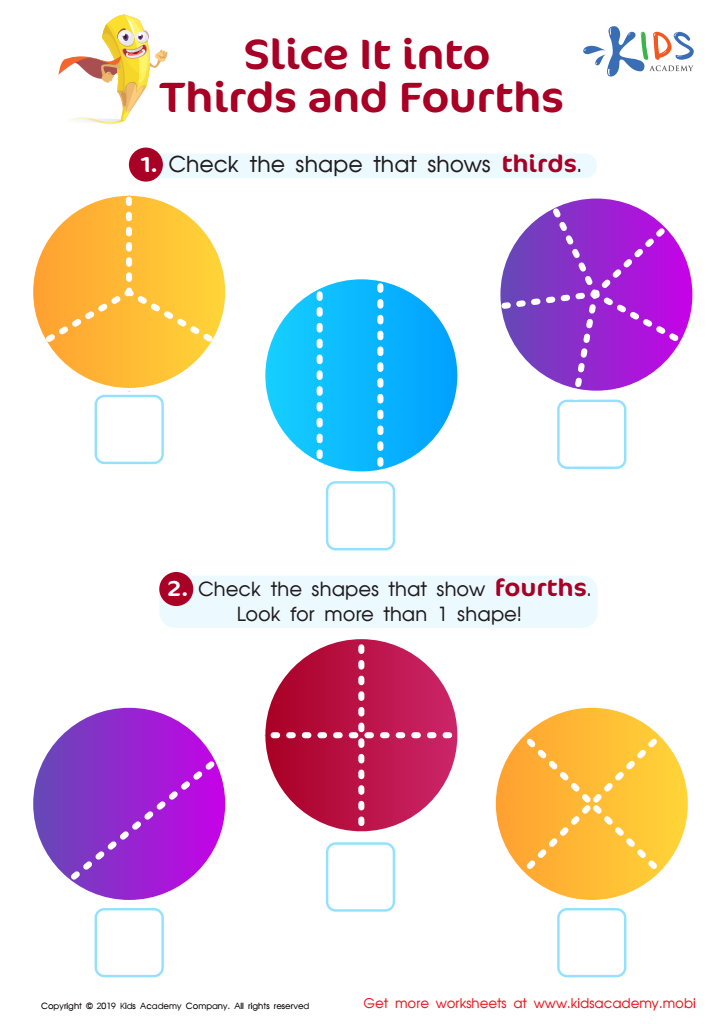
Slice in Thirds Fourths Worksheet








Parents and teachers should prioritize Fraction Comparison and Geometry for children aged 5-9 because these concepts lay the foundation for critical mathematical thinking and problem-solving skills. At this age, children are naturally curious, and engaging them with fractions and geometry can enhance their understanding of relationships and spatial awareness.
Understanding fractions is essential as it introduces children to the ideas of parts to a whole, comparison, and representation, which are relevant in everyday situations, from cooking to sharing. It also prepares them for more complex mathematical concepts as they progress in their education.
Geometry, on the other hand, fosters spatial reasoning and helps children comprehend shapes, sizes, and their properties. This knowledge is not only vital in mathematics but also valuable in science, art, and engineering.
By fostering an early appreciation for these concepts, parents and teachers can support children's cognitive development and cultivate their confidence in math. Ultimately, a strong foundation in Fraction Comparison and Geometry will equip children with the skills necessary for academic success and real-world applications, making them better prepared for future challenges. Therefore, early exposure and learning are crucial in shaping their mathematical journey.








