Hand-eye Coordination Geometry Worksheets for Ages 5-9
7 filtered results
-
From - To
Enhance your child's learning experience with our Hand-eye Coordination Geometry Worksheets, specifically designed for ages 5 to 9. These engaging resources help kids develop essential spatial awareness and fine motor skills while exploring geometric concepts. With a variety of fun and interactive activities, children will strengthen their hand-eye coordination as they practice recognizing shapes, sizes, and patterns. Our worksheets are perfect for classrooms or at-home learning, ensuring a well-rounded educational approach. Encourage your child's growth in math and creativity with these thoughtfully crafted geometry worksheets that promise to inspire and motivate young learners on their academic journey!
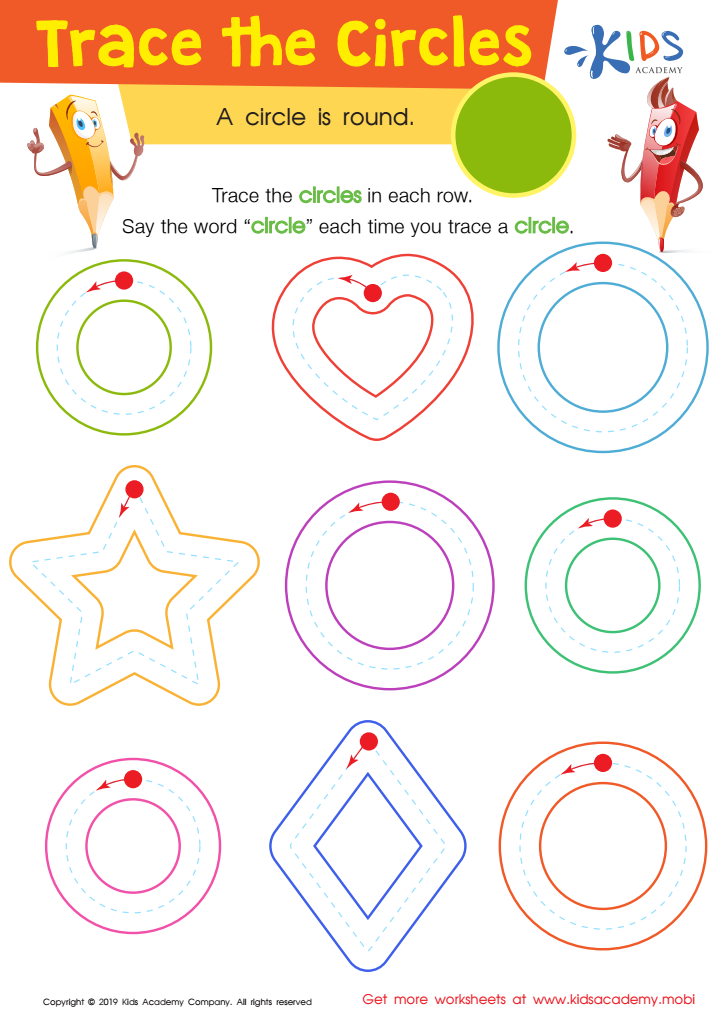
Trace The Circles Worksheet
 Assign to My Students











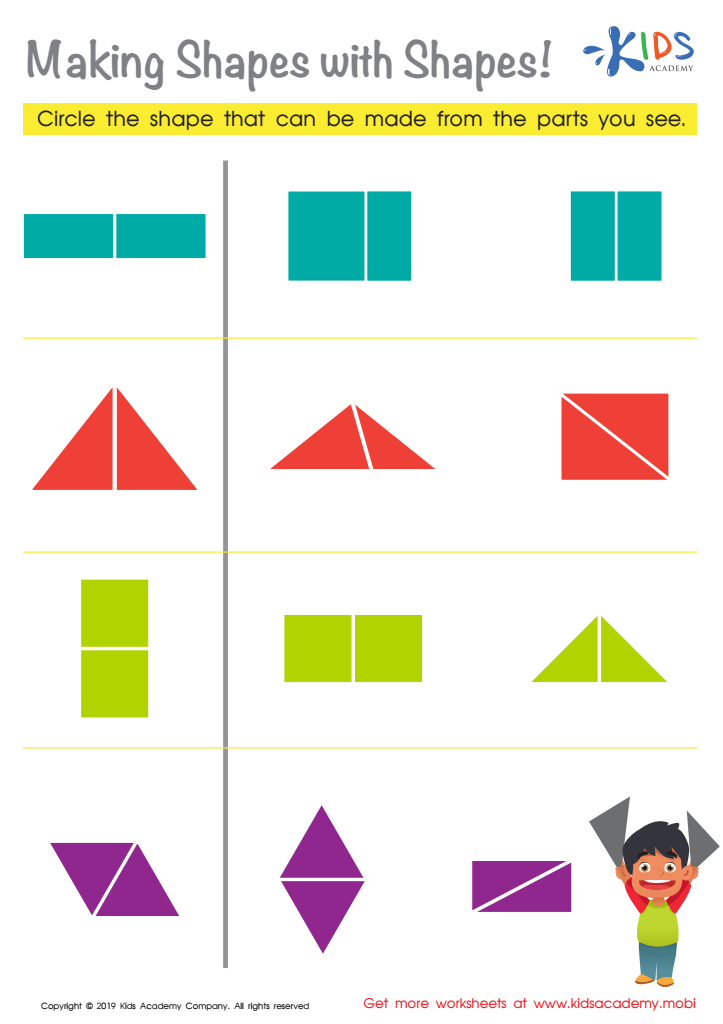
Making Shapes with Shapes Worksheet
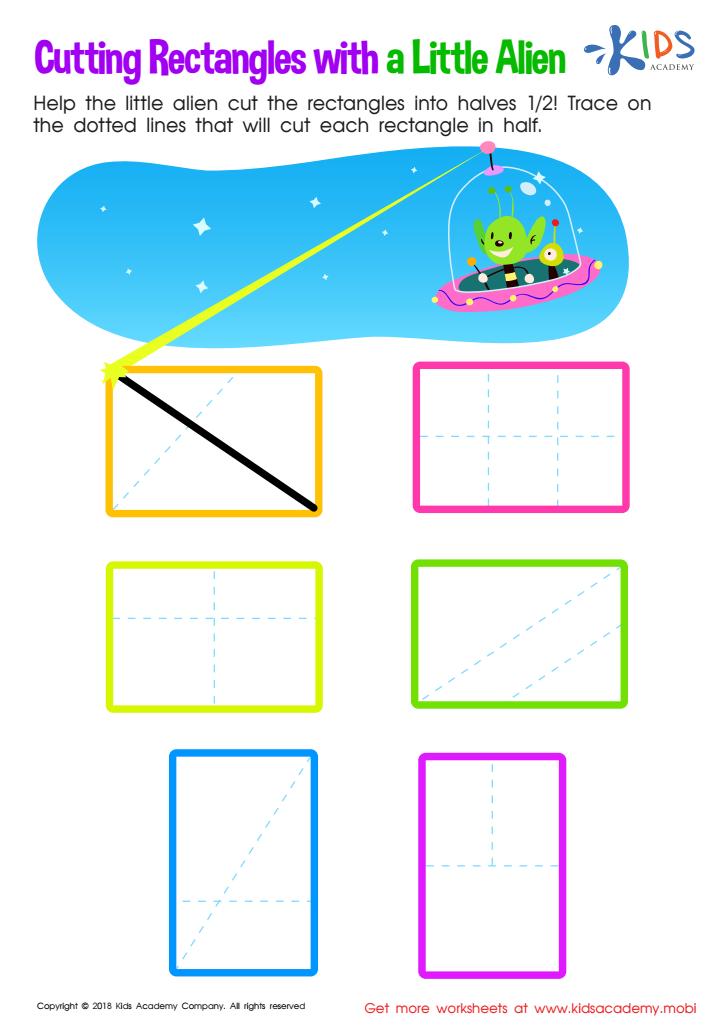
Cutting Rectangles with Alien Worksheet
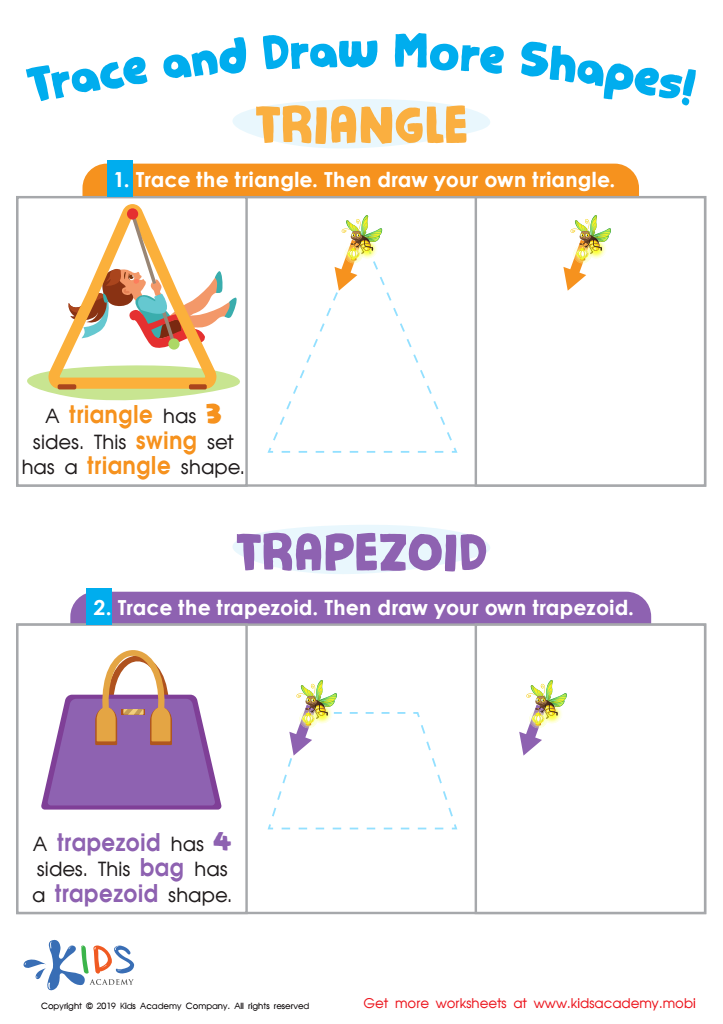
Trace and Draw More Shapes Worksheet
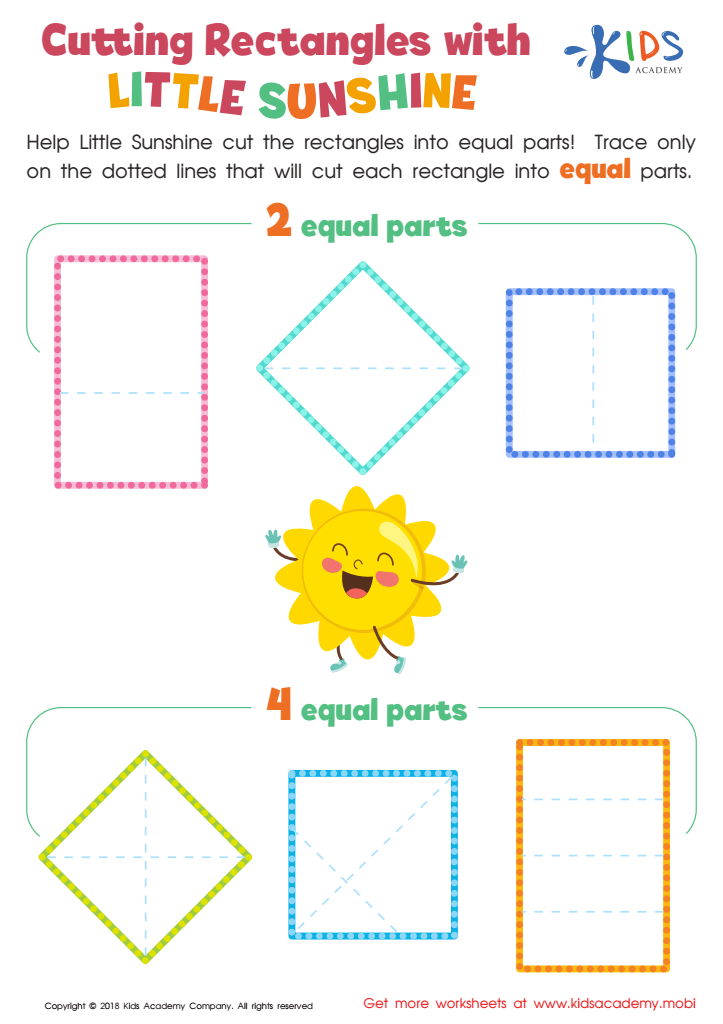
Cutting Rectangles with Little Sunshine Worksheet
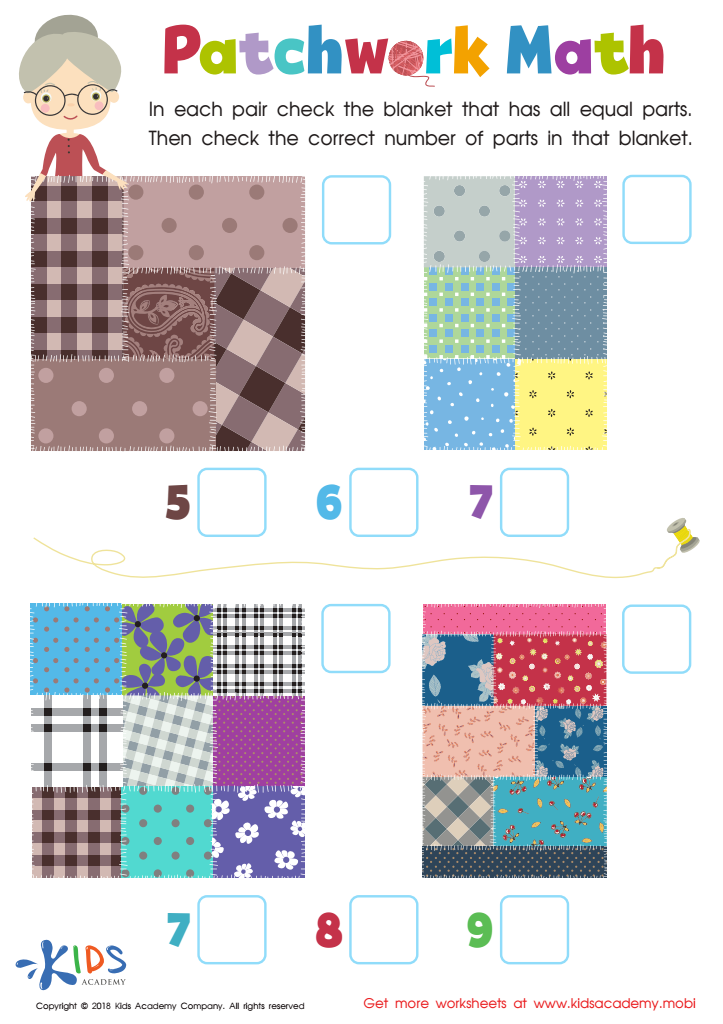
Patchwork Math Worksheet








Hand-eye coordination (HEC) is crucial for children aged 5-9 as it is foundational to their cognitive and physical development. As children engage in activities that combine visual perception with motor control, they enhance their ability to grasp and manipulate objects, which is vital for tasks such as writing, drawing, and playing sports. Geometry during this formative period introduces concepts like shapes, sizes, and spatial relationships. When integrated with hand-eye coordination activities—like building with blocks or completing jigsaw puzzles—children develop a stronger understanding of geometric principles in a practical context.
This coordination also supports problem-solving skills. For example, as children figure out how to fit pieces together or balance structures, they learn to think critically and adaptively. It fosters independence and confidence too, as successfully mastering these tasks can lead to a sense of accomplishment.
Moreover, improving HEC improves a child's ability to participate in group activities, enhancing social interactions while instilling teamwork. Overall, prioritizing hand-eye coordination alongside geometric understanding enriches children's play, learning experiences, and prepares them for future academic challenges, nurturing well-rounded individuals. Therefore, it is vital for parents and teachers to actively promote these skills within their teaching and enrich their child's development.








