Filters

7 filtered results

Clear all filters
Favorites
With answer key
Interactive

7 filtered results

Difficulty Level

Grade


Enhance your child’s understanding of geometry with our engaging reading comprehension worksheets tailored for ages 5-9! These interactive resources help young learners develop critical reading skills while exploring essential geometric concepts. Each worksheet combines fun stories and informative content, making geometry relatable and easy to grasp. Children will improve their vocabulary, comprehension, and analytical skills through carefully crafted questions that encourage critical thinking. Ideal for both classroom and home use, our worksheets foster a love for learning in math and reading. Watch your child build confidence as they master geometry through reading comprehension exercises designed to inspire curiosity and growth!

Check out this FREE Trial Lesson on Geometry for age 5-9!

Name the Shape Regardless of its Size

Favorites
With answer key
Interactive
  • 5-9
  • Reading comprehension
  • Geometry
Shared Breakfast Worksheet

Shared Breakfast Worksheet

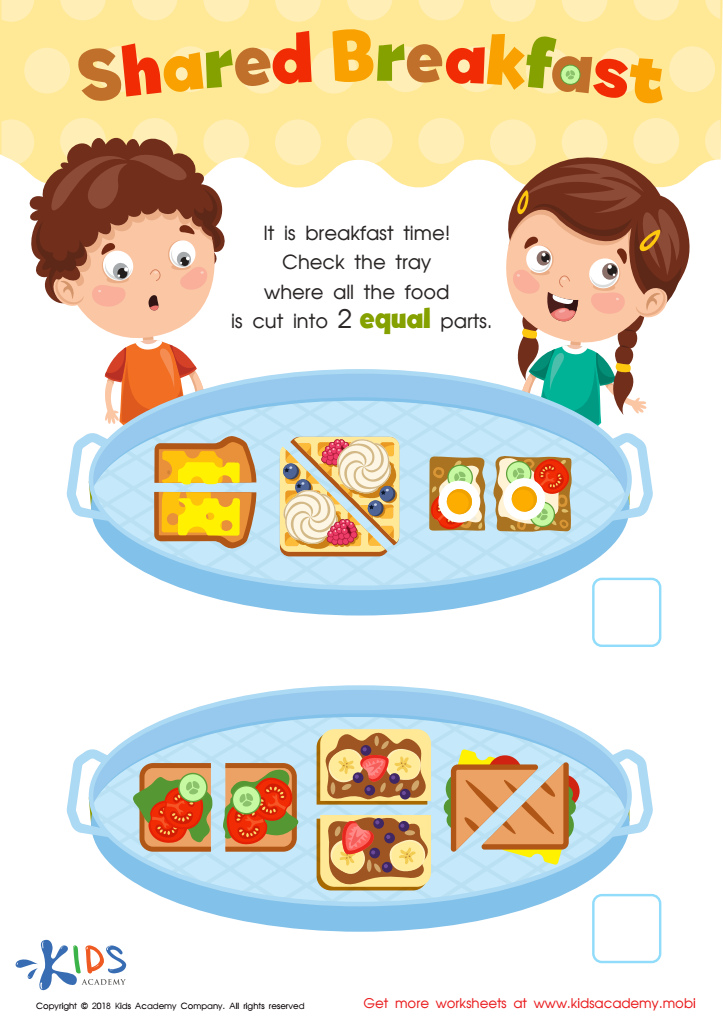
It's breakfast time! In this fun worksheet, a boy and girl are at the table, waiting for their meal. There are two trays, each with three different foods. Ask your child to find the one with all its food split into two equal parts. They'll be eating in no time!
Shared Breakfast Worksheet
Worksheet
Peter Pan Worksheet Preview

Peter Pan Worksheet

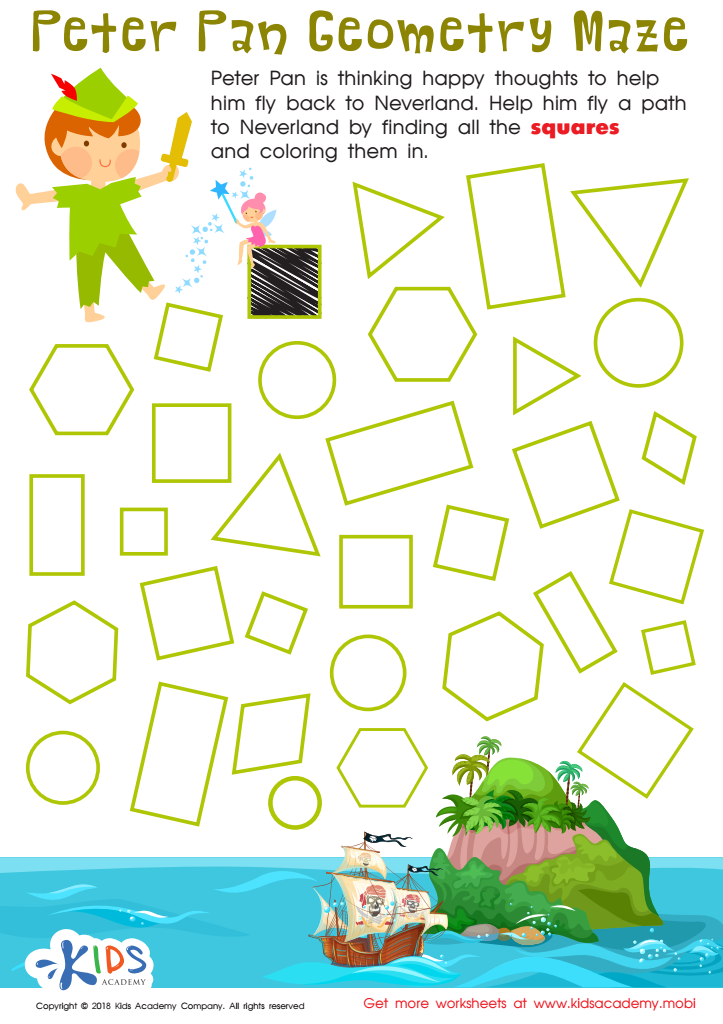
Kindergarteners can join Peter Pan on an adventure to Neverland! They can help him by coloring squares to create a path, strengthening their shape identification skills in a fun maze. Let the journey begin!
Peter Pan Worksheet
Worksheet
Hansel and Gretel Geometry Maze Worksheet

Hansel and Gretel Geometry Maze Worksheet

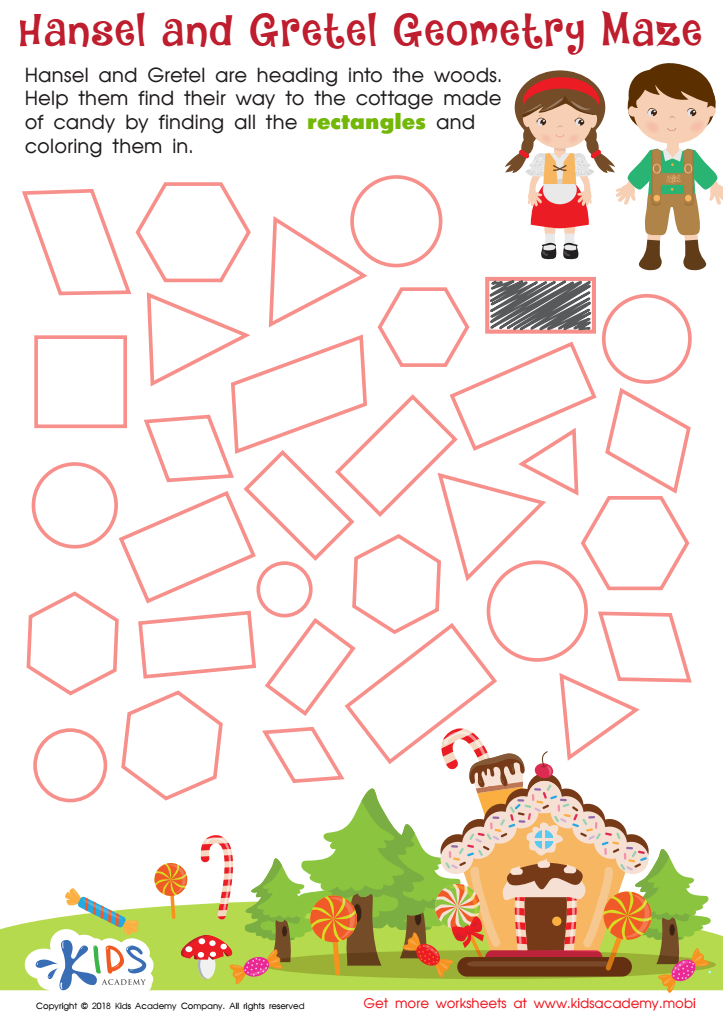
Your kids will have fun helping Hansel and Gretel get through a colorful forest of shapes! This free PDF reinforces the properties of rectangles, building skills in visual discernment and laying the foundations for geometry. They'll be too busy enjoying the story to realize they're learning!
Hansel and Gretel Geometry Maze Worksheet
Worksheet
Geometry: part 1 Worksheet

Geometry: part 1 Worksheet

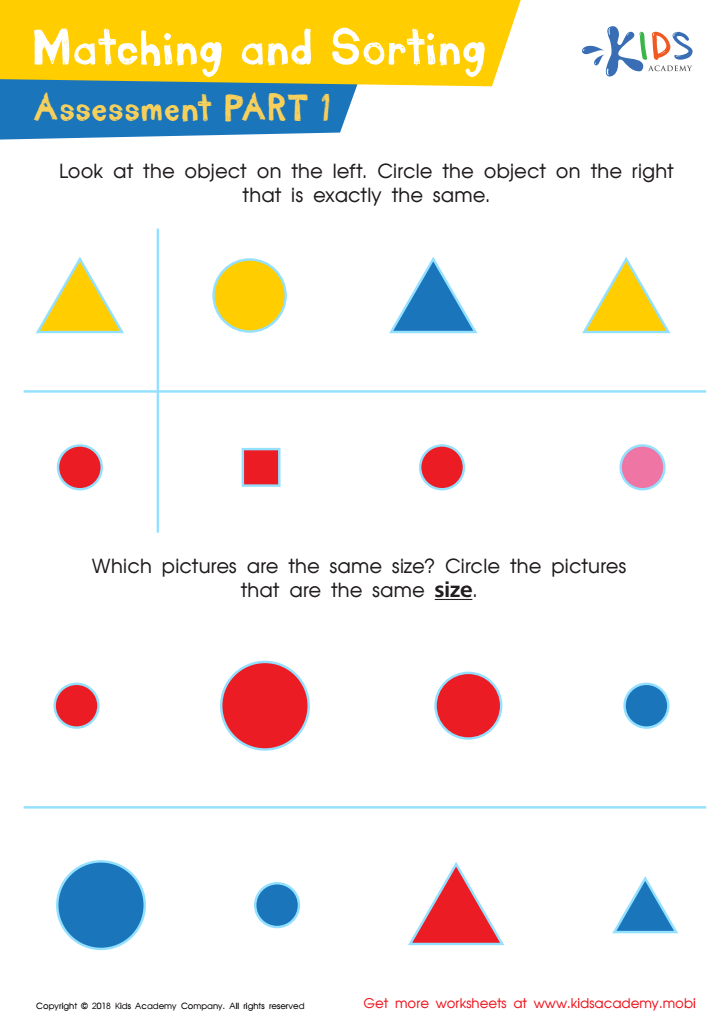
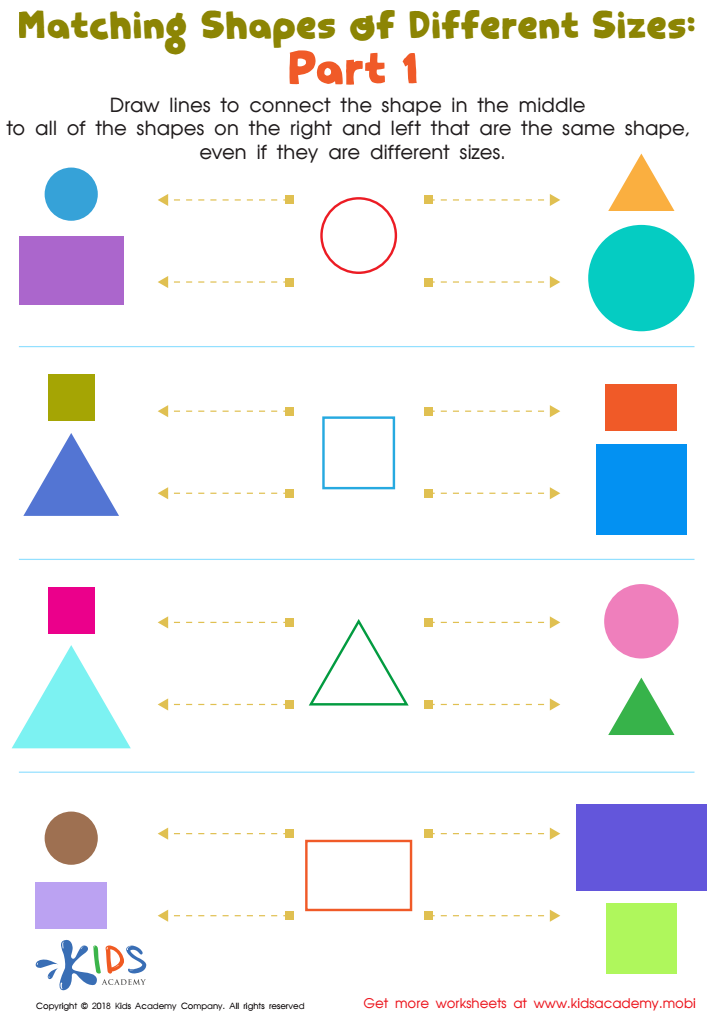
Test your student's shape knowledge with this beginner-level geometry worksheet. This fun, challenging printable PDF will sharpen spacial recognition skills as they match shapes of different sizes. Get started now!
Geometry: part 1 Worksheet
Worksheet
Name It! Worksheet
Name It! Worksheet

Name It! Worksheet

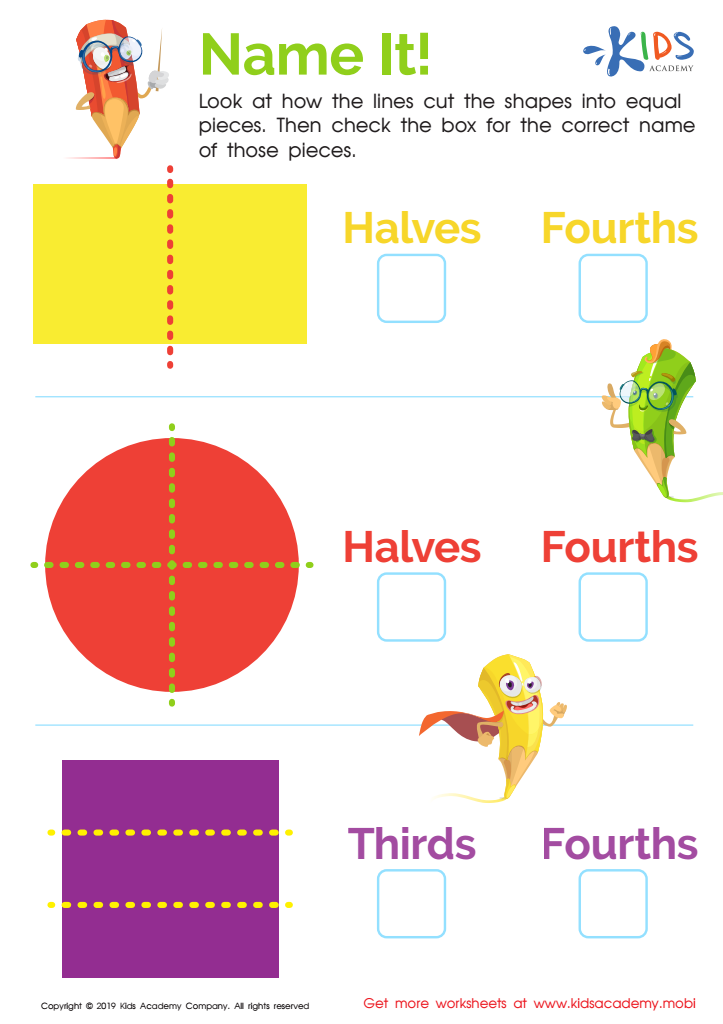
When teaching fractions, help children understand that they are groups divided into equal pieces. Introduce denominators and numerators with pictures to illustrate. Use this free fraction worksheet with colourful shapes divided into halves, thirds, and fourths to help them identify the fractions.
Name It! Worksheet
Worksheet
Matching and Sorting for Kindergarten: Assessment 1 Worksheet

Matching and Sorting for Kindergarten: Assessment 1 Worksheet

Kids can sharpen their visual discrimination skills and analyze properties of shapes with this free downloadable worksheet. They'll identify color, size, shape, and symmetry, working with bright primary colors. This helps build a strong geometric foundation, learning to identify shape attributes.
Matching and Sorting for Kindergarten: Assessment 1 Worksheet
Worksheet
Geometry riddles worksheet

Geometry Riddles Printable

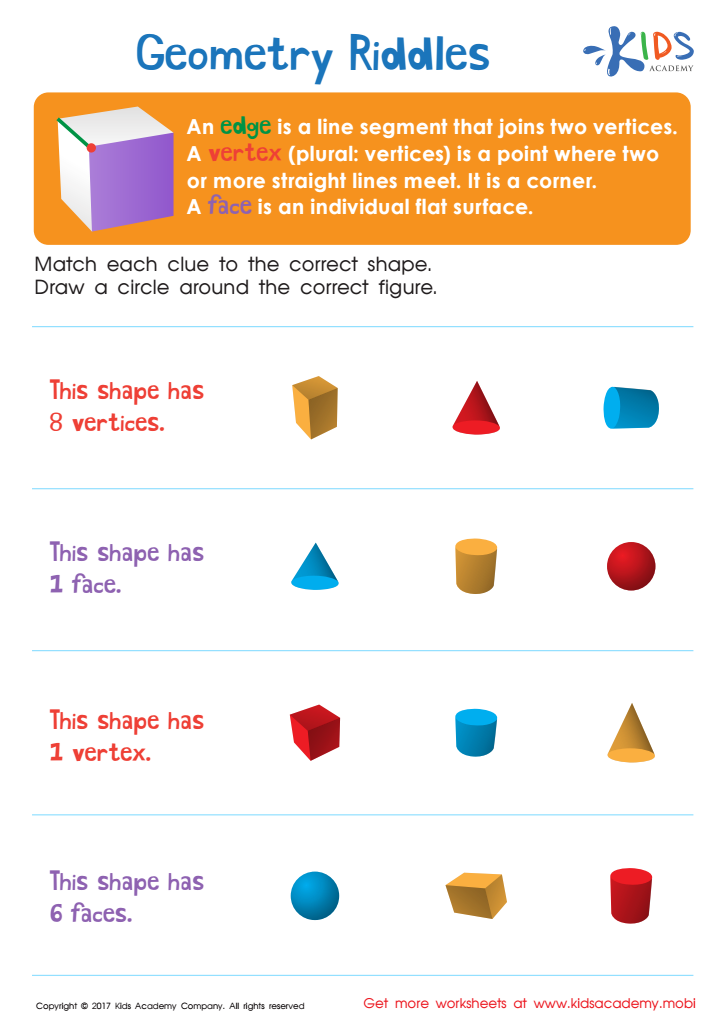
Review geometry terms with your child using this challenging worksheet of tricky riddles. Identifying and counting vertices, edges, and faces of shapes becomes fun as they solve the riddles!
Geometry Riddles Printable
Worksheet


Reading comprehension and geometry are foundational skills that are critical for children aged 5-9, as they lay the groundwork for future academic success and practical life skills.

First, strong reading comprehension skills enable young learners to understand geometric concepts, instructions, and vocabulary effectively. When children can read and comprehend texts related to shapes, spatial relationships, and measurements, they engage more deeply with the material, enhancing their overall learning experience.

Secondly, geometry fosters critical thinking and problem-solving abilities, essential for navigating everyday situations. Understanding shapes, forms, and spatial reasoning helps children with tasks such as organizing their environment, interpreting maps, and even making art. This mathematical knowledge, combined with strong language skills, aids in their ability to articulate thoughts and ideas clearly.

Furthermore, parents and teachers play a significant role in promoting these interconnected skills. By creating supportive learning environments—through reading geometric stories, engaging in hands-on activities, or displaying shapes in the real world—they can encourage children to explore both reading and geometry, thus boosting confidence and interest in both areas.

In summary, a solid grounding in reading comprehension and geometry equips children with practical skills for the real world and fosters a love for learning, making it invaluable in their formative years.