Recognizing shapes Geometry Worksheets for Ages 5-9
6 filtered results
-
From - To
Unlock the world of geometry for your child with our Recognizing Shapes Geometry Worksheets, designed specifically for children aged 5-9. These engaging resources help young learners identify and understand various shapes, enhancing their spatial awareness and foundational math skills. Fun, interactive activities encourage children to explore shapes in everyday objects, fostering a love for geometry while boosting their confidence. Our printable worksheets are perfect for home or classroom use, providing a balance of challenge and enjoyment. Bring creativity into learning and watch your child's skills flourish! Explore our collection today and support their early math development with confidence.
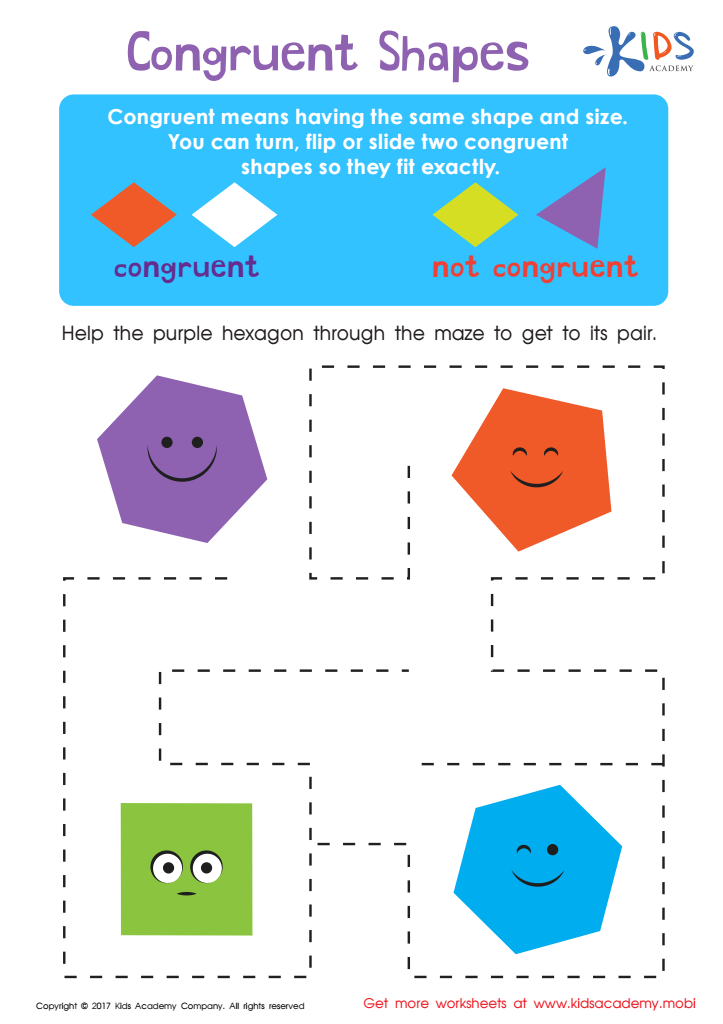
Congruent Shapes Worksheet
 Assign to My Students











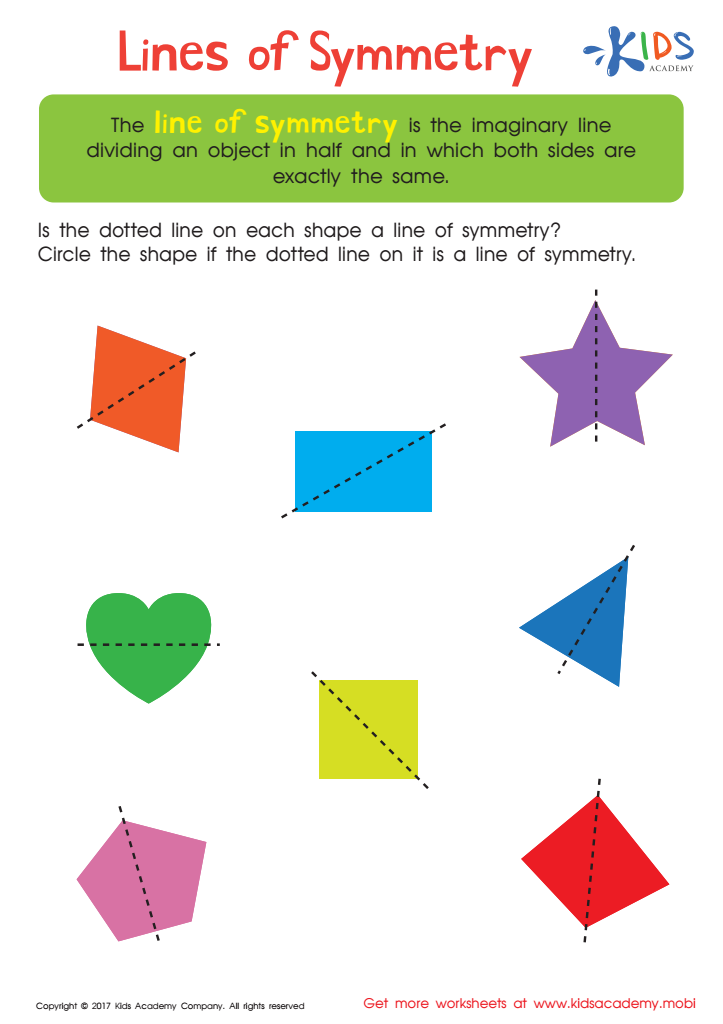
Lines of Symmetry Printable
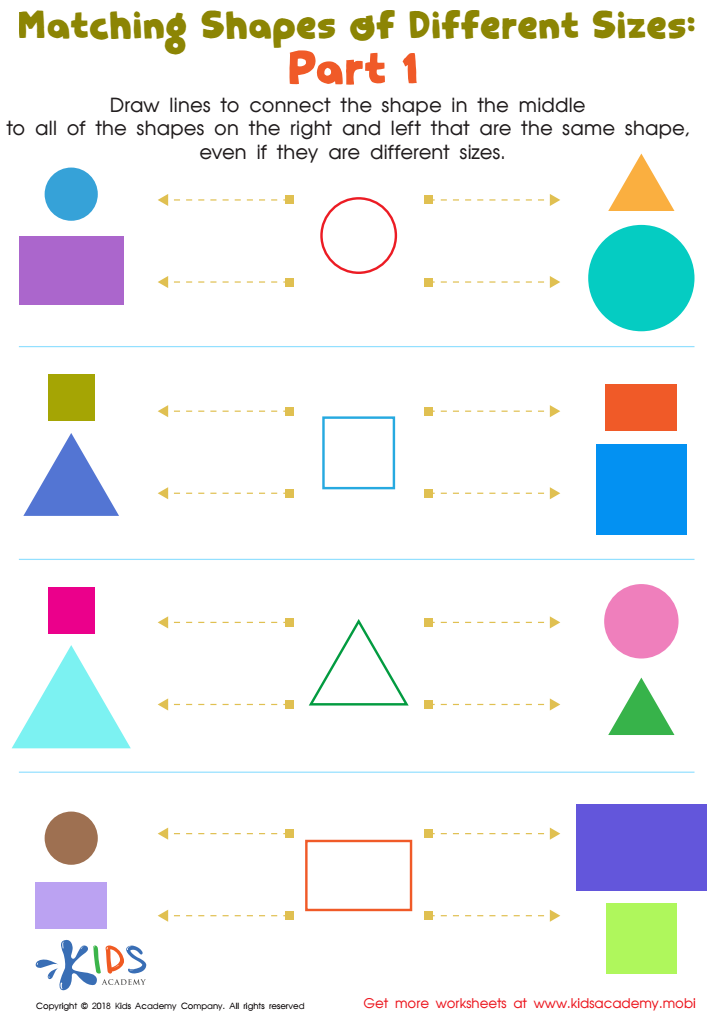
Geometry: part 1 Worksheet
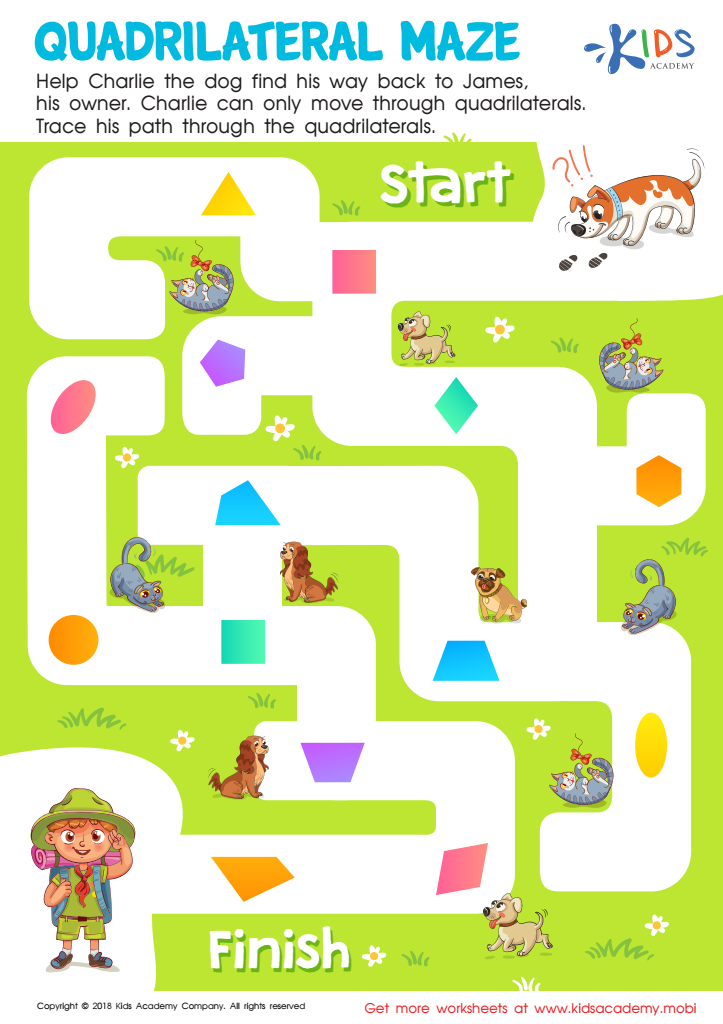
Quadrilateral Maze Worksheet
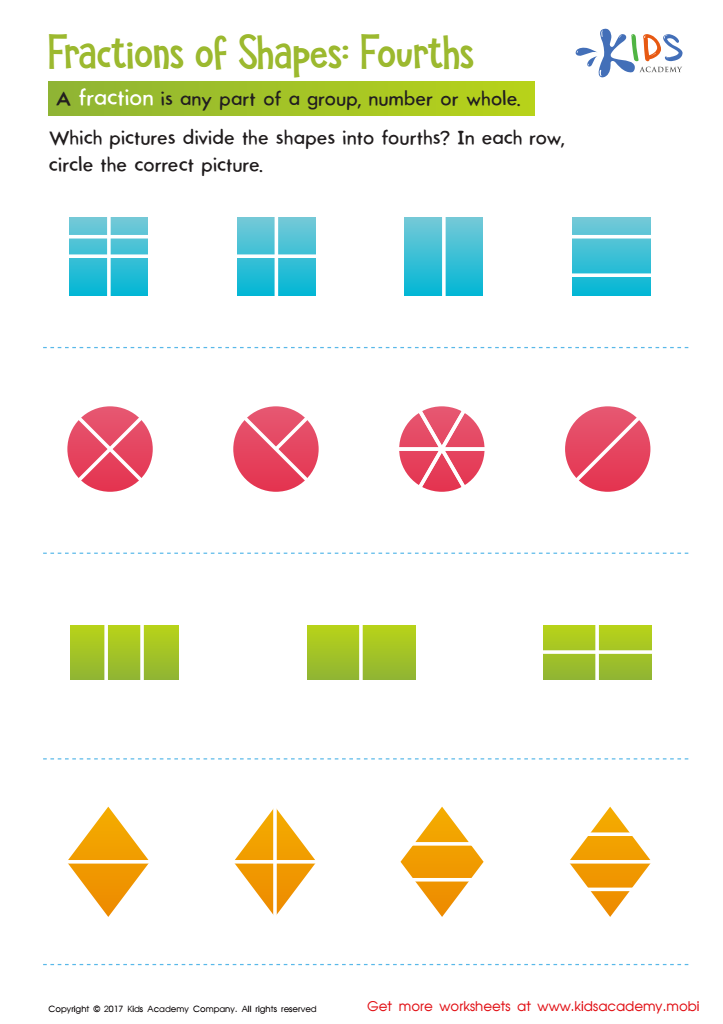
Fractions of Shapes Worksheet
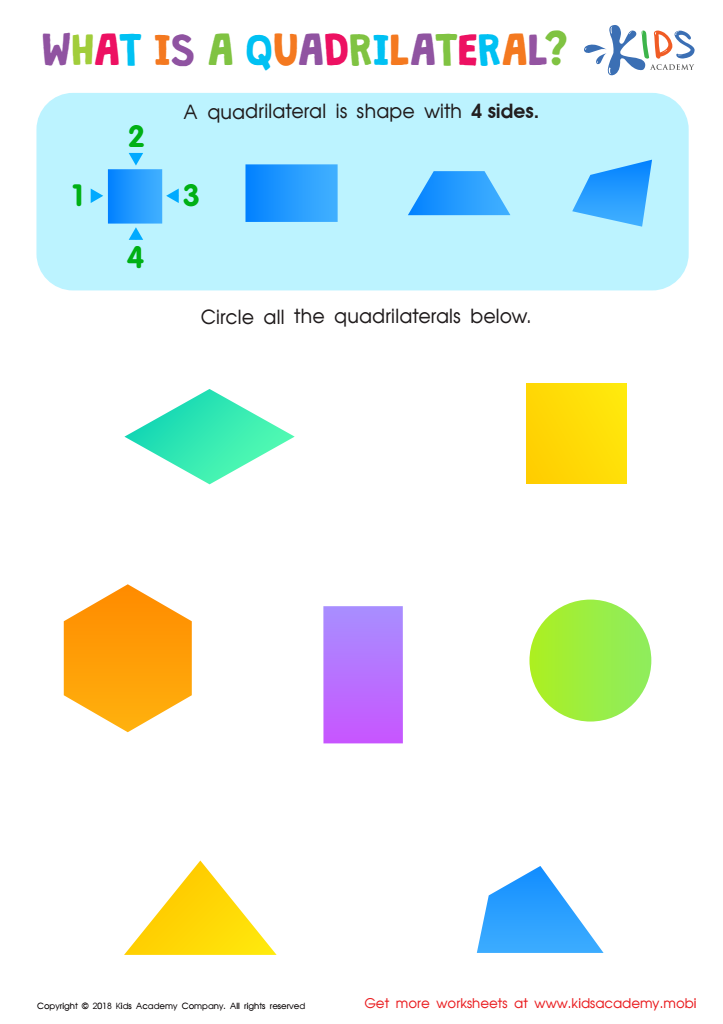
What Is a Quadrilateral? Worksheet








Recognizing shapes is a fundamental skill in geometry that significantly impacts a child's cognitive development and foundational mathematics. For children aged 5-9, understanding shapes is not just about identifying circles, squares, and triangles; it lays the groundwork for critical thinking and problem-solving skills that are essential in everyday life.
Firstly, recognizing shapes helps children develop spatial awareness, which is the ability to understand how objects relate to one another in space. This skill is crucial as it influences a child's ability in various disciplines, including math, science, and art. When children learn to identify, compare, and manipulate shapes, they enhance their analytical skills.
Moreover, early shape recognition contributes to mathematical reasoning. It prepares young learners for more complex concepts, like symmetry, area, and volume. By learning about shapes, parents and teachers create a strong mathematical foundation, enabling children to approach future math problems with confidence.
Furthermore, shape recognition encourages creativity and exploration. Engaging children in hands-on activities, such as drawing or building with shapes, fosters curiosity and innovation. Thus, investing time in recognizing shapes can profoundly enrich a child's learning experience, making math both enjoyable and relevant in their everyday lives.








