Shape comparison Geometry Worksheets for Ages 5-9
4 filtered results
-
From - To
Explore our engaging Shape Comparison Geometry Worksheets designed for children ages 5 to 9! These interactive resources help young learners develop essential spatial awareness and critical thinking skills by comparing various shapes. With colorful illustrations and easy-to-follow activities, kids will enjoy identifying, sorting, and contrasting 2D and 3D shapes. These worksheets provide a fun and effective way to strengthen mathematical concepts, paving the way for more complex geometry skills in the future. Tailored to meet educational standards, our worksheets are perfect for classrooms and home learning. Jump into the world of shapes and watch your child’s understanding soar!
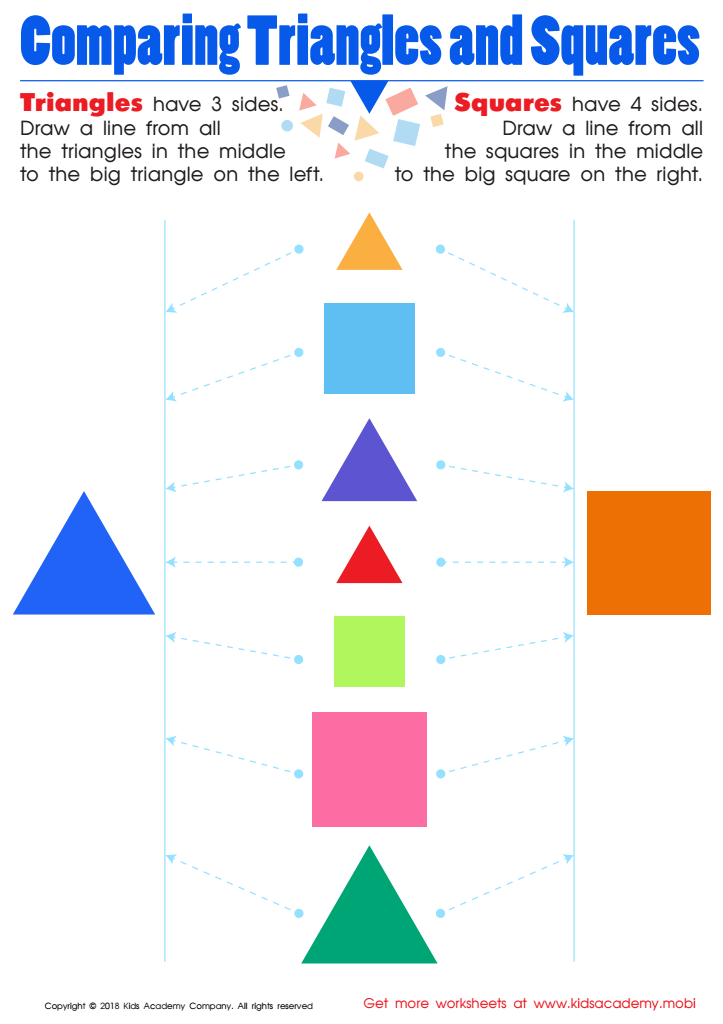
Comparing Triangles Squares Worksheet
 Assign to My Students











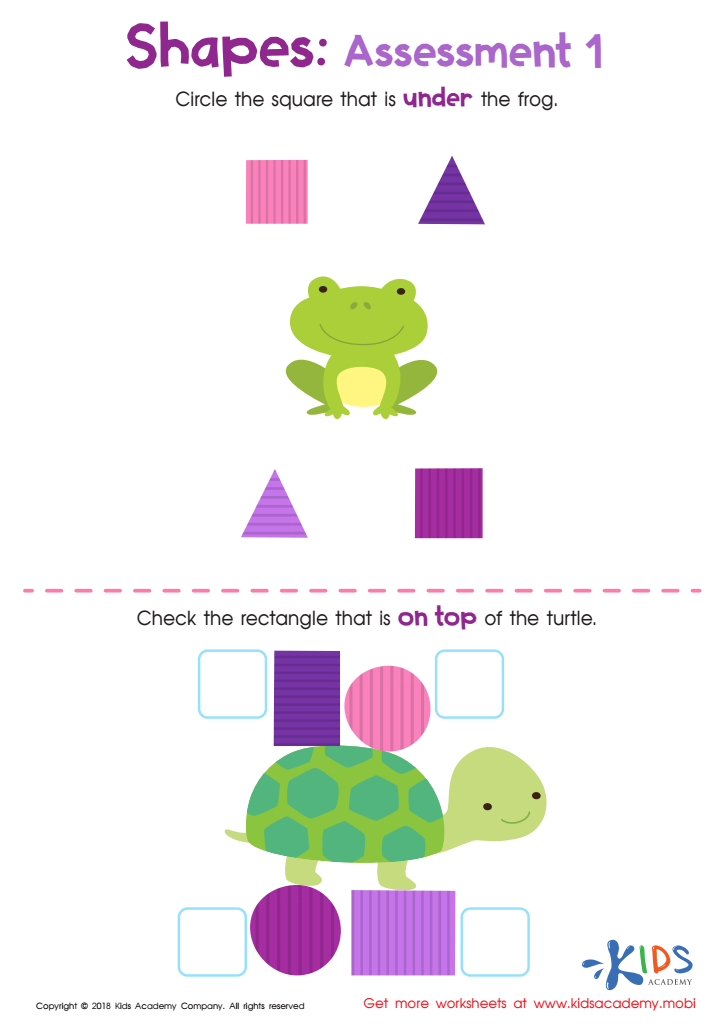
Geometry – Assessment 1 Worksheet
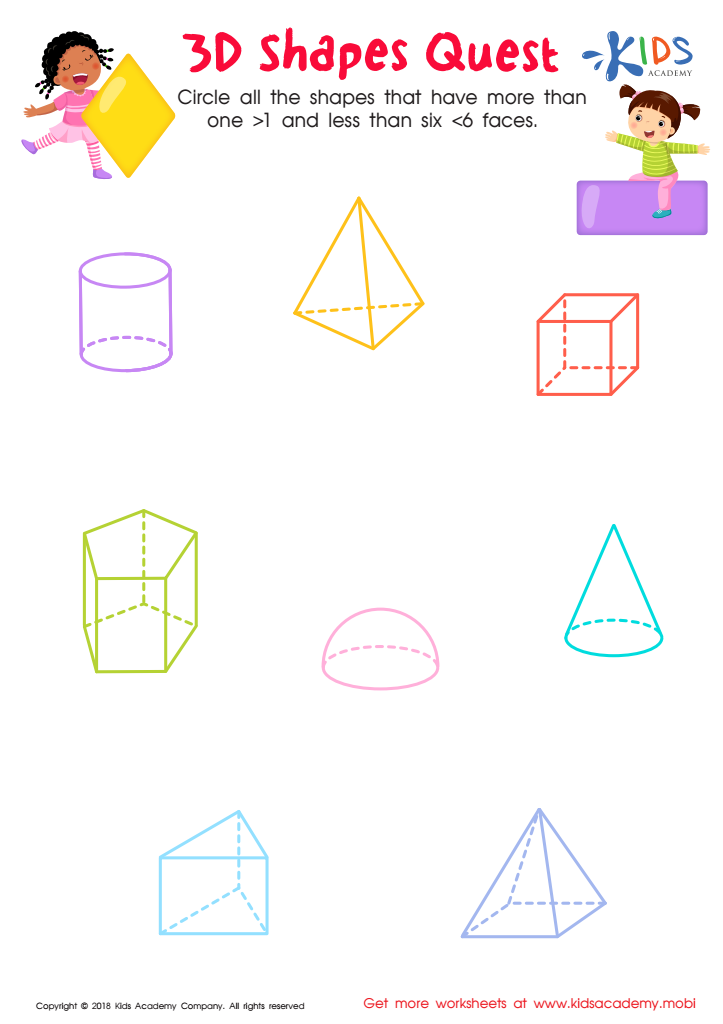
3D Shapes Quest Worksheet
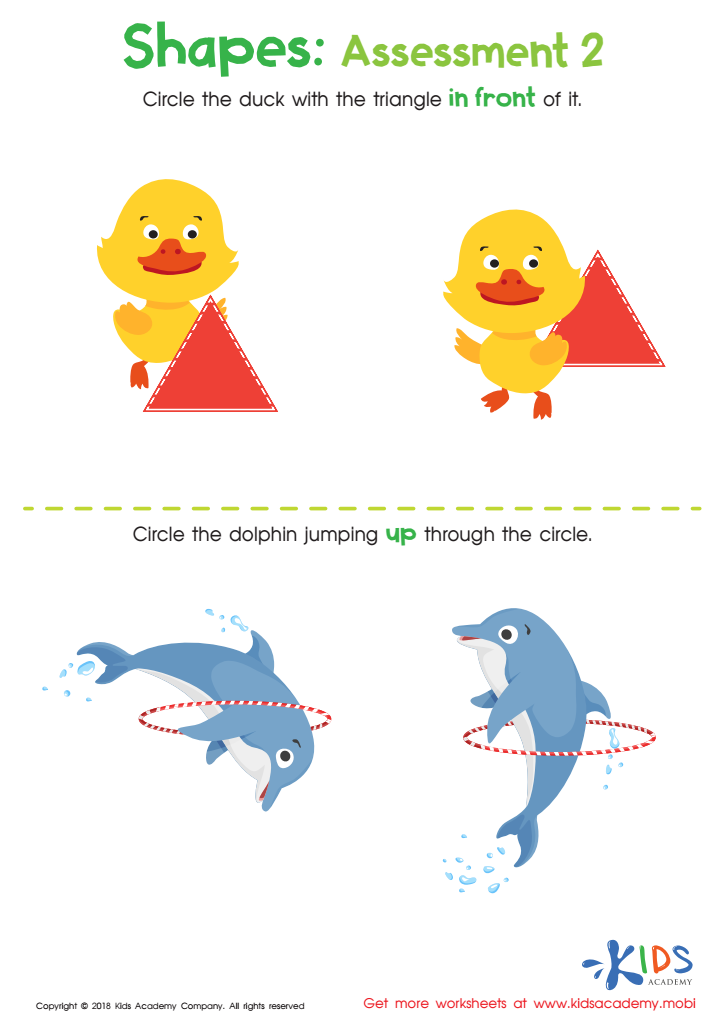
Geometry – Assessment 2 Worksheet








Shape comparison in geometry is a crucial aspect of early childhood education for children aged 5-9. Understanding shapes and their properties lays the foundation for more advanced mathematical concepts later on. Parents and teachers should care about this subject for several reasons.
Firstly, shape comparison helps foster critical thinking and problem-solving skills. Children learn to identify, differentiate, and analyze various geometric shapes, which aids cognitive development. It encourages logical reasoning as they categorize shapes based on their attributes such as size, angles, and symmetry.
Secondly, this area of geometry supports language development. Children learn vocabulary related to shapes and measurements (e.g., "big," "small," "triangle," "rectangle"), enhancing their communication skills. Discussing shapes allows for richer dialogue between children and adults, promoting further learning.
Additionally, shape comparison relates to real-world applications. For instance, recognizing shapes can aid in navigation and understanding spatial relationships, which are essential skills in everyday life.
Finally, an early focus on geometry fosters a positive attitude towards math. Engaging and age-appropriate activities can make learning fun and interactive, establishing a strong mathematical foundation that will carry into later educational stages. In summary, prioritizing shape comparison benefits children's cognitive, linguistic, and practical skill development.








