Spatial understanding Geometry Worksheets for Ages 5-9
3 filtered results
-
From - To
Unlock your child's potential with our "Spatial Understanding Geometry Worksheets for Ages 5-9." Designed to enhance spatial reasoning skills, these engaging worksheets offer a fun approach to learning geometric shapes, patterns, and relationships. Ideal for early grade students, each worksheet is crafted to build a strong foundation in geometry by presenting interactive activities that challenge and inspire young minds. Through puzzles, matching games, and more, your child will develop critical thinking skills and spatial awareness, setting the stage for future success in math. Spark a love for learning with our expertly designed geometry worksheets today!
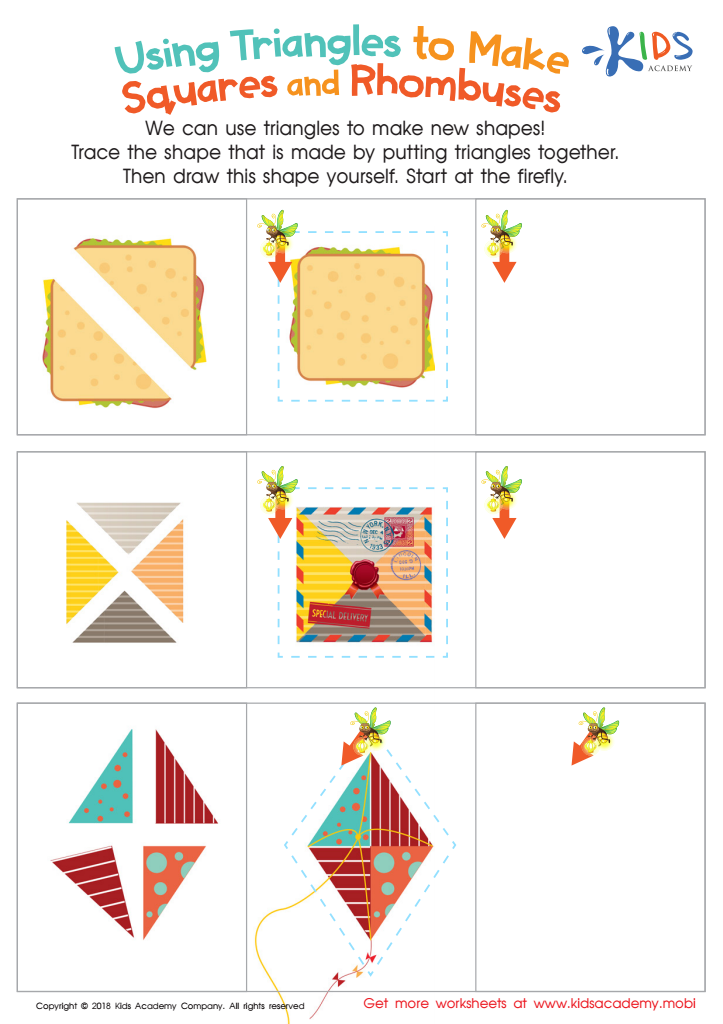
Using Triangles to Make Squares and Rhombuses Worksheet
 Assign to My Students











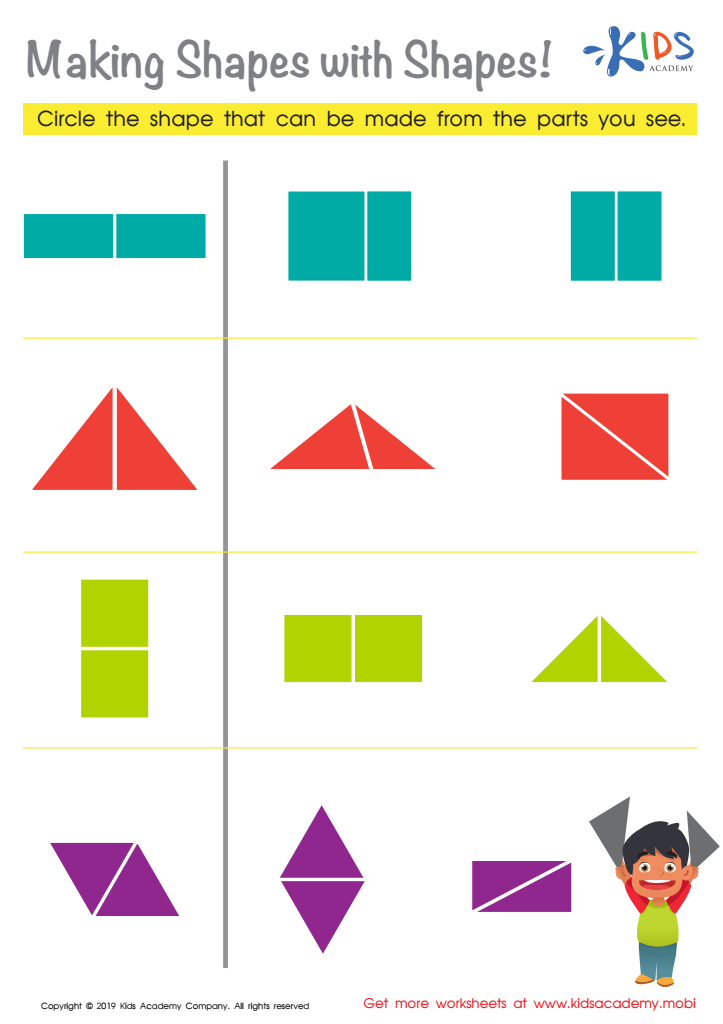
Making Shapes with Shapes Worksheet
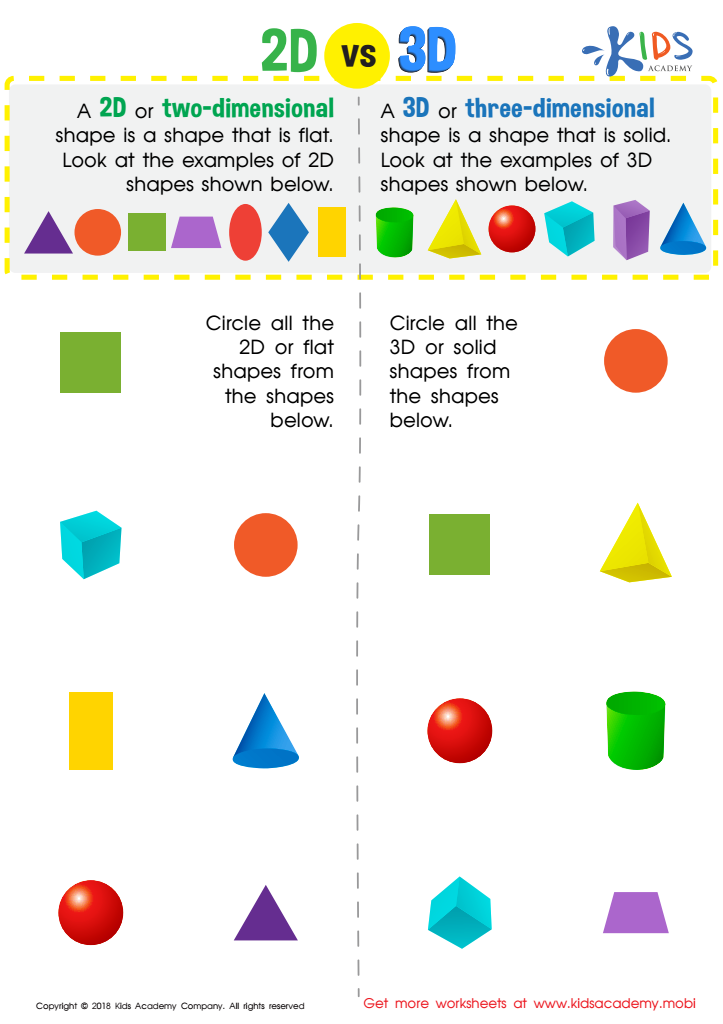
2D vs 3D Shapes Worksheet








Parents and teachers should highly prioritize spatial understanding and geometry for children aged 5-9 because these foundational skills are crucial for cognitive development, academic success, and everyday functioning. During these formative years, the brain is highly receptive to learning, and engaging in spatial tasks helps sharpen visualization skills, which are essential for problem-solving and critical thinking. Geometry aids in recognizing shapes, patterns, and sizes, fostering an understanding of the physical world.
Spatial understanding enhances kids' ability to navigate and interpret their environment. Activities like puzzles, drawing, and building with blocks build spatial reasoning, enriching spatial vocabulary and comprehension of spatial relationships. This geographical awareness extends to subjects such as math, where understanding spatial relationships informs concepts like symmetry, measurement, and algebra.
Investing in spatial skills early also supports future success in STEM (Science, Technology, Engineering, and Mathematics) fields. Careers in these areas often require strong spatial reasoning abilities.
Moreover, spatial competencies aid in daily life tasks. Understanding directions, reading maps, and organizing space are vital everyday skills rooted in geometric comprehension.
In summary, fostering spatial understanding and geometry in early years lays a critical foundation for cognitive development, enhances academic skills, and supports practical life applications, driving both immediate and long-term benefits for children's growth.








