Analyzing data Numbers Worksheets for Ages 5-9
3 filtered results
-
From - To
Discover our engaging "Analyzing Data Numbers Worksheets for Ages 5-9" designed to spark curiosity and enhance math skills. Our printable worksheets provide fun, interactive activities to help young learners understand numbers, recognize patterns, interpret charts, and develop critical problem-solving abilities. Ideal for kindergartners to 3rd graders, these exercises promote deductive reasoning and boost confidence in analyzing data. Perfect for classroom or home use, our worksheets align with educational standards, making learning both enjoyable and effective. Equip your child with essential skills they’ll use for a lifetime by exploring our comprehensive collection today! Enhance learning with Kids Academy!
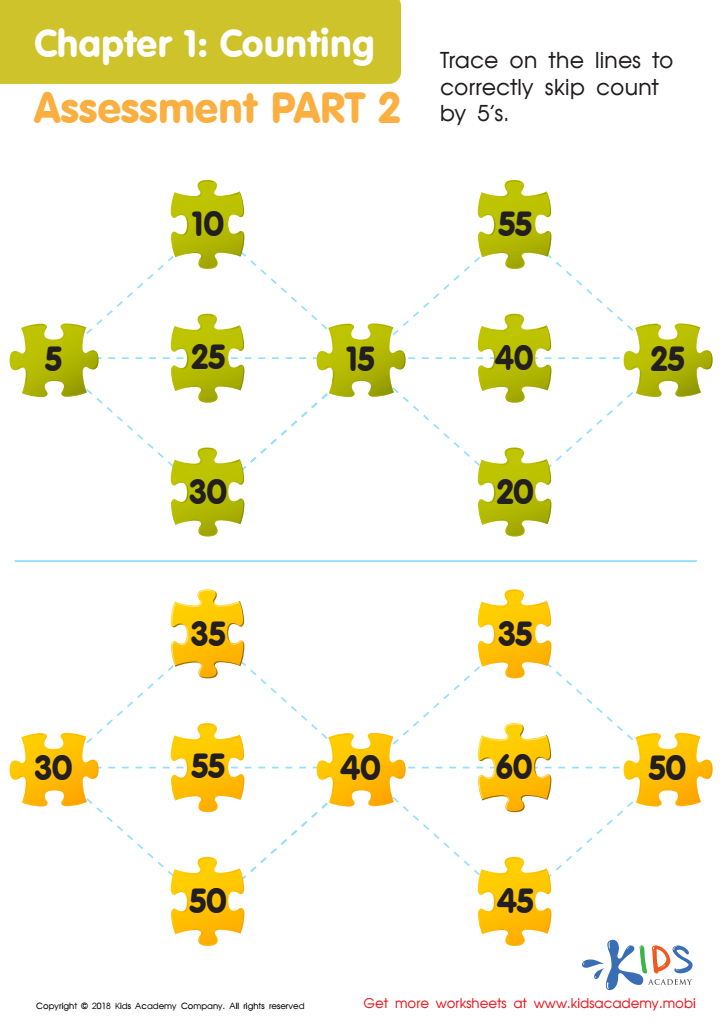
Counting: Assessment 2 Worksheet
 Assign to My Students
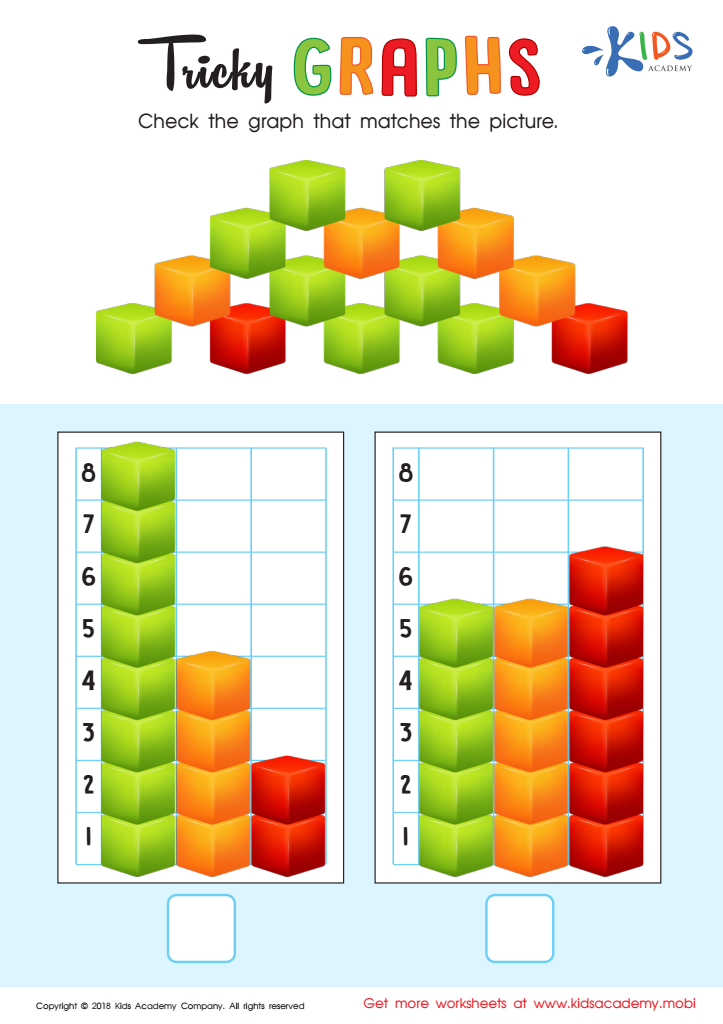
Tricky Graphs Worksheet
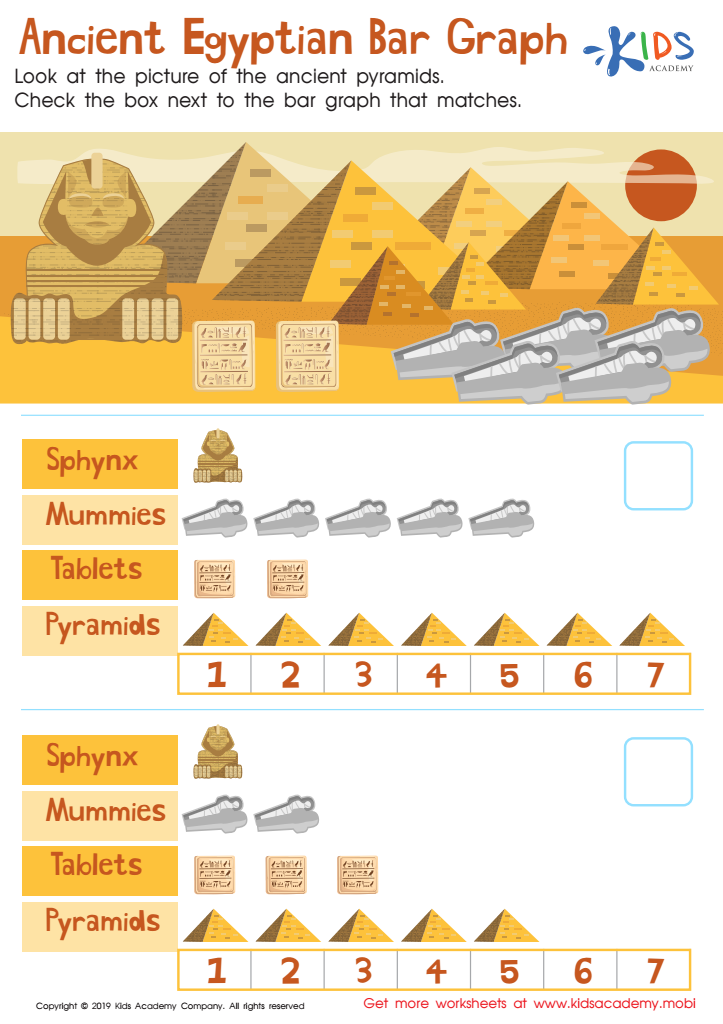
Egyptian Bar Graph Worksheet








Analyzing data numbers for children aged 5-9 is critical because it supports early development in mathematical and analytical skills. At this age, children build foundational cognitive abilities that influence their future learning. Introducing them to data analysis teaches them to observe, predict, and infer from numerical information, fostering logical thinking and problem-solving skills.
For parents and teachers, understanding the significance of this skill is important because it helps in identifying each child's strengths and areas needing improvement early on. Data analysis activities can be engaging and interactive, making learning fun while instilling a love for mathematics and critical thinking. Additionally, these skills are not limited to the math classroom – they bolster overall academic performance by improving reading comprehension, critical thinking, and science inquiry skills.
More importantly, in a world increasingly driven by data, equipping children with the capability to handle and interpret numbers prepares them for future academic and professional environments. It gives them a competitive edge by fostering adaptable thinking and analytical proficiency. By caring about and engaging with data analysis from a young age, parents and teachers can ensure children develop into well-rounded, proficient, and critically thinking individuals confident in their mathematical abilities.








