Fine motor skills (drawing) Numbers Worksheets for Ages 5-9
3 filtered results
-
From - To
Enhance your child's fine motor skills with our engaging "Drawing Numbers Worksheets" designed specifically for ages 5-9. These worksheets offer a delightful way for young learners to practice their number recognition while developing their hand-eye coordination and handwriting abilities. Each worksheet features fun and interactive tracing and drawing activities that make learning numbers enjoyable and effective. By blending creativity with education, children can grasp foundational math concepts while honing their fine motor skills. Perfect for both home and classroom use, these worksheets provide a valuable resource for parents and educators aiming to foster a love for learning in early childhood.

Make it Even: St. Valentine's Day Worksheet
 Assign to My Students
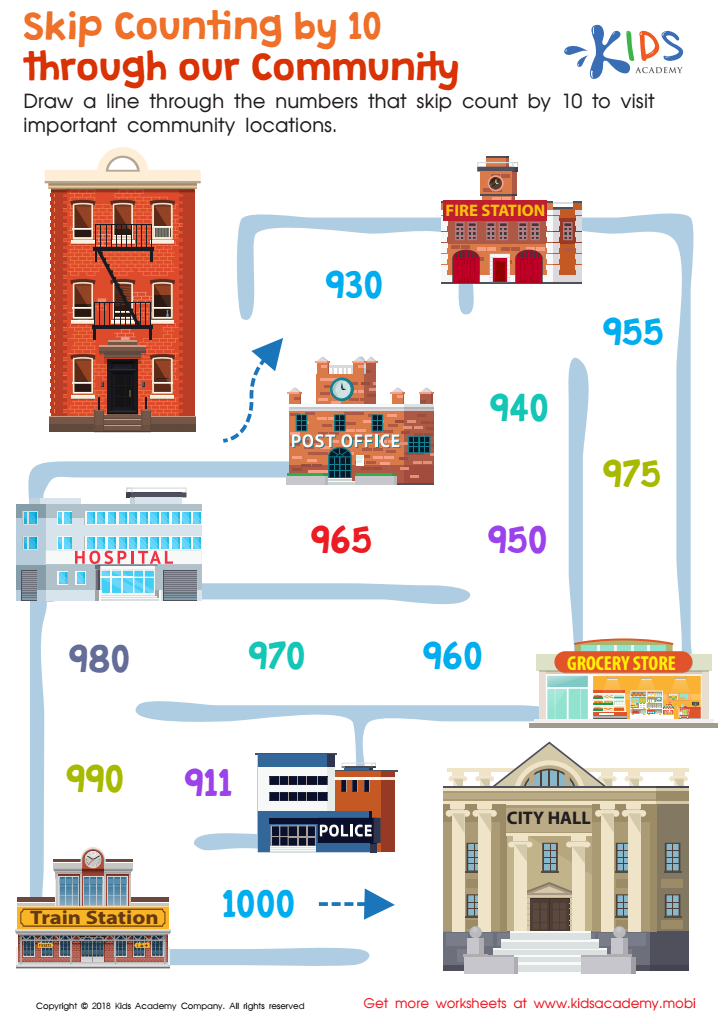
Skip Counting by 10 Through Our Community Worksheet
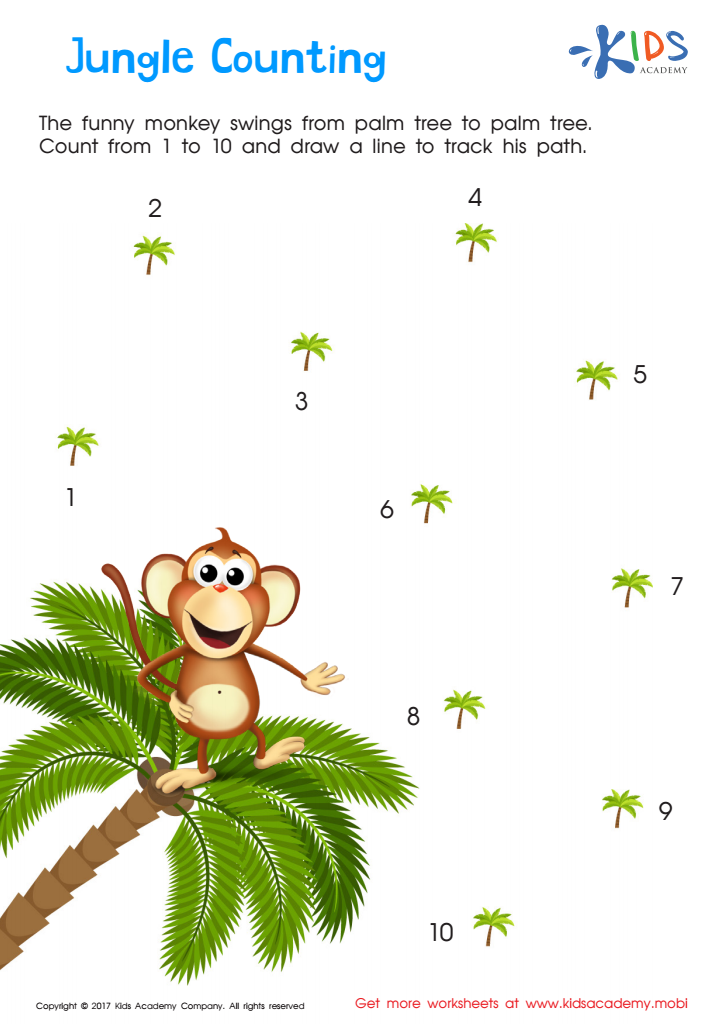
Jungle Counting Connect Dots Worksheet








Fine motor skills, particularly drawing and handling numbers, are crucial for children's development between the ages of 5 and 9. During this phase, children are refining their ability to control small hand movements, which directly impacts their capability to write, manipulate objects, and perform everyday tasks. Drawing enhances creative expression and supports cognitive development, fostering critical thinking and problem-solving skills.
When children engage with numbers, they practice essential mathematical concepts and logical reasoning. Learning to write numbers accurately promotes number recognition and lays the groundwork for more complex arithmetic. As children draw and work with numbers, they develop hand-eye coordination, which is vital for academic success as they progress through school.
Teachers and parents should prioritize nurturing fine motor skills because these abilities are closely linked to children's self-esteem, independence, and readiness for future learning. Improved fine motor skills can lead to better concentration and organizational skills, positively influencing children’s academic performance. By actively supporting activities that promote drawing and numerical engagement, parents and teachers help to ensure that children build a solid foundation for future learning, social interactions, and overall well-being. Investing in these skills contributes to a child’s comprehensive educational journey.








