Problem-solving practice Numbers Worksheets for Ages 5-9
3 filtered results
-
From - To
Discover our engaging Problem-Solving Practice Numbers Worksheets designed specifically for children aged 5-9. These worksheets enhance critical thinking and mathematical skills by challenging young learners with fun, colorful activities that stimulate curiosity and creativity. Each worksheet encourages kids to apply Number concepts through real-world scenarios, boosting confidence and proficiency in math. Perfect for parents and educators alike, our resources promote independent learning and collaborative problem-solving. Whether used in the classroom or at home, these practice sheets align with early learning standards to ensure every child builds a strong foundation in mathematics. Start your child's problem-solving journey today!
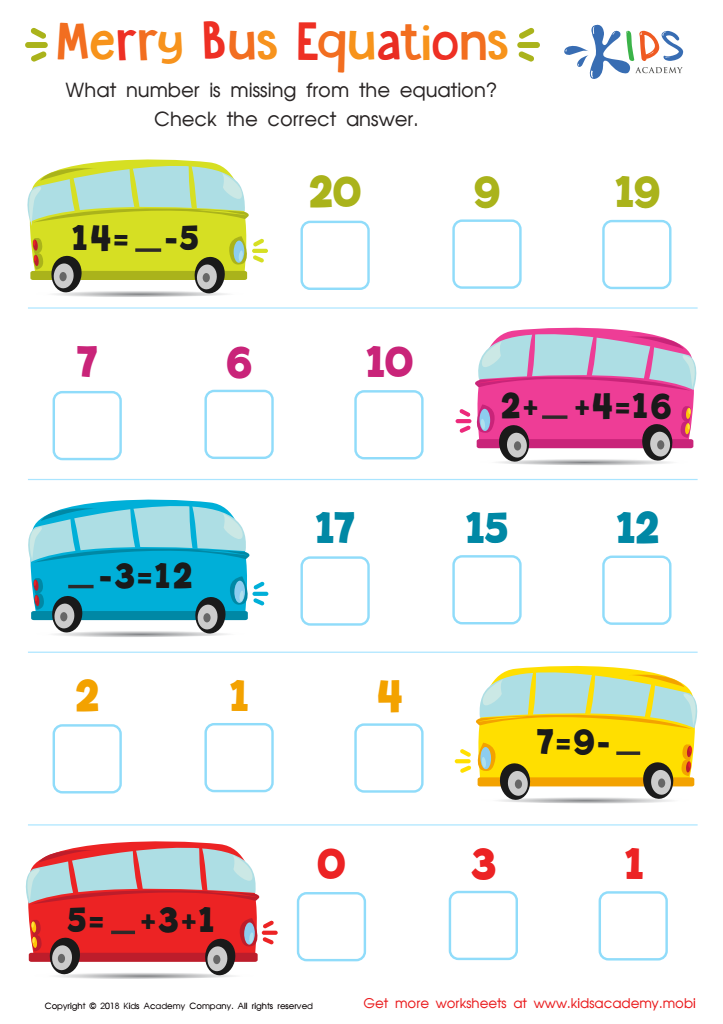
Merry Bus Equations Worksheet
 Assign to My Students
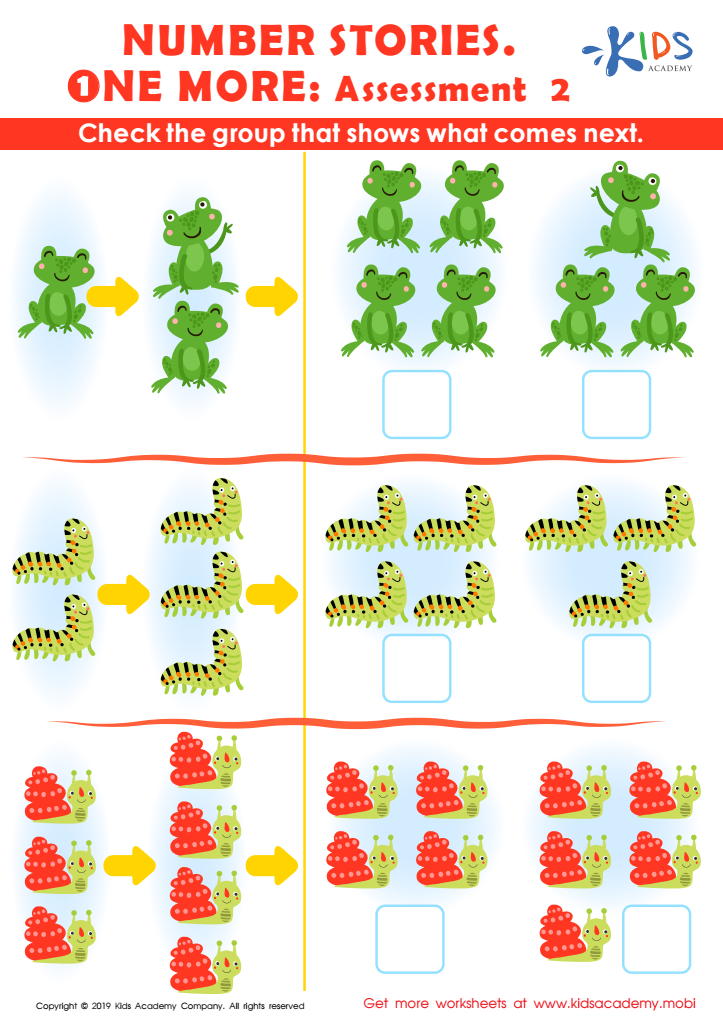
Number Stories One More – Assessment 2 Worksheet

What Is a Line Plot? Worksheet








Problem-solving practices in mathematics for children aged 5-9 are crucial for fostering critical thinking and logical reasoning skills early in life. At this developmental stage, children are naturally curious and eager to explore, making it an ideal time to cultivate mathematical concepts through engaging problem-solving activities.
Parents and teachers should care because these skills form the foundation for future academic success and everyday life. When children encounter problems, it encourages them to think critically and creatively, enhancing their ability to approach challenges with confidence. Learning to problem-solve also strengthens perseverance; children learn that making mistakes is part of the learning process and can lead to greater understanding.
Moreover, problem-solving in early childhood makes mathematics relevant and enjoyable. It moves beyond rote memorization into applying math in real-life scenarios, thereby deepening conceptual understanding. This playful engagement helps build a positive disposition toward math, reducing anxiety and laying the groundwork for a lifetime appreciation of the subject.
Finally, fostering these skills supports social development, as children often work collaboratively—sharing ideas, negotiating approaches, and learning to value diverse perspectives. Consequently, prioritizing problem-solving practices in early education enriches the overall learning journey and equips children for future challenges.








