
Shape identification Numbers Worksheets for Ages 5-9
3 filtered results
Difficulty Level
Grade
Age
-
From - To
Subject
Activity
Standards
Discover engaging and educational Shape Identification Numbers Worksheets designed for children ages 5-9! Our expertly crafted worksheets seamlessly blend learning numbers with recognizing various shapes, enhancing both math and cognitive skills. These fun activities encourage young learners to connect numbers with visual shapes, aiding in memory retention and problem-solving. Created by Kids Academy, these printable resources make learning interactive and enjoyable, perfect for use at home or in the classroom. Help your child build a solid foundation in math while igniting their curiosity and interest in learning. Explore our collection today and watch your child's confidence soar!
Favorites
With answer key
Interactive
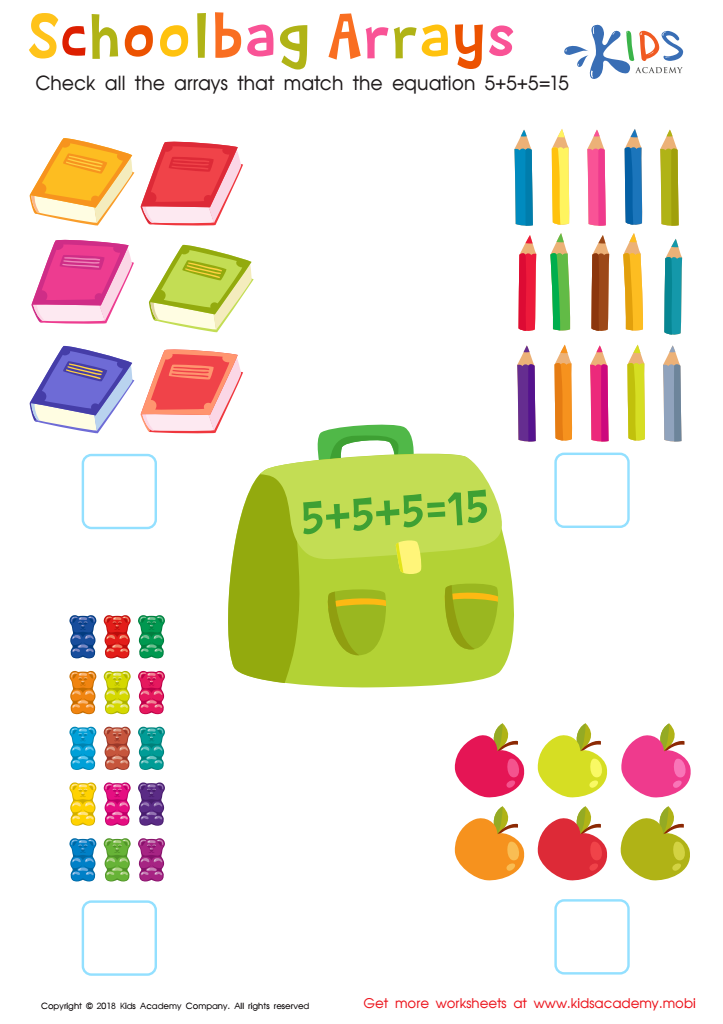
Schoolbag Arrays Worksheet
Help your child spot the correct arrays in this worksheet: having them count the items in each and check the boxes for the ones with 15 objects. Ask them to differentiate between rows and columns and explain which ones match the equation 5+5+5=15.
Schoolbag Arrays Worksheet
Worksheet
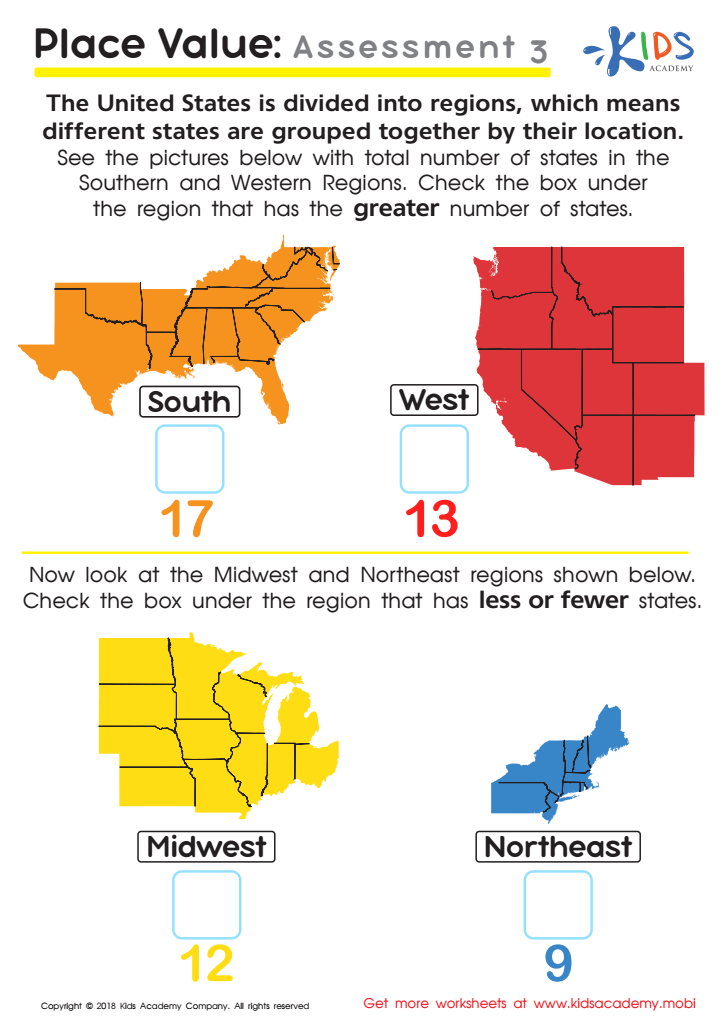
Place Value: Assessment 3 Worksheet
Test your child's math skills without them realizing it! This fun worksheet looks at the states and regions of the U.S. and your child can compare numbers greater or lesser than the other. It's the perfect way to assess your child's number sense without them knowing.
Place Value: Assessment 3 Worksheet
Worksheet
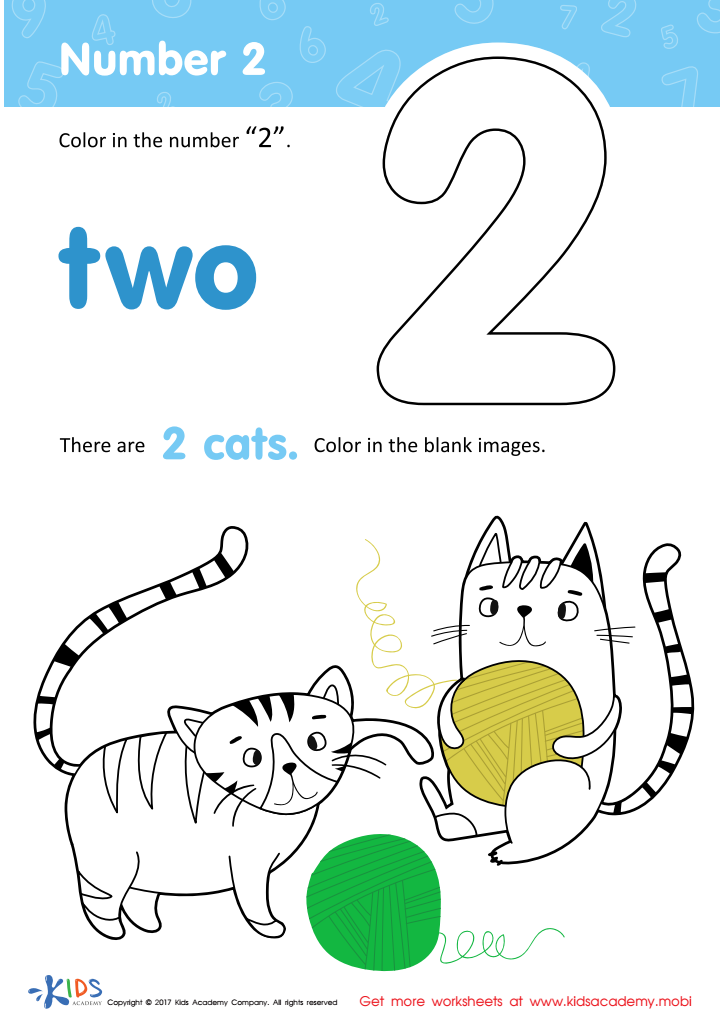
Number 2 Printable
Help your child learn to recognize the number two with these cats and their yarn balls. Print this coloring page – it's great for counting and coloring fun! Your child will develop basic numeracy skills as they visually see numbers in action.
Download (PDF)
 Assign to My Students
Assign to My Students
Number 2 Printable
Worksheet
Join Kids Academy for Free
Who is primarily going to use this learning content?








Parents and teachers should care about shape and number identification for children ages 5-9 because it serves as a foundational skill crucial for their cognitive and academic development. At this early age, children are rapidly developing their mathematical thinking, spatial awareness, and problem-solving abilities, all of which are underpinned by a solid understanding of shapes and numbers.
Identification of shapes such as circles, squares, triangles, and rectangles helps children gain essential spatial awareness skills, which are vital for tasks involving geometry, puzzles, and even daily navigation and play. Recognizing and differentiating between shapes fosters visual discrimination and attentiveness to detail, skills that are beneficial across various academic subjects and life scenarios.
Numbers, on the other hand, are fundamental to developing arithmetic skills. Understanding numbers, their order, and relationship to quantities forms the basis for more complex mathematical concepts such as addition, subtraction, multiplication, and division. Early familiarity with numbers supports literacy in math and lays the groundwork for success in more advanced arithmetic and science.
By nurturing proficiency in shape and number identification, parents and teachers equip children with the tools to excel in mathematics, bolster their logical reasoning, and enhance their confidence in tackling a wide range of academic challenges, thereby fostering a positive attitude towards learning.








