Understanding subtraction Numbers Worksheets for Ages 5-9
4 filtered results
-
From - To
Enhance your child's math skills with our "Understanding Subtraction Numbers Worksheets" designed for ages 5-9. These engaging and interactive worksheets help young learners grasp the concept of subtraction through fun exercises and visual aids. Your child will practice basic subtraction, understand the relationship between addition and subtraction, and develop number sense. Each worksheet promotes critical thinking and problem-solving abilities while keeping learning enjoyable. Perfect for homeschooling, supplemental practice, or classroom use, our resources cater to various learning styles. Watch your child's confidence grow as they master subtraction! Start exploring our worksheets today and build a strong mathematical foundation for your child.
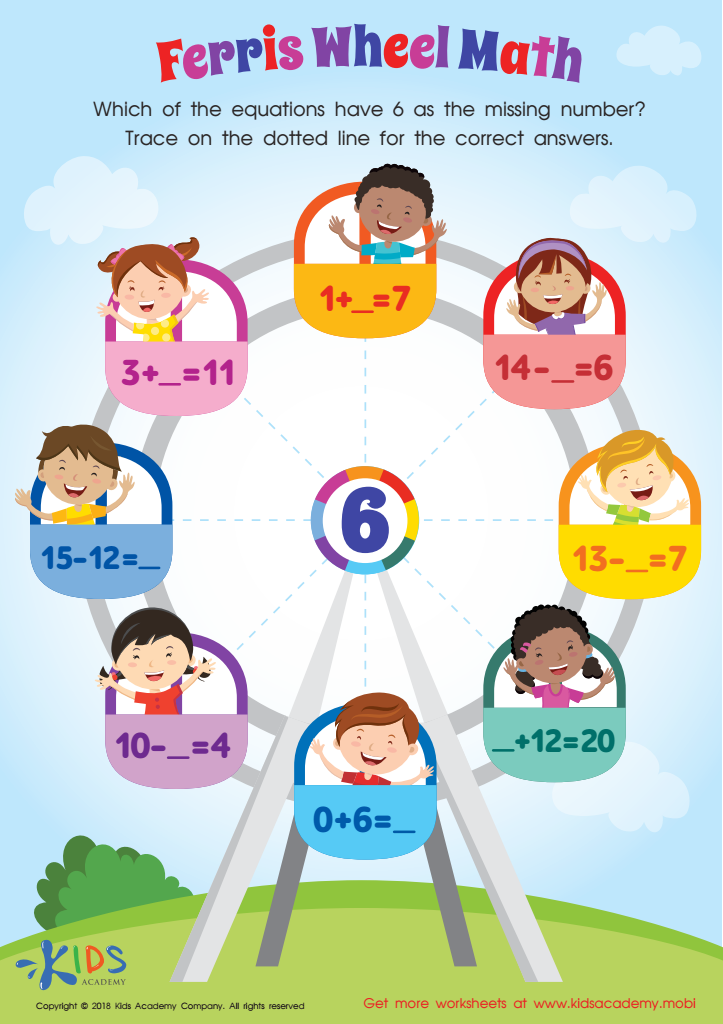
Missing Number: Ferris Wheel Math Worksheet
 Assign to My Students
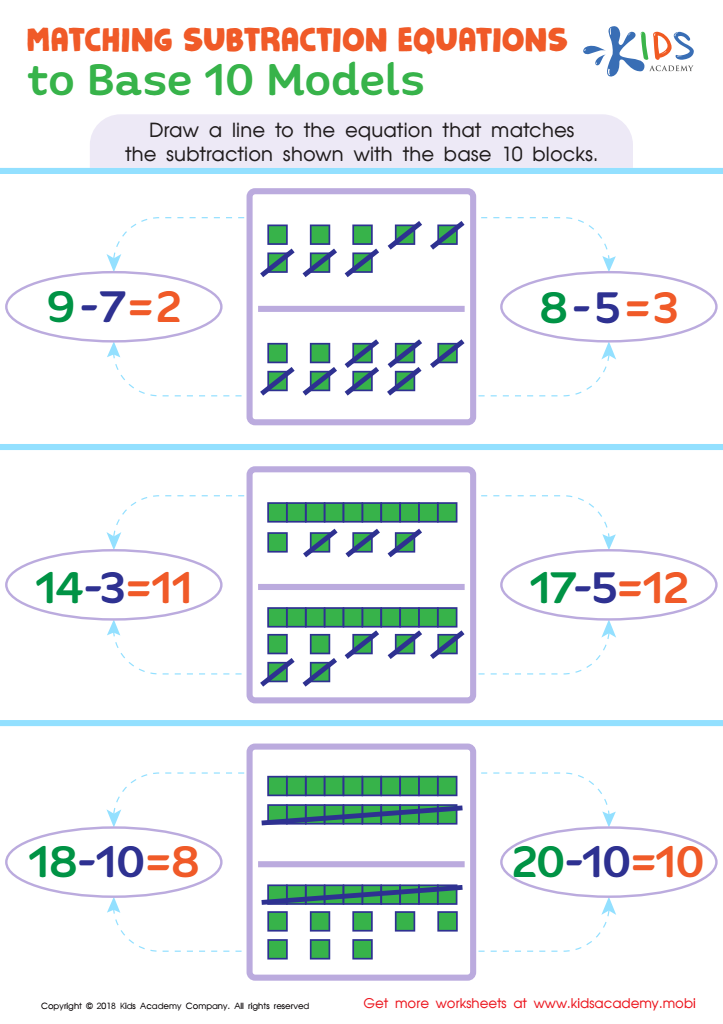
Matching Subtraction Equations To Base 10 Models Worksheet
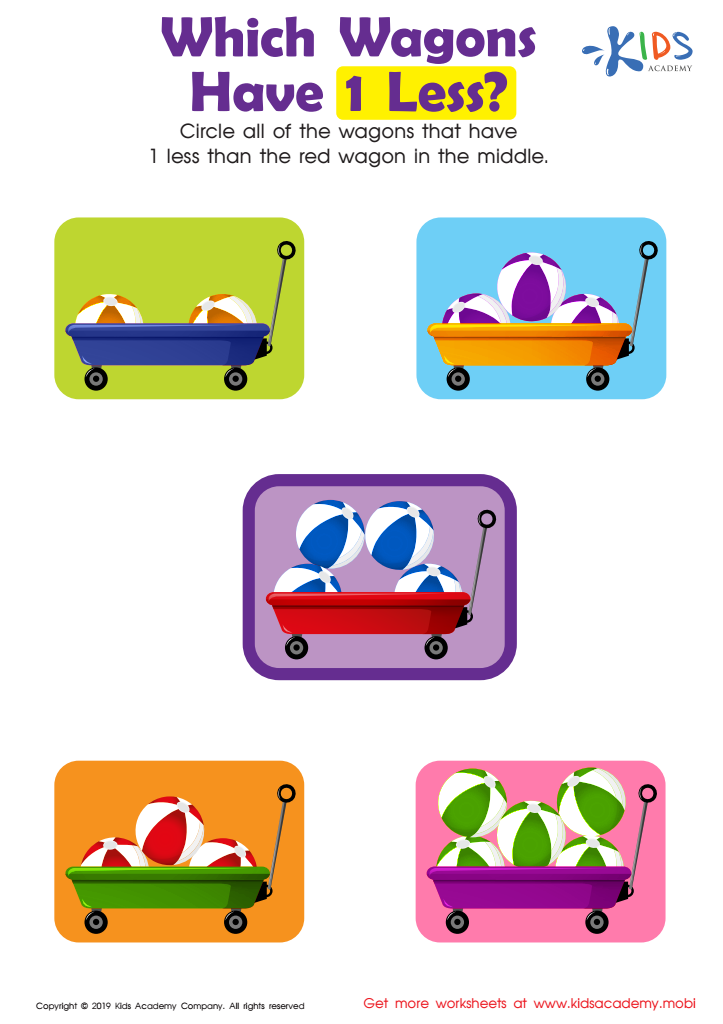
Which Wagons Have 1 Less? Worksheet
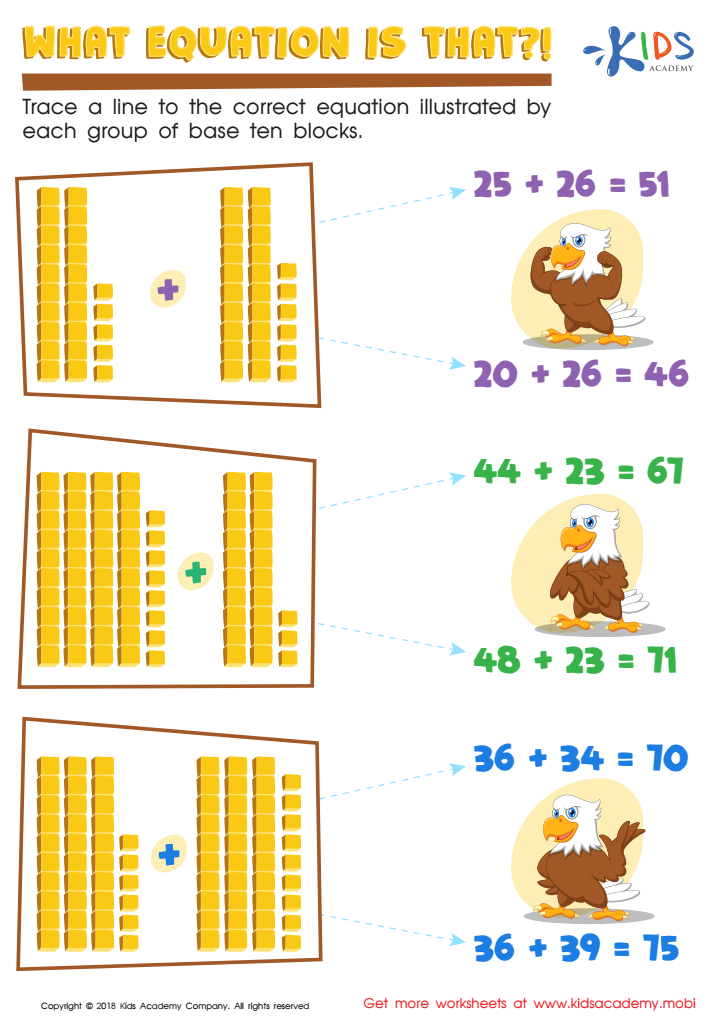
What Equation Is That? Worksheet








Understanding subtraction is crucial for children ages 5-9 as it lays the foundation for their mathematical development and fosters critical thinking skills. During this formative stage, children begin to grasp the concept of numbers and their relationships. Mastery of subtraction not only allows kids to solve basic math problems but also helps them understand the idea of 'taking away,' which is essential for everyday decision-making and problem-solving.
Parents and teachers should care about this because a solid grasp of subtraction boosts children’s confidence in math, preparing them for more complex concepts like addition, multiplication, and division later on. Subtraction skills also enhance their ability to handle real-life situations, such as budgeting or measuring, reinforcing the relevance of math in day-to-day life.
Moreover, understanding subtraction can improve overall cognitive development. When children engage with subtraction—using manipulatives, visual aids, or engaging stories—they learn to think critically, solve problems, and develop perseverance in the face of challenges. Encouraging this understanding paves the way for a positive attitude toward learning in general, helping to instill a lifelong love for math and education that can benefit children in numerous realms beyond the classroom.








