Animal Classification Math Worksheets for Ages 5-9
4 filtered results
-
From - To
Explore our engaging "Animal Classification Math Worksheets" designed specifically for children aged 5-9! These worksheets seamlessly combine essential math skills with the fascinating world of animals, enhancing young learners’ knowledge while boosting their confidence in math. From categorizing different species to counting and basic arithmetic, our worksheets encourage critical thinking through fun, interactive exercises. Ideal for classroom use or at-home learning, they make math enjoyable and relatable. Foster your child's love for learning with colorful visuals and exciting animal themes. Start your journey to math mastery and animal exploration today – perfect for curious minds and growing imaginations!
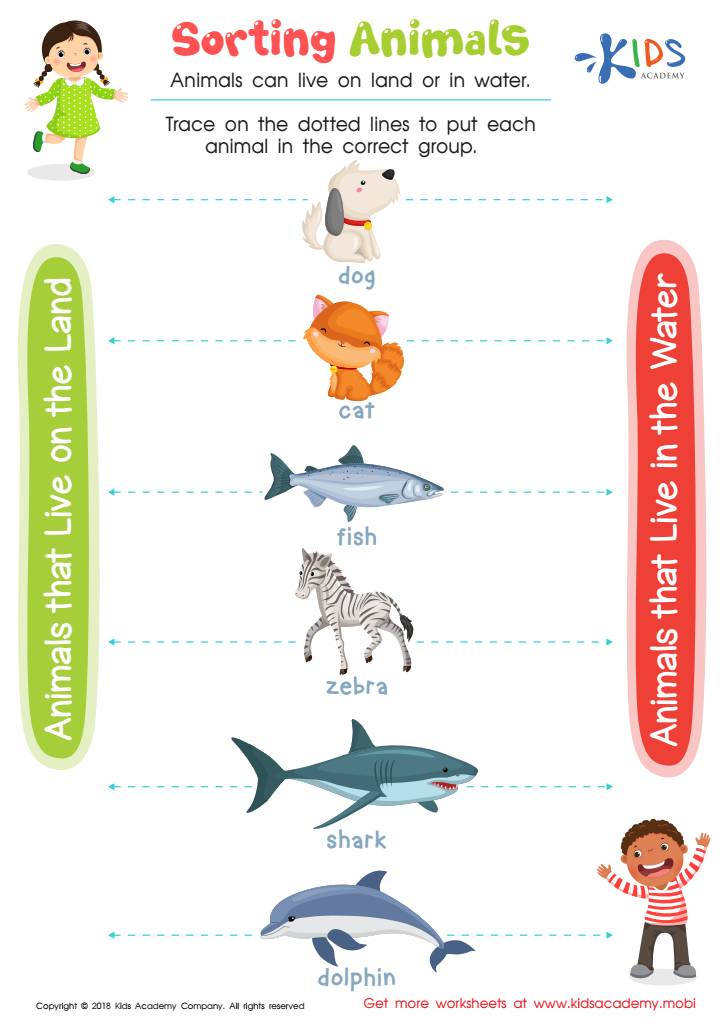
Sorting Animals Worksheet
 Assign to My Students
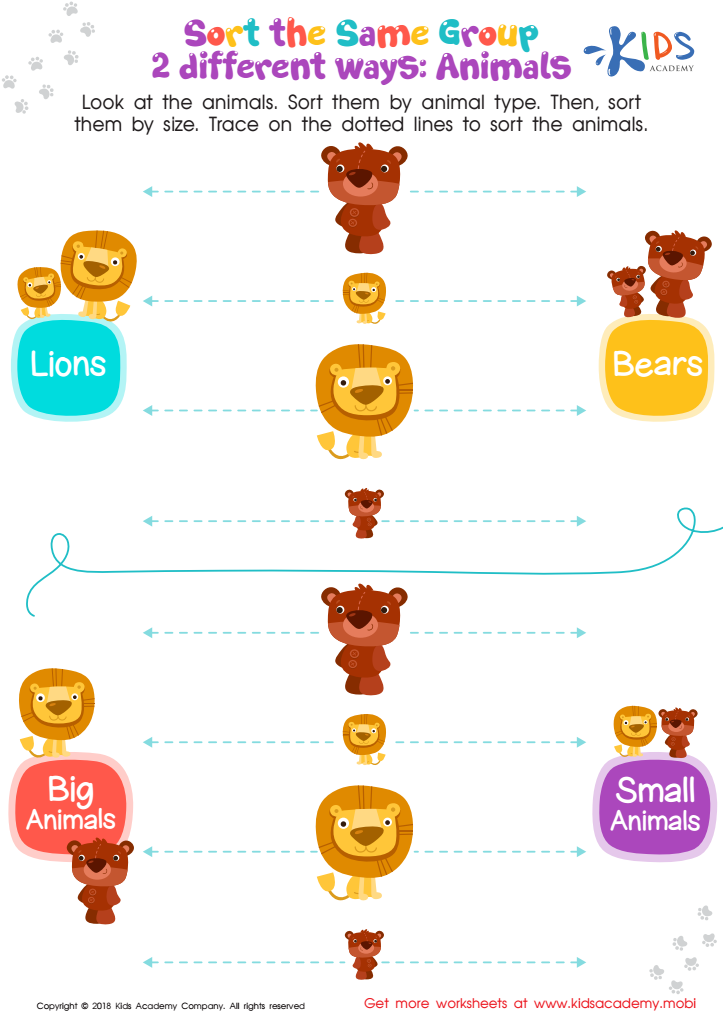
Sort the Same Group 2 Different Ways: Animals Worksheet
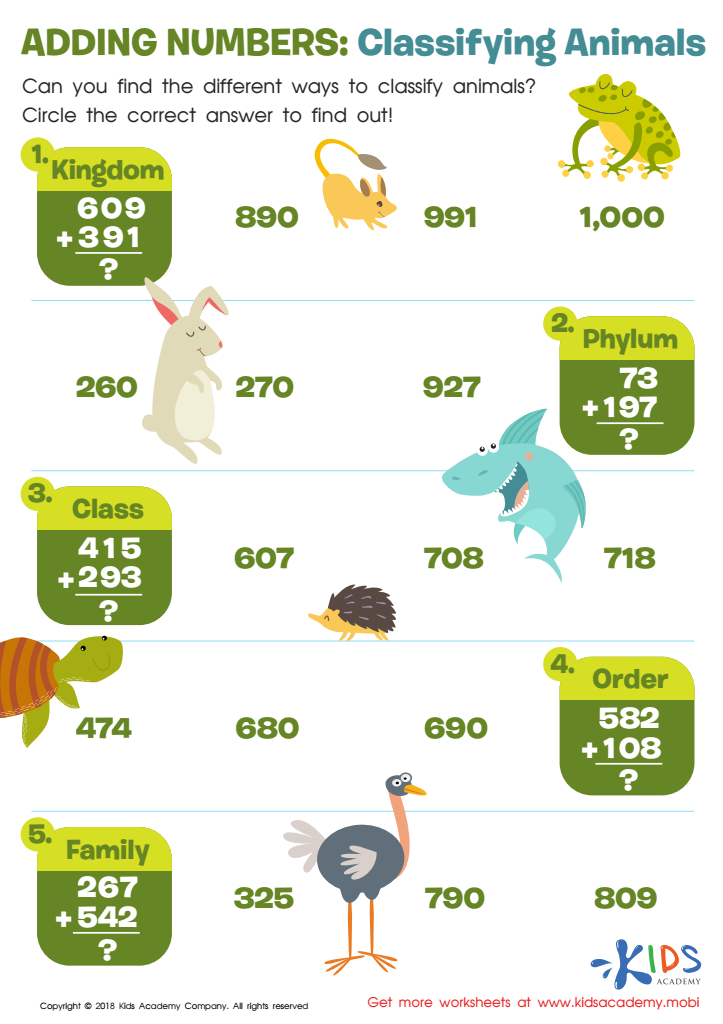
Adding Numbers: Classifying Animals Worksheet
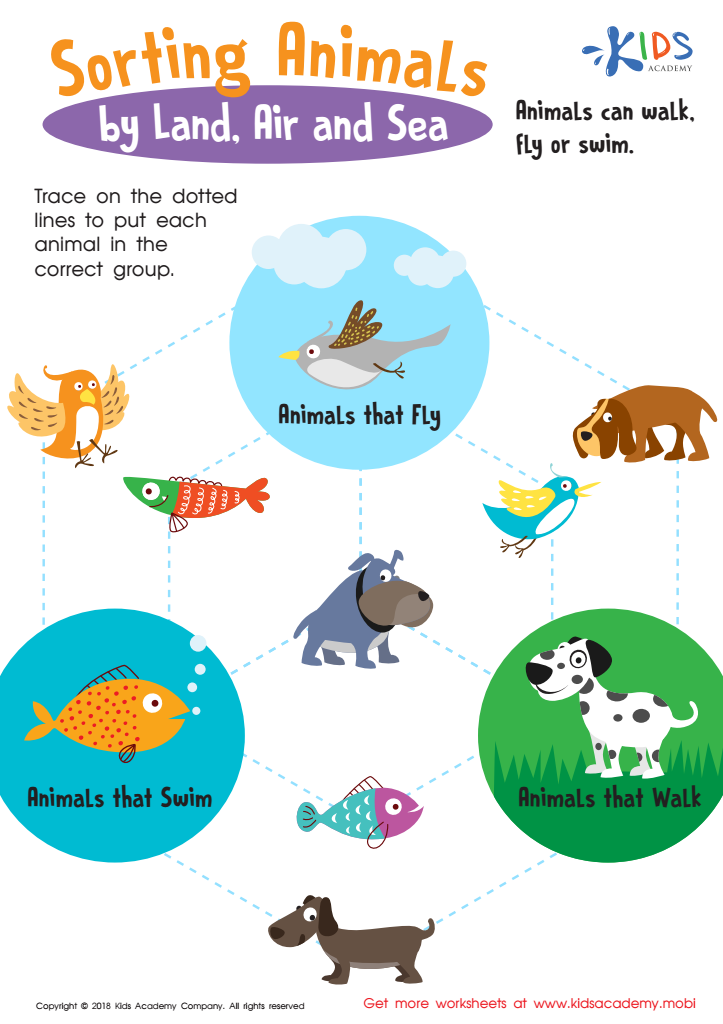
Sorting Animals by Land, Air and Sea Worksheet








Animal Classification Math for Ages 5-9 is a vital educational tool because it seamlessly combines foundational math skills with an understanding of the natural world. By exploring animal classifications—such as mammals, reptiles, birds, and fish—children develop critical thinking skills while engaging with math in a fun context. For instance, teachers can incorporate counting, sorting, and graphing activities based on various animal categories, thus reinforcing core math concepts like addition, subtraction, and data interpretation.
Additionally, learning about animal classification fosters curiosity and boosts scientific literacy. As students categorize animals by traits, they become more aware of biodiversity and ecosystems, promoting conservation awareness from a young age. This interdisciplinary approach not only enhances cognitive development but also sparks a love for learning.
Moreover, these activities cater to various learning styles, encouraging collaboration and problem-solving skills when children work together to classify animals. So, parents and teachers should prioritize Animal Classification Math as it supports academic achievement in mathematics while nurturing an appreciation for biology and environmental science. This combination enriches children's education, preparing them for future challenges both inside and outside the classroom.








