Check out this FREE Trial Lesson on Math for age 5-9!

A

Favorites
With answer key
Interactive
  • 5-9
  • Basic Addition Skills
  • Math
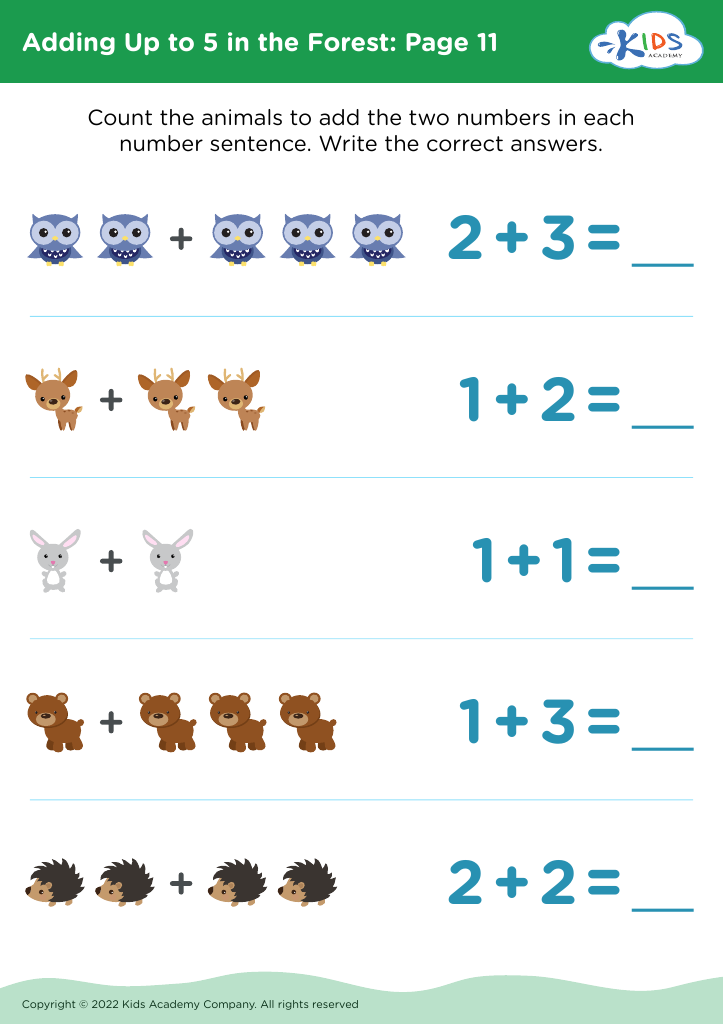
Adding Up to 5 in the Forest: Page 11
Worksheet
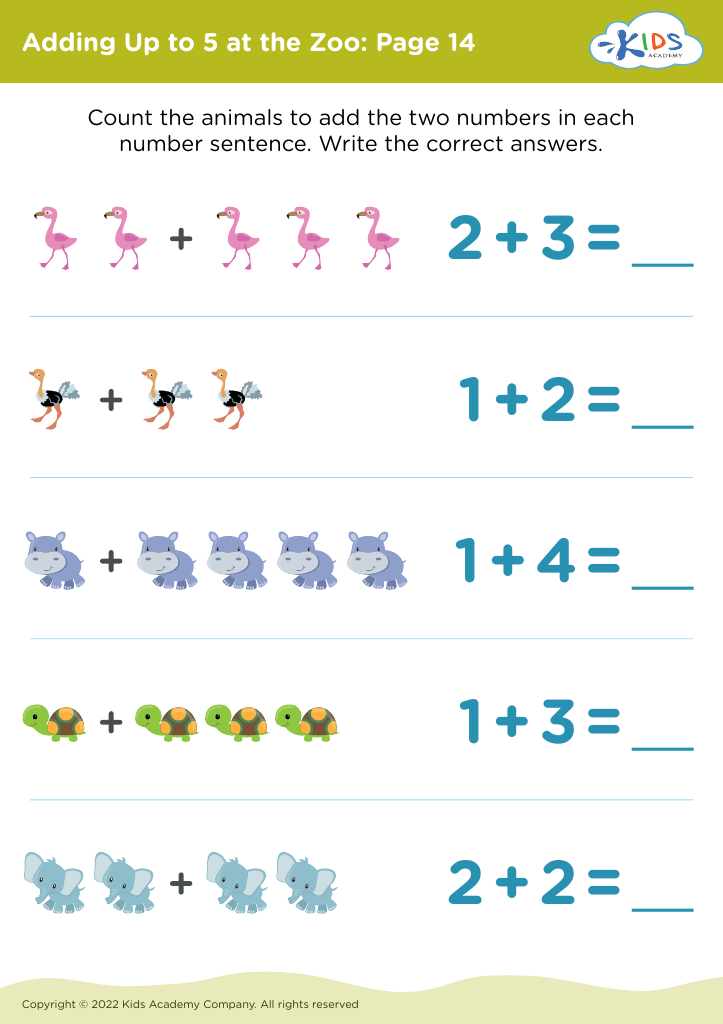
Adding Up to 5 at the Zoo: Page 14
Worksheet
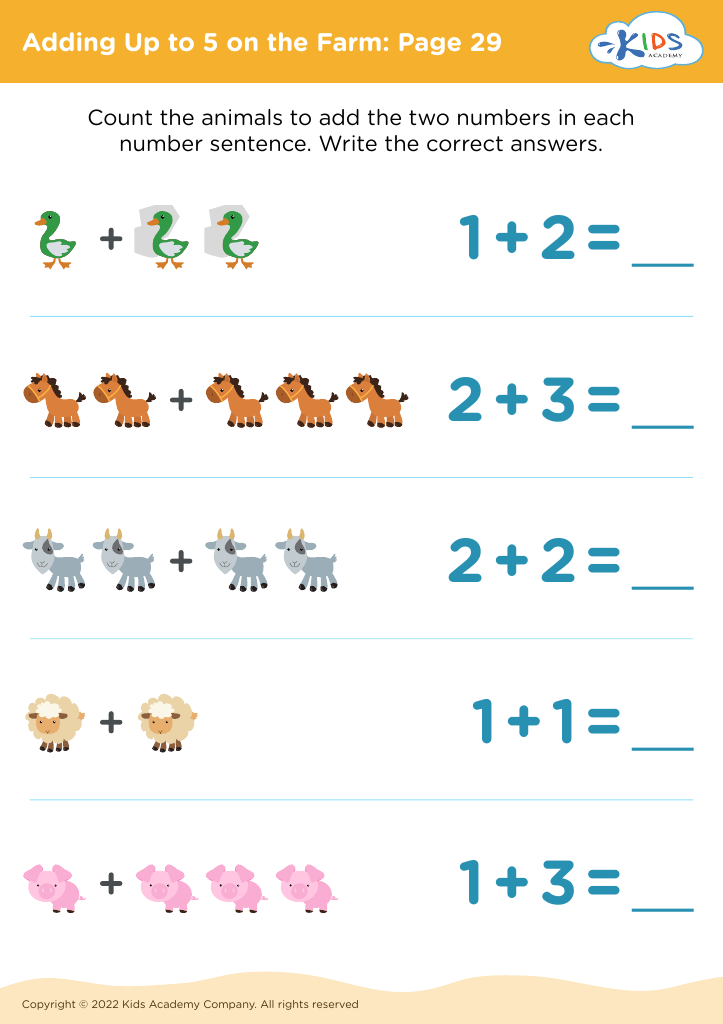
Adding Up to 5 on the Farm: Page 29
Worksheet
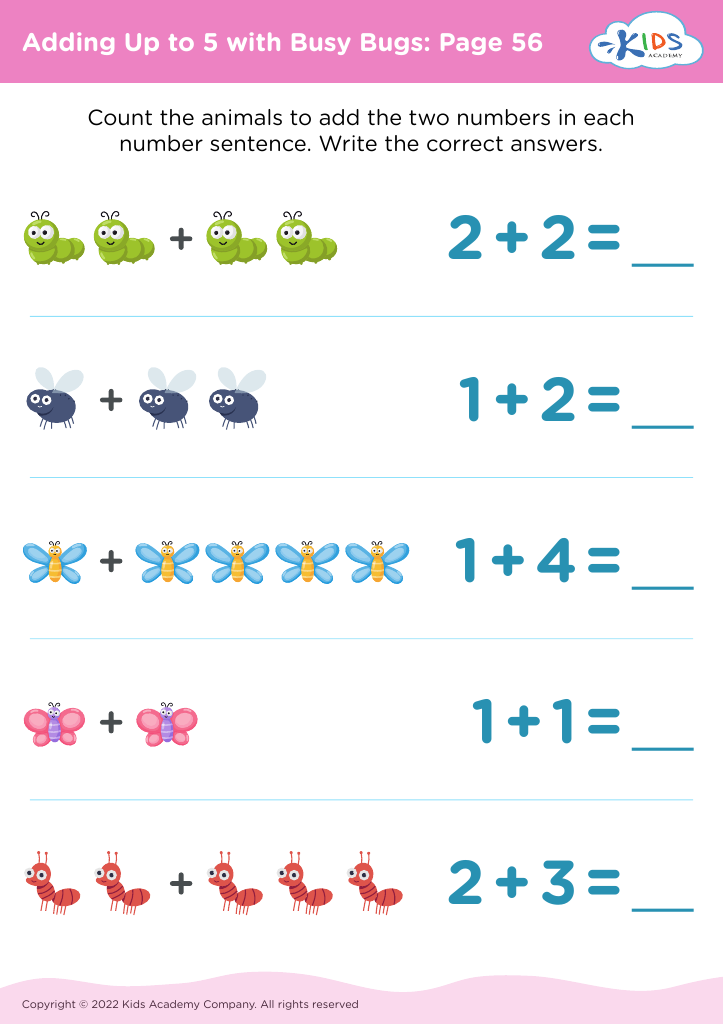
Adding Up to 5 with Busy Bugs: Page 56
Worksheet
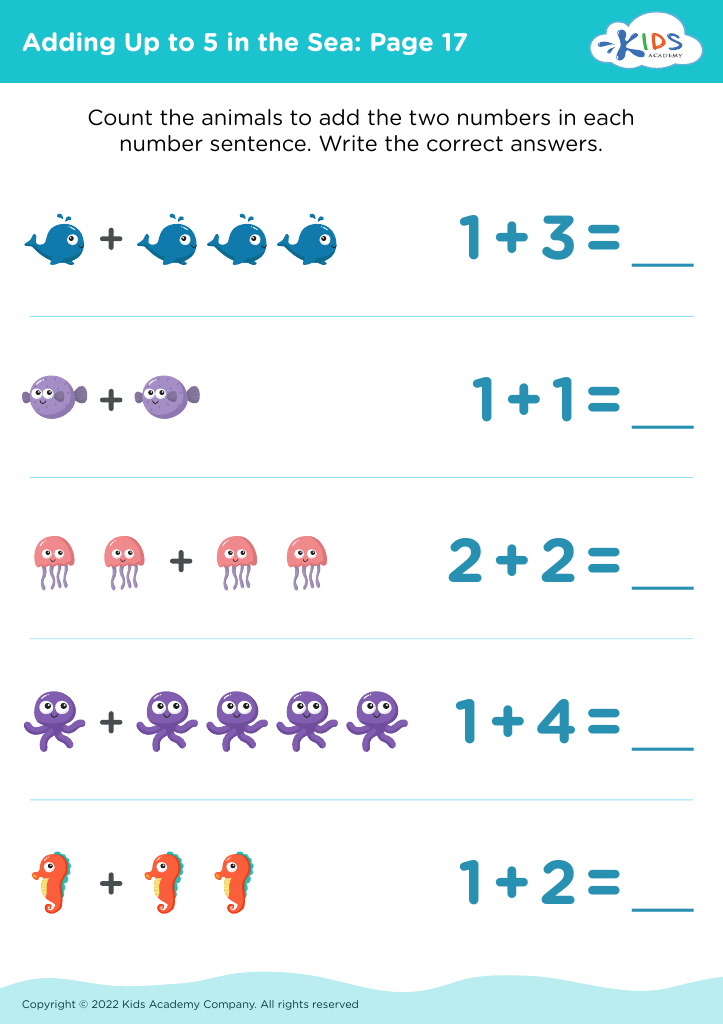
Adding Up to 5 in the Sea: Page 17
Worksheet
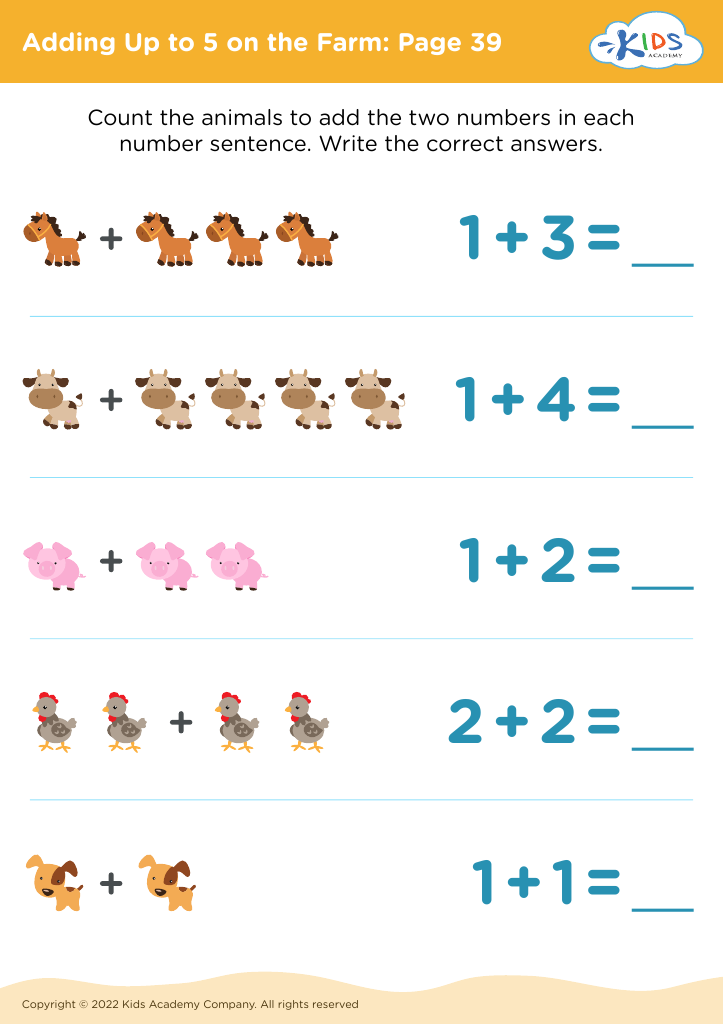
Adding Up to 5 on the Farm: Page 39
Worksheet
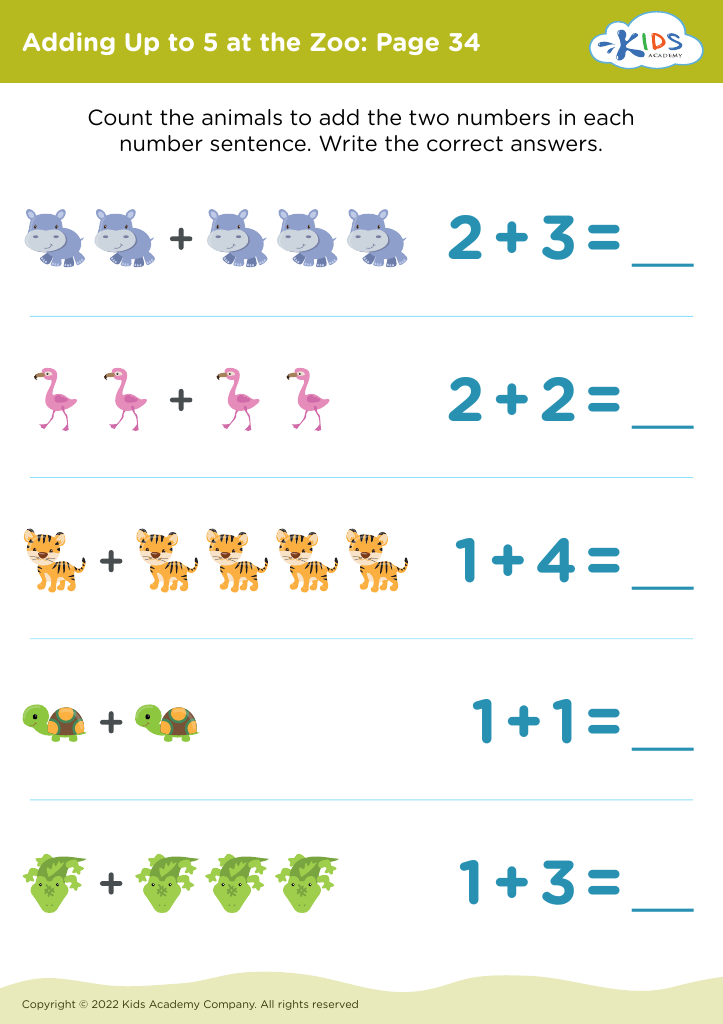
Adding Up to 5 at the Zoo: Page 34
Worksheet
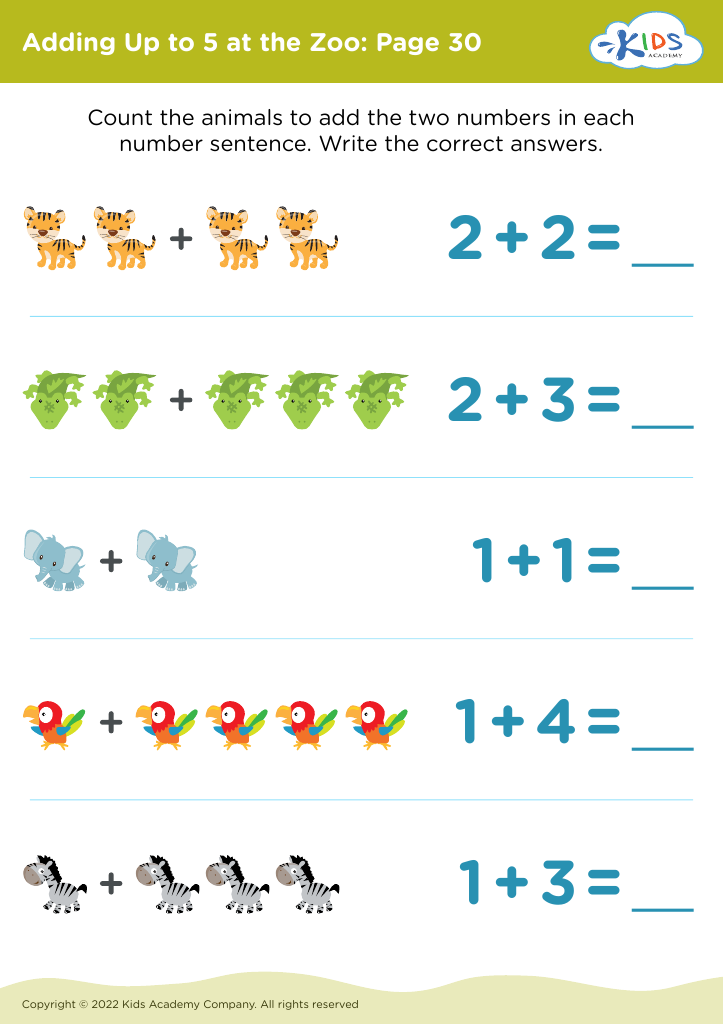
Adding Up to 5 at the Zoo: Page 30
Worksheet
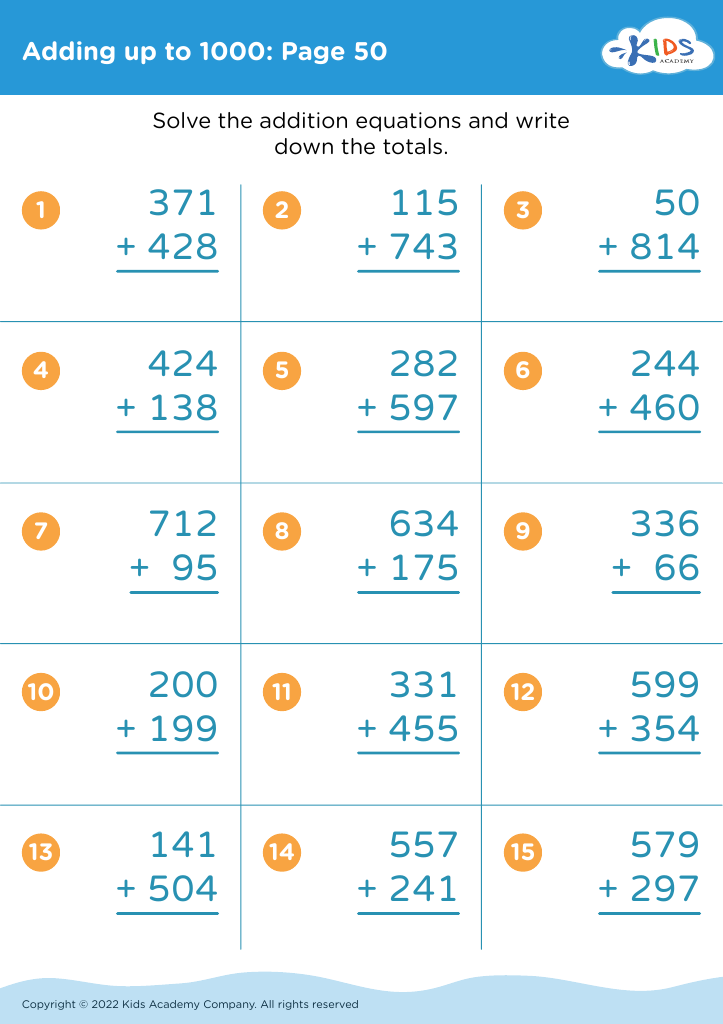
Adding up to 1000: Page 50

Adding up to 1000: Page 50

Adding up to 1000: Page 50
Worksheet
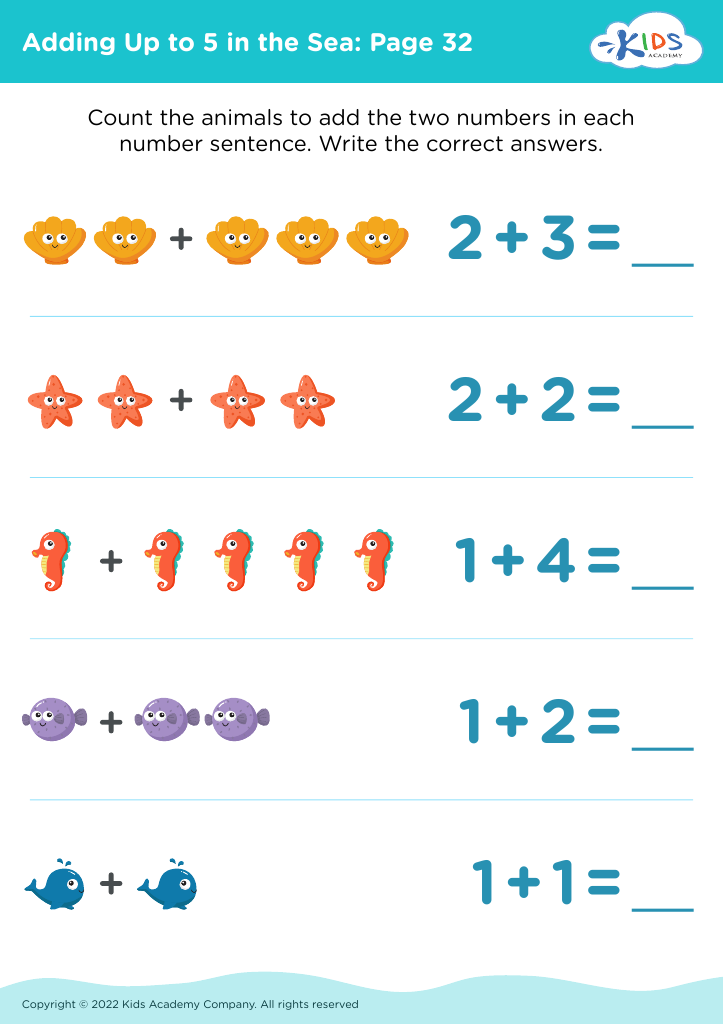
Adding Up to 5 in the Sea: Page 32
Worksheet
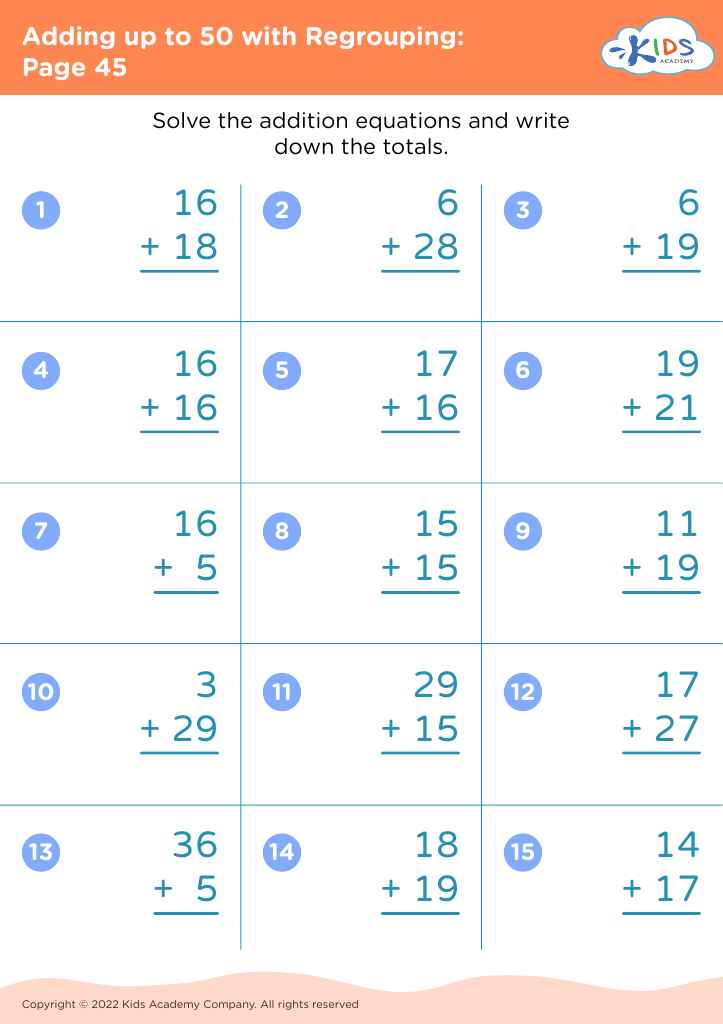
Adding up to 50 with Regrouping: Page 45
Worksheet
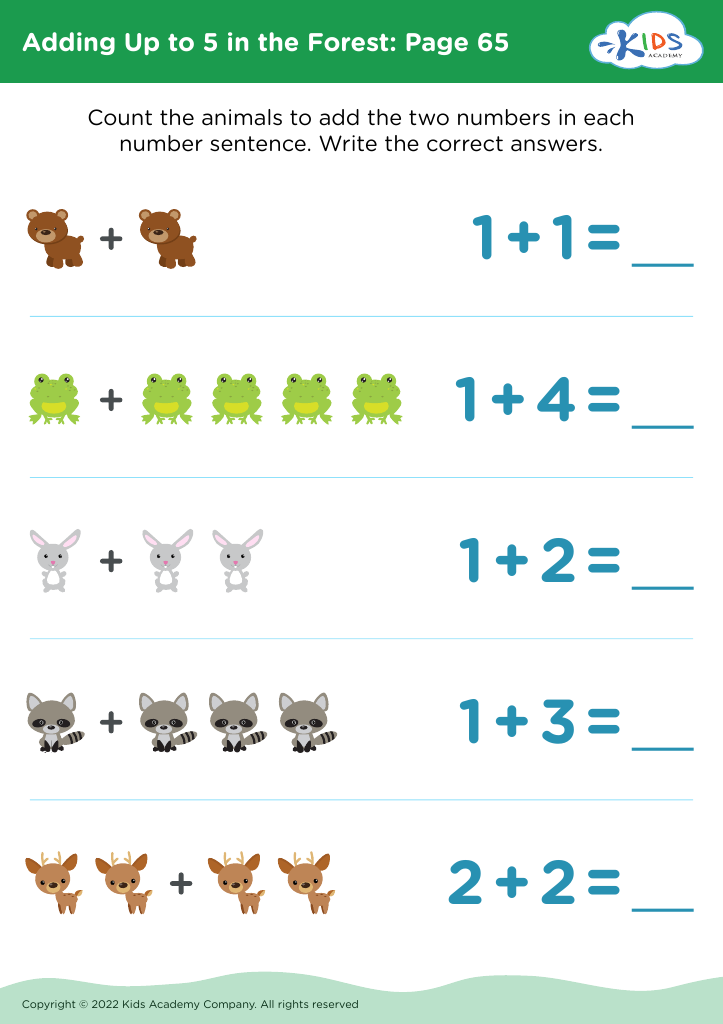
Adding Up to 5 in the Forest: Page 65
Worksheet
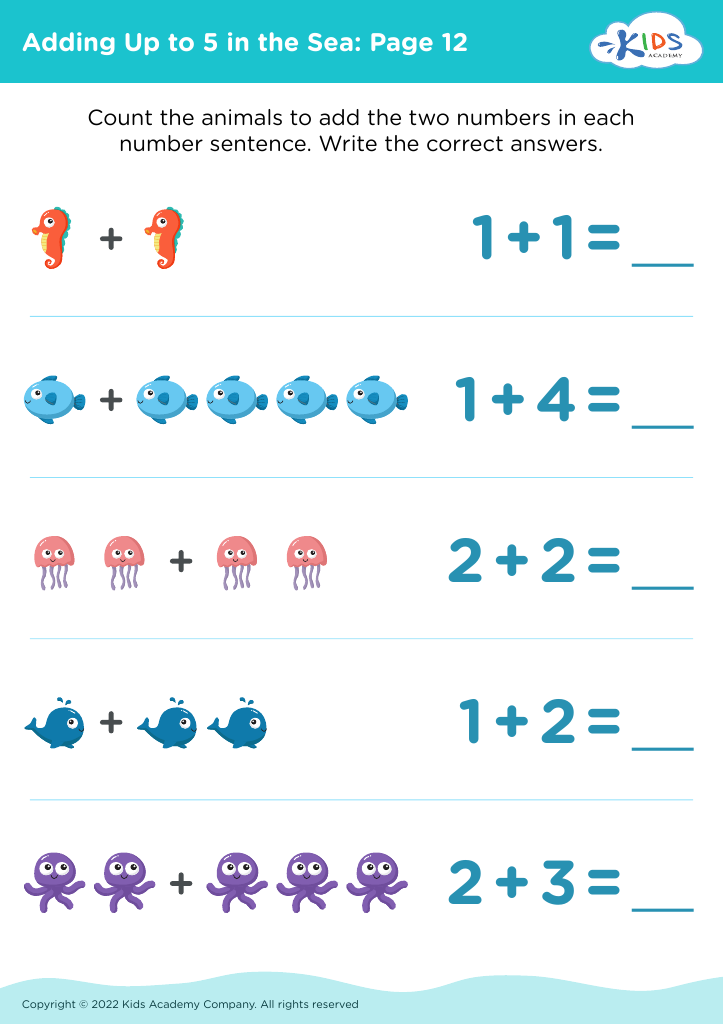
Adding Up to 5 in the Sea: Page 12
Worksheet
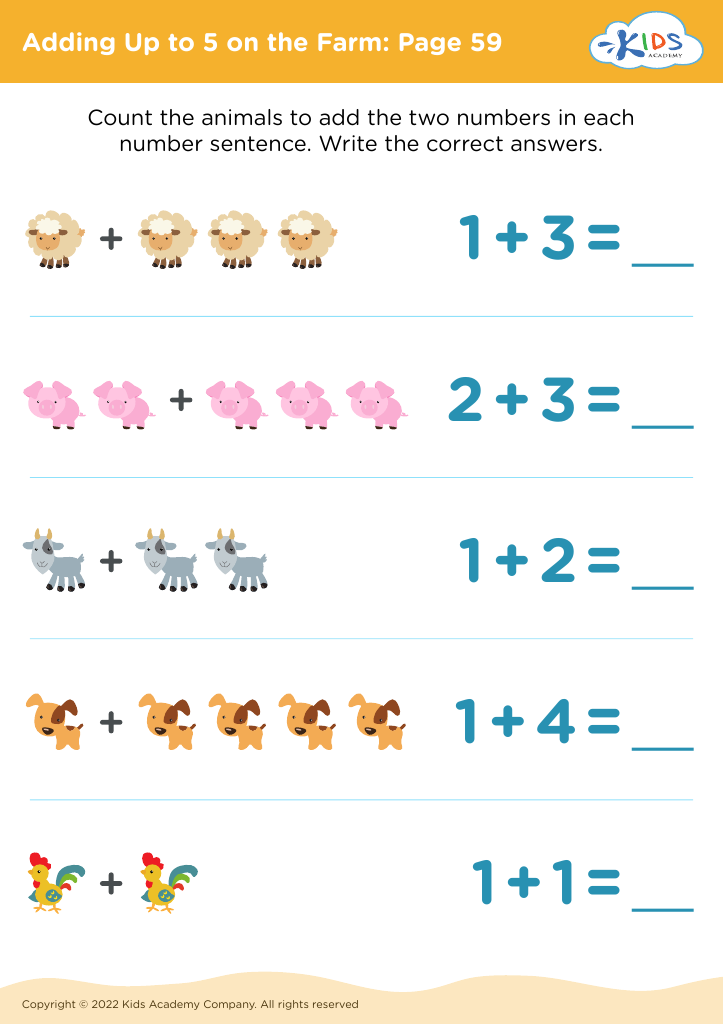
Adding Up to 5 on the Farm: Page 59
Worksheet
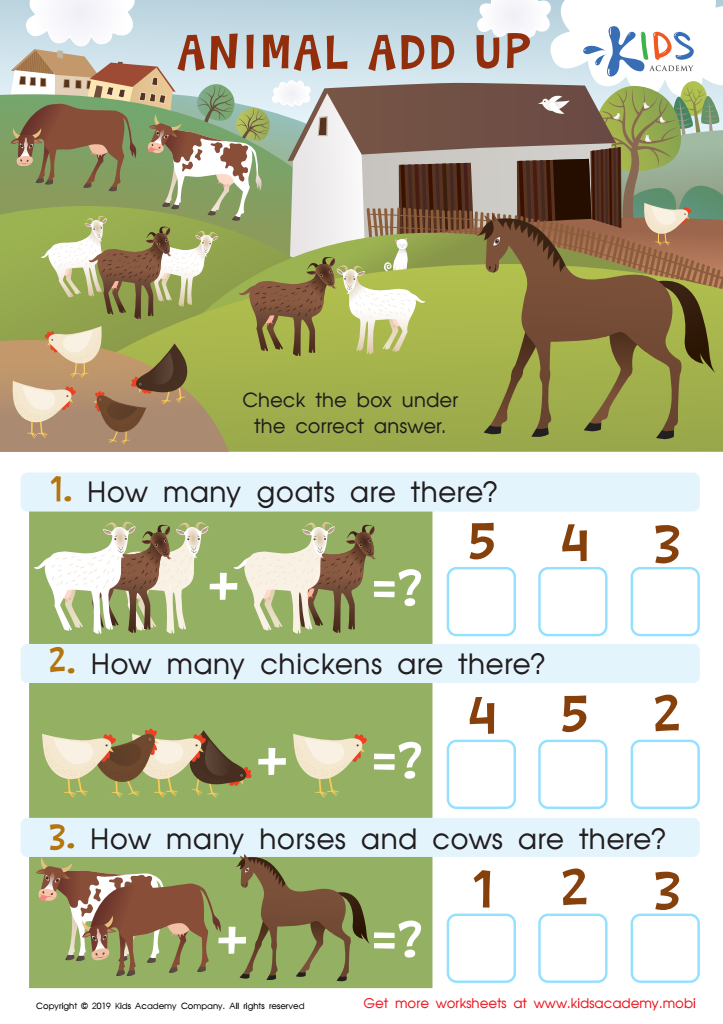
Animal Add Up Worksheet

Animal Add Up Worksheet

Animals are fun to observe and interact with. They can be seen at the zoo, parks, farms and in homes with pets. This worksheet helps kids identify animals, and build addition skills. Look at the picture with them and help name each animal. After that, add the animals up and check the box for the correct answer. 80 words.
Animal Add Up Worksheet
Worksheet
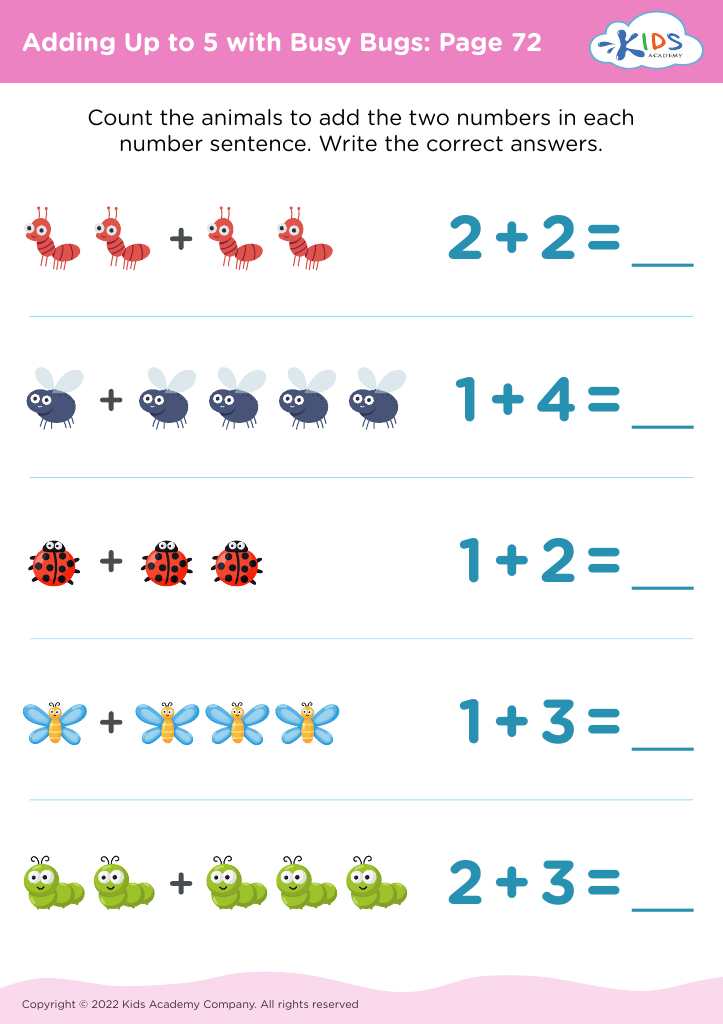
Adding Up to 5 with Busy Bugs: Page 72
Worksheet
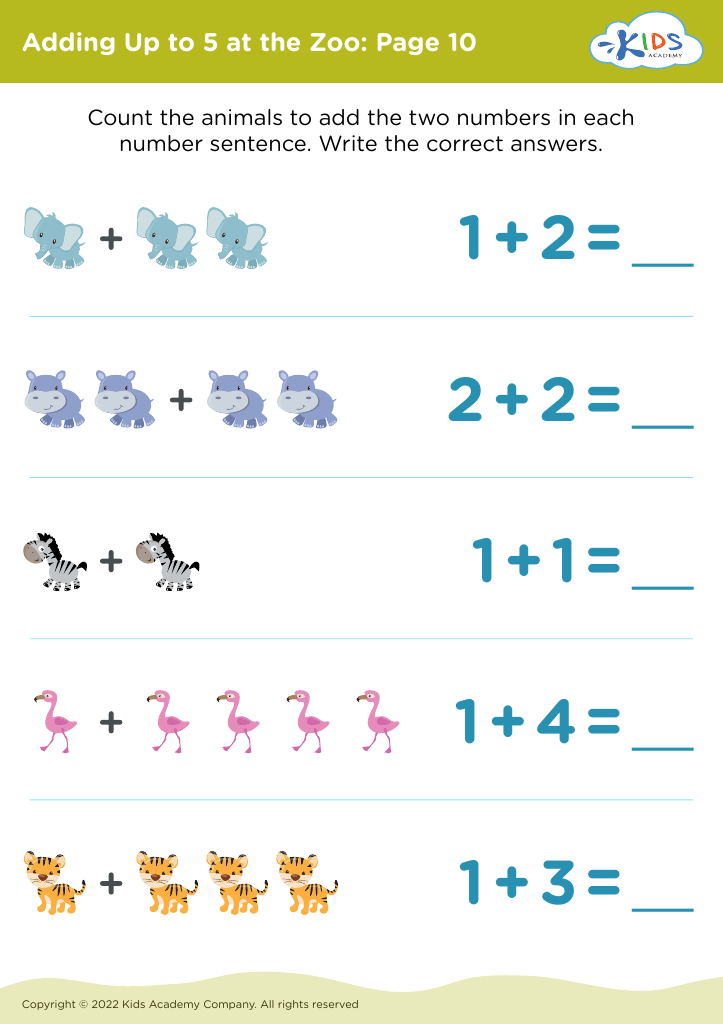
Adding Up to 5 at the Zoo: Page 10
Worksheet
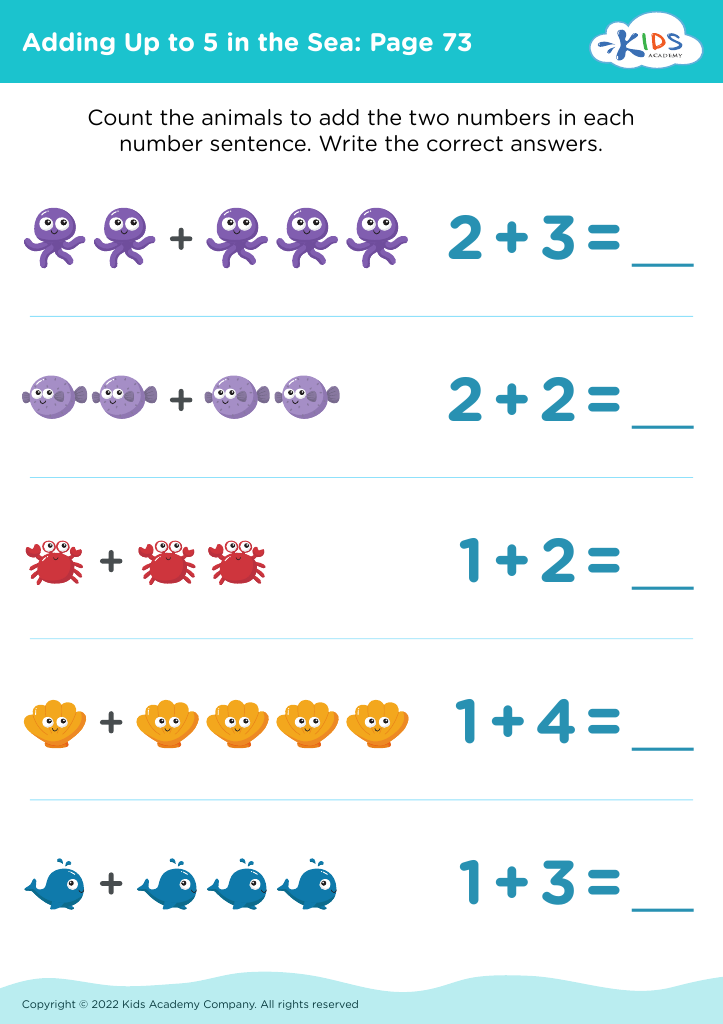
Adding Up to 5 in the Sea: Page 73
Worksheet
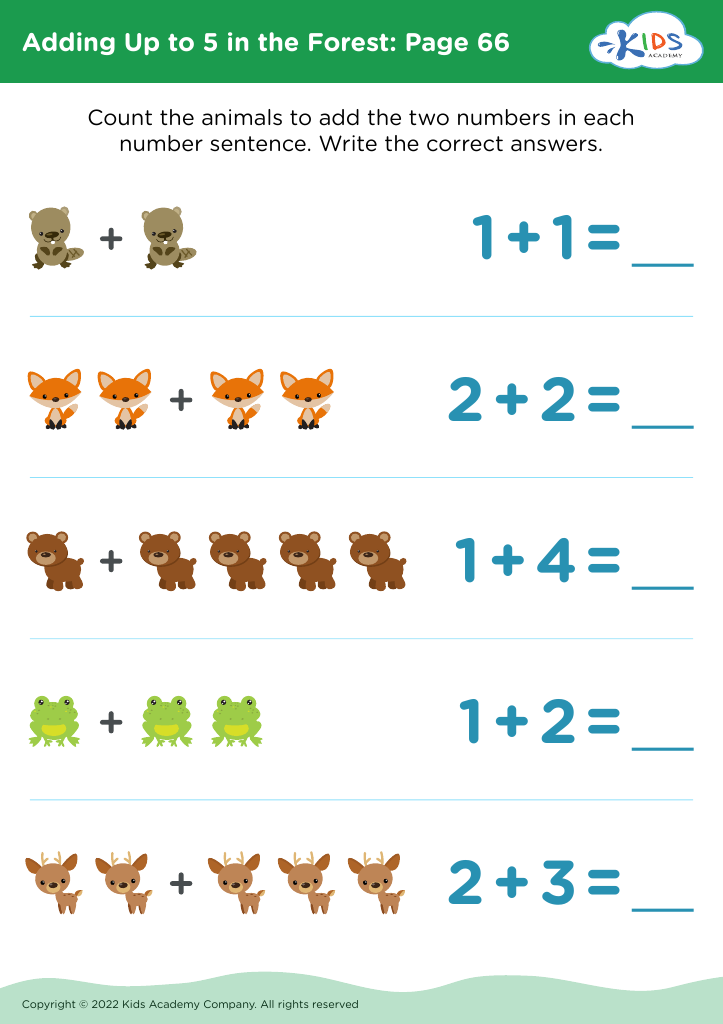
Adding Up to 5 in the Forest: Page 66
Worksheet
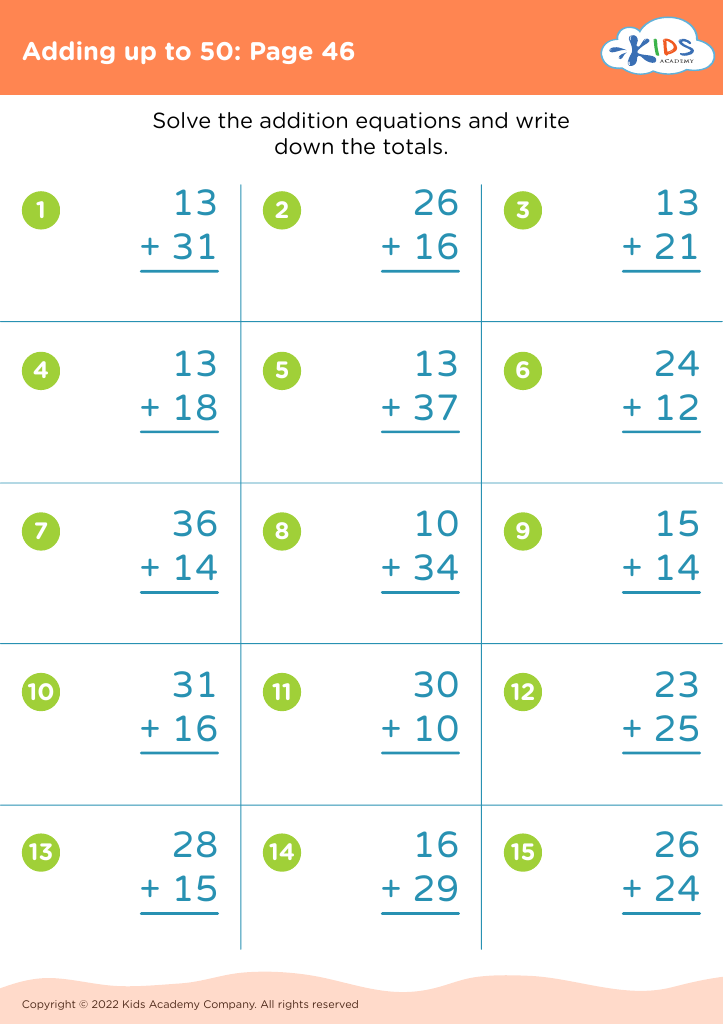
Adding up to 50: Page 46

Adding up to 50: Page 46

Adding up to 50: Page 46
Worksheet
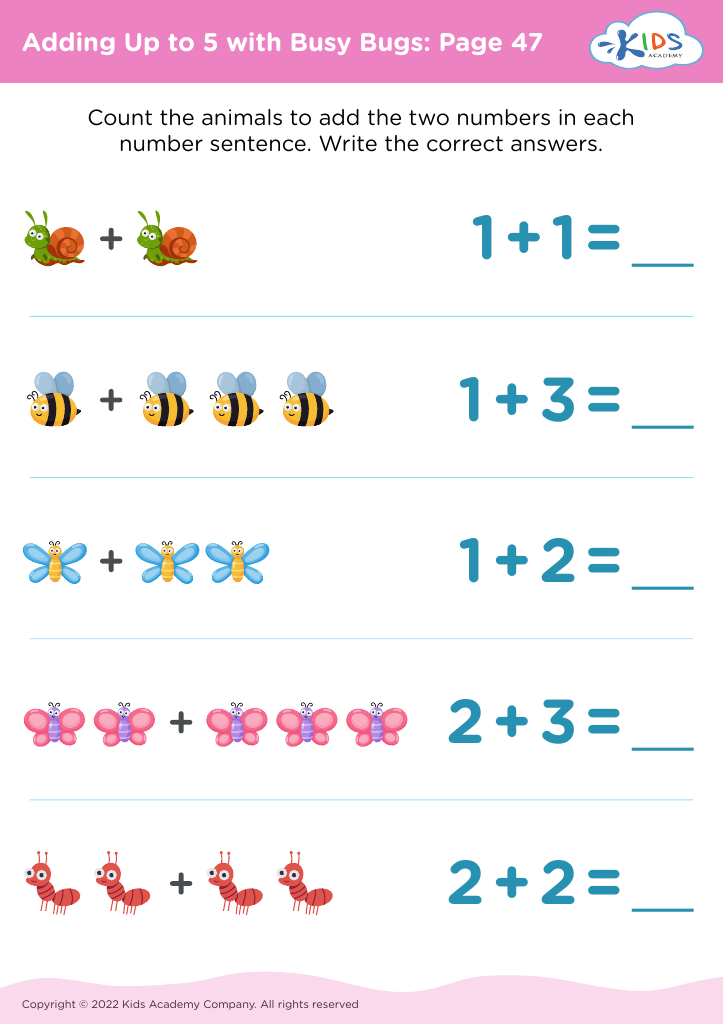
Adding Up to 5 with Busy Bugs: Page 47
Worksheet
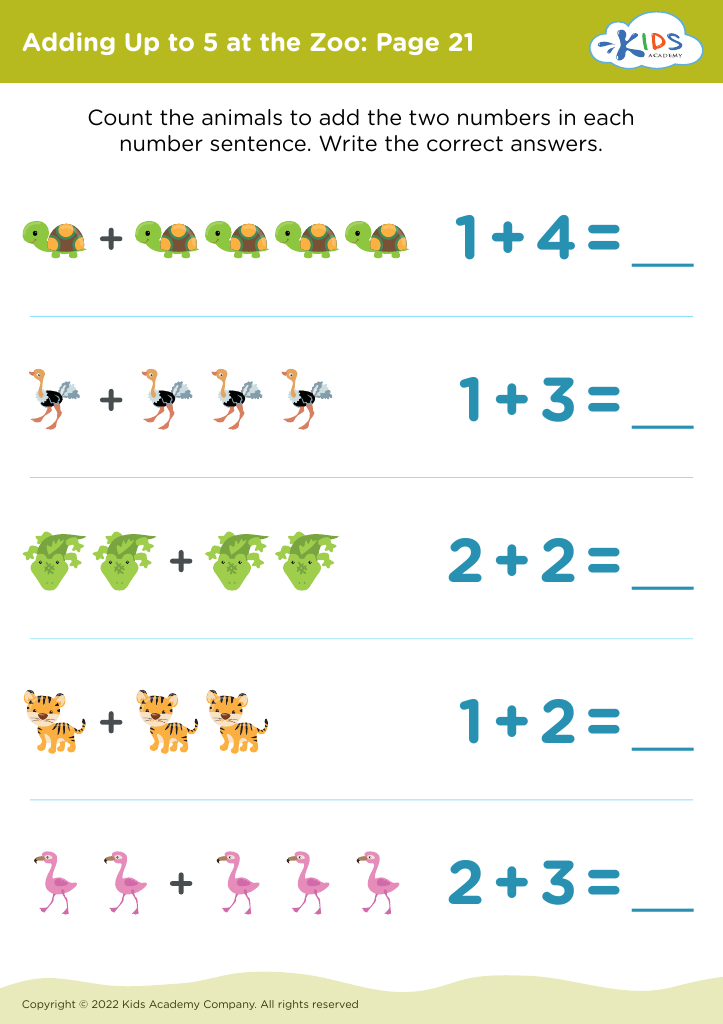
Adding Up to 5 at the Zoo: Page 21
Worksheet
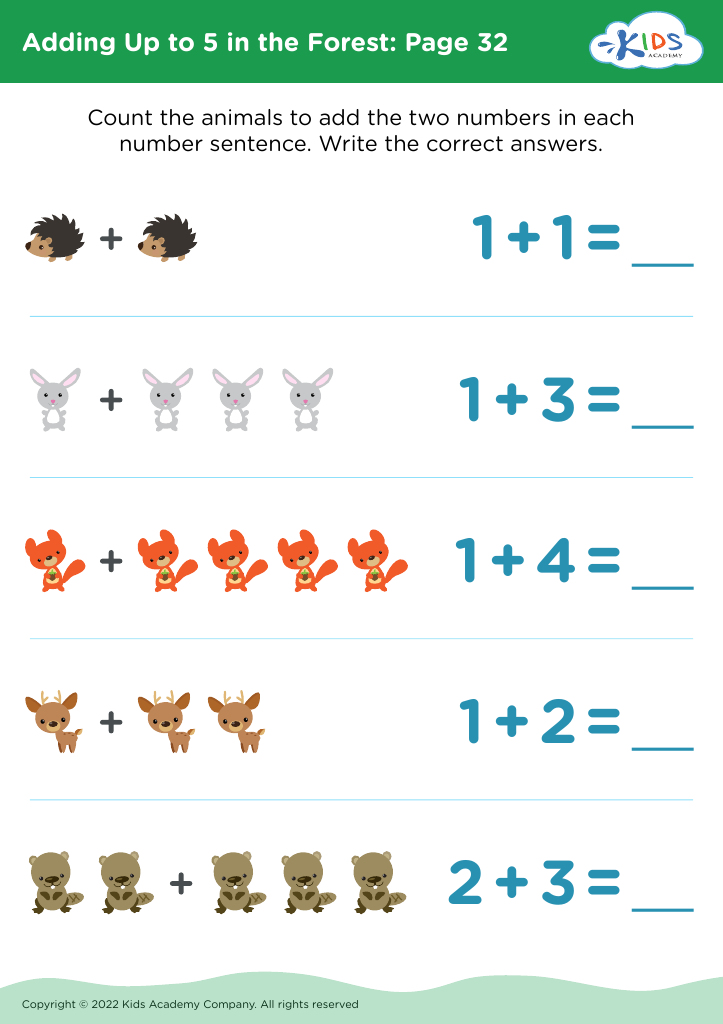
Adding Up to 5 in the Forest: Page 32
Worksheet
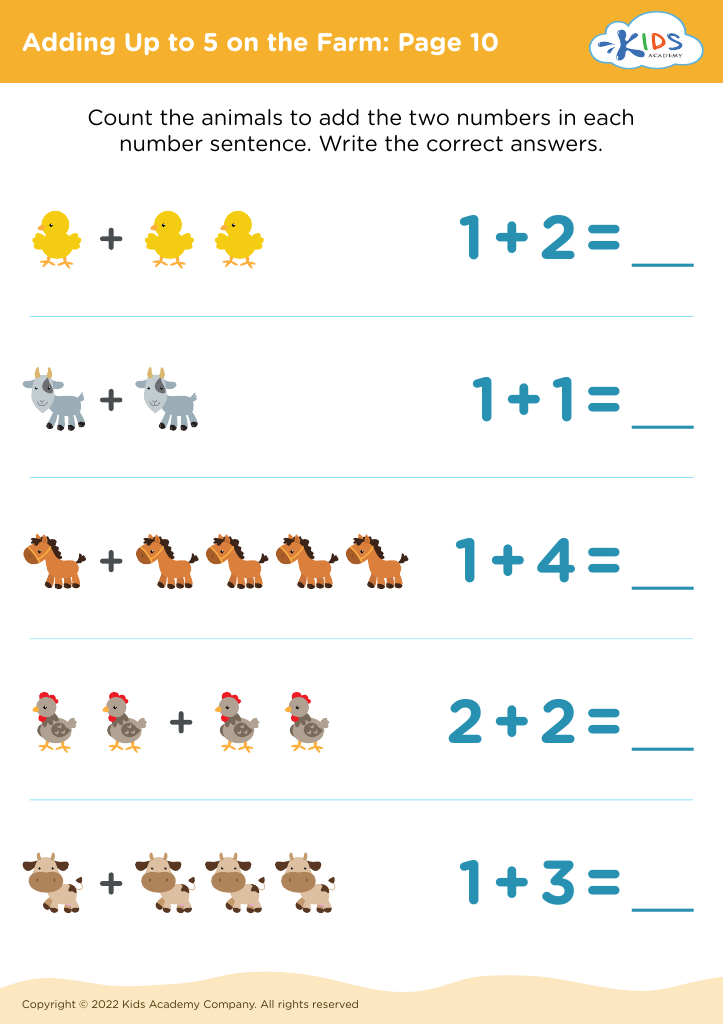
Adding Up to 5 on the Farm: Page 10
Worksheet


Basic addition skills are essential for children aged 5-9, laying the foundation for their mathematical understanding and overall cognitive development. At this early stage, learning to add nurtures critical thinking and problem-solving abilities, which are crucial for their academic journey. Strong addition skills not only foster numerical literacy but also help children develop confidence in their abilities to tackle more complex math concepts as they progress through school.

Moreover, proficiency in addition encourages a positive attitude towards learning and builds resilience. Children who master basic addition often find daily applications for these skills, from counting money to measuring ingredients during cooking. Parents and teachers play a significant role in reinforcing these skills through engaging and interactive activities that make learning enjoyable.

Establishing a strong grasp of basic addition creates a seamless transition into understanding other mathematical operations and concepts such as subtraction, multiplication, and division. Additionally, it serves as an excellent opportunity for parents and teachers to promote teamwork and social skills, as children often collaborate on math-related games and exercises.

In summary, prioritizing basic addition skills prepares young learners for future academic success, enhances their cognitive development, and fosters a lifelong appreciation for math.