
Basic Counting Math Worksheets for Ages 5-9
5 filtered results
Difficulty Level
Grade
Age
-
From - To
Subject
Activity
Standards
Explore our engaging Basic Counting Math Worksheets designed specifically for children aged 5 to 9! Our collection features fun and interactive exercises that foster early numeracy skills, helping young learners understand numbers, counting sequences, and basic addition. Each worksheet is thoughtfully crafted to make learning enjoyable, featuring vibrant illustrations and themes that capture children's interest. These resources encourage independent practice while reinforcing foundational math skills essential for future success. Ideal for classroom settings or home learning, these worksheets are perfect for parents and teachers looking to support math development. Start your child’s counting journey today and watch their confidence grow!
Favorites
With answer key
Interactive
 Assign to My Students
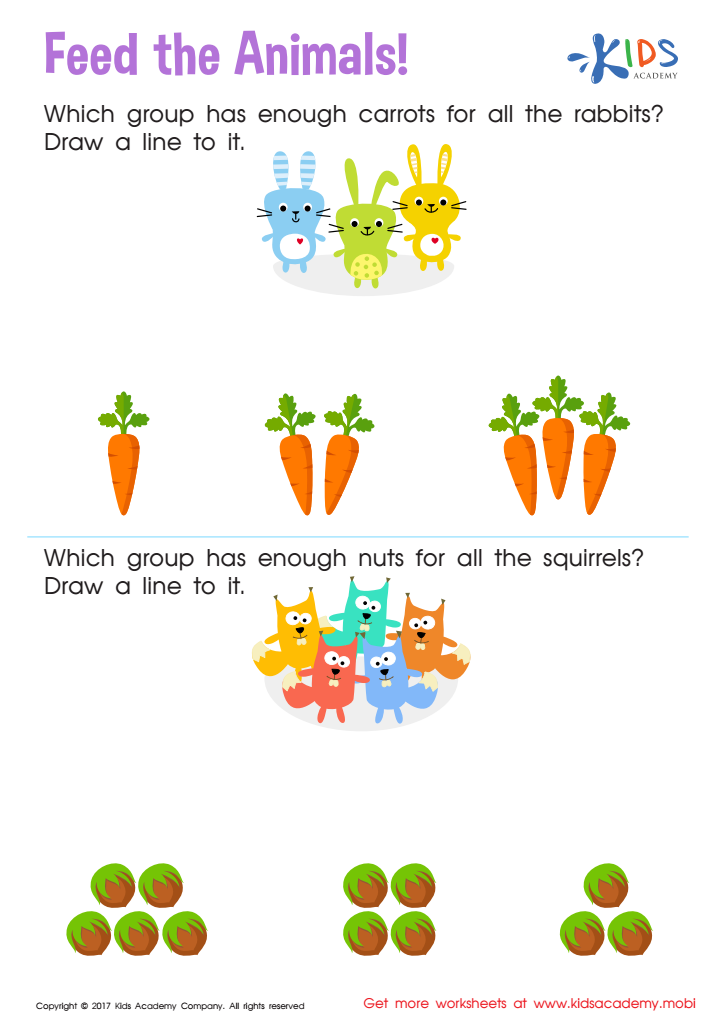
Count and Match: Feed the Animals Worksheet
Learning and growing involves more than just numbers, phonics and comparison. This Feed the Animals worksheet helps kids to exercise their reasoning skills. They must work out how many rabbits and carrots there are, and then repeat the process for the squirrels. This encourages problem solving and counting skills.
Count and Match: Feed the Animals Worksheet
Worksheet
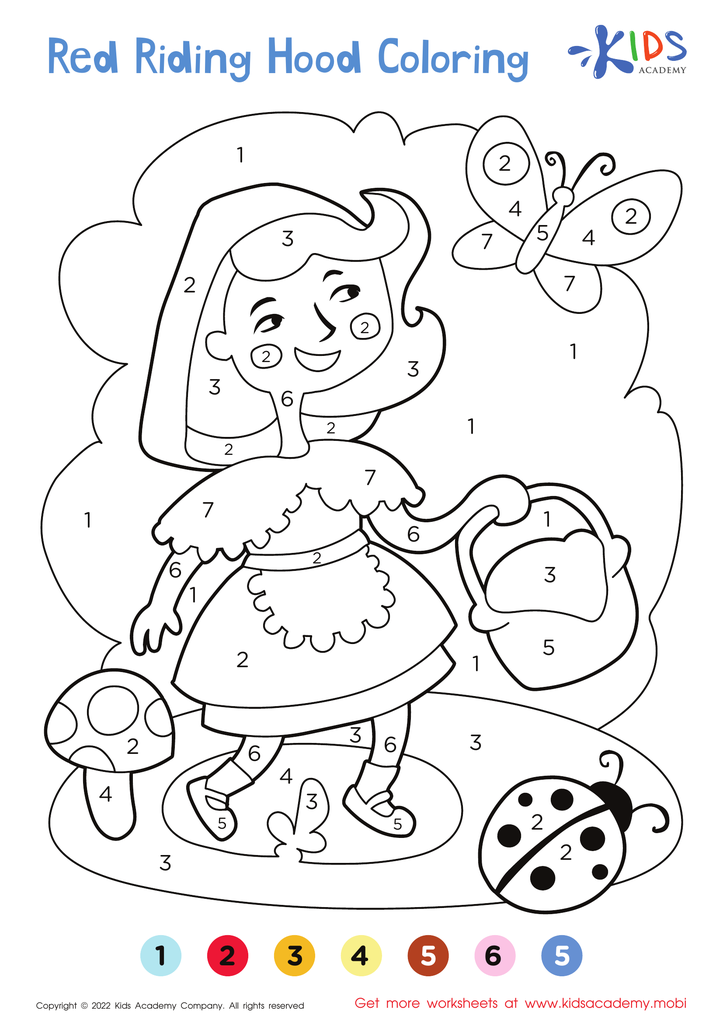
Little Red Riding Hood – Coloring by Numbers
Download this free PDF page and enjoy coloring Little Red Riding Hood. It's an easy and fun activity that everyone can do - just follow the numbers! Get your colored pencils ready and have a blast. 80 words.
Little Red Riding Hood – Coloring by Numbers
Worksheet
Join Kids Academy for Free
Who is primarily going to use this learning content?







Basic counting math is foundational for children aged 5-9, serving as the building blocks for all future mathematical learning. At this stage, children develop critical cognitive skills that influence their ability to grasp more advanced mathematical concepts. Mastering counting fosters number recognition and helps children understand the relationship between quantities and symbols.
Parents and teachers play an essential role in nurturing this skill, as early experiences in math shape attitudes towards the subject later in life. Engaging in counting activities strengthens problem-solving abilities and encourages persistent effort. It also promotes logical thinking, enhancing skills such as categorization and pattern recognition.
Moreover, counting creates connections to real-world applications. When children count objects during play or while shopping for groceries, they gain practical experience that reinforces mathematical understanding in contextual situations. This lays the groundwork for future skills like addition and subtraction.
Thus, parents and teachers should care about basic counting math because it bolsters children's self-confidence, fosters a positive learning environment, and encourages lifelong learning. By investing time in counting lessons, caregivers can inspire a deep appreciation for math as a fundamental aspect of everyday life.








