Fine motor skills development Math Worksheets for Ages 5-9
8 filtered results
-
From - To
Enhance your child's fine motor skills while fostering a love for math with our engaging worksheets designed for ages 5-9! Our finely crafted math worksheets combine fun activities with skill-building exercises that promote hand-eye coordination and dexterity. Young learners will enjoy tracing numbers, cutting, coloring, and connecting dots within mathematical concepts, making learning an interactive experience. Perfect for at-home practice or classroom settings, these worksheets are tailored to support motor development alongside foundational math skills. Empower your child with essential abilities for both academic and daily tasks—download our innovative fine motor skills development math worksheets today!
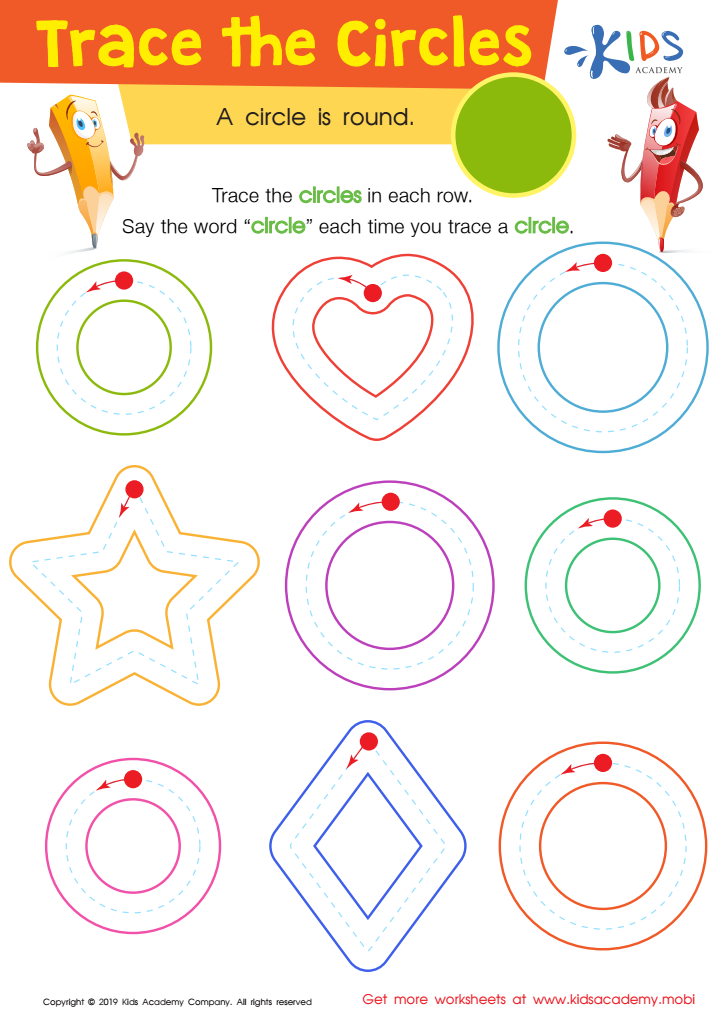
Trace The Circles Worksheet
 Assign to My Students
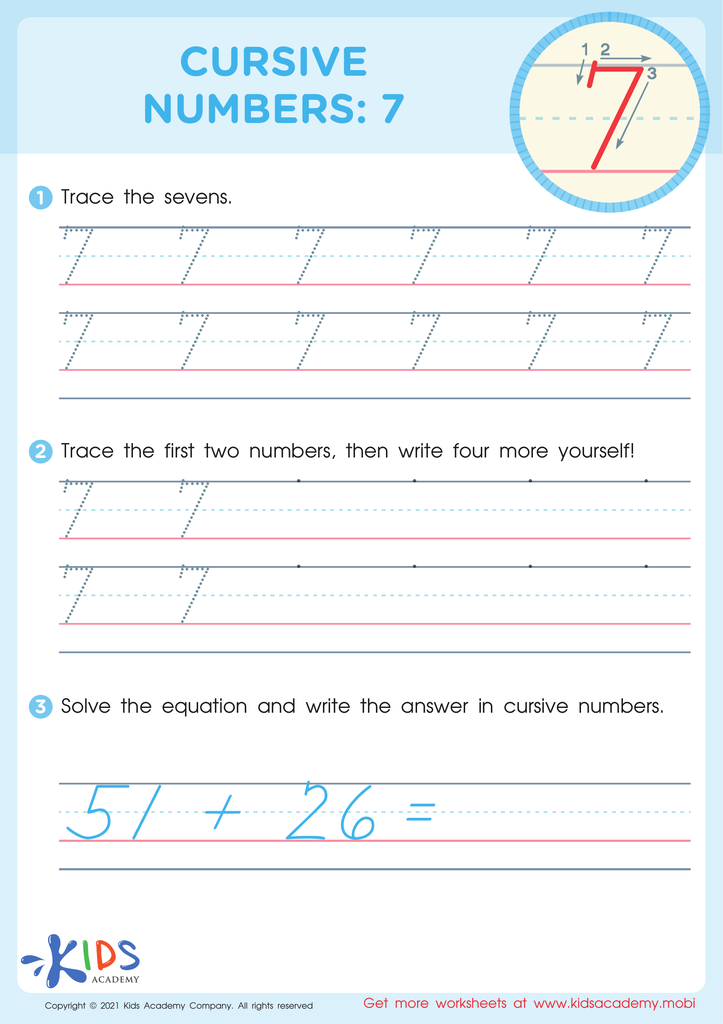
Cursive Numbers: 7 Worksheet
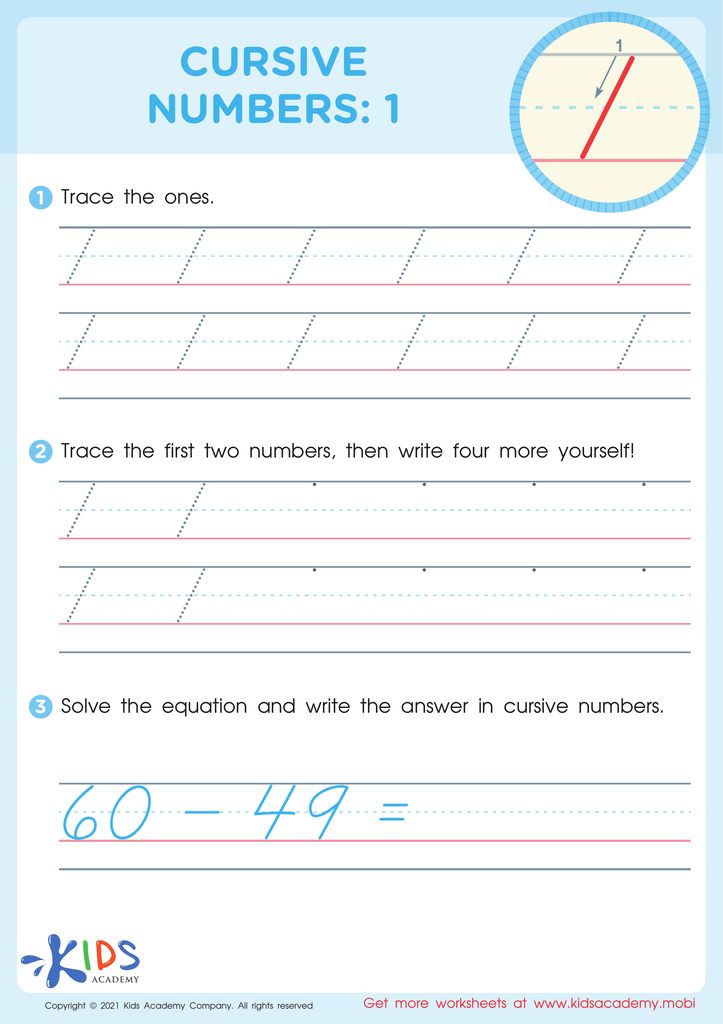
Cursive Numbers: 1 Worksheet
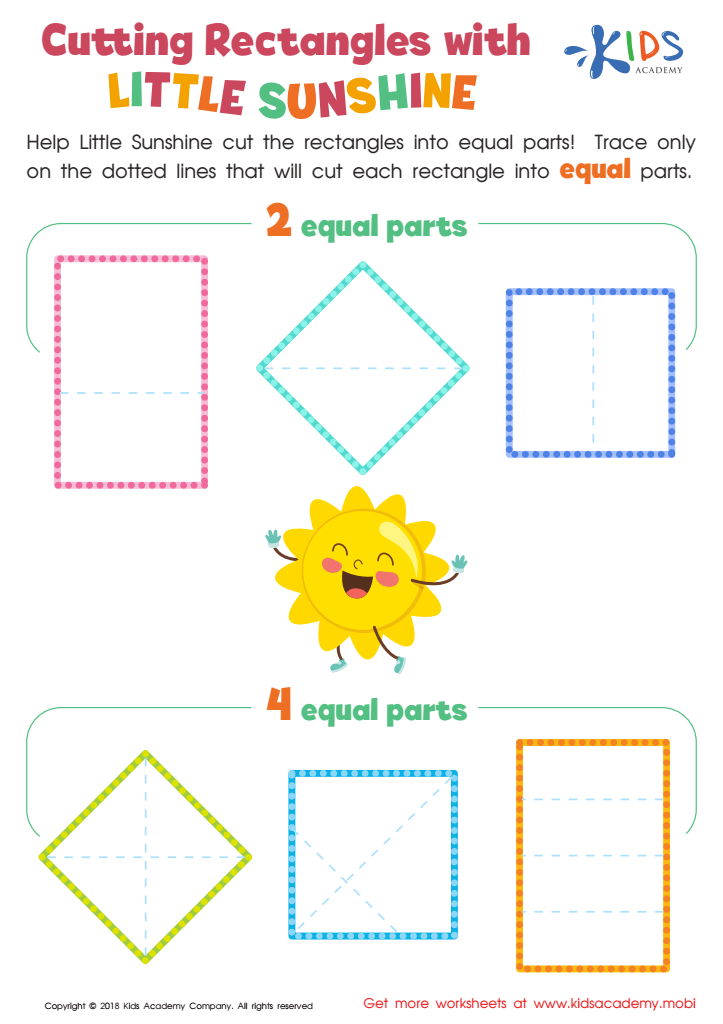
Cutting Rectangles with Little Sunshine Worksheet
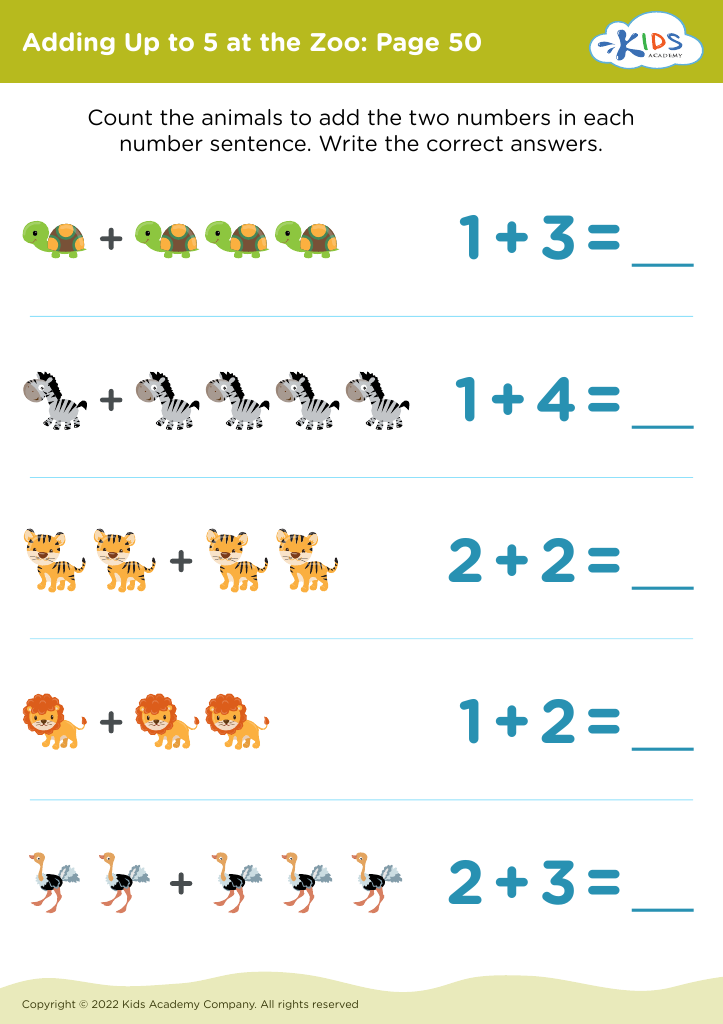
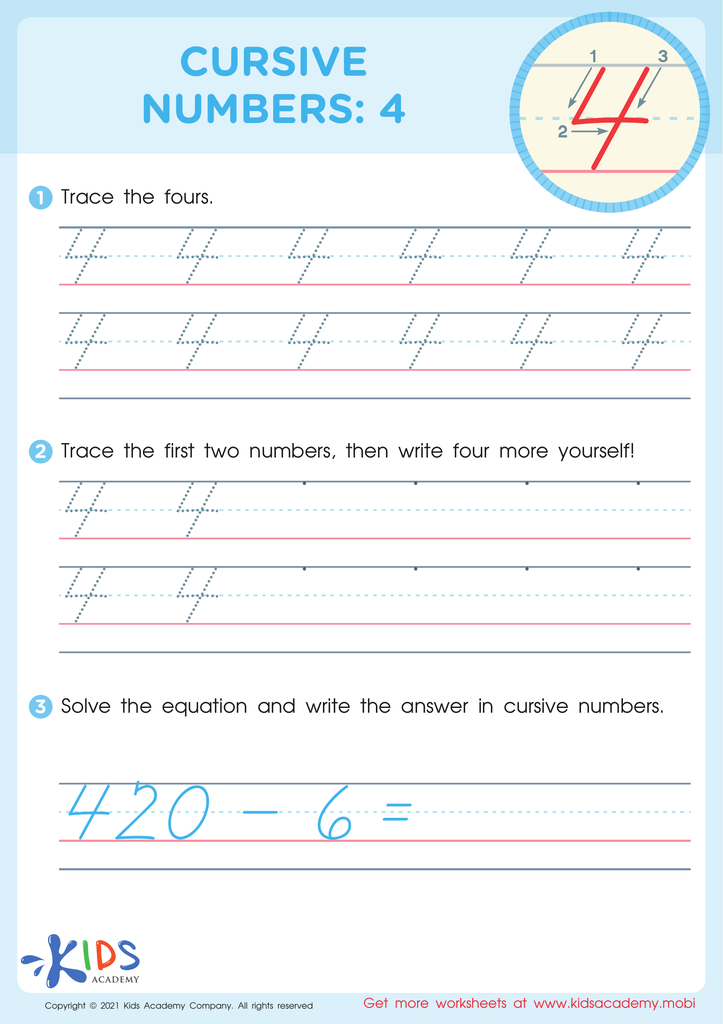
Cursive Numbers: 4 Worksheet




.jpg)



Fine motor skills are crucial for young children's development, particularly in the realm of math learning for ages 5-9. These skills involve the precise movements of small muscles in the hands and fingers, which are essential for tasks such as drawing, writing, and manipulating small objects. When children develop fine motor skills, they enhance their ability to engage actively with mathematical concepts.
For instance, activities like counting coins, using building blocks, or drawing shapes require precise hand movements. These interactions not only make math more tangible and engaging but also reinforce problem-solving skills and spatial awareness. As children build their fine motor skills, their confidence in handling math-related tasks improves, fostering a better attitude towards subjects that can often seem intimidating.
Additionally, fine motor development lays the groundwork for future academic success beyond mathematics; strong handwriting skills, for example, support effective communication in all subjects. Consequently, parents and teachers should prioritize activities that cultivate fine motor abilities, such as arts and crafts, threading beads, or engaging in sensory play. By doing so, they not only facilitate math readiness but also promote holistic learning and personal growth in young children.








