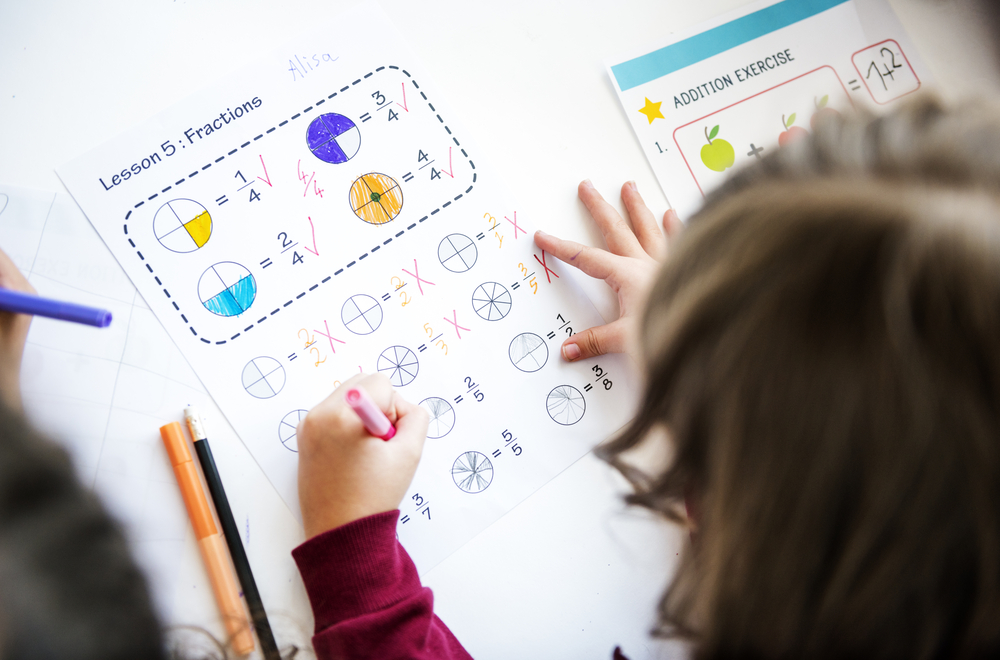
Boost your child's fine motor skills with our engaging Math Worksheets for Ages 5-9! Specifically designed to enhance handwriting and numeric proficiency, these fun and interactive activities help young learners master number formation. Each worksheet provides practice in writing numbers correctly, improving pencil control, and boosting hand-eye coordination. Perfect for developing foundational skills, our math worksheets make learning enjoyable and effective. Created by experts for ages 5-9, they offer an excellent resource for parents and teachers looking to support their child's educational journey. Explore our collection and make learning numbers a delightful experience!

Check out this FREE Trial Lesson on Math for age 5-9!

T

Favorites
With answer key
Interactive
  • 5-9
  • Fine motor skills (writing numbers)
  • Math
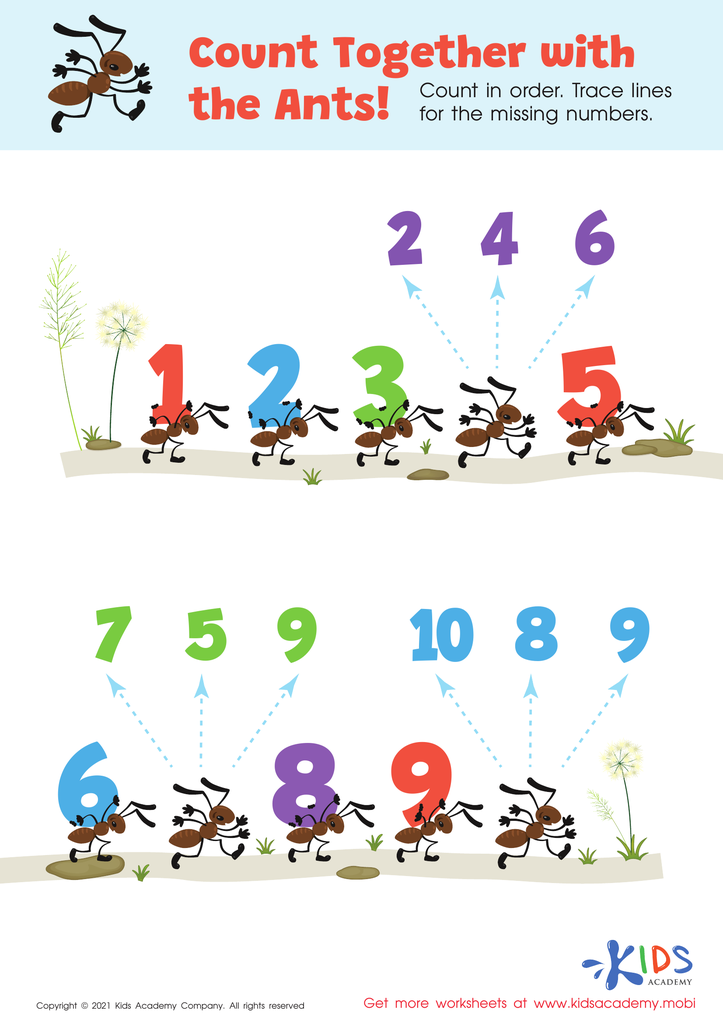
Count Together with the Ants Worksheet
Count Together with the Ants Worksheet
Rather than letting kids get too deep in online games, keep them engaged with learning worksheets. Ask them to identify the insect in the picture, then count the ants. Help them trace lines to the missing numbers. It's simple and straightforward for young children to comprehend.
Count Together with the Ants Worksheet
Worksheet
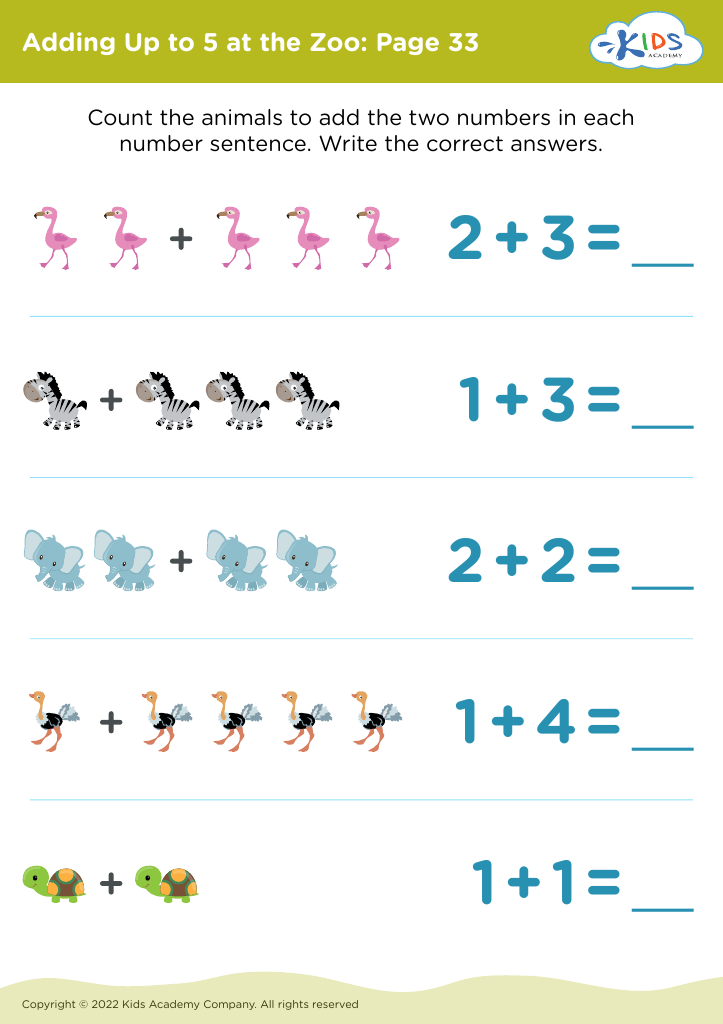
Adding Up to 5 at the Zoo: Page 33
Worksheet
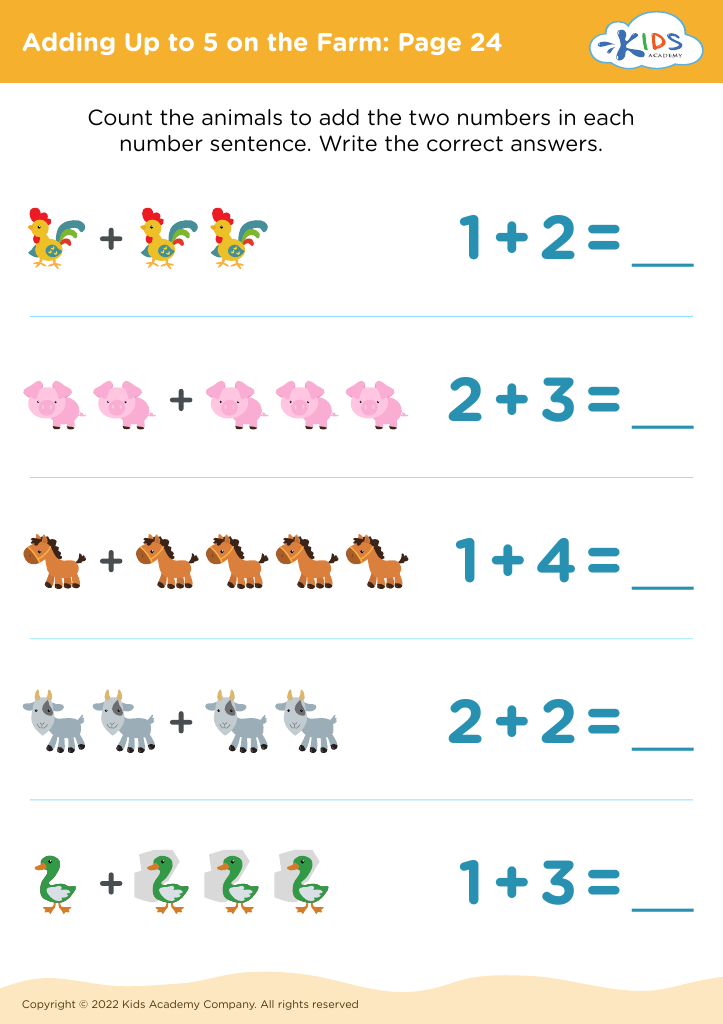
Adding Up to 5 on the Farm: Page 24
Worksheet
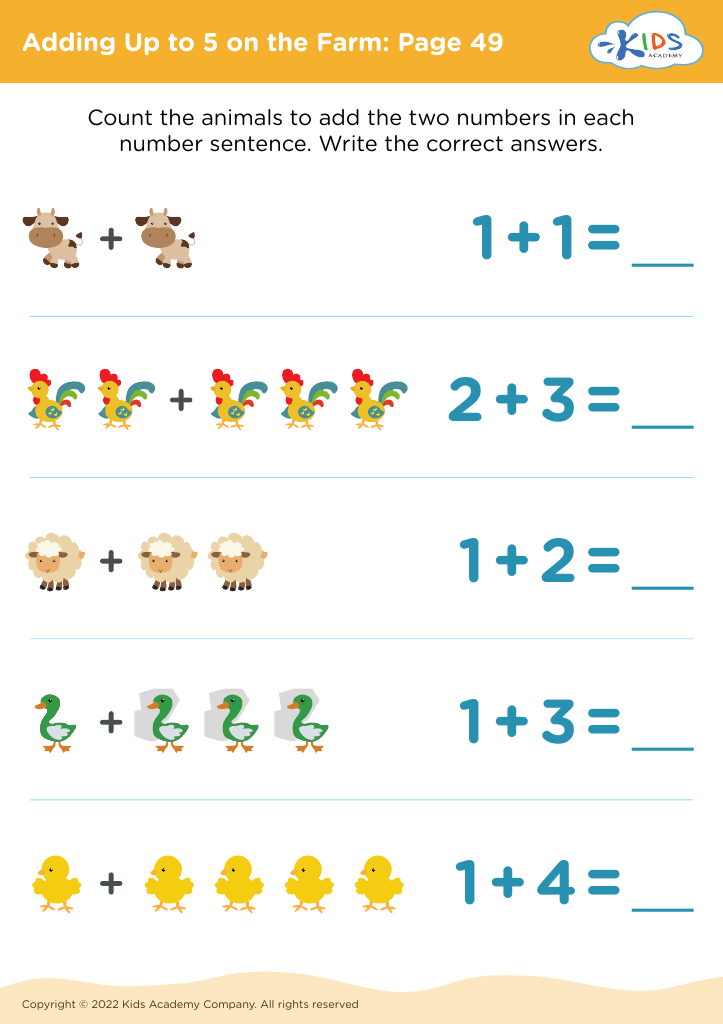
Adding Up to 5 on the Farm: Page 49
Worksheet
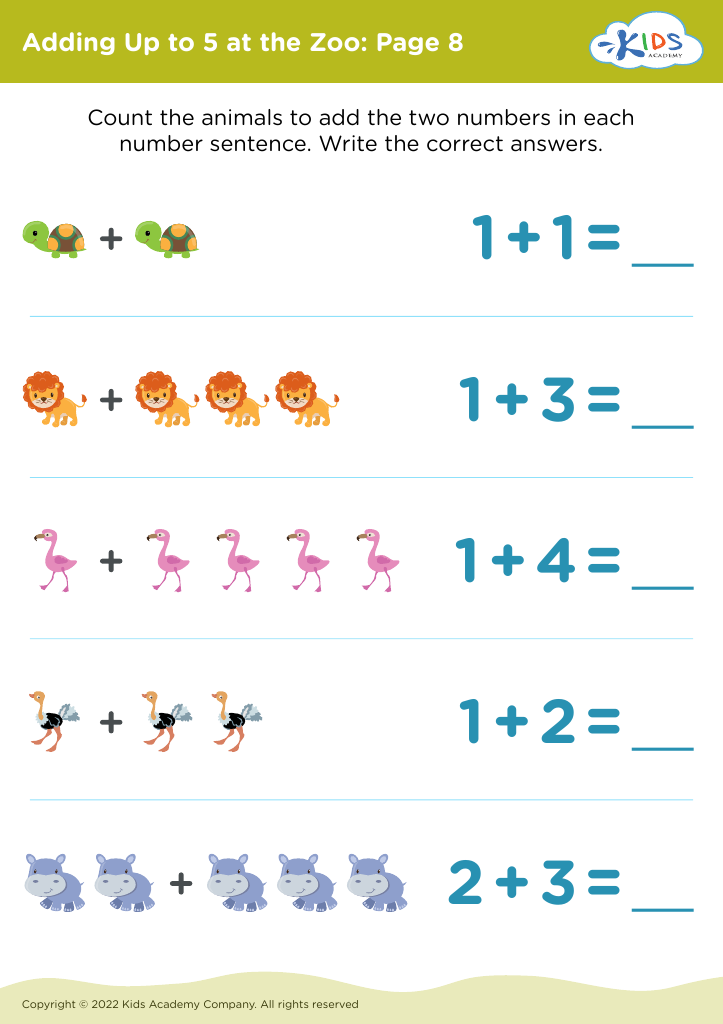
Adding Up to 5 at the Zoo: Page 8

Adding Up to 5 at the Zoo: Page 8

Adding Up to 5 at the Zoo: Page 8
Worksheet
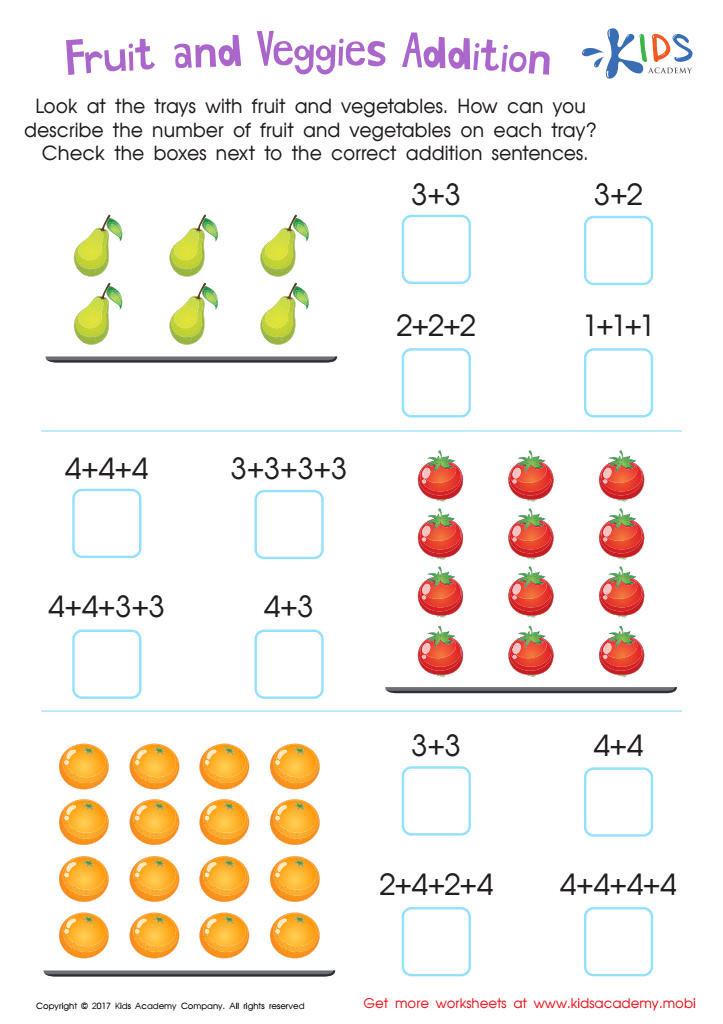
Simple Addition PDF Worksheet

Fruit and Veggies Worksheet

It promotes problem-solving and analytical skills as kids match pictures to correct addition sentences. Help your child go beyond simple addition with this PDF worksheet!
Fruit and Veggies Worksheet
Worksheet
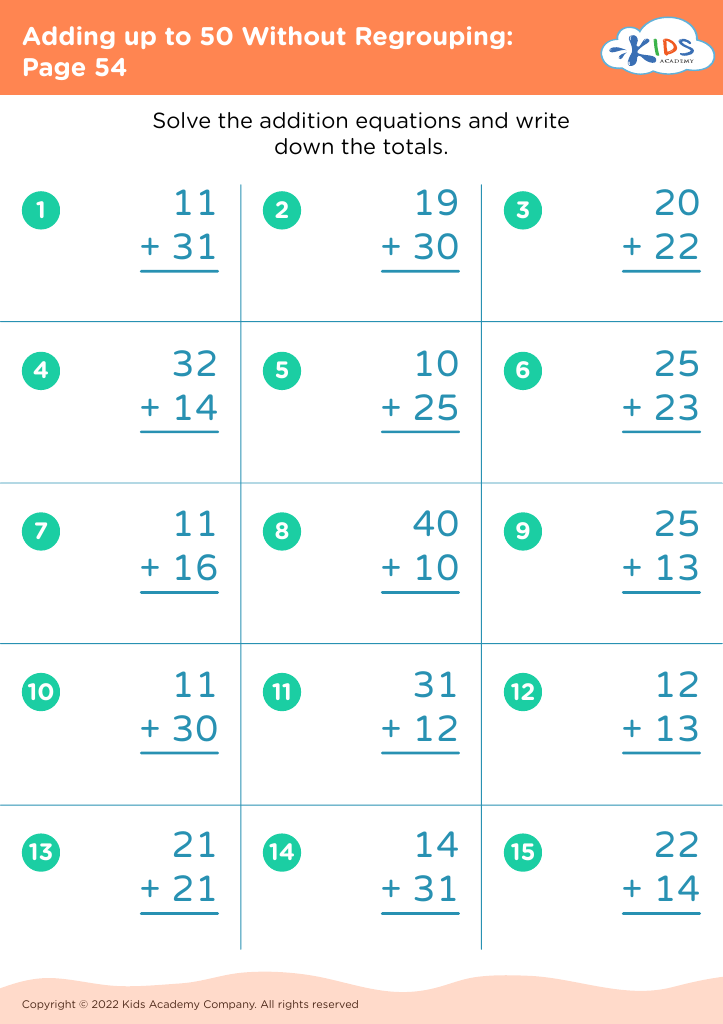
Adding up to 50 Without Regrouping: Page 54
Worksheet
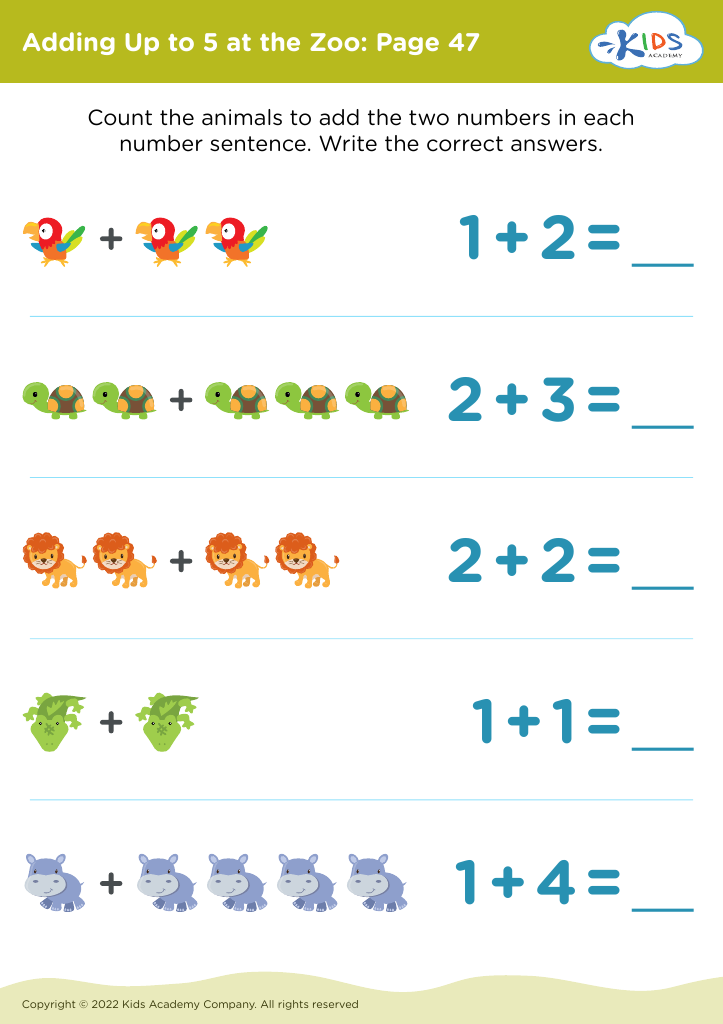
Adding Up to 5 at the Zoo: Page 47
Worksheet
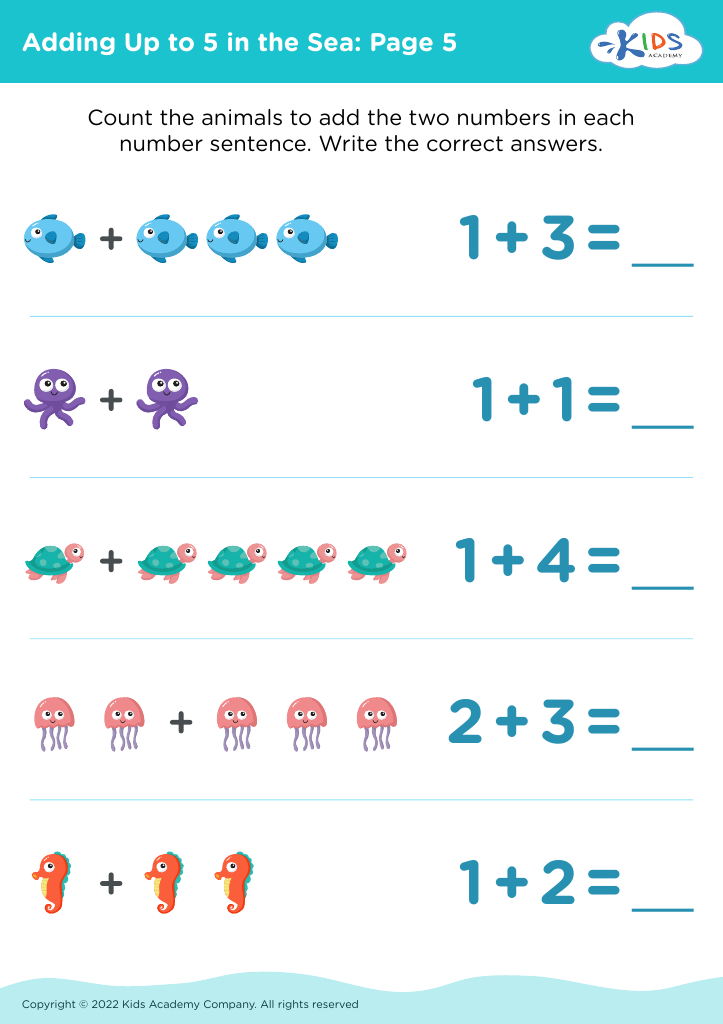
Adding Up to 5 in the Sea: Page 5

Adding Up to 5 in the Sea: Page 5

Adding Up to 5 in the Sea: Page 5
Worksheet
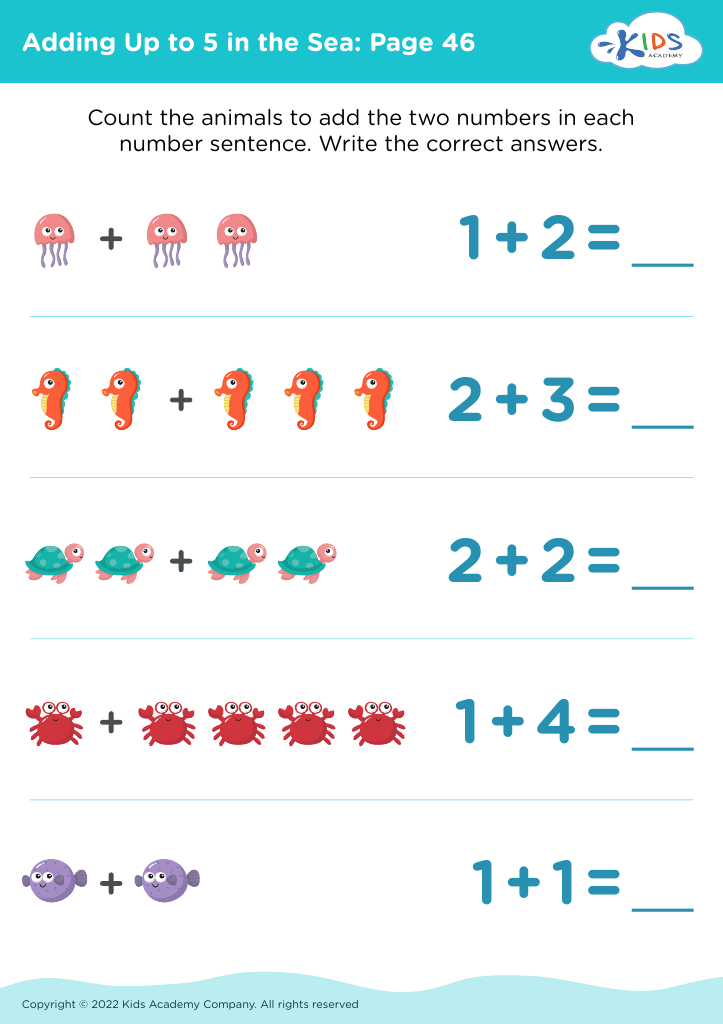
Adding Up to 5 in the Sea: Page 46
Worksheet
A Hundred Pineapples Worksheet

A Hundred Pineapples Worksheet

Can your child count in tens? Show them how to count 100 boxes in stacks of tens. A worksheet can help them understand the concept. Ask them to count boxes of pineapples in stacks of tens and circle the truck with 100 pineapples.
A Hundred Pineapples Worksheet
Worksheet
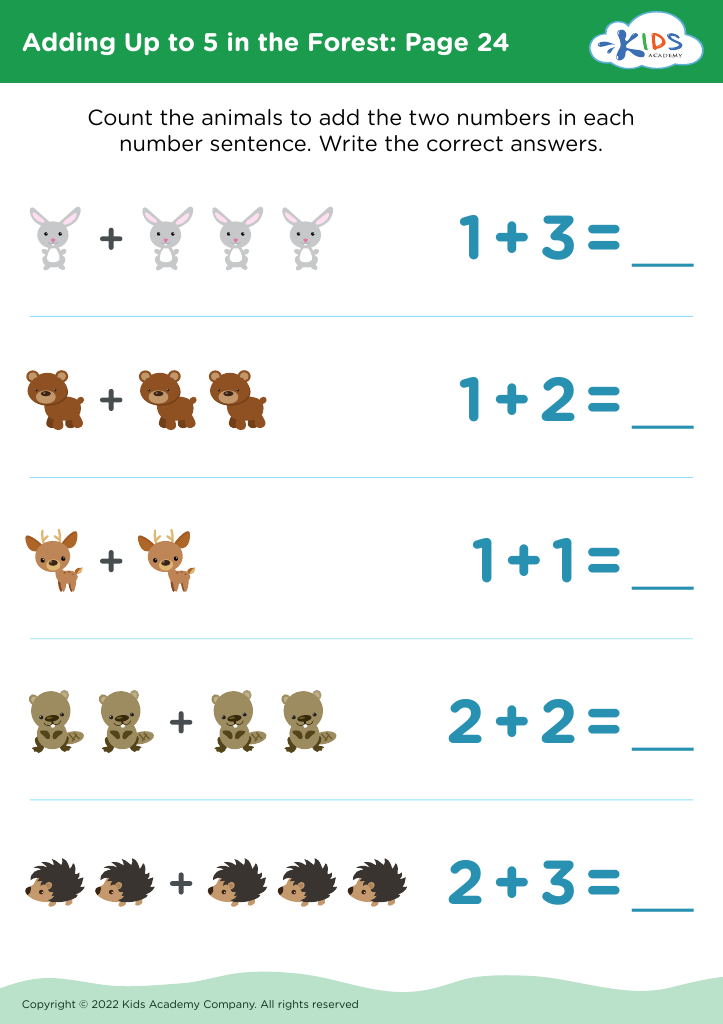
Adding Up to 5 in the Forest: Page 24
Worksheet
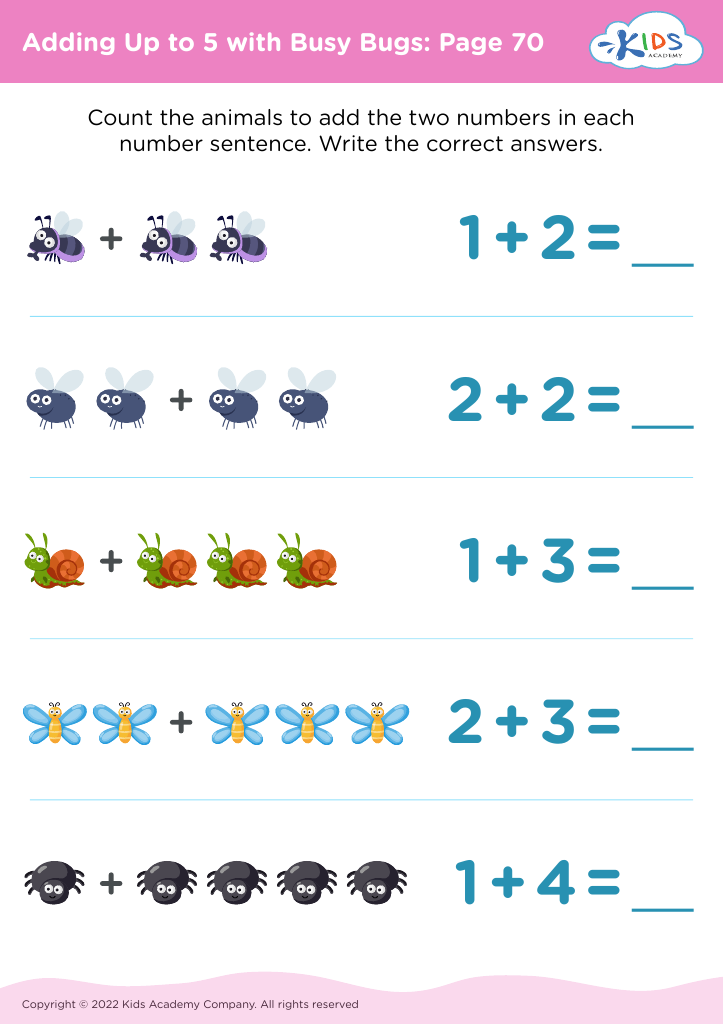
Adding Up to 5 with Busy Bugs: Page 70
Worksheet
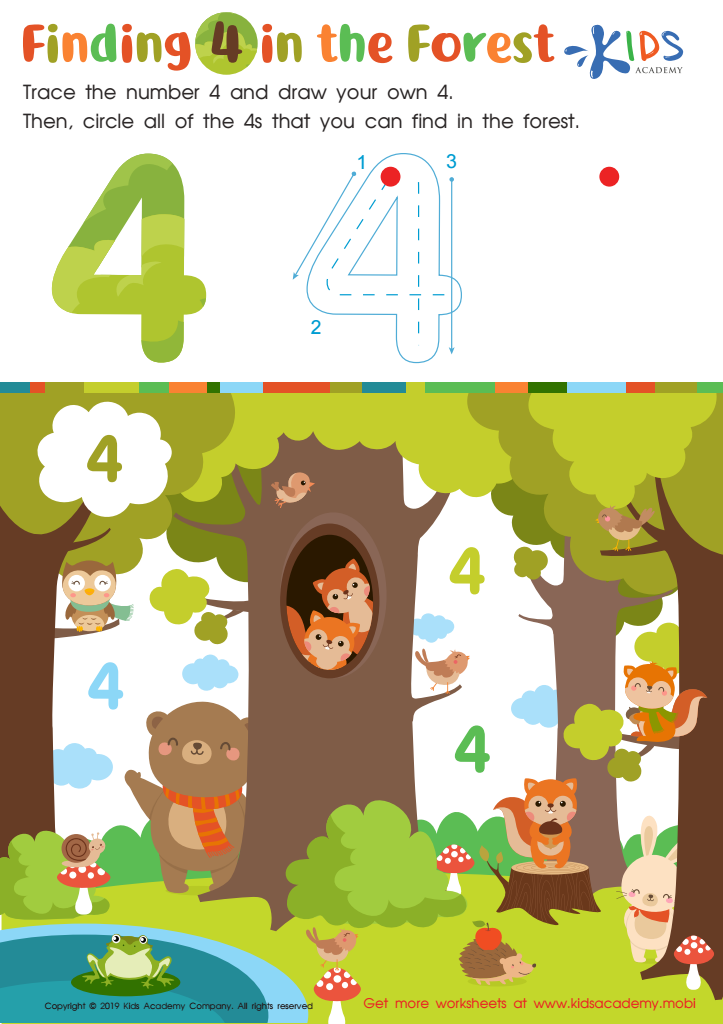
Finding 4 in the Forest Worksheet
Finding 4 in the Forest Worksheet
Before starting, have your kids count as high as they can. Ask them to identify the setting and point out the 4s. Trace 4 and draw your own. Help your kids circle all the 4s they can find in the forest. How far can they count? How well did they find the hidden 4s?
Finding 4 in the Forest Worksheet
Worksheet
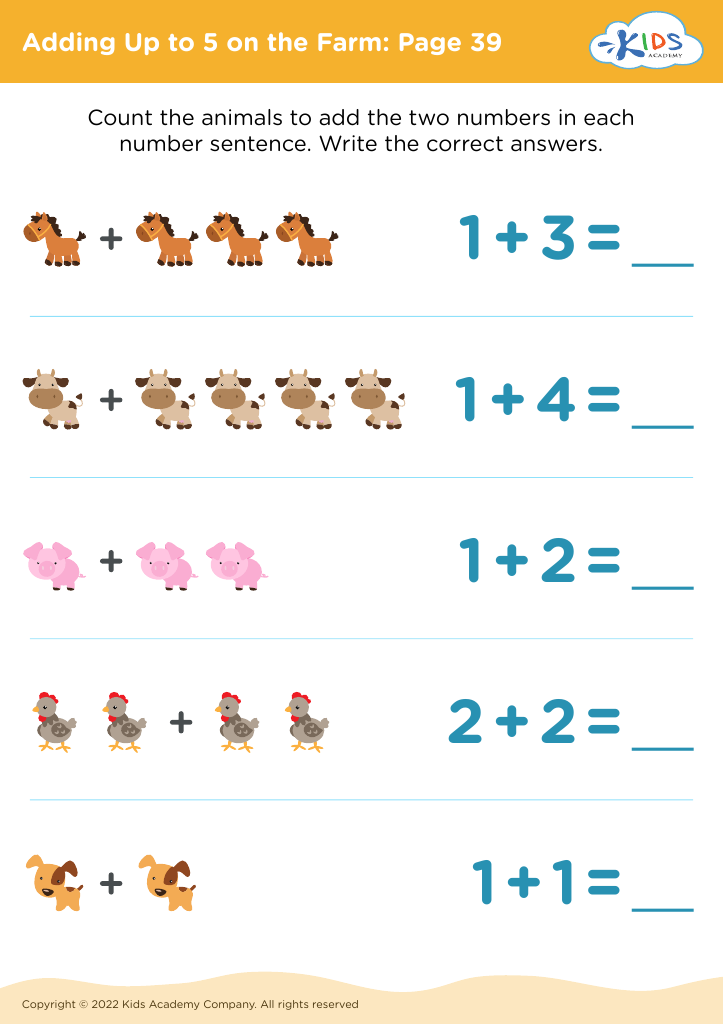
Adding Up to 5 on the Farm: Page 39
Worksheet
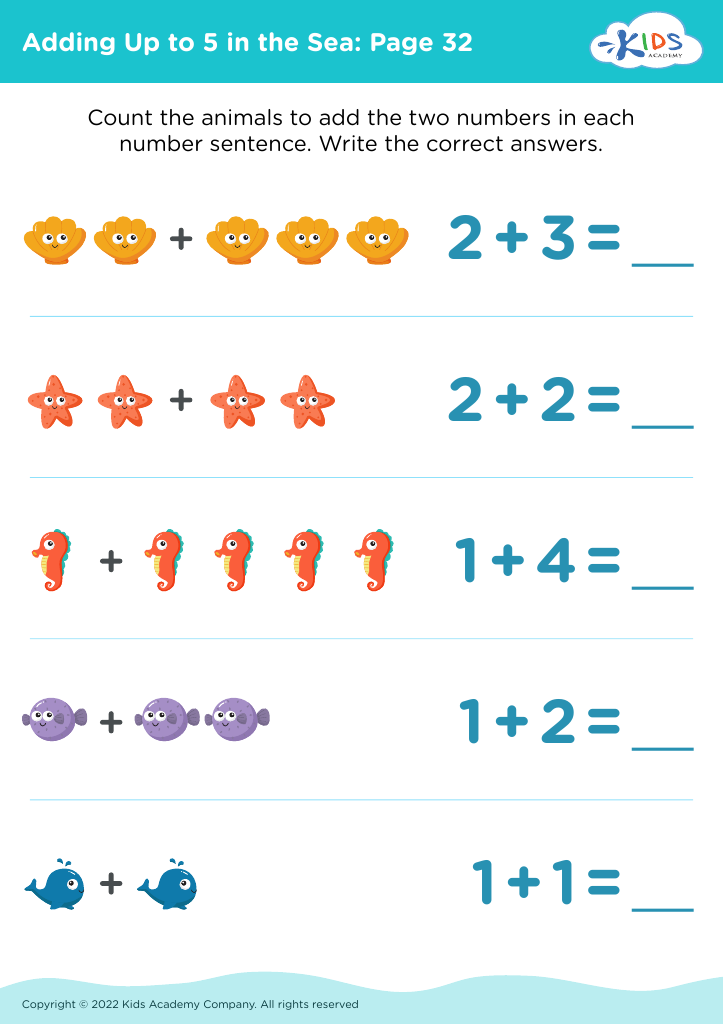
Adding Up to 5 in the Sea: Page 32
Worksheet
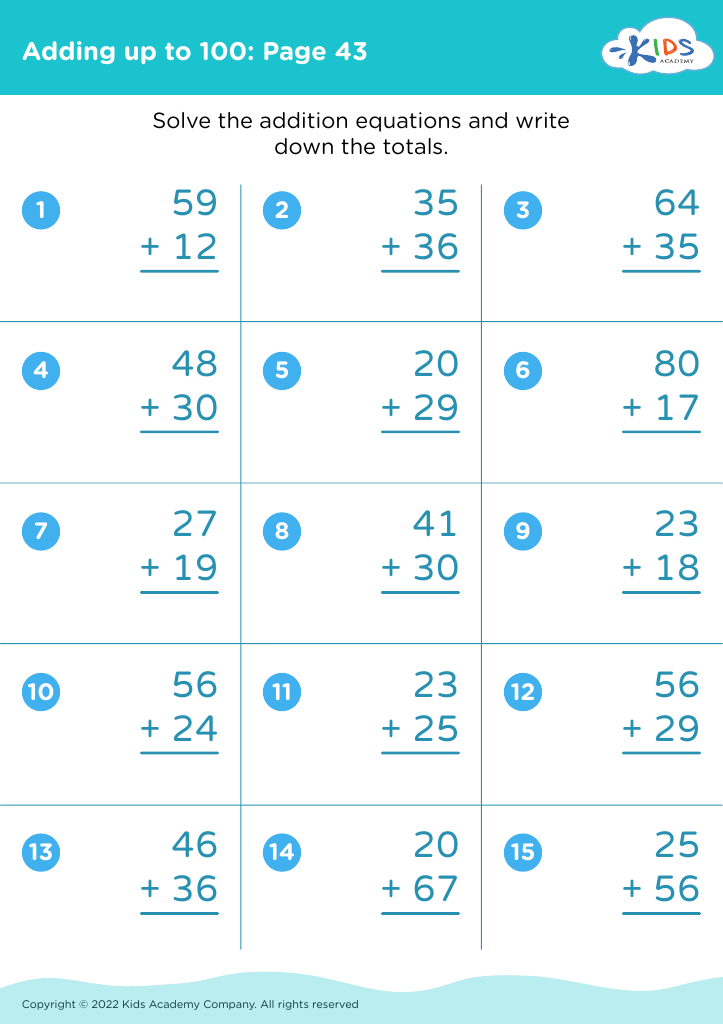
Adding up to 100: Page 43

Adding up to 100: Page 43

Adding up to 100: Page 43
Worksheet
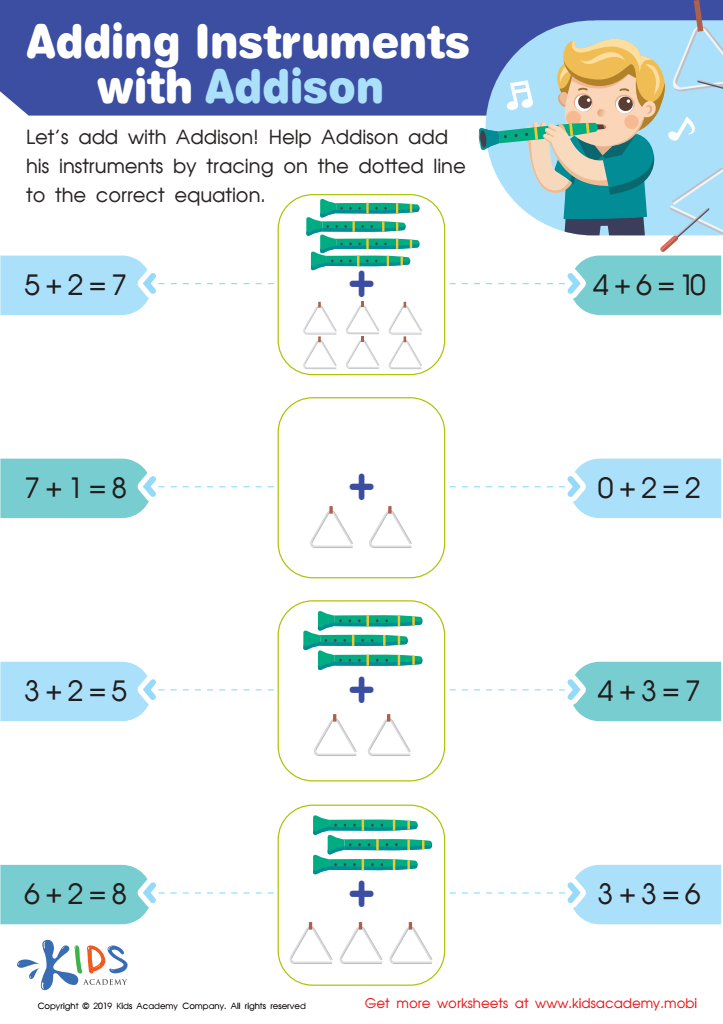
Adding Instruments with Addison Worksheet
Adding Instruments with Addison Worksheet

Your math stars will enjoy assisting Addison as he adds his instruments. This worksheet has 10 basic addition problems with pictures of instruments to aid children. They match the pics and sentences, then connect them to the correct problem using the lines. A fun way to learn and practice addition!
Adding Instruments with Addison Worksheet

Worksheet
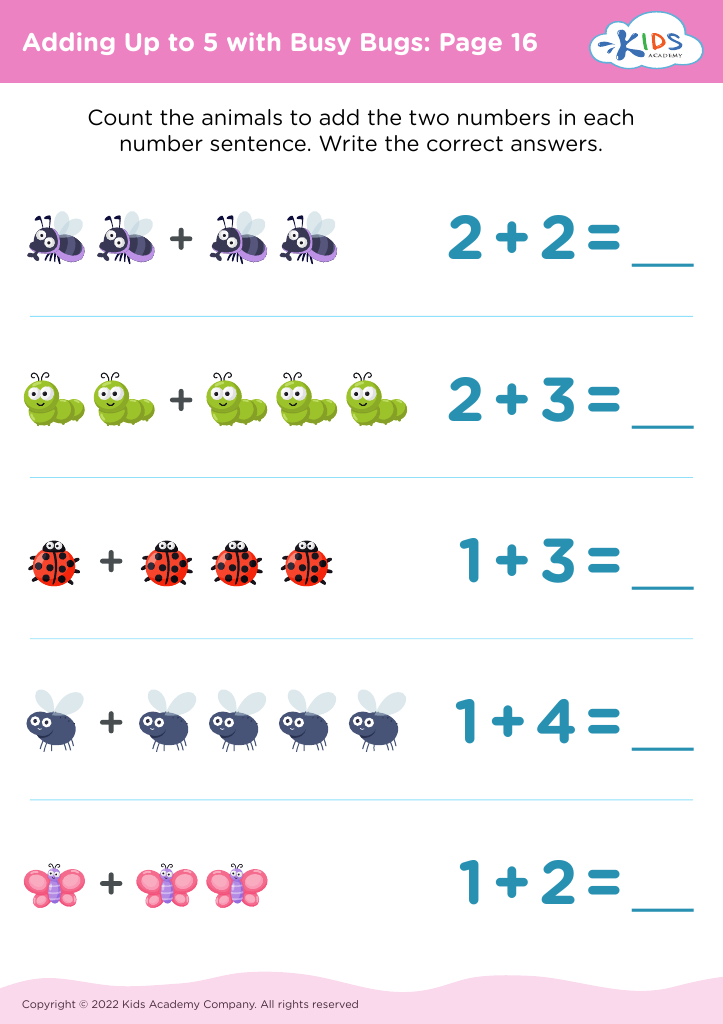
Adding Up to 5 with Busy Bugs: Page 16
Worksheet
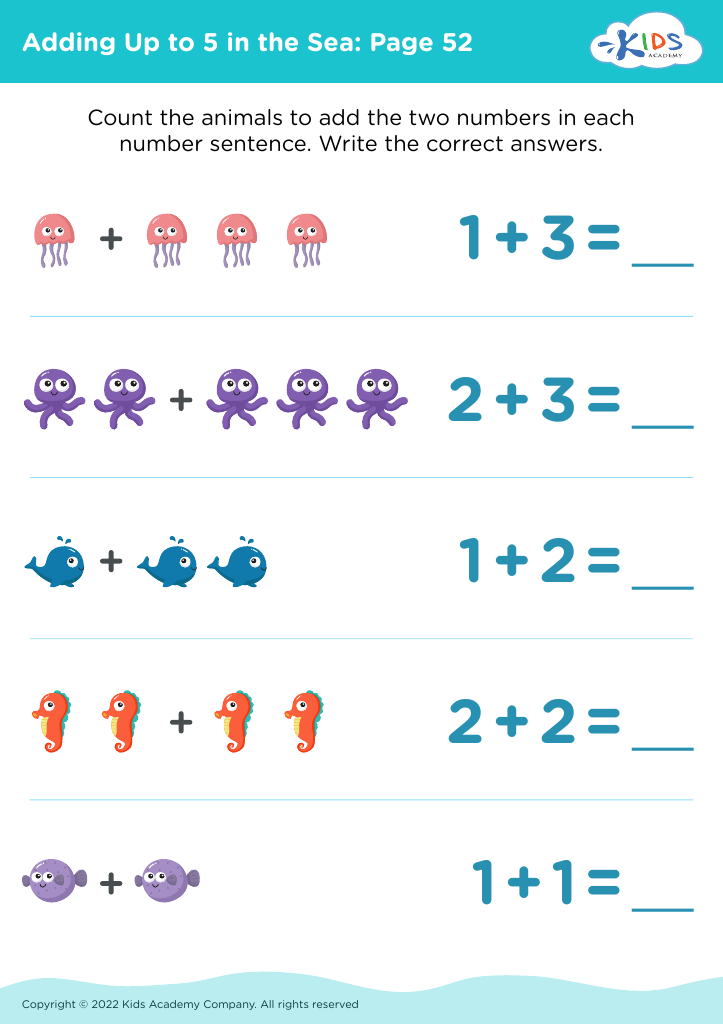
Adding Up to 5 in the Sea: Page 52
Worksheet


Developing fine motor skills, particularly in writing numbers, is crucial for children aged 5-9 as it lays a foundational cornerstone for their academic and personal growth. Fine motor skills involve the coordination of small muscles in activities like grasping a pencil or manipulating small objects, and these are essential for almost all day-to-day tasks, including writing and mathematics.

Writing numbers accurately enhances students' mathematical understanding and keeps them aligned with curriculum milestones. By fostering strong fine motor skills, parents and teachers equip children with the capability to express their thoughts and solve problems efficiently. Accurate number writing is pivotal, as messy or incorrect representations can lead to misunderstandings in basic arithmetic and more complex mathematical concepts later on.

For young children, these skills are intimately linked with brain development. Handling objects, drawing shapes, and writing numbers help build the neuropathways needed for higher-order cognitive processes such as memory, reasoning, and problem-solving. Moreover, proficiency in writing boosts confidence and fosters a sense of independence, encouraging young learners to engage more enthusiastically with their education.

Therefore, prioritizing fine motor skill development is not only about helping children succeed academically but also about contributing to their overall cognitive and emotional maturation. A win-win investment from parents and teachers alike!