Improving fine motor skills Math Worksheets for Ages 5-9
3 filtered results
-
From - To
Enhance your child's fine motor skills with our engaging math worksheets designed for ages 5-9. These colorful and fun activities not only align with math concepts but also foster essential hand-eye coordination and dexterity through interactive exercises. From tracing numbers to cutting and pasting, our worksheets provide varied challenges to keep your young learners motivated while building their confidence in both math and motor abilities. Perfect for use at home or in the classroom, our resources are easy to print, making it simple to integrate learning and skill development into your daily routine. Boost your child's educational journey today!
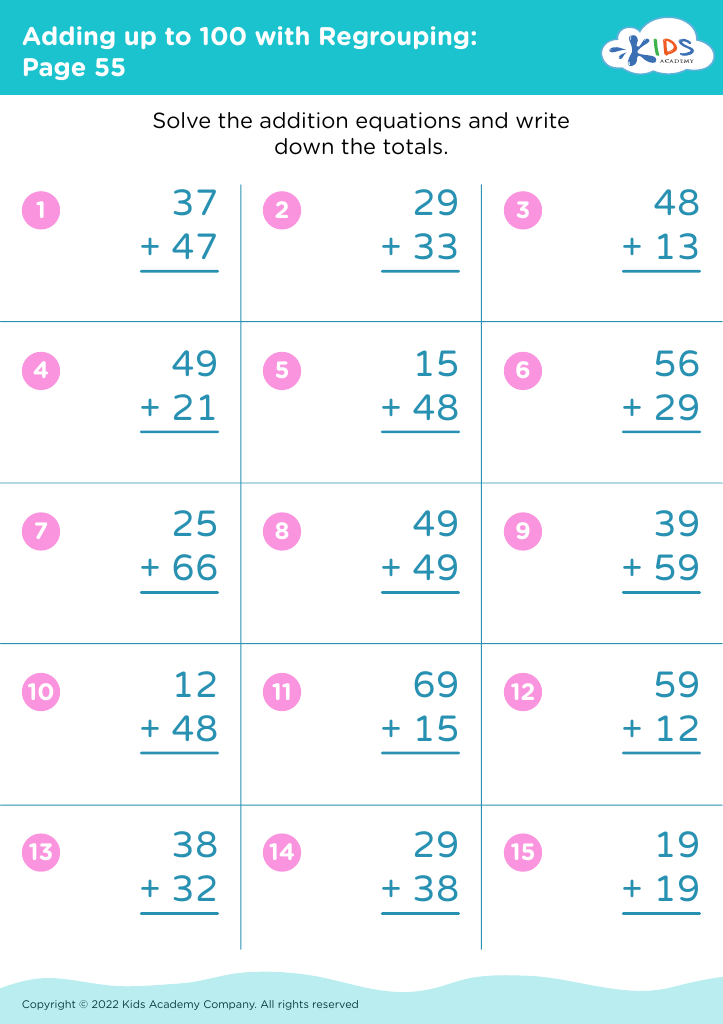
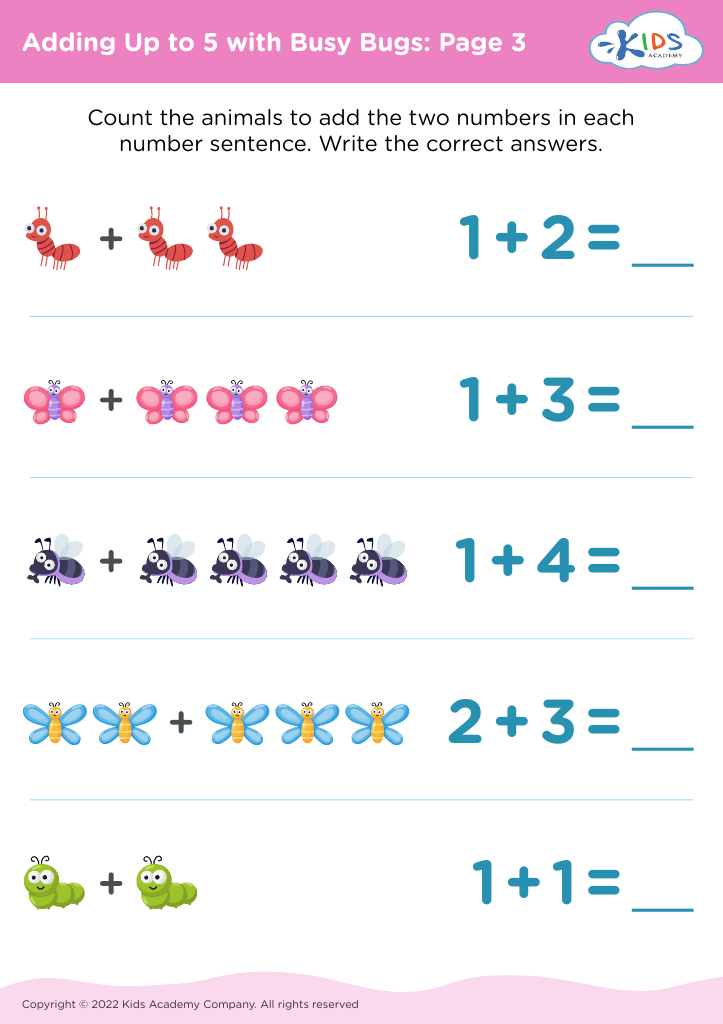
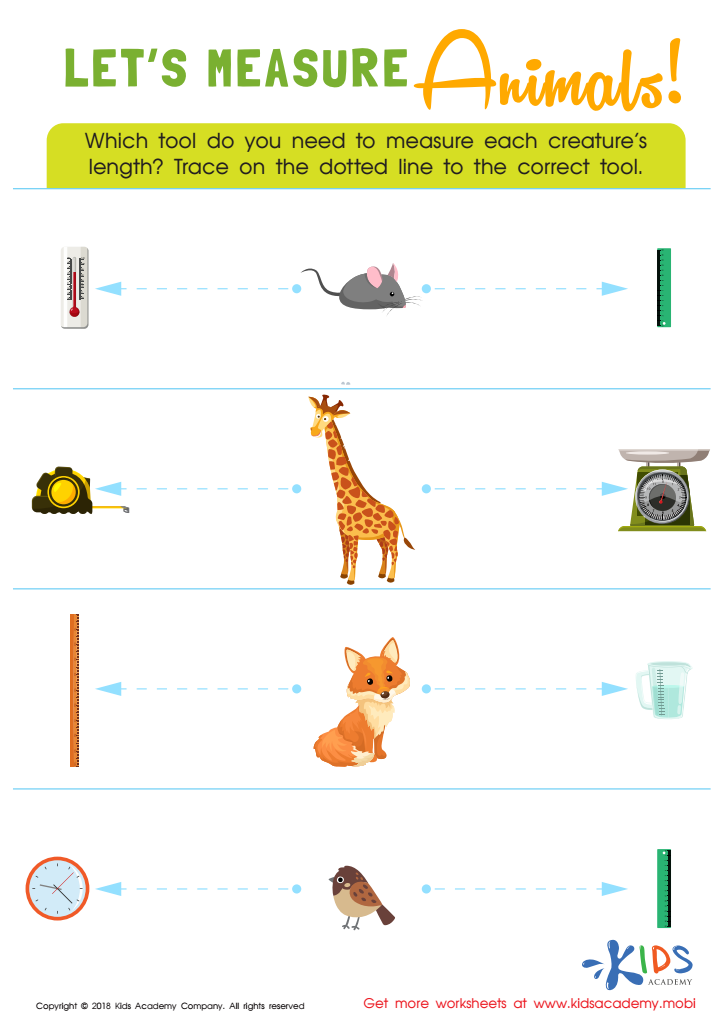
Let's Measure Animals! Worksheet
 Assign to My Students








Fine motor skills are essential for young children as they form the foundation for many important activities, including math. For children aged 5-9, developing these skills not only assists in holding pencils properly and cutting with scissors but also significantly impacts their mathematical abilities. When children can manipulate small objects—such as counting blocks, creating shapes, or assembling puzzles—they enhance their hand-eye coordination and dexterity, which boosts their confidence in handling mathematical tools.
Moreover, fine motor skills are closely linked to cognitive development. Engaging in hands-on math activities, like sorting, measuring, or arranging objects, allows children to visualize concepts and nurture problem-solving abilities. Parents and teachers can create dynamic learning environments, emphasizing coordination through playful strategies like arts and crafts, building games, or even everyday chores that promote manipulation of objects.
By focusing on improving fine motor skills, educators and parents lay the groundwork for more comprehensive learning experiences. Students equipped with these skills can transition into more complex tasks in math and beyond, fostering not just proficiency but a love for learning. Investing time and resources to enhance fine motor skills ultimately leads to better educational outcomes and well-rounded development too.








